
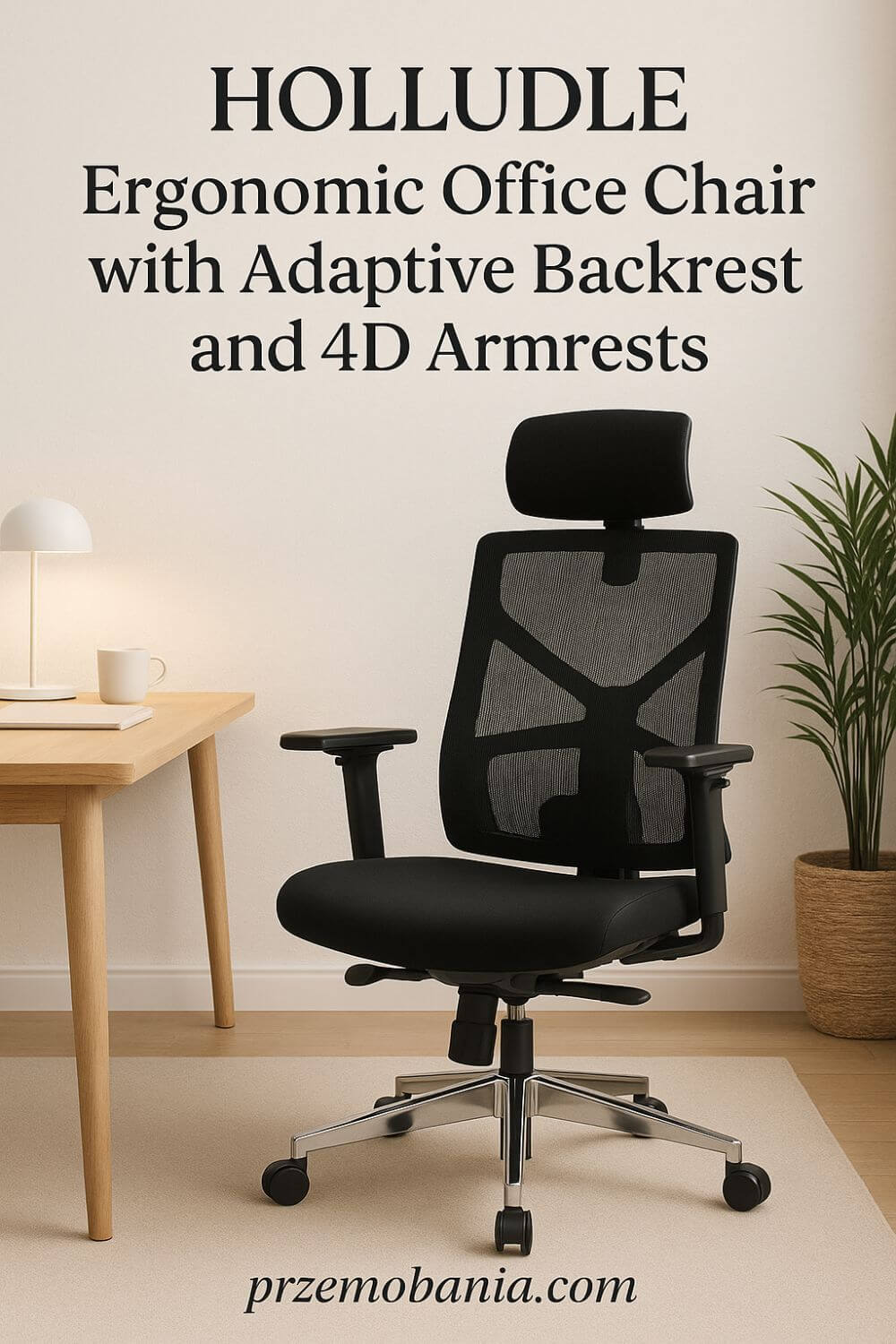
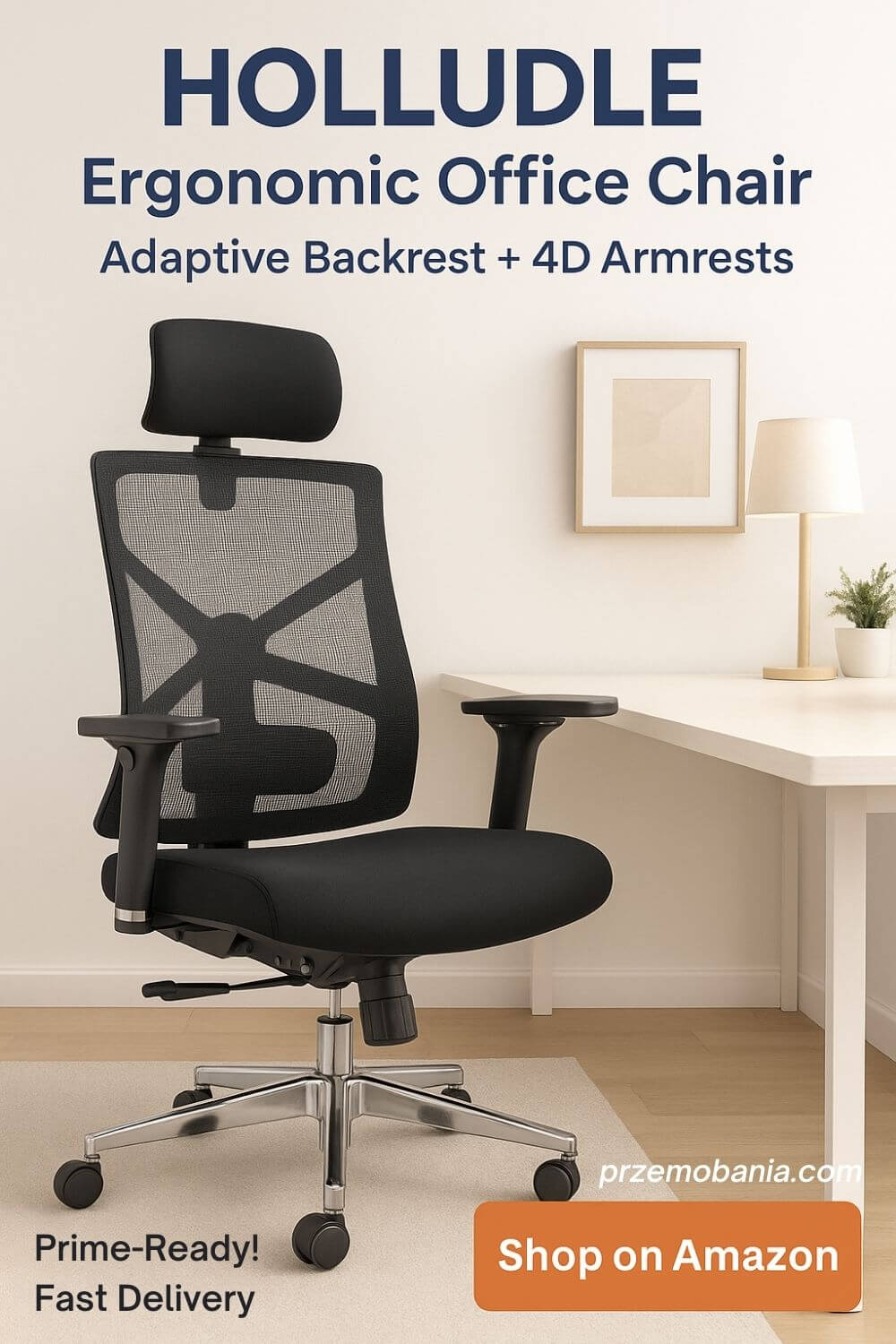
HOLLUDLE Ergonomic Office Chair
Is an ergonomic office chair the turning point between pushing through pain and finally feeling supported at your desk? Could the HOLLUDLE ergonomic office chair be the one change that lets you work, study, and create without dread or fatigue?
Yes! When a chair truly fits your body, focus returns, pressure eases, and long hours stop feeling like a battle. This guide cuts through marketing and explains what actually matters. In a few minutes, you’ll know if this belongs in your workspace.
I’ve spent years shaping a cozy, ergonomic home office so my wife, who lives with endometriosis and fibromyalgia, and I can work on my blogs with less strain and more calm.
Here I’ll unpack comfort, adjustability, build quality, and value like a friend would. No fluff, just practical insight to help you choose the right ergonomic desk chair and build a more comfortable office chair setup that supports your day.
Read on for the real-world details product pages miss—so you can decide, with confidence, if this is the chair your body has been asking for.
- Why I Love HOLLUDLE Ergonomic Office Chair?
- FREE eBook
- Is the HOLLUDLE Ergonomic Office Chair Built for Comfort?
- How the HOLLUDLE Ergonomic Office Chair Works for Real-Life Workdays?
- How to Evaluate and Fine-Tune the HOLLUDLE Ergonomic Office Chair?
- Design a Calm Workspace with the HOLLUDLE Ergonomic Office Chair
- Conclusion on the HOLLUDLE Ergonomic Office Chair
Why I Love HOLLUDLE Ergonomic Office Chair?
When I set up our workspace, I wasn’t chasing trends; I was chasing relief. My wife’s pain taught me that comfort isn’t a luxury; it’s the baseline that makes meaningful work possible. A chair either calms your nervous system or constantly pokes at it.
I look for support that meets the body where it actually lives during long sessions: a backrest that follows movement, armrests that find the elbows, and a seat that doesn’t cut into the thighs. Breathable materials matter because heat and pressure add up after an hour or two.
Quiet mechanics matter because the body hears strain before the mind does.
Adjustability is non-negotiable; one setting won’t fit eight hours of changing tasks. I need a chair to invite micro-movements while keeping posture honest. A dialed-in headrest and lumbar let my wife last longer at her desk without flaring symptoms, and I notice my own focus stretches further when my legs and lower back aren’t arguing with me.
Build quality shows up on day 100, not day one. I pay attention to frame rigidity, tilt smoothness, and how stable the base feels when I lean, stretch, or reach. The HOLLUDLE ergonomic office chair aims at that balance of fluid recline and anchored support that keeps you present instead of fidgeting.
Value is more than price; it’s minutes of pain avoided and ideas you can stay with because your body isn’t waving a red flag. In a home office meant to heal and perform, a chair must feel like an ally, not another demand on your energy.
If you’d like a deeper, practical walkthrough of building a cozy, ergonomic workspace, grab the FREE chapter of my eBook “The Cozy Home Office Blueprint.” I share more personal lessons, subscriber-only tips, and big discounts on the full book, in addition to occasional printables and surprise bonuses.
Grab a FREE eBook!
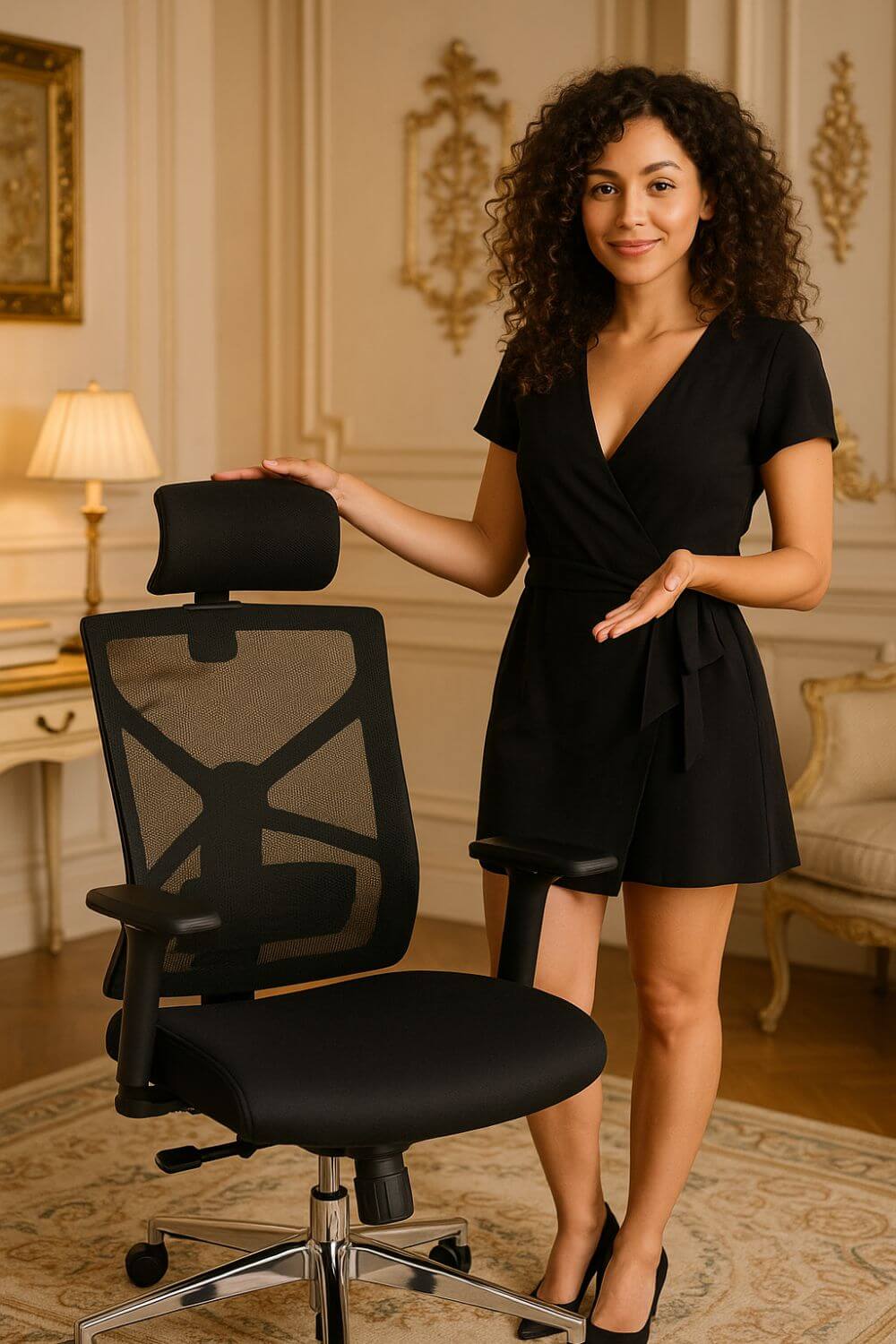
Is the HOLLUDLE Ergonomic Office Chair Built for Comfort?
Comfort isn’t just about plush padding; it’s the alignment between your spine, hips, and neck that lets you breathe and focus. That alignment starts with a backrest that tracks your movement so you don’t lock into one rigid pose.
In my home office, I coach myself to vary tasks, typing, reading, and brainstorming, and I expect the chair to support each posture without a fight. A smooth recline with consistent lumbar contact keeps the lower back quiet while the mind does its best work. If the recline jolts or dumps you backward, micro-tension builds, and creativity pays the bill.
Armrests matter more than most buyers realize.
When they adjust precisely under your elbows, the shoulders drop, the neck stops guarding, and wrist pressure eases. Too wide or too low, and your forearms hover, forcing tiny compensations that add up after lunch.
Seat design is the silent hero: a waterfall front edge, supportive foam or mesh, and adjustable depth protect circulation. Legs that aren’t tingling stay present for deep work, and breaks become a choice, not an escape. For smaller frames or taller bodies, dialling seat depth is the difference between perching and being held.
I also listen for quiet squeaks and wobbles to pull focus faster than notifications. A stable base and quality casters mean you can pivot to the printer or the whiteboard without bracing. Breathable materials help regulate temperature, especially on deadline days when hours blur.
Only then do I look at style, because an aesthetic office chair can still be a truly comfy office chair when ergonomics lead. Clean lines and a neutral palette integrate into a cozy workspace without shouting for attention. The HOLLUDLE ergonomic office chair earns a spot on my shortlist when a chair feels like an ally, supportive, adaptable, and quiet.
That’s how you judge value: not by marketing claims, but by how your body feels after hour three.
Next, I’ll break this down into focused sections: backrest, armrests, seat design, materials, and build so you can see exactly what to look for and why it matters.
Adaptive Backrest & Real Lumbar Contact
A supportive backrest should move with you forward when you lean in to type, and back when you exhale into a deeper brainstorm. Static chairs force you to fight them; dynamic backs invite micro-movement that keeps your spine nourished and alert. I look for a back that maintains lumbar contact through the recline, so the lower back never feels abandoned mid-email.
When my wife’s pain flares, even small gaps translate into burning fatigue. A back that tracks her natural S-curve lets her stay present without bracing. Add an adjustable lumbar that can fine-tune height and firmness, and you’ve got real-world comfort. In a cozy desk chair meant for long sessions, the goal is quiet alignment that you barely notice because it’s doing exactly what you need.
4D Armrests That Actually Find Your Elbows
Armrests aren’t decoration; they’re the bridge between your shoulders and the keyboard. If they don’t adjust in height, width, depth, and angle, your forearms hover, your neck guards, and the day drains you. I bring them under the elbows so the shoulders drop and the wrists relax; then I rotate the caps slightly to match the typing angle.
For reading or calls, I slide them back, opening the chest and reducing wrist extension. My test is simple: after fifteen minutes, do I forget about my arms entirely?
Well-designed 4D armrests give that disappearing act. They turn an office desk chair into a truly comfortable office chair by distributing effort where the body wants it, not where the frame dictates.
Seat Depth, Waterfall Edge & Circulation
Great seats hold you not too deep, not too shallow. Adjustable depth lets shorter bodies keep back contact without cutting off the calves, while taller folks gain thigh support without pressure. I slide the pan until two or three fingers fit between the seat edge and my knees.
A waterfall front eases blood flow so your legs don’t tingle by mid-afternoon. Firm, resilient foam or breathable mesh keeps you perched “on” the seat, not sinking “in,” which helps posture. When my wife needs a calmer day, we nudge the depth shorter and raise the seat slightly to keep her hips just above her knees.
Small tweaks like this turn a stylish office chair into an all-day ally.
Recline, Tilt Tension & Task Switching
Work is not one posture. I want a tilt mechanism that’s smooth, predictable, and locks when needed without jerking me forward. Proper tension means the chair meets you halfway, easy enough to encourage motion, firm enough to keep you supported when you pause to think.
I set a lighter tension for writing sprints, then lean back to read, keeping that lumbar hug present the whole time. The point is modulation: your chair should help you change gears as your brain does. When recline is fluid, breaks are mindful choices, not emergency exits. That’s how a comfy office chair stretches your focus instead of taxing it.
Headrest & Cervical Alignment on Real Days
Neck fatigue is sneaky. A headrest that lifts and angles to meet the base of your skull supports the natural curve without pushing the head forward. I raise it until it cradles the occipital bone, then tilt just enough to share the load during reading and calls.
For screen time, it should vanish from awareness, not collide with headphones, not force chin-down. On pain days at our house, this gentle contact is the difference between ending at 3 p.m. and making it to dinner. In an ergonomic desk chair built for real life, the headrest is less a throne and more a quiet hand at the neck that says, “I’ve got you.”
Breathable Materials, Quiet Frame & Stable Base
Heat is pressure’s cousin. Mesh backs or breathable fabrics regulate temperature so your body doesn’t waste energy cooling itself. Quiet hardware matters, too, no squeaks that pull you out of deep work, no wobble when you reach for a notebook.
A sturdy five-star base with quality casters glides without catching on rugs or cables, and a rigid column prevents that unsettling sway some chairs develop by week three. These are the unglamorous details that separate an aesthetic office chair from the best office chair for long, focused days.
When the frame is silent and the ride is smooth, your nervous system finally trusts the seat, and you can get on with your day.
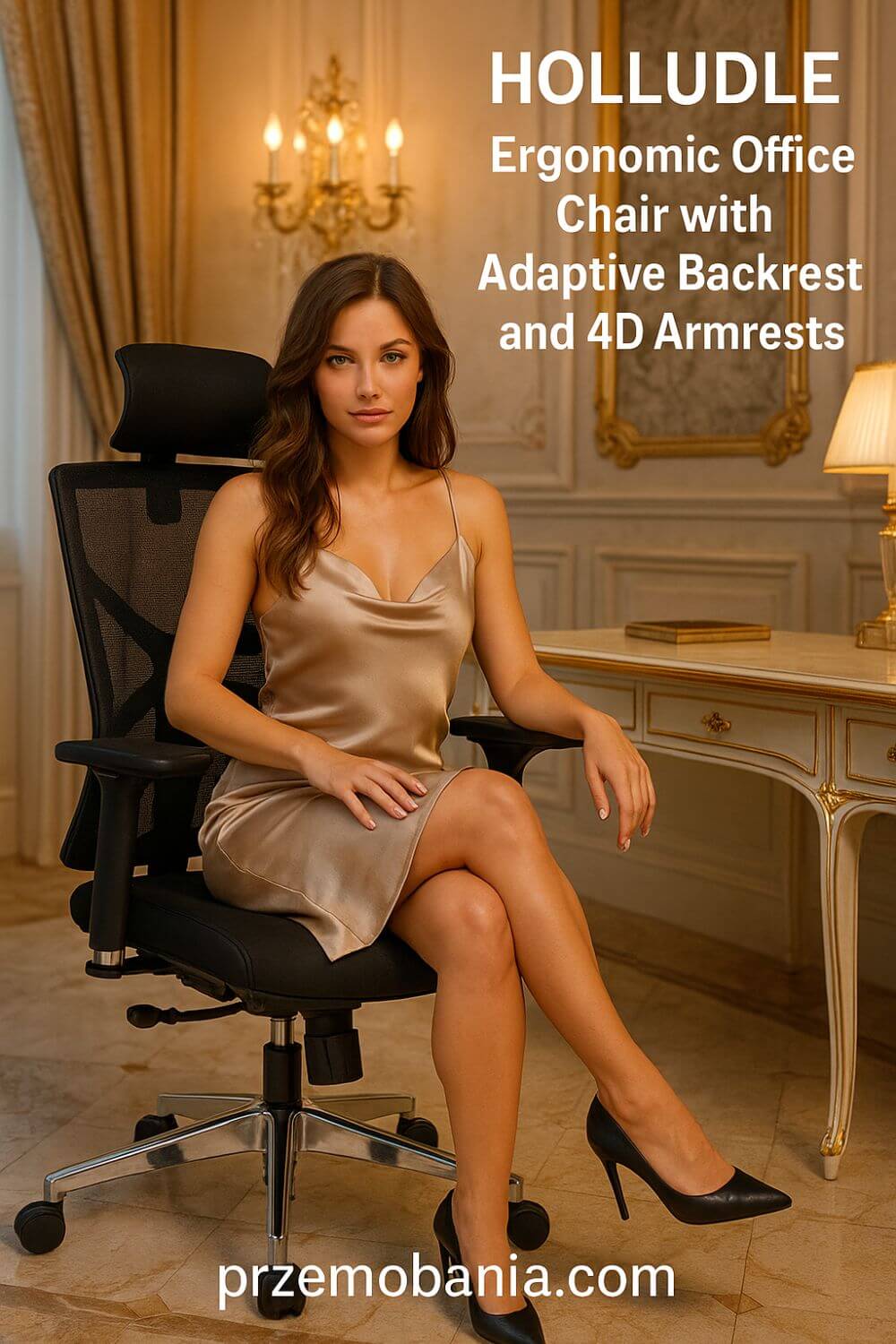
How the HOLLUDLE Ergonomic Office Chair Works for Real-Life Workdays?
I start every morning with a 60-second reset: seat height so my hips sit a touch above my knees, feet planted, and backrest tension set to meet me, not push me. Then I check armrests under the elbows so my shoulders drop and my wrists stop fighting the keyboard.
On writing days, I nudge the seat depth forward a hair for thigh support and keep a gentle lumbar hug so my lower back stays quiet during deep focus. When I shift to reading or planning, I ease the recline and let my breathing stretch into that support instead of slumping.
If my wife is flaring, I lower the seat slightly and bring the backrest a notch more upright so she can anchor without bracing. Tiny changes like this protect energy, and energy is the currency of meaningful work from home.
Midday, I do a posture “micro-audit” – two breaths, a small lean back, wrists neutral, screen at eye level. It sounds fussy, but it’s how I turn a good chair into a calm, reliable co-worker that quietly removes friction instead of adding it.
How to Evaluate and Fine-Tune the HOLLUDLE Ergonomic Office Chair?
Specs look neat on paper, but your body tells the truth the moment you sit. That’s why I judge any ergonomic office chair by how it supports small movements across an entire workday, not by a single showroom pose.
Start with height so your hips sit just above your knees, then set tilt so the back follows your breath rather than trapping it. If circulation nags, shorten the seat depth until two fingers fit between the knee and the edge. For typing, bring armrests to the elbows; for reading, slide them back to open the chest.
My wife’s pain taught me that comfort isn’t a feature; it’s a survival skill. On flare days, we keep the back slightly more upright and let the lumbar hold the curve so she can concentrate without bracing.
Materials matter too. Breathable mesh, quiet hardware, and a stable base turn a comfy office chair into a long-haul partner. If your neck tightens, raise and angle the headrest until it meets the base of the skull, then forget it exists.
Only after those fundamentals feel right do I ask whether the HOLLUDLE ergonomic office chair also fits the room’s style and the way you work. Form should follow function, but when a stylish office chair blends into your space and disappears beneath your focus, you’ve found the best kind of office desk chair.

Seat Height & Depth: Your Daily Energy Regulator
Getting height right is about stacking joints so your body can forget about them. I start with hips a touch above knees, feet planted, then slide the seat so two fingers fit between the knee and the front edge. That tiny gap protects circulation and keeps the thighs relaxed.
If you’re petite, shorten the depth until your lower back can rest without reaching; if you’re tall, lengthen for full thigh support without cutting off the calves. You’ll feel the difference around hour two when your legs stay awake and your focus doesn’t fray.
On flare days in our home, I lower the height a notch and bring the seat slightly forward to reduce hip pressure. Those micro-adjustments conserve energy, and energy is the currency of deep work. The goal isn’t a rigid pose; it’s a neutral starting point that you can return to after every task shift. When seat height and depth are dialed, the rest of the chair finally has permission to help.
Lumbar & Backrest: Continuous Contact, Not Constant Effort
Real lumbar support feels like a steady hand at your lower back, not a shove. I raise it until it meets the natural curve, then tune firmness so it disappears from awareness. If you notice it constantly, it’s either too high, too low, or too aggressive.
Set tilt tension so the back follows your breath forward when you lean into typing, supportive when you exhale into reading. That continuity keeps your spine nourished without micromanaging posture.
For my wife, an upright back with gentle lumbar lets her concentrate without bracing, and on good days, we open the recline to encourage micro-movements. Listen for quiet: no clunks, no squeaks, no wobble. When the backrest stays present through every angle, your body stops negotiating with the chair and gets back to what matters, writing and thinking.
Armrests & Shoulders: The Keyboard-to-Body Bridge
Armrests are where shoulder relief actually happens. I bring them to elbow height so the shoulders drop, then slide them in or out until forearms are fully supported without crowding the torso. If your wrists ache, the rests are usually a touch too low or too far back.
For long typing runs, I angle the caps slightly to match my natural wrist line; for reading or calls, I move them back to open the chest. Two minutes of tweaking buys hours of comfort.
If you use multiple devices, set a “typing” position and a “reading” position you can switch between in seconds. The right armrest geometry turns an office desk chair into a sustainable workstation by removing the tiny compensations that drain you by mid-afternoon. When elbows feel held, your neck stops guarding, and your focus stops leaking away.
Headrest & Neck: Support That Vanishes When You’re Flowing
Neck support should meet you, not move you. I lift the headrest until it kisses the base of the skull, then tilt it just enough to share the load during reading, planning, or calls. If your chin tucks or your head pushes forward, reset your cervical curve. Want gentle contact, not a shove.
For screen work, I often forget the headrest exists, and that’s the point. It should help when you lean back, and disappear when you lean in.
My wife’s pain taught me that a calm neck changes the whole day. On tougher mornings, we raise the headrest a touch to reduce guarding; later, when energy returns, we lower it so posture can carry itself again. Treat the headrest like a gear shift for your nervous system: present when you need anchoring, invisible when flow takes over.
Materials, Base & Movement: The Feel of Long-Haul Quality
Breathable mesh or well-ventilated upholstery manages heat before it turns into restlessness. I look for resilient foam that supports “on” the seat rather than sinking “in,” and a mesh back that flexes quietly as you move. If you run warm, airflow isn’t a luxury; it’s stamina.
A rigid column and sturdy five-star base prevent the undermining sway you notice by week three. Quality casters glide on hard floors and low-pile rugs without grabbing cables or lip edges, so movement feels intentional, not risky.
I listen for silence: no squeaks when shifting, no clicks when reclining. When hardware is quiet and the ride is smooth, your body trusts the chair, and your mind goes deep. That is what separates a cozy, stylish office chair from a truly most comfortable office chair—the kind you forget about because it simply works all day.
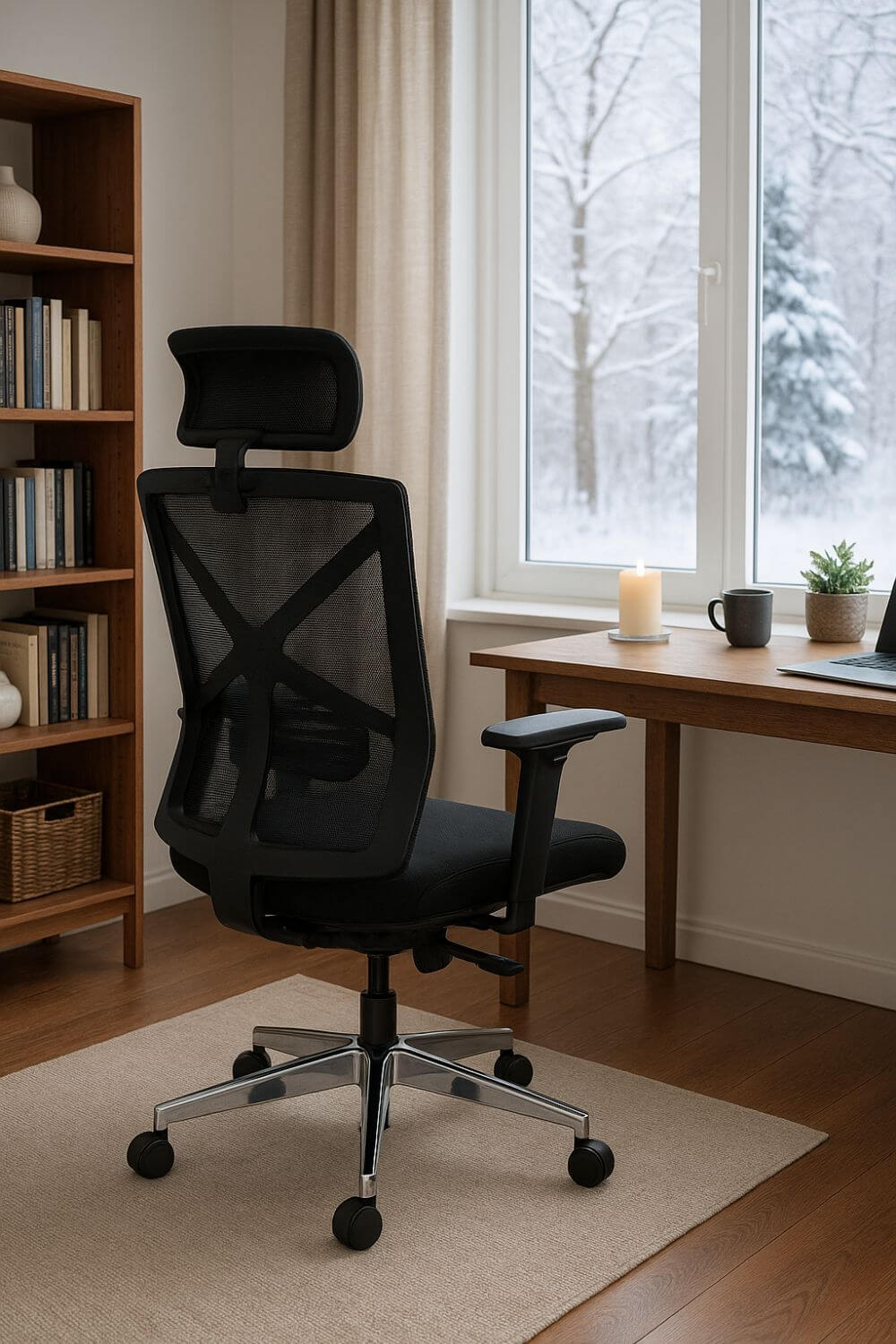
Design a Calm Workspace with the HOLLUDLE Ergonomic Office Chair
When I picture my best workdays, they always start with a chair that greets my body kindly and a room that feels like a deep, steady breath. That’s why I built the space around the chair, not the other way around. A supportive seat anchors everything from desk height to lighting, so the room serves your focus instead of stealing it.
Working from home taught me that comfort isn’t indulgence; it’s fuel. I keep the desk just above elbow height, set a warm desk lamp at the side to soften glare, and let natural light fall behind my monitor to avoid squinting. The palette stays calm, woods, soft textiles, and one textured rug under the base to cue my brain that this is a safe place to create.
Home decor is my language for care. I add one living plant at shoulder height to lift the eye line and a pin board for quick wins and gentle reminders. Cable clips and a slim tray keep surfaces clear so my mind doesn’t trip over clutter when the ideas finally arrive.
Blogging thrives in this kind of order. I block tasks – writing, editing, planning – and let posture shift with each mode, using the chair’s adjustments as small rituals that reset my energy. A timer for movement breaks sits next to a water carafe; when it chimes, I roll back, stand, stretch, and return refreshed.
Little habits make big days. I start with a two-minute setup check, end with a sixty-second reset, and leave the space tidy so tomorrow’s version of me walks in grateful. When your workspace holds you physically and emotionally, you stop bargaining with discomfort and start doing your best work.
Conclusion on the HOLLUDLE Ergonomic Office Chair
In the end, the right chair should feel like a quiet promise: less fighting with your body, more space for your mind. A home office only works if your seat works first, because posture is the foundation your focus rests on. When support follows you instead of fixing you in place, you stop bleeding energy and start doing the work that actually matters.
What convinced me wasn’t a spec sheet; it was how my days changed. I could write longer without the fidgeting that breaks thought. My wife could stay present without bracing through pain spikes. We both noticed the subtle confidence that comes from being held shoulders lower, breath deeper, attention steadier. That is what I want for you: fewer distractions, more ease.
The best chairs make adjustments feel like a ritual rather than a chore. Height to lift the hips, depth to free the knees, armrests that meet your elbows instead of asking you to reach. A back that keeps gentle contact as you lean in to type or lean back to think. A headrest that’s there when you need it, invisible when you don’t. These are small decisions that add up to large days.
Of course, beauty matters too. When design is calm, clean lines, breathable materials, quiet hardware, your space looks like a place you want to enter. I’ve learned to build the room around the seat: desk height that respects your shoulders, lighting that soothes your eyes, cable management that clears your field of view.
Comfort is not just how a chair feels; it’s how your whole environment behaves.
If you choose this model, give it a week of thoughtful tweaking. Set a morning minute to tune height, depth, and tilt tension; set a midday check to release the shoulders and widen the breath. Notice what changes in your mood after lunch, and respond. Great ergonomics are not rigid rules; they are responsive habits that keep you steady across changing tasks.
Some days will still be heavy. On those days, let the seat be a soft ally and shorten your list. Protect circulation, protect your neck, protect your attention. The goal is not perfection; it is momentum without self-betrayal. When your chair supports that, the rest of your system—your routines, your projects, your courage rises to meet you.
For me, the HOLLUDLE ergonomic office chair earns a place because it makes good days more frequent and hard days more survivable. If your body has been asking for relief and your work has been asking for consistency, bringing both to the same seat is a wise, long-term gift to yourself.
A final thought: invest once, adjust often, and let the benefits compound. A supportive seat will not write your book, code your app, or lead your team, but it will remove the friction that keeps you from showing up fully. Over months, that removal becomes measurable progress: fewer cut-short sessions, steadier mood, clearer thinking. And that is the quiet edge that turns ambition into outcomes you can touch.
Choose a chair that frees your body so your mind can do its best work. Start with small adjustments, build calm rituals, and let comfort compound into momentum. Your work, your health, your home, all of it improves when the seat beneath you finally supports who you’re becoming. Give yourself that gift today, and notice how much easier focus, patience, and progress can feel.
Have a question or your own experience with this chair? Leave a comment below and grab the FREE chapter of “The Cozy Home Office Blueprint” to keep building a calmer, more supportive workspace.


Przemo Bania is a blogger and writer who helps people get out of their traditional jobs to start a blogging career. Przemo also runs a health blog advocating for endometriosis and fibromyalgia…