
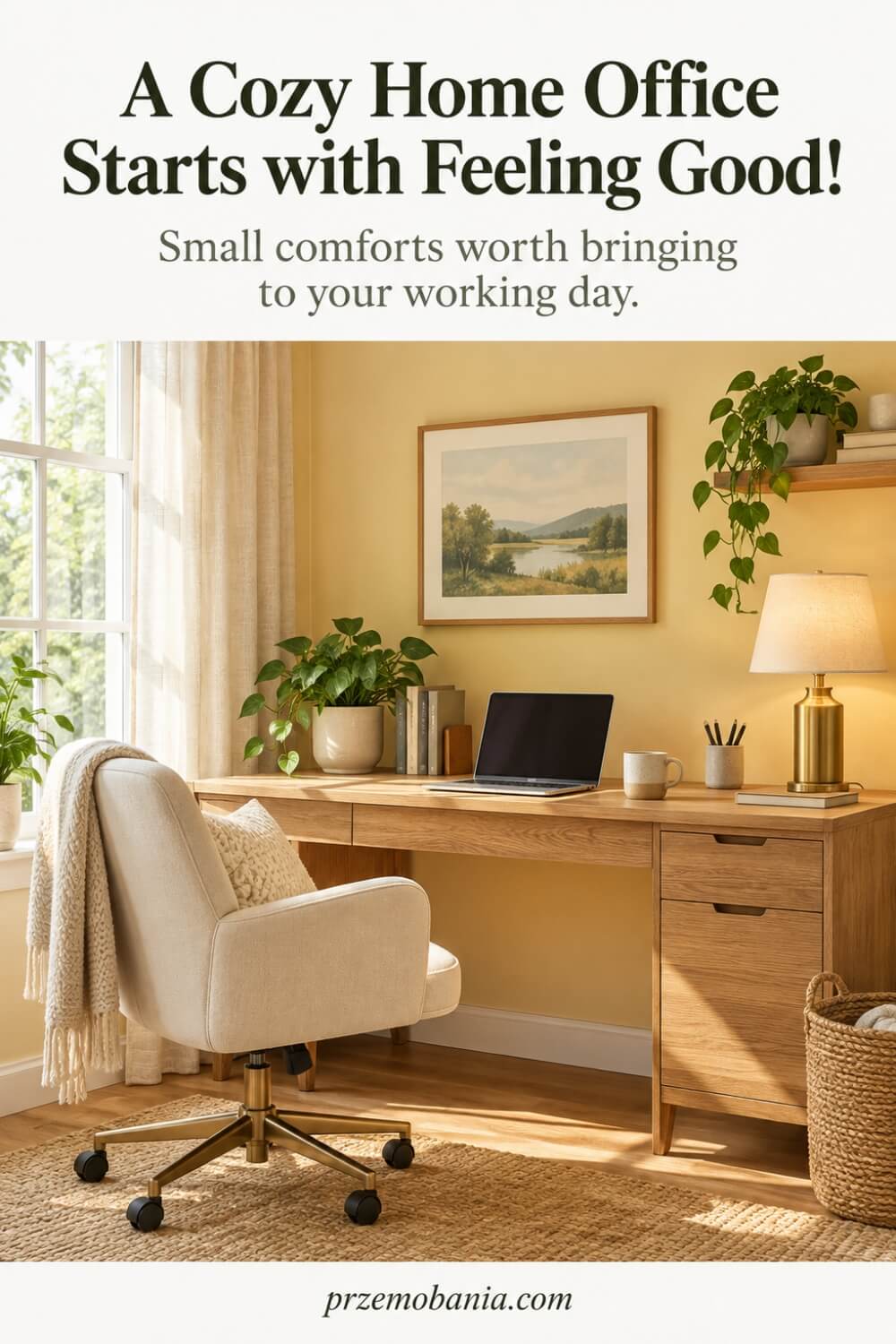
Cozy Home Office
What makes one workspace feel welcoming while another leaves you counting the minutes until you can leave? A cozy home office brings together the practical comfort you need to work and the personal touches that make you feel at home. If your desk looks acceptable but the room still feels cold, harsh or strangely uninviting, you are not imagining the difference.
A cozy home office combines comfortable working furniture, controllable lighting, pleasing textures and personal details to create an inviting workspace. Its warmth comes from how the room feels and functions, with clear work surfaces, manageable sound and enough light for the tasks you need to do.
My mum sparked my love of interiors long before my wife’s chronic illness changed our lives, and helping her create a more supportive workspace shaped the passionate blogger I am today, working from my own cosy office and building an income from home while continuing to learn from the sources listed at the bottom.
A room can feel warm without containing a single beige cushion. Equally, a beautiful photograph can hide an uncomfortable chair, distracting reflections and a desk that feels unpleasant beneath your arms.
That is why I like to judge atmosphere from the seat you will actually use. The most worthwhile changes often become obvious there, rather than from the doorway.
For the wider decisions that sit beneath this comfortable atmosphere, my guide to planning a home workspace that supports you connects furniture, equipment and everyday working needs.
Create a Cozy Home Office You Enjoy Using
Begin by describing what feels uncomfortable in your room. Be specific about the moment you notice it. “The room feels wrong” gives you less to work with than “the ceiling light shines straight into my eyes”.
Sit at your desk before buying anything decorative. Notice the surfaces you touch and the sounds you hear. Look at what occupies your view when you pause between tasks.
Your cozy home office should answer those observations. It does not need to resemble a particular photograph. Your own preferences deserve more attention than a fashionable colour palette.
Choose three words that describe the atmosphere you want. Mine might be welcoming, grounded and practical. Yours could be bright, quiet and personal.
Use those words to assess proposed additions. A beautiful object still needs somewhere sensible to live. An improvement should make the room easier to enjoy without creating another daily irritation.
Helping my wife work from home made comfort feel much more specific to me. A room needed to feel manageable on an ordinary difficult day, not merely attractive when everything was going well.
These eight choices help you build that feeling:
- Soften the Light Around Your Desk
- Choose Textures You Enjoy Touching
- Give Your Eyes Somewhere Restful
- Make Your Chair Feel Welcoming
- Bring Meaning into Personal Details
- Keep Warmth Comfortable and Adjustable
- Listen to the Room Around You
- Create a Small Place to Pause

Soften the Light Around Your Desk
I would start by separating the light that helps you work from the light that makes the room inviting. A desk lamp can illuminate your notebook, while a shaded lamp elsewhere adds a gentler background glow. Neither needs to fight with an exposed bulb directly in your field of view.
Try the arrangement while reading an actual page and looking at your screen. Move the lamp if it creates a reflection or puts your writing hand between the light and the paper. A cosy atmosphere should still let you see comfortably.
Before replacing fittings, experiment with position and the controls you already have. Check that any dimmable lamp and bulb are compatible. The useful result is a room you can adjust, with enough light for the task and a pleasant surrounding atmosphere, rather than a permanently dim scene designed only for photographs.
Choose Textures You Enjoy Touching
A material can look inviting and still irritate you when you touch it. Run your hand over a proposed desk mat, chair fabric or armrest before choosing it where possible. I would think first about the surfaces you meet repeatedly, because those small points of contact become part of every working day.
Keep texture away from places where it interferes with a task. A heavily woven mat may be lovely beneath a lamp but frustrating beneath paper when you write. A fluffy throw can also catch under chair wheels if it hangs too low.
You can introduce softness through curtains, an upholstered seat or a washable cushion without covering every surface. Choose a few textures that feel pleasant together and are manageable to clean. The point is to make the room more comfortable to use, not to give yourself a collection of delicate objects you are afraid to touch.
Give Your Eyes Somewhere Restful
Look beyond your screen and notice what meets your eyes. A crowded noticeboard, exposed packaging or an overfilled shelf can make the room feel busier than you intended. I would begin with this seated view instead of trying to restyle every corner at once.
Create one calmer area using what you already own. You might leave part of a shelf empty, move a stack of supplies behind a door or hang one picture at a comfortable viewing height. This is an invitation to simplify your view, rather than a rule that every working surface must be empty.
Keep anything genuinely useful where you can find it. Your current notes may belong in sight, while paperwork for next month can live elsewhere. A room can look lived in and still feel settled. Judge the result by whether the view feels pleasant to you during a normal pause, not by how closely it resembles a staged interior.
Make Your Chair Feel Welcoming
A chair needs to work for your body before it works for the photograph. I would keep the adjustments and support you need, then consider how its colour or upholstery sits within the room. You can soften the surrounding space without replacing a useful chair with a decorative one that makes working harder.
Be cautious about adding thick cushions automatically. They change how you sit and may alter the relationship between your arms, desk and backrest. Try any addition during real work and remove it if you find yourself perching, sliding or struggling to reach the controls.
A neatly folded throw on a nearby chair can provide visual softness without covering your working seat. If you do use one while seated, keep it clear of moving parts and the floor. Comfort comes from the whole experience of sitting down, working and standing again, rather than the amount of padding visible in the room.
Bring Meaning into Personal Details
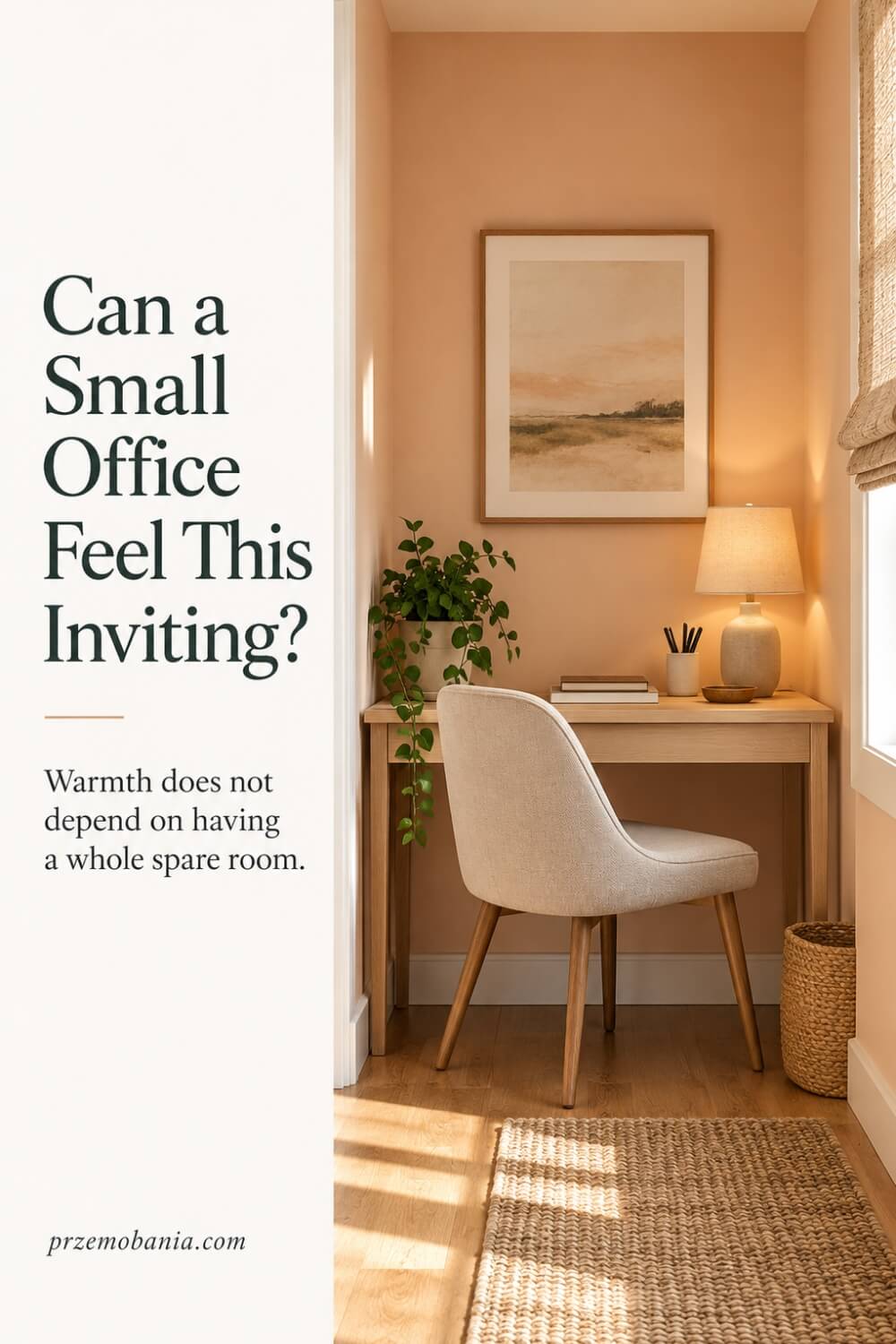
I prefer a small number of objects that mean something to you over a shelf assembled only because the colours match. A photograph, a piece of pottery or a book you often return to can make your office feel connected to your life. You do not need to explain its significance to anyone else.
Choose the location as carefully as the object. A treasured item may belong where you can see it without having to move it whenever you open a notebook. Keep fragile pieces away from the edge of a busy desk or the sweep of a monitor arm.
If you have many things you love, rotate them rather than displaying everything together. Put a few aside and enjoy changing the selection occasionally. This gives your favourites room to be noticed and keeps the room personal without turning the work surface into a display shelf that leaves no space for your actual work.
Keep Warmth Comfortable and Adjustable
A cosy room does not have to be a hot room. Notice whether you feel cold at floor level, uncomfortable beside a sunny window or too warm once your equipment has been running. I would describe those situations separately before deciding that the whole room needs more heat.
Start with practical controls already available, such as suitable clothing, window coverings and the room’s heating settings. Keep ventilation openings and equipment vents clear. If you use portable heating, follow its instructions and maintain the specified clearance from furniture and textiles.
Think about easy adjustments rather than one fixed setting that must suit the entire day. A light layer within reach can be more useful than decorating around a permanently heavy blanket. Your aim is a comfortable working environment that responds to you, without letting the desire for a snug appearance conceal overheating, stale air or an awkward draught.
Listen to the Room Around You
Spend a few minutes listening before deciding what would make the room feel quieter. The problem might be a rattling object, a loud printer or speech from another room. I would deal with an identifiable source first rather than assume a new rug will solve every sound problem.
Textiles can change the sound of a room, but ordinary curtains and cushions should not be mistaken for soundproofing. If noise is a major concern, the source, gaps and building construction all matter. For a modest improvement, begin with the things you can move or adjust easily.
Try working with background music only if you actually enjoy it during the task. Silence may suit writing, while gentle music may suit repetitive administration. Keep the choice personal and reversible. An atmosphere that feels comforting during a quiet morning can become distracting during a call, so allow the room to support more than one kind of sound environment.
Create a Small Place to Pause
A pause does not require a second seating area or a large room. It might be a clear window ledge where you can look outside, or a comfortable chair elsewhere in your home. I would avoid squeezing another piece of furniture into the office if it makes the working area harder to use.
Decide what the pause is for before decorating it. Reading away from the screen, having a drink and taking a brief change of position need slightly different arrangements. Keep the surface simple enough that you can use it without clearing a stack of things first.
If your office is small, let the pause happen outside it. That still supports a comfortable working routine and can preserve valuable space around your desk. The important detail is permission to step away, not ownership of a particular armchair. A room becomes more welcoming when it supports ordinary breaks as well as concentrated work.

Understand What a Cozy Home Office Cannot Fix
An inviting room can improve the setting for your work. It cannot make an unreasonable workload reasonable. I would keep that distinction clear when judging a makeover.
A cozy home office should not become another standard you feel obliged to meet. There will be days when the desk is busy. There will also be days when finishing the necessary work matters more than arranging a shelf.
My wife’s experience has made me careful about promises attached to interiors. A more suitable space can remove an avoidable irritation. It does not erase illness or guarantee an easy day.
That understanding has changed what I consider a successful improvement. I look for something useful and repeatable. A change that quietly helps during an ordinary afternoon matters more to me than a dramatic photograph.

Make a Cozy Home Office Easy to Live With
Every decorative choice brings a small practical commitment. Fabrics need cleaning. Plants need appropriate care.
The best cozy home office for you is one you can maintain without resentment. Look at how an item behaves after the first week. A soft surface that constantly sheds may lose its appeal quickly.
Think about where dust collects. Consider how easily a lampshade can be cleaned. Check care labels before choosing textiles for frequently used areas.
I would also notice how many things need moving before basic cleaning. A crowded desk makes a simple wipe more complicated. A few well-placed objects can still create warmth.
Avoid buying several similar additions at once. Try one and see whether you enjoy living with it. That gives you useful evidence before spending more.
My wife’s limited energy has made me appreciate spaces that ask less of the person using them. For my own blogging, I also want a pleasant office that leaves me time to write, rather than demanding constant attention.
These four habits help comfort last:
- Choose Fabrics with Manageable Care
- Place Greenery Where It Can Thrive
- Keep Comfort Controls Within Reach
- Leave Space for Everyday Imperfection
Choose Fabrics with Manageable Care
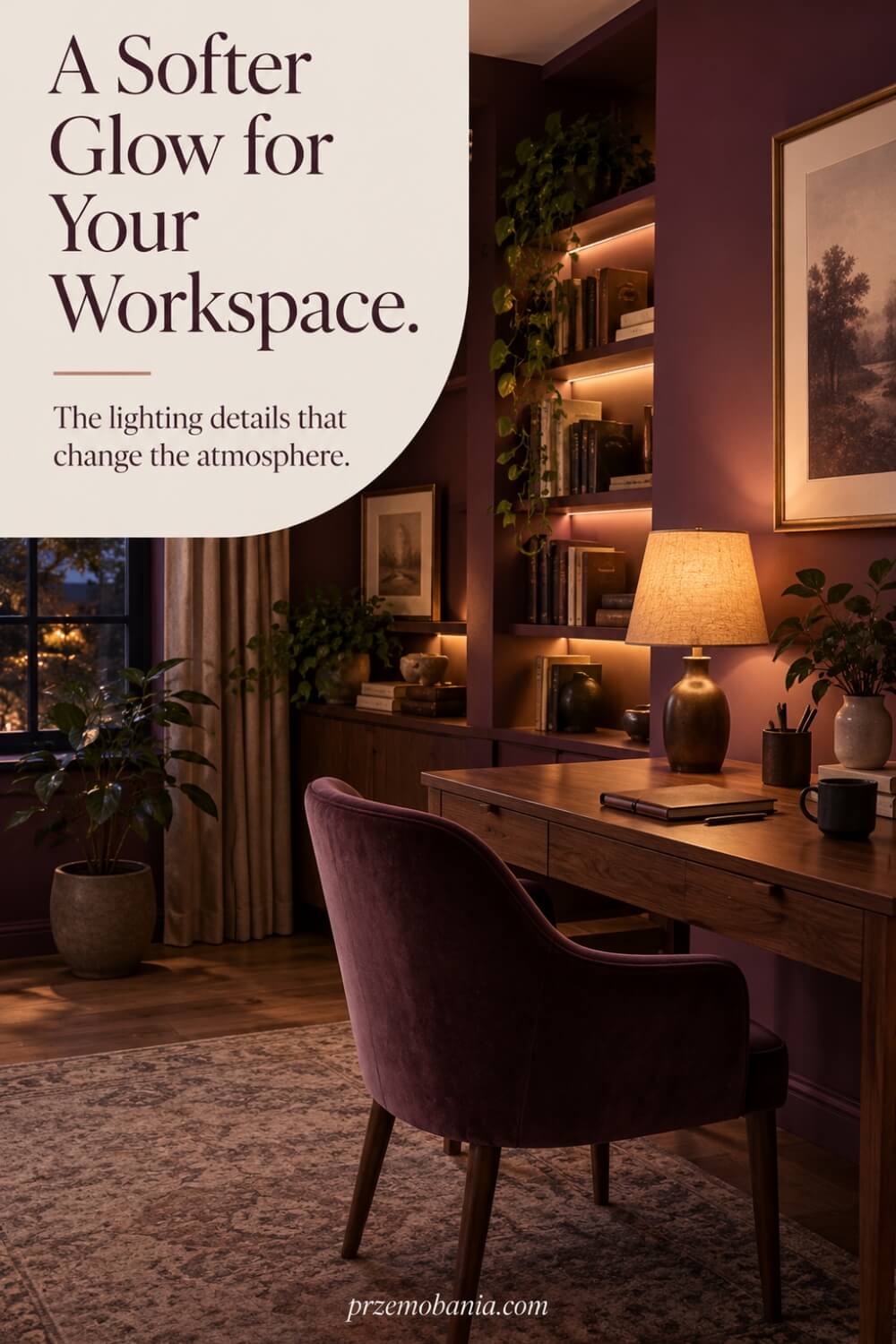
Before bringing a textile into the office, read how it should be cleaned and think about whether that suits your routine. A removable washable cover may be easier for you than something requiring specialist care. I would also check whether the colour or texture makes ordinary marks more noticeable than you expect.
Consider the specific location. A rug beneath a rolling chair needs to work with that movement, while a cushion on an occasional seat has a different job. Loose edges and unstable layers can turn an attractive addition into an everyday nuisance.
You do not need every textile to be identical or particularly expensive. You need it to suit the way the room is used. Start with one piece that adds comfort in a clear way, then see how it behaves over time. That small trial is more useful than committing to a complete collection before discovering that its care requirements do not fit your life.
Place Greenery Where It Can Thrive
My mum’s love of plants is part of why greenery feels so familiar to me. Still, I would choose a plant for the actual conditions in your room, rather than place one in a dark corner because a photograph suggests it belongs there. Light, access for watering and the plant’s mature size all deserve thought.
Protect the surface beneath the pot and keep water away from electrical equipment. Place the plant where you can tend it without reaching across your monitor. If you share your home with pets or young children, check the suitability of the particular species before buying.
A plant is an optional source of enjoyment, not a requirement for a welcoming office. A view of outdoor greenery, a botanical picture or no greenery at all may suit you better. I would rather see you enjoy one manageable plant than feel guilty about several that never had suitable conditions in the first place.
Keep Comfort Controls Within Reach
An adjustable room is only convenient if using its controls is straightforward. Notice what happens when you want to change the light, open a blind or switch off a distracting device. I would look for repeated inconveniences that are easy to overlook because you have grown used to them.
Arrange the controls you use frequently where you can reach them comfortably. That might mean repositioning a lamp, choosing a fitting with an accessible switch or moving an object that blocks a blind cord. Follow the product’s installation and safety instructions rather than improvising an unsafe extension.
Test the arrangement at the end of a tiring day, when small obstacles tend to feel larger. You should not need to crawl behind a desk merely to create a gentler atmosphere. The useful improvement is often unglamorous, but it makes the room easier to enjoy whenever your needs change during the working day.
Leave Space for Everyday Imperfection
A room that only feels welcoming when every object is perfectly arranged can become tiring to maintain. I would deliberately leave space for a mug, an open notebook and the materials of your current task. Those things are evidence of use, not proof that your design has failed.
Choose a small landing place for the items that arrive during the day. It might be a tray or a clear corner of a shelf, provided it does not become a permanent hiding place for everything. The aim is to prevent a temporary interruption from taking over the entire desk.
At the end of work, restore enough order to make tomorrow’s start comfortable. You do not need to recreate a showroom. Keep the parts of the room that genuinely help you feel settled and let the rest remain human. A welcoming workspace should make ordinary life easier to accommodate, including the days when you have very little energy left for tidying.
Sharing a Cozy Home Office Without Losing Comfort
Two people can experience the same room differently. One may enjoy a warm lamp. Another may need a brighter working area.
A shared cozy home office needs room for those differences. Separate task lighting can help each person make a local adjustment. Headphones may be useful for chosen audio if they suit the work and the wearer.
My wife’s needs have encouraged me to ask before assuming that my preference should set the atmosphere. That has also made me more aware of what helps me concentrate. We can care about each other’s comfort without pretending our needs are identical.
Discuss the recurring points of friction rather than guessing. Agree on simple adjustments that each person can make without rearranging the whole room.
Knowing When Your Cozy Home Office Is Working
Judge the result over several ordinary working days. Notice what you use. Notice what you keep moving out of the way.
A cozy home office should feel inviting without distracting you from its purpose. Ask whether the room is easier to settle into. Also ask whether leaving it at the end of work feels straightforward.
For my blogging, atmosphere matters most when it supports a sustainable routine. I want to enjoy the space without feeling that I must stay at the desk indefinitely. My wife’s experience reinforces the importance of a home that still feels like home after work.
Keep the changes that help. Remove the additions that look lovely but repeatedly make the day more awkward.
Conclusion on Cozy Home Office
Comfort begins with paying attention to your own experience of the room. You do not need to start with a shopping list, a fashionable palette or a complete redesign. Start with the place where you sit and ask what feels pleasant, what feels irritating and what you keep adjusting. Those observations give you a much more useful direction than trying to reproduce every detail of a photograph.
A cozy home office grows from several modest choices working together. You can see the task clearly, touch surfaces you enjoy, adjust the atmosphere and keep a few meaningful things nearby. None of those choices needs to be dramatic. Their value comes from how consistently they support the work and the person doing it, including on days when your energy or patience is limited.
I would resist the idea that more softness automatically means more comfort. A thick rug may obstruct a chair, a decorative cushion may change your sitting position, and another lamp may create a reflection. That does not make those objects wrong. It simply means they need to earn their place through use. Try them in the real room and allow yourself to change your mind.
My mum helped me notice how personal details can make a home feel welcoming. Supporting my wife gave that interest a more practical purpose. I began thinking about whether a space made ordinary actions easier, whether its atmosphere could be adjusted and whether maintaining it demanded too much. Those questions still influence the way I approach my own corner for writing and building my blogs.
Your room can reflect a different story. You may prefer bright colours, dark timber, very little decoration or shelves filled with things you love. The useful test is not whether someone else would call it cosy. It is whether you enjoy being there and can carry out your work without avoidable discomfort. A personal space does not need universal approval to be successful.
Make one change that addresses a clear irritation. Move the lamp, clear the view beside your screen or choose a textile that genuinely feels good to use. Live with that change before adding another. You will gradually learn which details matter to you and which are simply attractive ideas that belong in someone else’s room.
Keep the process kind to your time and energy. A welcoming office should not become a demanding project that is never allowed to look used. Leave room for your current work, ordinary breaks and the occasional untidy afternoon. Choose care requirements you can manage and make the controls you need easy to reach.
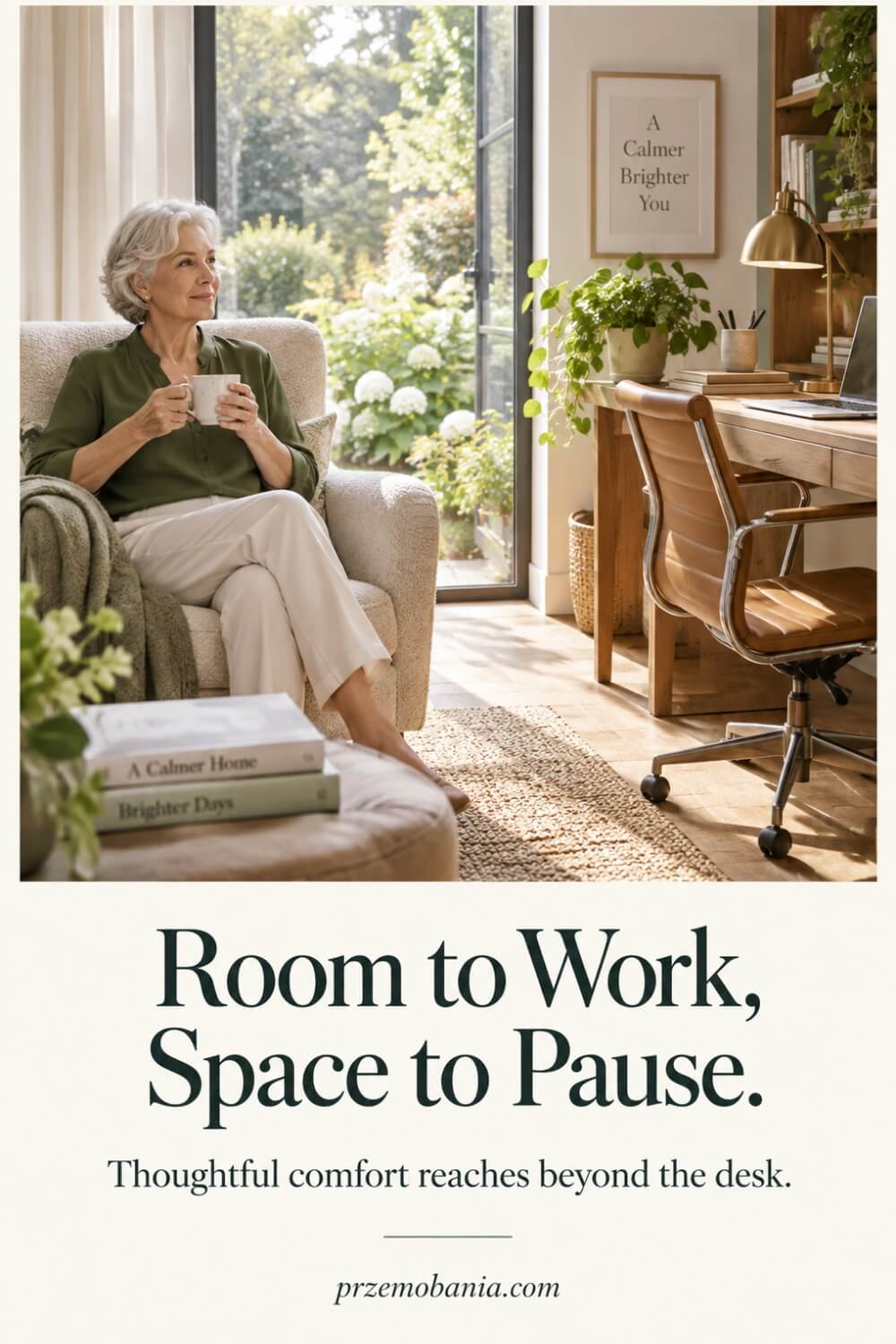
Most of all, let the room support your life beyond the desk. Enjoy the atmosphere while you work, then give yourself permission to leave it. The best result is a space you are pleased to return to because it feels useful, familiar and comfortable. That is a worthwhile improvement, even when it begins with something as small as changing where a lamp sits.
Start with the part of your workspace that feels least comfortable and make one thoughtful change. You can build warmth through light, texture and personal meaning without filling every surface. Give yourself time to discover what feels good in daily use, and let your office become welcoming in a way that suits your life.
Tell me what would make your workspace feel more welcoming in the comments, and take a look at the FREE chapter of my eBook at the bottom of this post for ideas you can try at your own pace.


Przemo Bania is a blogger and writer who helps people get out of their traditional jobs to start a blogging career. Przemo also runs a health blog advocating for endometriosis and fibromyalgia…
Related Questions You May Be Asking About Cozy Home Office
Can a minimalist office still feel cosy?
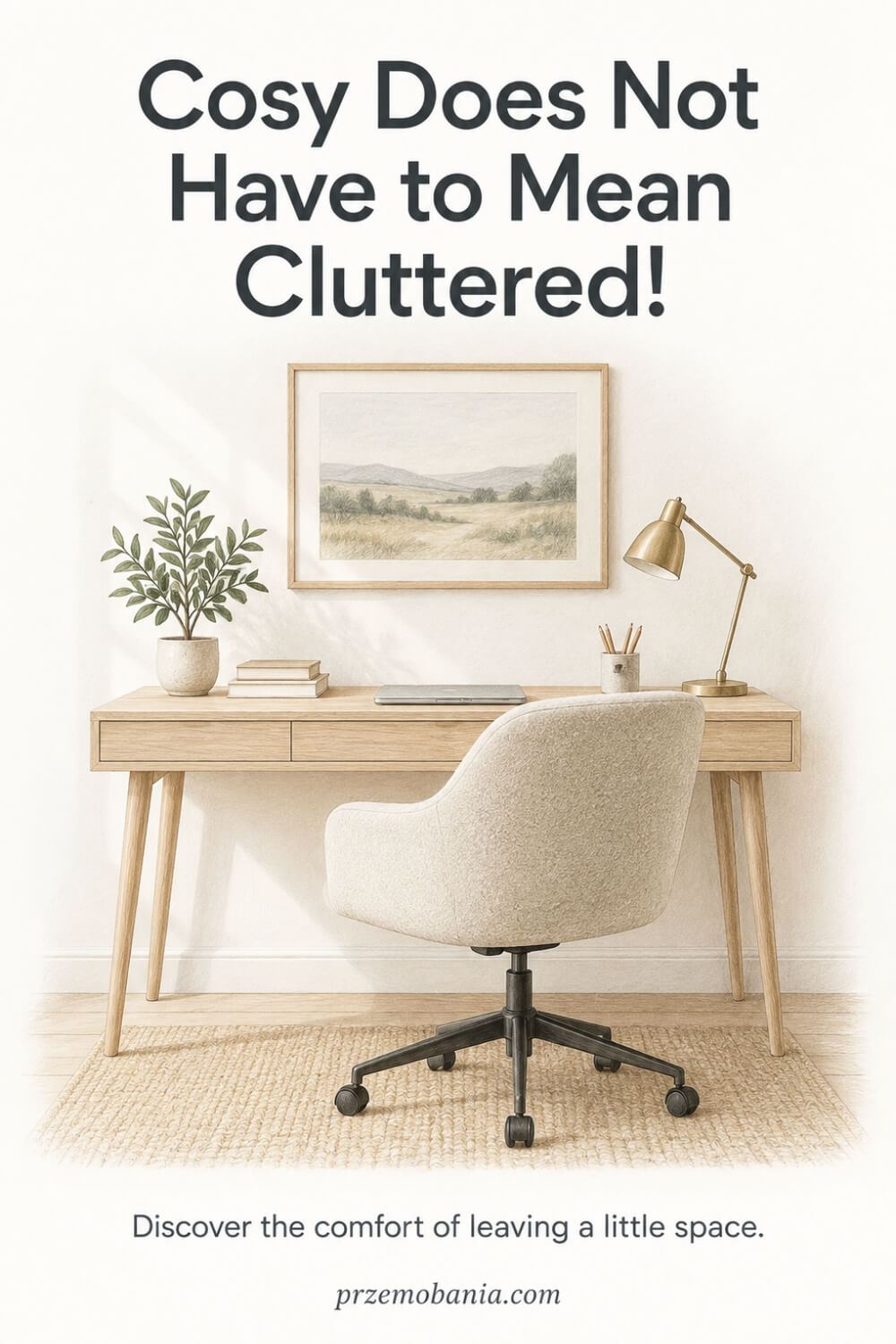
Yes, a restrained room can feel welcoming through comfortable furniture, pleasing materials and well-placed light. You do not need many decorative objects. Choose a few details you enjoy and leave enough clear space for work. Minimalism is most useful here when it reduces unwanted visual noise without removing everything that makes the room feel personal.
Does a cosy office need warm wall colours?
No, colour preference is personal, and cool colours can work with warm materials or inviting light. Judge a sample in your own room at different times rather than relying on its name. The relationship between the walls, furnishings and light matters more than following a rule that every surface must be beige, cream or brown.
How can I make a windowless workspace feel inviting?
Use controllable lighting that illuminates both the task and the surrounding room, then add a few personal details and pleasant materials. Avoid relying on one small decorative lamp. Pay attention to ventilation and take breaks elsewhere when possible. Decorative choices can improve the atmosphere, but they do not create natural daylight or replace suitable working conditions.
Are scented candles necessary for a cosy atmosphere?
No, fragrance is entirely optional and may be unwelcome to you or someone sharing the space. A lamp can provide a warm visual focal point without a flame. If you choose candles, follow fire-safety guidance and keep them away from paper, fabrics and equipment. Comfort should not depend on adding a scent you do not enjoy.
Can bright colours work in a cosy workspace?
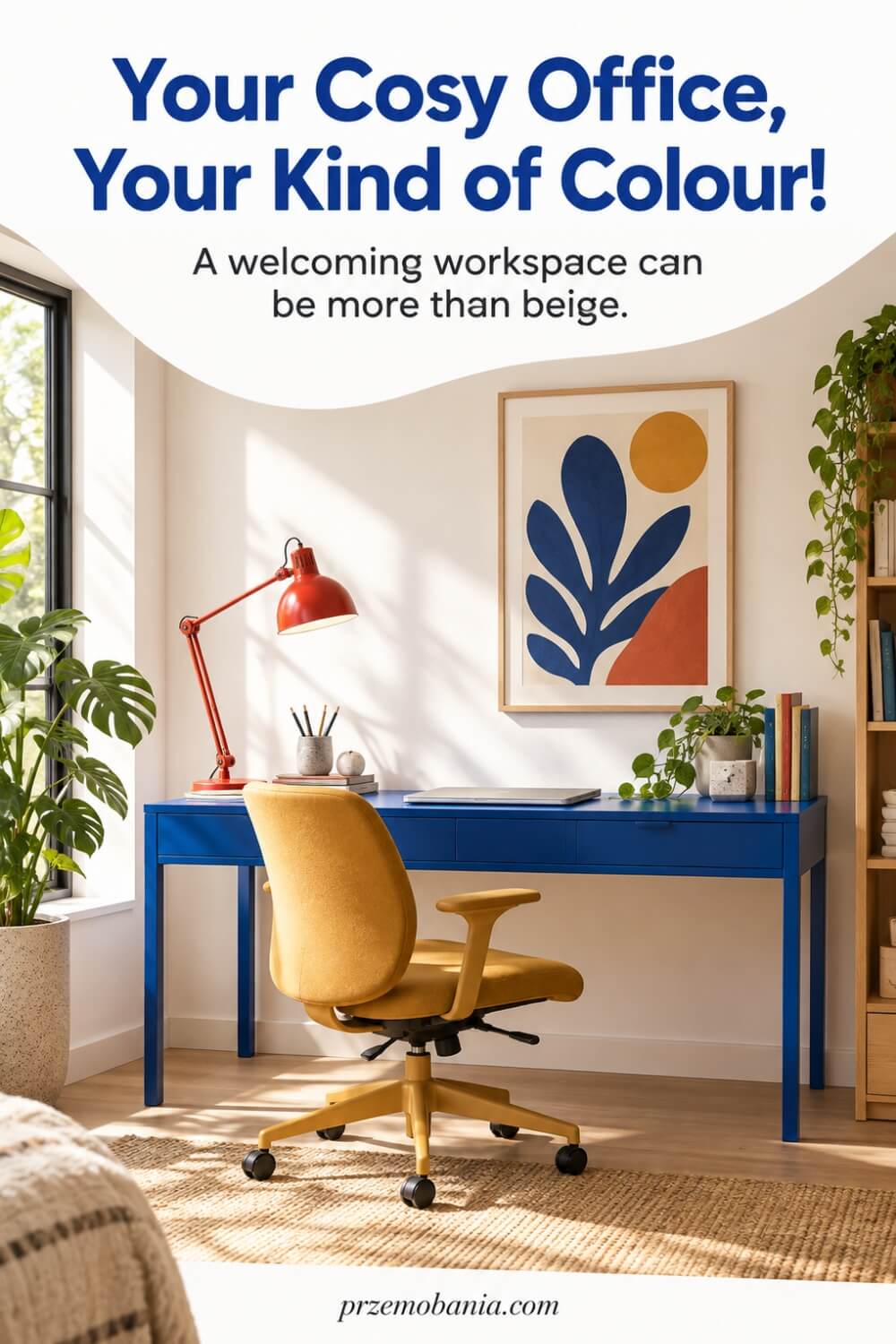
Yes, if you enjoy them and the overall arrangement feels comfortable to you. You might use a vivid chair, artwork or a painted shelf while keeping other surfaces quieter. Test the colour in your seated view and your usual lighting. There is no need to remove a favourite colour simply because softer palettes dominate inspiration photographs.
Cozy Home Office References
- https://www.hse.gov.uk/pubns/ck1.pdf
- https://www.ikea.com/gb/en/rooms/home-office/
- https://www.ikea.com/gb/en/rooms/home-office/how-to/6-bright-ideas-for-home-office-lighting-pub87dc3af0/
- https://www.ikea.com/gb/en/rooms/home-office/how-to/6-workspace-decor-ideas-to-boost-productivity-and-creativity-on-a-budget-pubc65c9a20/
