
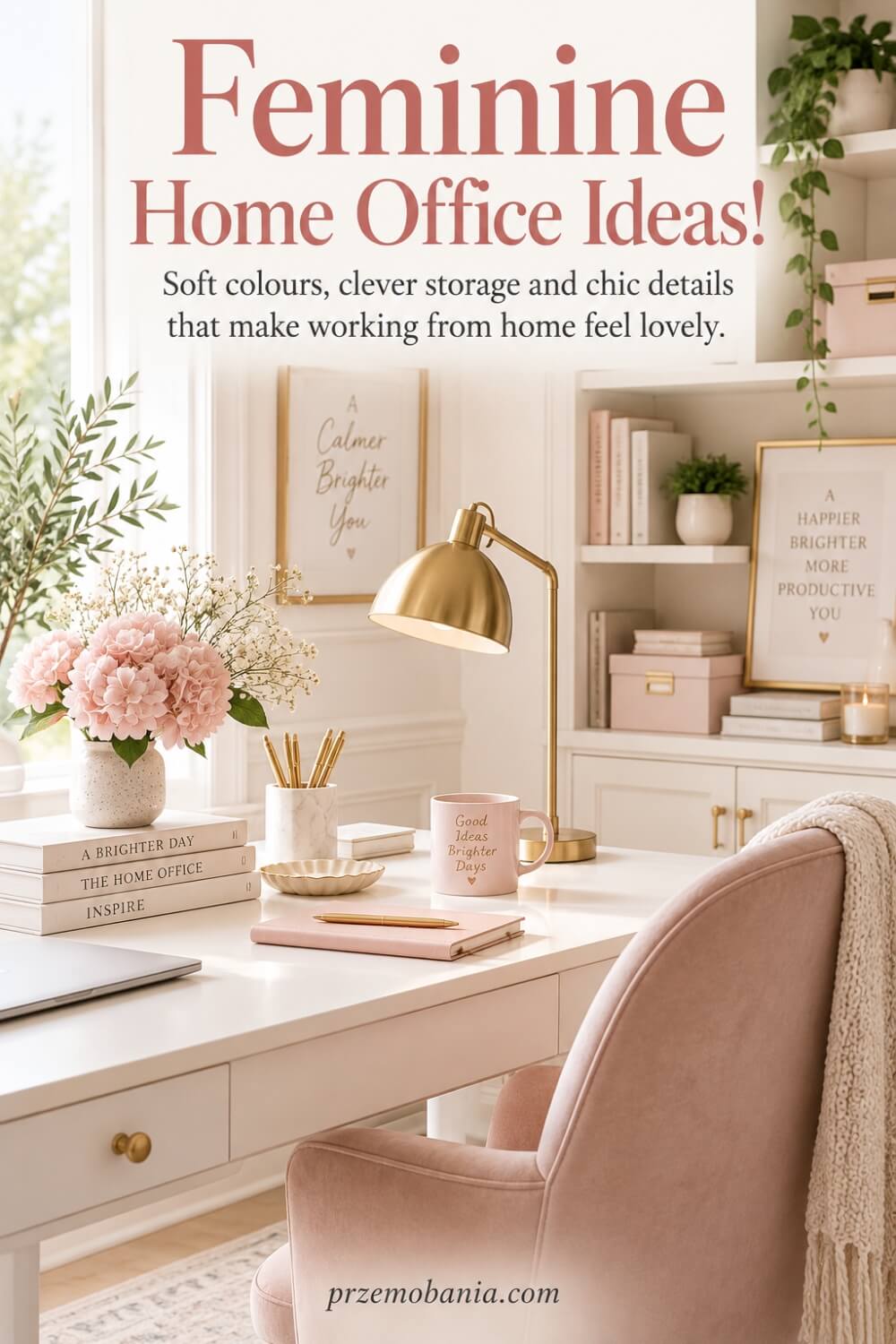
Feminine Home Office Ideas
Have you ever saved dozens of beautiful office pictures, then realised you still do not know what will actually make your own workspace feel feminine, comfortable and genuinely good to work in? A feminine home office works best when its softness is built around function, rather than when colour and accessories are expected to disguise an uncomfortable setup.
If you have been trying to choose between pretty and practical, especially when your energy, concentration or comfort can change from one day to the next, I want you to know that you do not have to sacrifice either.
A feminine home office blends practical workspace planning with a softer, personal design language through colour, texture, lighting, curves, storage and meaningful décor. It can be pink, neutral, green, blue, or dark and dramatic, as long as comfort, function and personality guide every choice.
I’m a passionate blogger whose life changed when my wife became chronically ill, and the love of interiors my mum planted in me as a child became something practical when I helped my wife shape a gentler workspace for working from home and built my own cosy office for writing and earning online; beyond what we have learned through living it, and beyond my lifelong love of home décor, I have linked the sources I used at the bottom of this article so you can see what keeps teaching me too.
Here is the part I find fascinating: the domestic study was historically a strongly male space, and the history of the study notes that social restrictions on gender roles kept it essentially male well into the twentieth century, before technology gradually helped turn that private study into the modern home office. That makes today’s feminine workspace far more interesting than simply taking a traditional office and adding pink accessories.
Current design inspiration stretches from blush and brass to powder blue, soft grey, warm timber, white cabinetry, dark green joinery, sculptural lighting, wallpaper and quiet neutral schemes, while the strongest ideas repeatedly combine personal style with useful storage, comfortable furniture and layered lighting.
But there is another layer photographs rarely show: UK workplace guidance still comes back to sensible screen height, reduced glare, enough leg space, comfortable posture and a workstation that suits the person using it, which is why I believe beauty should support your body rather than compete with it.
Before you choose the prettiest lamp, chair or wall colour, I would build the room around the practical foundations of home working, because layout, comfort and daily use decide whether your décor feels effortless or starts fighting you.
- How Do You Design a Feminine Home Office That Feels Beautiful and Works Properly?
- Why a Feminine Home Office Should Feel Personal, Not Perfect?
- How Can a Feminine Home Office Support Focus Without Losing Its Personality?
- How Can a Feminine Home Office Adapt to Changing Energy and Different Working Days?
- How Can a Feminine Home Office Stay Beautiful as Your Needs Change?
- Final Word on Feminine Home Office
How Do You Design a Feminine Home Office That Feels Beautiful and Works Properly?
The mistake I see most often is beginning with accessories when the room itself has not yet been asked the most important question: what do you actually need this workspace to do for you? A room can look gorgeous in a photograph and still frustrate you every morning because the desk is cramped, the chair is uncomfortable, cables take over the floor, or the light hits your screen at exactly the wrong angle.
I start with how the room must work before I decide how I want it to look, because good interior design should make your day easier rather than simply give you something attractive to photograph. Before choosing a colour palette, I look at the desk position, natural light, available storage, electrical sockets, screen placement and whether there is enough space to sit, move and reach the things I use regularly.
Current HSE guidance recommends arranging a workstation so your forearms can remain roughly horizontal, your eyes are around the height of the top of your screen, there is enough room beneath the desk for your legs, and glare or bright reflections are reduced where possible. That sounds technical, but in a real home it simply means that the prettiest desk in the shop is not a bargain if you spend eight hours twisting yourself around it.
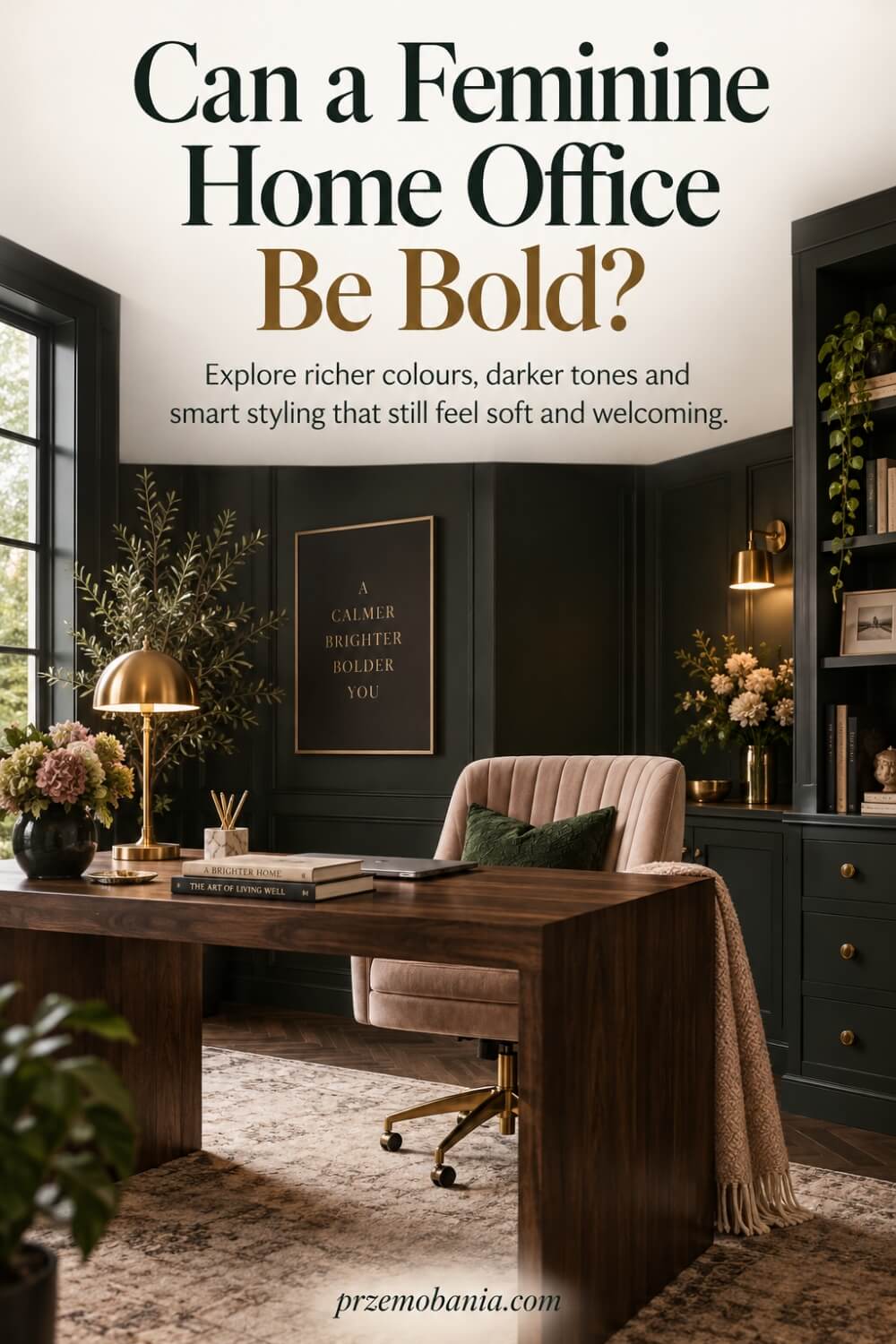
Then I decide what kind of feminine character the room should have, and this is where you have far more freedom than Pinterest sometimes makes you believe. A softer scheme can come from warm whites, cream, taupe, dusty rose, sage, muted blue, natural timber, brushed brass, curved furniture, tactile upholstery or even deep dramatic colours balanced with gentler details.
Layered lighting matters just as much because relying on one ceiling light can leave a workspace either harsh or gloomy, while combining natural light, general room lighting and a well-positioned task lamp gives you much more control throughout the day. Interior designers regularly use this combination of ambient and task lighting in home offices because the room has to remain comfortable for screen work while still feeling like part of a home.
I also think about the shape of furniture because curves can instantly soften a workspace without turning it into something sugary or childish. Homes & Gardens highlights curved seating, textured neutral backdrops, thoughtful window treatments and personal objects as ways of making a home office feel welcoming while keeping comfort and practical organisation at the centre of the room.
This is where storage becomes part of the design rather than something you desperately add once paperwork begins multiplying. Closed cupboards and drawers calm the visual noise, while a few open shelves give you somewhere to display books, artwork, ceramics or objects that mean something to you instead of filling every surface with decoration.
I treat texture almost like another colour because linen curtains, a wool rug, timber grain, an upholstered chair or a tactile wall finish can create warmth even when your palette is very restrained. The key is contrast: soft beside structured, decorative beside practical, open space beside carefully chosen detail, so the room feels interesting without constantly demanding your attention.
A feminine home office should ultimately feel like a room designed around the person who uses it, not a photograph designed around a trend.
I learned the importance of that distinction while helping my wife create a workspace she could return to even on days when simply getting through the working day demanded more from her than anyone looking through the window would ever know. I remember realising that the small things I once considered decorative, the supportive chair, the quiet corner, the softer light, the drawer that kept everything within reach, could become little acts of kindness when your body was already asking enough of you.
That is why the next part is not about buying more things; I want to walk you through the practical choices I would make with you if we were standing in your room together, trying to make it beautiful, useful and unmistakably yours.
- Start With Your Daily Routine
- Choose Your Desk Position
- Build A Softer Colour Palette
- Invest In Comfortable Seating
- Layer Your Workspace Lighting
- Plan Storage Before Decorating
- Add Texture Without Clutter
- Personalise With Meaningful Details
- Leave Space For Flexibility
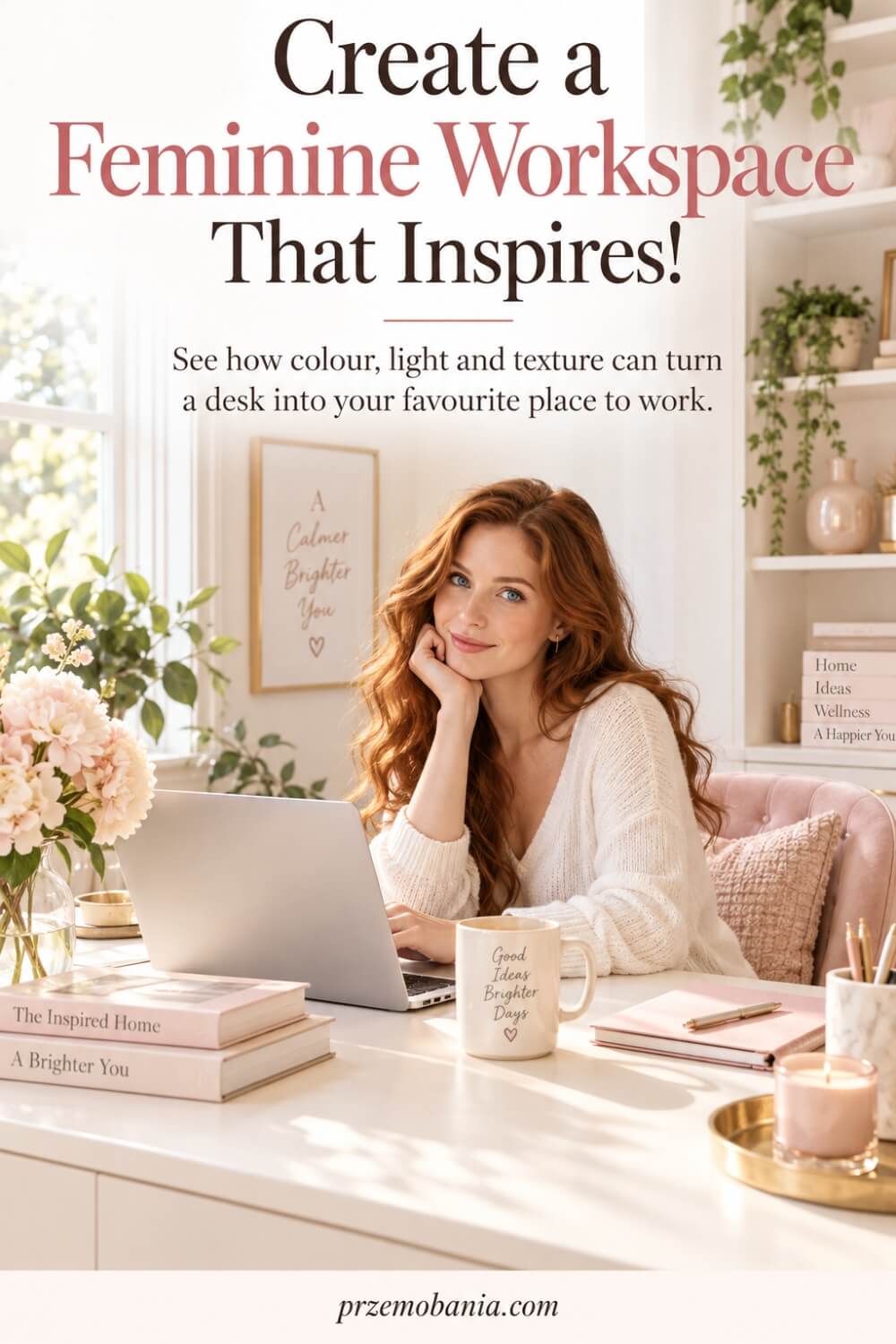
Start With Your Daily Routine
Before you move a desk or buy anything, pay attention to what your working day actually looks like. Do you spend hours typing, take frequent video calls, work with notebooks spread around you, or need somewhere to step away from the screen for ten quiet minutes? Your room should be built around those habits, because a beautiful setup becomes frustrating very quickly when it ignores the way you really work.
I learned to think this way while watching my wife manage working from home on days when her energy could change without warning. We needed her workspace to make ordinary tasks easier, not demand extra effort just to reach a charger, find paperwork or change position. I suggest writing down your five most common work activities and arranging the room around them first. Once those practical movements feel natural, you can add the softer colours, textures and details that make the space feel personal rather than staged.
Choose Your Desk Position
Desk position affects far more than the view you get while working. I look first at daylight, screen glare, traffic through the room, nearby sockets and whether the chair can move freely without hitting a wall or cabinet. Sitting directly in front of a bright window can make a screen difficult to see, while placing the screen with a window beside you often gives you better control over natural light.
I also like a desk position that gives the room a sense of calm rather than making you feel squeezed into whatever corner was left over. In a small space, that may mean using a shallow desk, floating surface or carefully measured alcove instead of forcing in oversized furniture. Take measurements before you shop, including chair clearance behind you. A graceful desk only earns its place if you can sit comfortably, stand up easily and work there without constantly adjusting the room around you.
Build A Softer Colour Palette
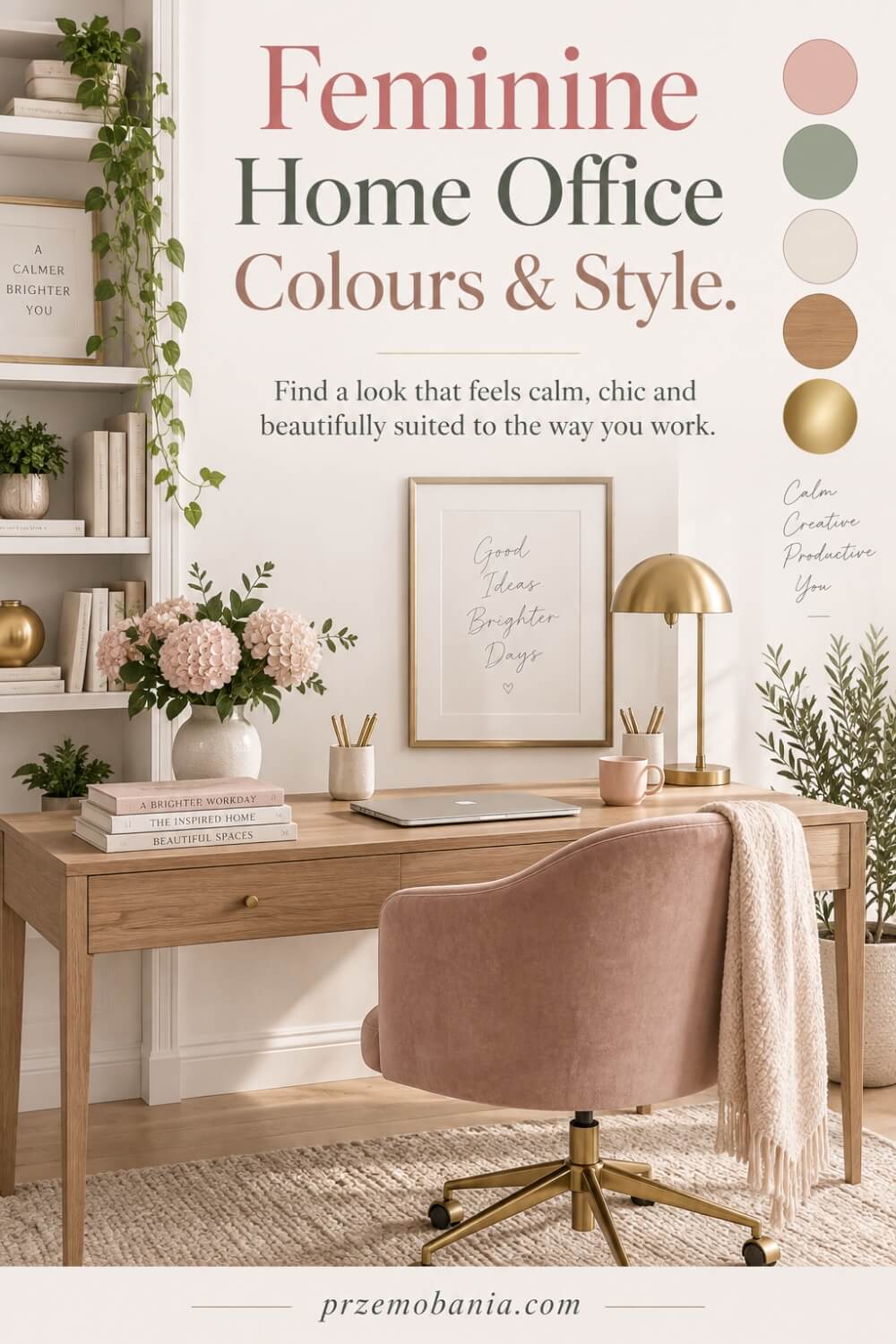
A feminine room does not need to begin with pink, and I think that belief has limited far too many lovely spaces. Start with the feeling you want instead: warm, calm, bright, cocooning, elegant or energetic. Cream, warm white, mushroom, sage, dusty blue, clay, muted mauve and soft grey can all create a gentler foundation, while timber, brass or black accents stop the scheme becoming flat.
I usually choose one dominant neutral, one supporting colour and one smaller accent because it keeps the room coherent without making it look overdesigned. Test paint where you will actually use it and look at it in morning, afternoon and artificial light, because colour changes dramatically through the day. If you work long hours in the room, give your eyes some quieter surfaces too. The goal is not to create a showroom, but a backdrop that still feels pleasant after the novelty of decorating has worn off.
Invest In Comfortable Seating
If your budget forces you to choose between a decorative chair and one that properly supports you, choose support and make the rest of the room beautiful around it. Your chair should let your feet feel stable, support your back and allow your arms to work without your shoulders creeping upwards. A seat that looks delicate in a photograph can become the most expensive mistake in the room when discomfort starts interrupting your concentration.
This lesson became personal for me because comfort was never an abstract design principle once my wife needed to keep working while her body was already under strain. We learned that being able to alter position, sit back properly and avoid unnecessary pressure mattered more than matching a perfect mood board. You can still choose attractive upholstery, elegant curves or a softer colour, but test the chair for the way you work. Beauty should sit on top of comfort, not replace it.
Layer Your Workspace Lighting
Lighting can completely change whether a workspace feels soothing or exhausting. I like to think in layers: daylight when available, a general room light for even brightness, and a task lamp that gives focused light where you read, write or work with details. This approach also lets you change the atmosphere as the day moves on instead of relying on one harsh ceiling fitting from morning until night.
Pay attention to where light falls on your screen and glossy surfaces, because reflections can become irritating long before you consciously notice why. A movable desk lamp is often more useful than a beautiful fixed light because you can direct it as your task changes. In the evening, I prefer warmer, softer surrounding light so the office begins to feel less clinical without becoming too dim to use. The most successful lighting is the kind you barely think about because it simply supports whatever you are doing.
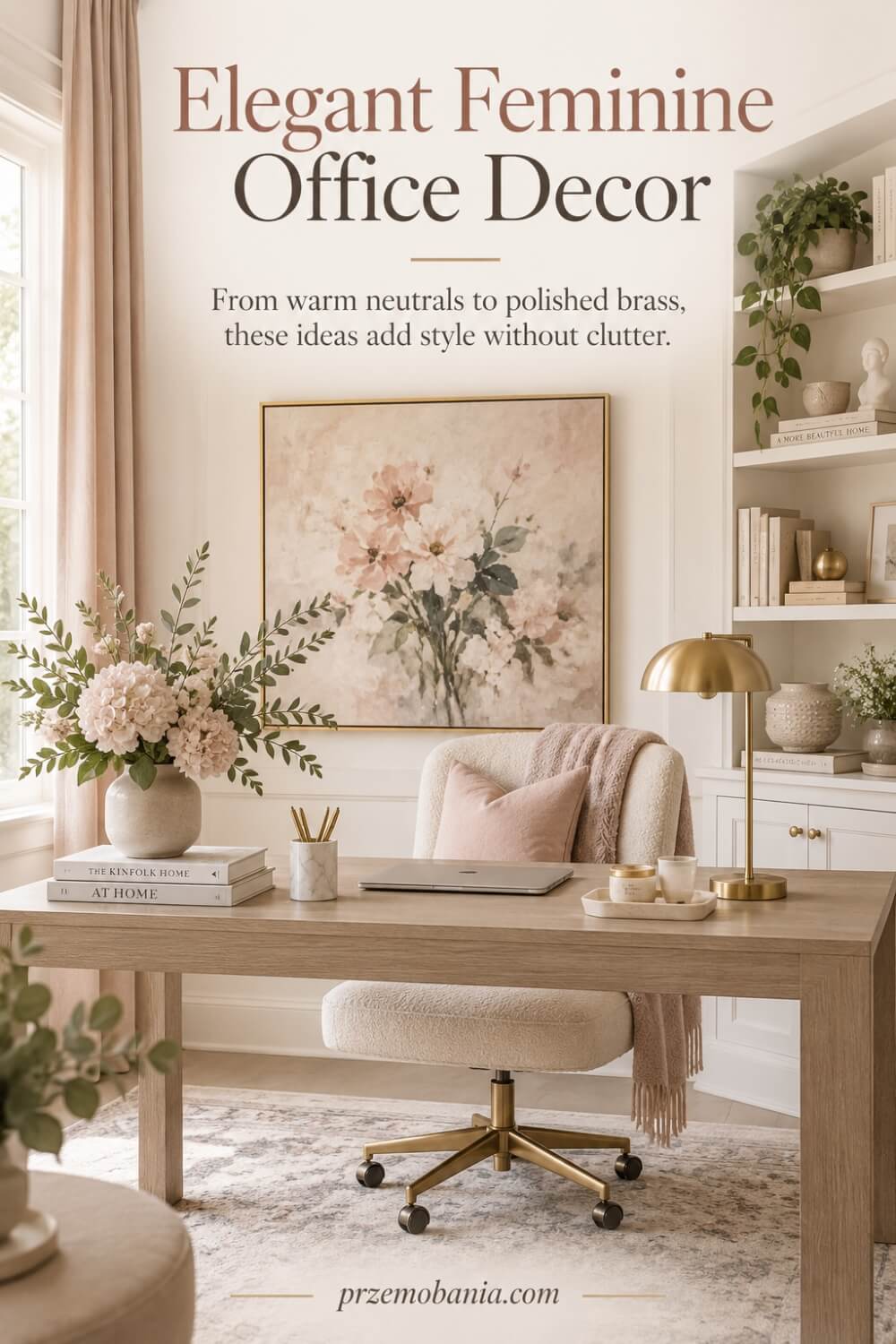
Plan Storage Before Decorating
Storage is one of those decisions that seems boring until you get it wrong. Before adding artwork, candles or decorative objects, work out what must live in the room: documents, chargers, stationery, notebooks, printer supplies, camera equipment or anything else connected with your work. Then decide what deserves to be visible and what will make the room calmer when it is hidden behind a drawer or cupboard door.
I have made the mistake of styling a surface first and then discovering that daily work had nowhere practical to go. Now I prefer closed storage for visual noise and open shelving for a small number of things I genuinely enjoy seeing. Use drawer dividers, cable management and containers that fit the dimensions you already measured rather than buying organisers at random. When every regular item has an obvious home, tidying takes less effort and the softer side of the room has space to breathe.
Add Texture Without Clutter
Texture is one of my favourite ways to make an office feel feminine without relying on obvious decorative clichés. A linen curtain, woven rug, upholstered chair, timber desk, ribbed glass lamp or softly textured wall can add depth even when the colour palette is very simple. The trick is to let texture do some of the visual work so you do not need to fill every shelf and wall with accessories.
I usually repeat two or three materials rather than introducing something new in every corner. For example, warm timber can appear in the desk and frames, while a soft fabric is echoed in the chair and window treatment. That repetition makes the room feel considered without making it busy. Leave some surfaces almost empty, especially around your main work area. Empty space is not wasted space; it is what allows the details you chose carefully to feel intentional instead of crowded.
Personalise With Meaningful Details
The difference between a stylish office and a room that feels like yours often comes down to what you choose to keep close. I would rather see one framed photograph, a book that changed you, a piece of art you genuinely love or an object tied to a memory than ten decorative items bought simply because they matched a trend. Personal details give a workspace emotional warmth that cannot be copied from somebody else’s mood board.
For me, home working is connected with writing, building something of my own and being close to the person I love, so I naturally value objects that remind me why I work in the first place. Your reasons will be different, and that is exactly the point. Keep the things that make you smile, steady you or reconnect you with your goals. When the room reflects your life rather than an algorithm, it becomes much easier to feel at home there.
Leave Space For Flexibility
Your needs will change, so I never like designing a home office so tightly that one new habit makes the whole room stop working. Leave enough clear floor space to move a chair, add a small side table, change your monitor setup or create a temporary surface for a project. Furniture that can move or serve more than one purpose is especially useful when your office shares space with a bedroom, guest room or living area.
Flexibility matters even more when energy, concentration or comfort vary from day to day. In our home, I learned that a room can be beautiful and still need to adapt to the person using it, sometimes at very short notice. Avoid filling every available corner simply because it looks empty. A little breathing room gives you options, and options make a workspace kinder. The best design is not frozen on the day you finish decorating it; it can quietly change with you.
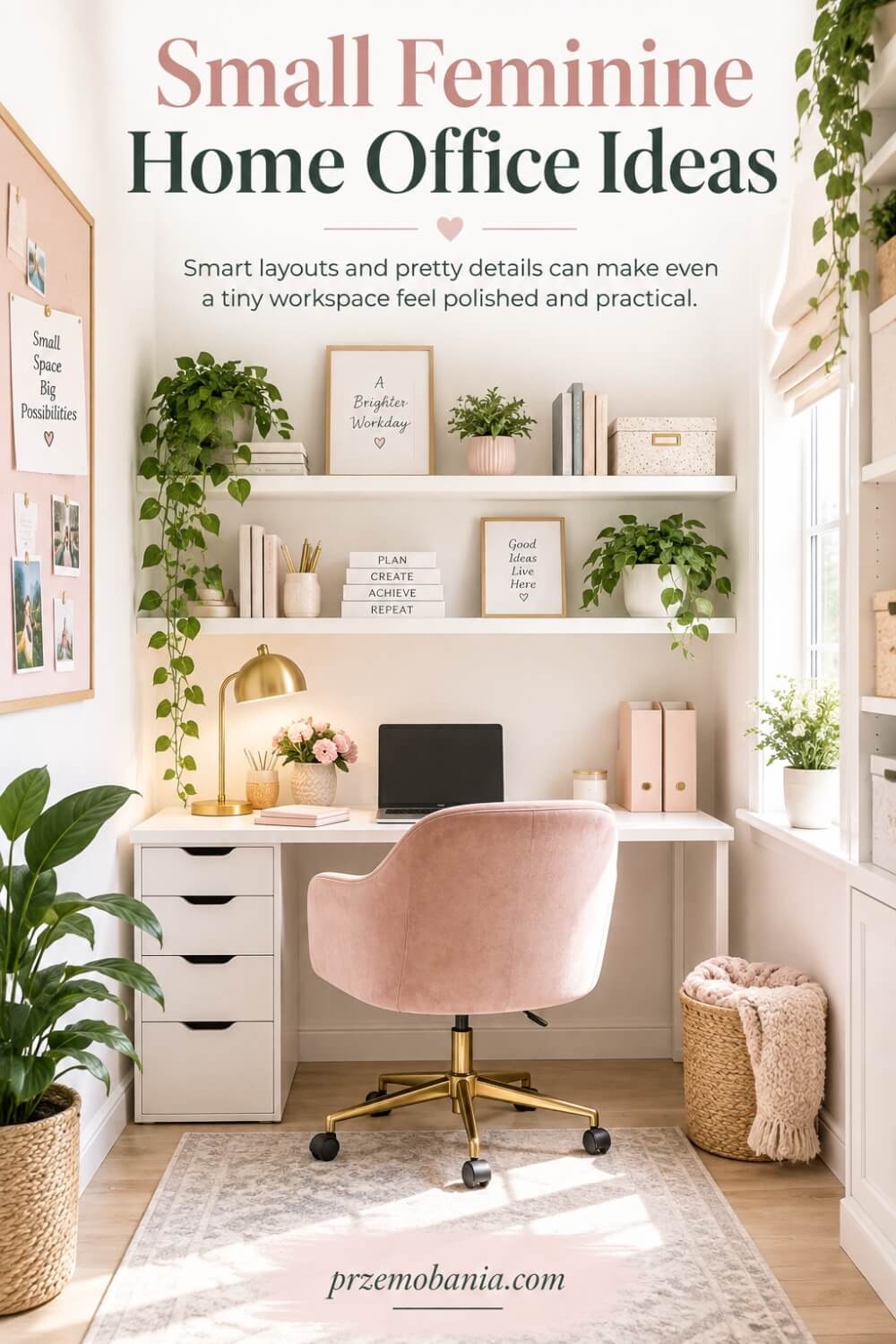
Why a Feminine Home Office Should Feel Personal, Not Perfect?
There comes a point when designing a room where you have to stop asking whether somebody else would approve of it and start asking whether the space actually feels right for you. I have learned that the rooms we connect with most deeply are rarely the ones that follow every trend perfectly, because they carry traces of the person living and working inside them.
A feminine home office becomes much more powerful when it reflects your personality instead of trying to imitate a photograph you saved online. Maybe that means combining an elegant desk with an old chair you restored, displaying books with battered covers because you genuinely love them, or choosing a colour that makes you feel calm even though it is not appearing everywhere on social media.
I began understanding this differently after watching my wife work through days when simply sitting at a desk required determination most people around her could never see. There were mornings when the room looked exactly the same as it had the day before, but the person using it felt completely different, and that changed what good design meant to me.
I stopped thinking only about whether something matched and started noticing whether the room quietly removed obstacles from her day. A blanket within reach, a place to rest tired feet, curtains that softened overwhelming brightness or enough clear space to move without effort suddenly carried more meaning than another perfectly styled shelf.
That experience also changed the way I design my own working space because I realised how easily we can create offices for the person we imagine ourselves becoming instead of supporting the person who actually has to work there today. Your workspace should encourage your ambitions, but it should also forgive you when you are tired, distracted, overwhelmed or simply having a difficult day.
I love beautiful interiors, and I will probably always notice finishes, furniture proportions and the way colours sit beside each other, but beauty feels hollow to me when a room makes everyday life harder. The most successful spaces I have lived with are the ones where practical decisions disappear quietly into the background and leave you feeling comfortable enough to concentrate on what matters.
That does not mean your office has to look ordinary or cautious. You can use bold wallpaper, delicate detailing, vintage furniture, contemporary art or a luxurious statement light if those choices genuinely make you happy, because femininity in interiors is not one prescribed visual formula.
What matters is that the room begins to feel like an extension of you instead of a performance for somebody scrolling past it. When you reach that point, you stop decorating for approval and start creating a workspace that can hold your work, your ambitions, your difficult days and the small victories that nobody else gets to see.
How Can a Feminine Home Office Support Focus Without Losing Its Personality?
Once the foundations of your room are working properly, the next challenge is making it somewhere you can actually concentrate for hours without stripping away everything that makes it feel warm and personal. I have found that productivity rarely comes from making a workspace colder, emptier or more corporate.
Instead, I think about how much visual information my brain is being asked to process while I am trying to write, plan or create. A beautiful room can still become distracting when every wall, shelf and desktop is competing for your attention.
One of the simplest changes is creating a clear visual zone around your main working position. You can still enjoy artwork, photographs and decorative details, but I prefer keeping the immediate area around my screen calmer while allowing more personality to appear slightly further away.
I also separate objects that help me work from objects that simply look good. When something earns its place because I use it every day, I want it easy to reach, while purely decorative pieces can sit where they add atmosphere without getting in the way.
Sound matters more than people often realise when designing a workspace at home. Soft furnishings, curtains, rugs and upholstered furniture can make a room feel less echoing, which is especially helpful when you take calls, record content or simply need a quieter environment in which to think.
Another thing I value is creating a visible boundary between working and not working, even if your office occupies only part of another room. A rug beneath the desk, a change in wall treatment, a narrow shelving unit or simply a carefully defined furniture arrangement can tell your brain that this particular area has a purpose.
That boundary becomes especially useful at the end of the day. When work equipment spreads into every corner of your home, it becomes much harder to feel that work has actually finished.
I also believe a feminine home office benefits enormously from having one strong focal point rather than ten competing ones. It might be an elegant desk, a beautiful chair, a piece of art, wallpaper behind the workstation or distinctive cabinetry, but giving one feature permission to lead makes everything else easier to edit.
You do not need every attractive idea you discover online in the same room. Restraint is often what makes a space look more expensive, calmer and more intentional.
I have made the opposite mistake myself, adding things because I liked each one individually and then wondering why the finished space felt restless. Learning to remove something can be just as important as learning what to add.
I also keep some practical space deliberately unfinished. An empty section of desk, a spare drawer or a clear part of a shelf gives you somewhere for temporary projects without allowing them to take over the whole room.
There is something reassuring about knowing your workspace has room for real life rather than being arranged so perfectly that using it seems to spoil it. Your office should survive coffee mugs, notebooks, difficult deadlines and messy creative days.
That became even clearer to me while watching my wife continue working through days when her body was asking her to stop long before her responsibilities did. I could not take those difficult days away from her, but I could understand why a calm room, fewer unnecessary obstacles and a workspace that did not demand perfection mattered so much.
Sometimes love looks less like a grand gesture and more like moving something closer, clearing a surface or changing a room so the person you love has one less thing fighting against them. That is why the next choices I want to share are small, practical changes that can make your workspace feel gentler, calmer and much easier to return to every morning.
- Create A Calm Visual Zone
- Reduce Distracting Background Noise
- Define Your Working Boundary
- Choose One Strong Focal Point
- Keep Space For Real Life
Create A Calm Visual Zone
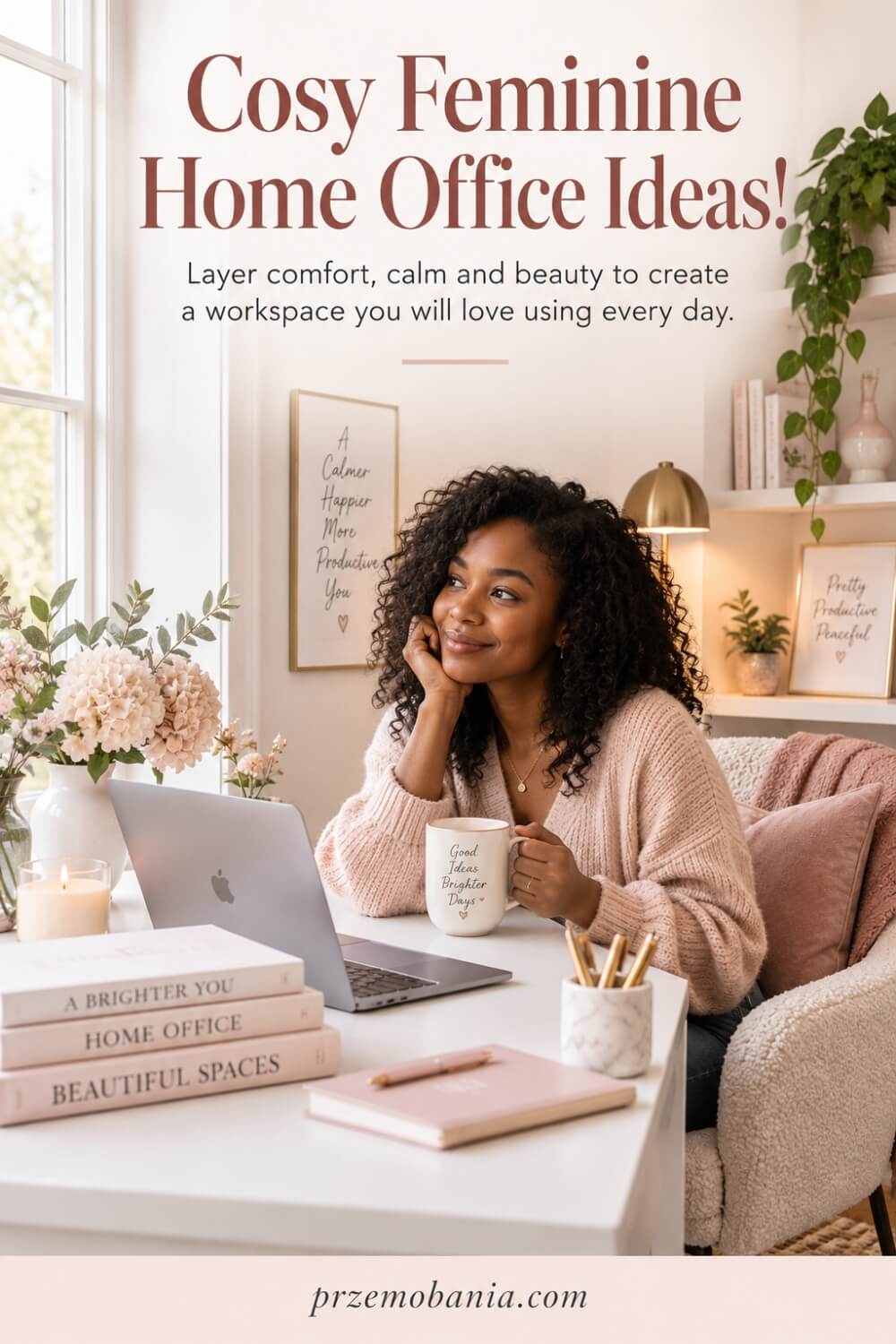
I like to protect the area directly around my screen because this is where my eyes spend most of the working day. If that space is crowded with notes, ornaments, cables and competing colours, your attention is constantly being pulled somewhere else before you even realise it. You do not need to make it sterile, but I would keep the immediate work zone simpler than the rest of the room.
A softly coloured wall, one framed print, a small lamp and perhaps one meaningful object can be enough. Then let shelves, artwork and decorative pieces live slightly further away, where they still give the room personality without fighting for your attention. I learned this through my own writing work because the more focused my visual field became, the easier it was to settle into difficult tasks. Calm is not emptiness. It is choosing what deserves to remain in view while you are trying to think.
Reduce Distracting Background Noise
Noise can quietly drain your concentration, especially when your office shares walls or space with the rest of your home. Hard floors, bare walls and large empty surfaces can make everyday sounds feel sharper, while rugs, curtains, upholstered furniture and fabric-covered accessories help soften the acoustic character of the room. I think of these details as comfort tools first and decorative choices second.
You can also pay attention to where your desk sits in relation to doors, televisions, kitchens or busy hallways. Sometimes moving a workstation by a surprisingly small distance changes how exposed you feel to household noise. My wife taught me to notice these things because when your energy is already limited, unnecessary stimulation can become another thing your body has to manage. A quieter workspace will not solve every distraction, but it can make concentration feel less like a battle and more like something the room is helping you protect.
Define Your Working Boundary
When your office is part of a bedroom, lounge or dining area, I think creating a visible boundary becomes incredibly important. You do not need to build a wall to achieve it. A rug, narrow shelving unit, different wall colour, floor lamp or simply the direction of your desk can create a clear sense that one area belongs to work and another belongs to home.
That distinction matters psychologically as much as visually. I have found that when everything blends together, work has a habit of following you long after you meant to finish. Even something as simple as closing a laptop and placing it inside a drawer can become a small end-of-day ritual. When my wife works from home, I value anything that helps the room stop asking things of her once her working hours are over. Your workspace should support ambition, but your home still deserves places where you can switch off.
Choose One Strong Focal Point
A room becomes much easier to design when one feature is allowed to lead. In your workspace, that could be a beautiful desk, statement chair, elegant pendant light, patterned wallpaper, built-in cabinetry or a large piece of artwork. Once you decide what the focal point is, the other elements can support it instead of competing for equal attention.
I used to think adding more interesting pieces automatically made a room more interesting, but I learned that too many focal points create visual noise. If your wallpaper is bold, keep the desk styling quieter. If the chair has a striking shape or colour, let nearby accessories become simpler. This approach also helps you spend more wisely because you can invest in one element you genuinely love instead of buying ten smaller things that never quite work together. Restraint gives your favourite feature room to breathe, and that often makes the whole office feel more confident.
Keep Space For Real Life
I never want a home office to look so perfect that you become afraid to actually work in it. Real working days involve notebooks, chargers, mugs, paperwork, packages and projects that do not disappear simply because you created a beautiful room. That is why I deliberately leave some surfaces, storage and floor space unclaimed rather than decorating every available centimetre.
A spare drawer can catch temporary clutter. An open section of desk gives you room to spread out when you need it, while an empty shelf can accommodate new books or equipment without forcing you to redesign the whole room. Watching my wife work through difficult days changed how I think about this more than any interiors photograph ever could. A useful room has to bend around life as it happens. If your workspace can stay beautiful while still forgiving the occasional mess, change of routine or low-energy day, you have designed something far more valuable than a perfect picture.
How Can a Feminine Home Office Adapt to Changing Energy and Different Working Days?
One thing I have learned from sharing life and work with my wife is that the same room can feel completely different depending on what kind of day you are having. Some mornings she can settle into work relatively comfortably, while on others even sitting in one position for too long can make the hours feel painfully slow.
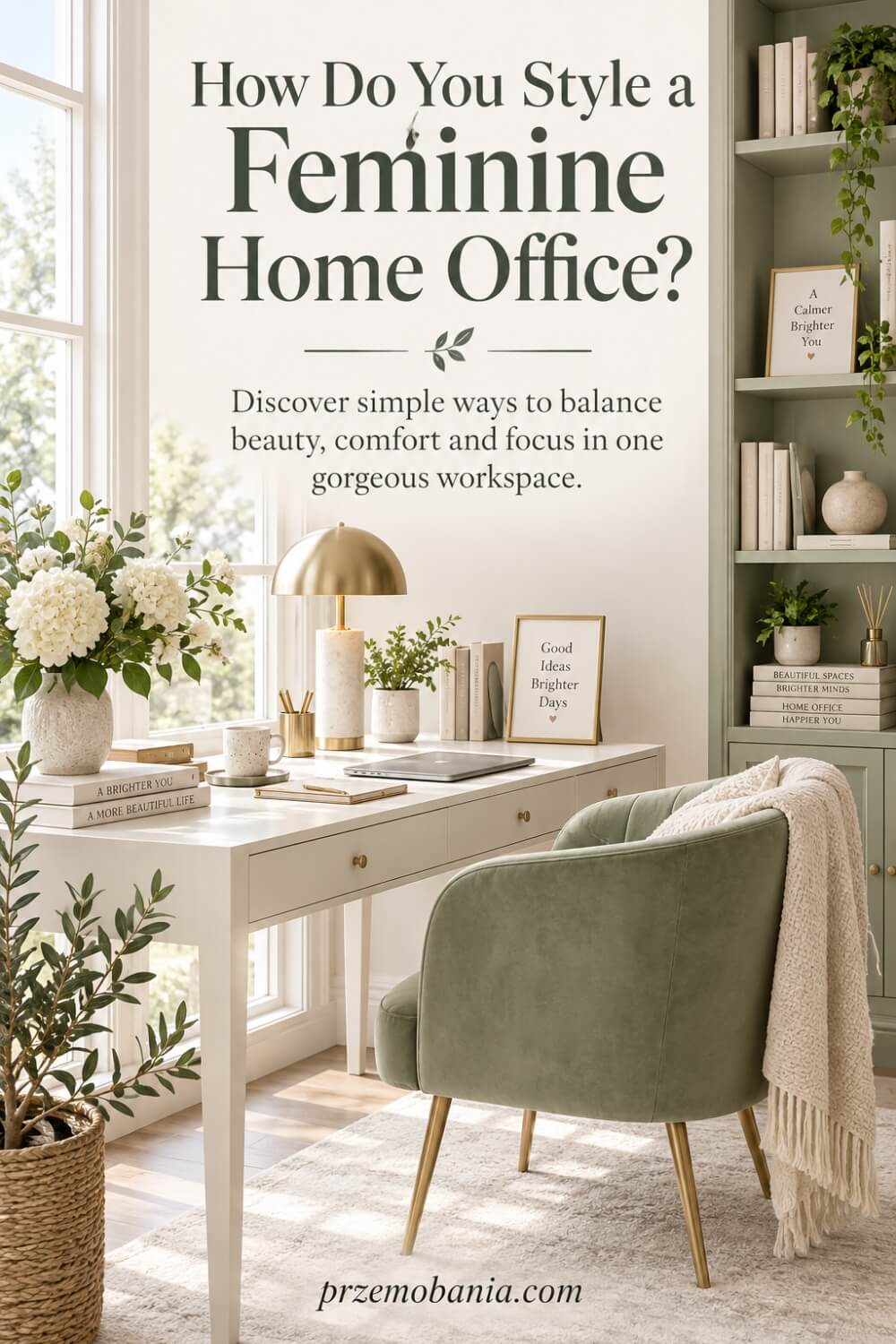
That is why I prefer a feminine home office that gives you options instead of forcing you into one fixed way of working. A lightweight side table, adjustable task light, movable footrest or second comfortable seat can let you change position without turning the room upside down.
I also think frequently used items should follow your energy rather than somebody else’s idea of perfect organisation. If you reach for medication, water, headphones, notebooks or chargers throughout the day, keeping them close is far more sensible than hiding everything simply because an empty desk photographs beautifully.
Watching my wife taught me how exhausting unnecessary movement can become when your body is already asking for more energy than you have available. It made me notice small design frustrations in my own office too, such as having to crawl beneath the desk for cables or constantly stand up to reach something I use ten times a day.
We started looking at the room almost like a route, paying attention to what she needed from the moment she sat down until she finished work. That approach helped us remove little obstacles that might seem insignificant to somebody else but can feel enormous during a difficult afternoon.
For me, it also changed what productivity means because I no longer believe a successful workspace should push you to work harder at any cost. Sometimes the most productive thing a room can do is make it easier to slow down, change position, take a short pause and return without feeling as though you have failed.
There is an emotional side to this that people rarely include in beautiful office photographs. When somebody you love is trying to keep working while you can see how much effort it takes, you stop caring whether every object is perfectly arranged and start caring whether the room is giving something back.
That lesson has stayed with both of us, and it is why I now value adaptable furniture, easy access, softer lighting controls and uncluttered movement routes as much as colour or styling. A workspace that changes with you can still look polished, but beneath the surface it carries something more important: permission to have different kinds of days.
Your office does not need to demand the same version of you every morning. It should be ready for the focused days, the slower days and all the ordinary days in between.
How Can a Feminine Home Office Stay Beautiful as Your Needs Change?
Designing for the life you are living today is important, but I also like to leave enough room for the workspace to grow with you. Your work may change, your equipment may change, and the way your body responds to long hours at a desk may change too. That is why I prefer furniture and storage that can adapt rather than a room built around one rigid layout.
In a feminine home office, I would rather choose a strong desk, supportive chair, useful lighting and flexible storage first, then let decorative details evolve around those foundations. Changing artwork, cushions, curtains, paint or small accessories is far easier than replacing uncomfortable furniture because you chose appearance before everyday use.
I have watched this become especially important in our own home because my wife’s needs have never remained conveniently predictable. There have been periods when she could sit comfortably for longer and others when changing position, controlling light or simply keeping essential things close became much more important.
Living beside that taught me not to treat interior design as something finished forever on the day the last picture goes on the wall. A good workspace should be able to absorb a new monitor, different working hours, an extra lamp, another storage unit or a more supportive piece of furniture without losing the character you worked so hard to create.
It has changed my own relationship with my office as well because blogging has grown from something I loved doing into work that asks more from my space, my concentration and my equipment. Instead of constantly redesigning everything, I now value a solid foundation that allows small changes whenever life moves in a new direction.
Perhaps that is the part of creating a beautiful workspace I care about most now: your room should never make you feel guilty for changing. When your office can evolve alongside your work, your body and your life, its beauty stops being something you maintain for appearances and becomes something that genuinely continues to serve you.
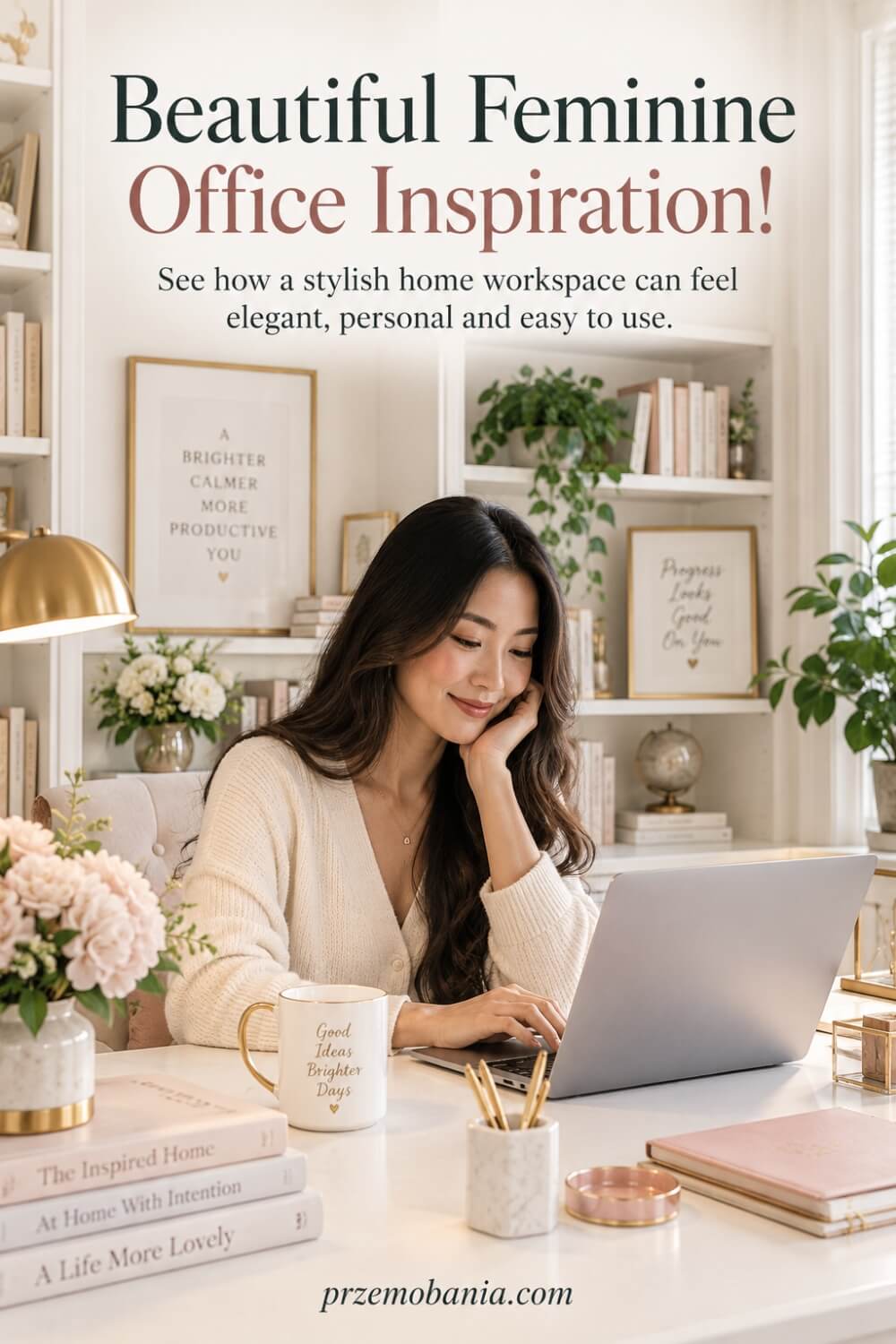
Final Word on Feminine Home Office
By now, I hope you can see that creating a beautiful workspace is not about copying somebody else’s room or filling a desk with objects that happen to look pretty together. It is about noticing how you work, what helps you concentrate, what makes you comfortable, and what kind of atmosphere makes you want to return to the room tomorrow.
For me, that understanding changed through experience. I have always loved interiors, writing and creating spaces that feel considered, but living beside my wife taught me that design becomes far more meaningful when it helps somebody through an ordinary difficult day. A supportive chair, softer light, reachable storage or a quieter corner may look like small details, yet those details can shape how manageable several hours of work actually feel.
That is why I no longer separate beauty from usefulness. I want a room to feel inviting when you first walk into it, but I also want it to keep serving you after the excitement of decorating has disappeared. The colours should still feel calming, the desk should still suit the way you work, and the layout should continue making sense when real life brings paperwork, deadlines, tiredness and unexpected changes.
Your feminine home office can be soft and elegant, bold and dramatic, minimal, romantic, modern or somewhere between all of those. There is no single correct palette, chair shape or decorative style that makes the room yours. What matters is whether the space reflects your personality while giving your body and mind fewer unnecessary things to fight against during the working day.
I would also encourage you to resist the urge to finish everything at once. Some of the best decisions come after you have lived with a room for a while and noticed what is missing. Perhaps you discover that you need better task lighting, more closed storage, a footrest, another socket nearby or simply less decoration around your monitor. Those discoveries are not design failures. They are the room teaching you how it needs to work.
My own office has changed because my work changed, and our home has changed because our lives changed. I now see that flexibility as a strength rather than evidence that I got something wrong the first time. A workspace should be allowed to grow with you.
If I could leave you with one thought, it would be this: do not design for an imaginary version of yourself who is always energised, organised and endlessly productive. Design for the real person who will sit there on good mornings, distracted afternoons, ambitious weeks and difficult days.
Choose comfort without apologising for it. Choose beauty because it lifts you. Keep what helps, remove what irritates you, and let the room become more personal with time.
The most rewarding workspace is not the one that impresses everybody else. It is the one that quietly makes your own day better, supports the work you care about and feels unmistakably like home every single time you enter.
Your workspace does not need to look like anyone else’s to be beautiful or productive. Build it around the way you genuinely work, give yourself permission to prioritise comfort, and let personality arrive naturally. The room can evolve with you, supporting your ambitions without asking you to become somebody different first.
I would genuinely love to hear how you are creating your own workspace, so leave me a comment below and tell me what you are changing first. You can also check out the FREE chapter of my eBook at the bottom of this post.


Przemo Bania is a blogger and writer who helps people get out of their traditional jobs to start a blogging career. Przemo also runs a health blog advocating for endometriosis and fibromyalgia…
Related Questions You May Be Asking About Feminine Home Office
1. What colours work best in a feminine home office?
There is no single correct palette. Warm white, cream, beige, dusty rose, sage green, muted blue, soft grey and mauve can all create a softer workspace. I prefer choosing one calm base colour, one supporting shade and a smaller accent, then using timber, brass, black or textured fabrics to stop the room feeling flat or overly sweet.
2. Can a feminine home office look modern rather than overly girly?
Absolutely. A modern feminine workspace can combine clean-lined furniture, neutral walls, curved shapes, warm timber, subtle metallic finishes and carefully chosen artwork without using pink at all. I find that softness comes just as effectively from texture, proportions and lighting. The aim is creating elegance and personality rather than following an outdated idea of what feminine décor has to look like.
3. How do I create a feminine office in a small space?
Start with scale rather than decoration. Choose a desk that fits comfortably, use vertical shelving, keep frequently used items within easy reach and favour closed storage where possible. Then introduce personality through colour, lighting and one or two meaningful details. In a small office, leaving some visible empty space can make the entire setup feel calmer, larger and far more intentional.
4. How can I make my home office feel cosy without creating clutter?
I would focus on materials rather than adding lots of decorative objects. A textured rug, linen curtains, upholstered seating, timber finishes and warm task lighting can create tremendous comfort without covering every surface. Keep useful items organised and choose a few objects you genuinely care about. Cosiness comes from atmosphere and comfort much more effectively than it comes from filling empty shelves.
5. What furniture should I prioritise when designing a feminine workspace?
I would spend your attention first on the desk, supportive chair, lighting and practical storage because these are the pieces that influence your working day most. Once those foundations feel right, decorative furniture can follow. I would rather own an ergonomic chair that is slightly less glamorous than spend every afternoon uncomfortable simply because another chair looked better in an inspiration photograph.
6. How can I make a feminine home office feel more personal?
Bring in details connected with your real life rather than buying everything specifically as office décor. Display a favourite photograph, artwork you genuinely enjoy, books you return to, something collected while travelling or an object carrying a meaningful memory. When those personal pieces sit alongside a thoughtful colour palette and functional furniture, the room begins to feel like your workspace rather than somebody else’s design.
Feminine Home Office References
- https://twinsmommy.com/female-office-ideas/
- https://en.wikipedia.org/wiki/Study_%28room%29
- https://jane-athome.com/home-office-ideas/
- https://www.hse.gov.uk/pubns/indg36.pdf
- https://www.homesandgardens.com/ideas/home-office-lighting-ideas
- https://www.homesandgardens.com/interior-design/home-office-ideas-for-her
- https://worryhead.com/about-us/
- https://przemobania.com/why-home-decor/
