
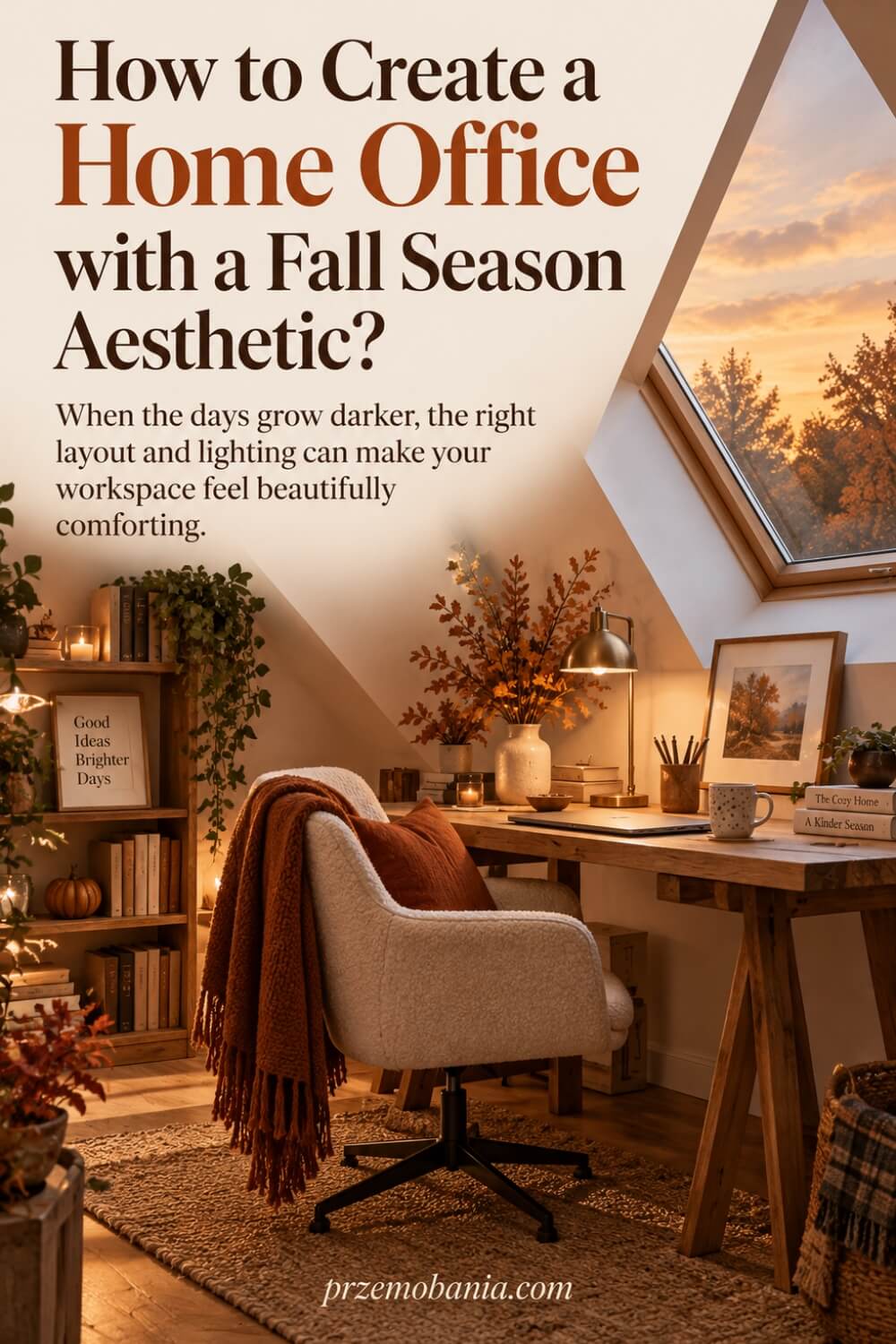
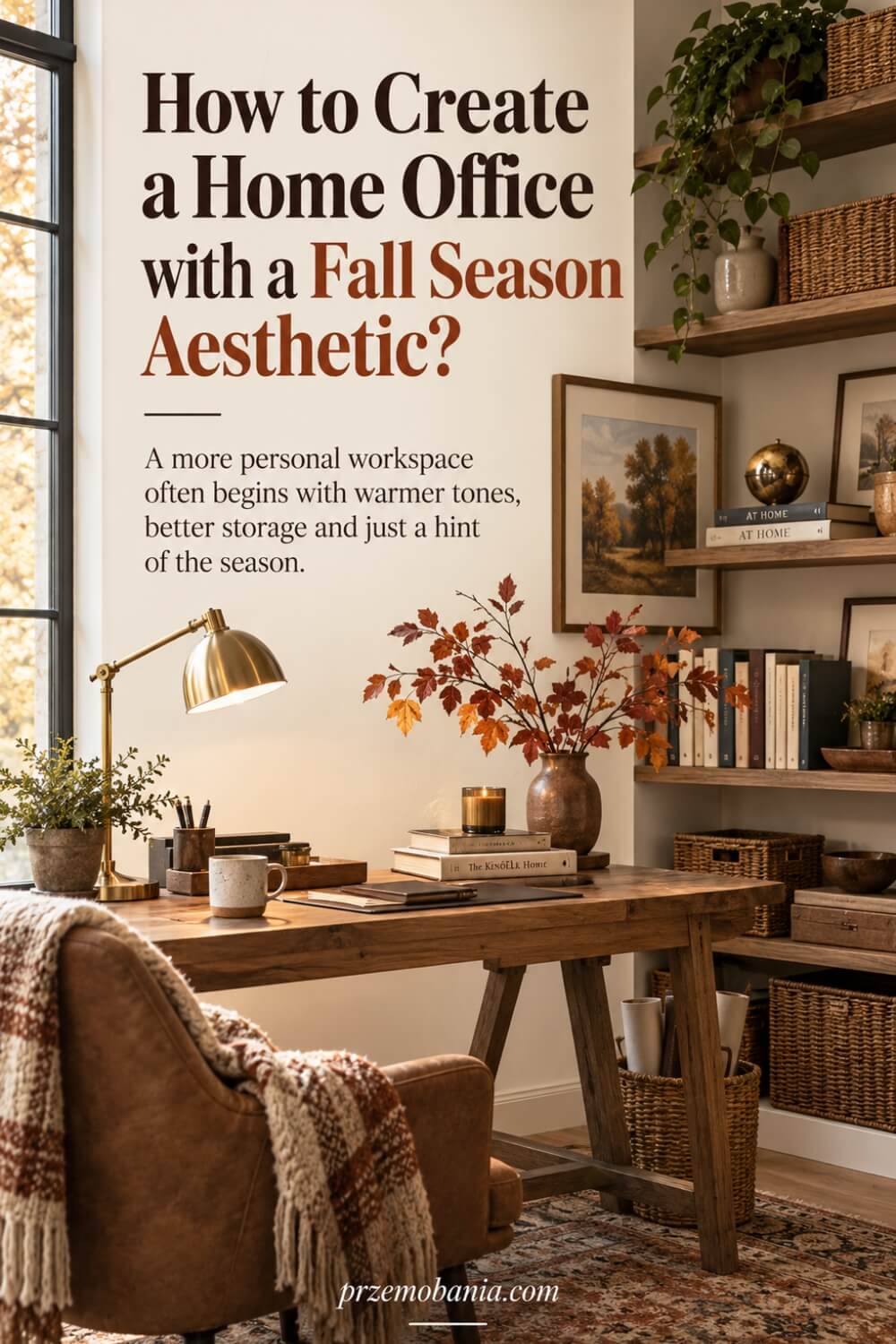
How to Create a Home Office with a Fall Season Aesthetic?
Could changing a few carefully chosen details make your workspace feel like autumn without turning it into a cluttered display of pumpkins? A home office with a fall season aesthetic should feel warm, grounded, and inviting while still giving you the light, comfort, and order you need to get real work done.
If your desk feels colder, darker, or simply harder to settle into as the season changes, I know exactly why you are looking for a better way to shape it.
A fall-inspired home office blends practical workspace design with autumn colour, texture and light. Use warm earth tones, natural materials, layered lighting and a few seasonal accents, while keeping the desk ergonomic, uncluttered, comfortable and well lit for focused work throughout darker days.
I’m a passionate blogger whose life was redirected by my wife’s chronic illness; the love of interiors my mum planted in me as a child became practical when I helped create a gentler workspace where she could work from home, while building a cosy office for myself to write, create and earn through blogging, and beyond our lived experience and my love of home décor, I have included the sources I used at the bottom of this article so you can see where I continue expanding my knowledge too.
The part many fall office makeovers miss is that autumn is not really an “orange palette” at all. As green chlorophyll disappears from leaves, carotenoids reveal yellows and oranges, while anthocyanins contribute many of those deeper reds and purples, which gives you a much richer natural colour map of ochre, muted gold, rust, aubergine, olive and brown to work with. Current designers are taking a similar approach, mixing deeper contrasts and layered textures instead of relying on obvious seasonal decorations.
Lighting is just as interesting, because making an office feel cosy does not mean making the whole workspace dim. A 2025 controlled study involving 100 participants found that warm, dim 3000 K lighting reduced measured and perceived stress, while cooler 7000 K conditions were associated with stronger cognitive performance, which is one reason I prefer creating an autumn atmosphere with warmer ambient lamps while keeping useful task lighting where your eyes actually need it.
If you want to understand how these choices fit into the bigger seasonal transformation of your workspace, my practical fall home office guide explores the wider changes in lighting, comfort, colour and texture that become especially important as summer gives way to autumn.
How Do You Create a Home Office with a Fall Season Aesthetic?
The easiest way to create a home office with a fall season aesthetic is to change what you see, touch and feel around your working position without disturbing the parts of the room that already help you work well.
Before buying anything, sit at your desk and look at the room from the position you actually spend hours in, because the shelf behind you, the lamp beside your monitor and the surface directly in front of you matter far more than decorations hidden in corners. Look for three things first: areas that feel visually cold, spaces that have become cluttered and practical features you would regret covering simply to make the room look more seasonal.
I usually begin with one deeper foundation colour and let smaller autumn shades support it rather than trying to introduce every seasonal colour at once. A muted brown, warm taupe, olive, rust, burgundy or ochre can become that foundation through something as simple as a desk mat, curtain, cushion, storage box or artwork, while lighter neutrals stop the office from becoming visually heavy. Then repeat your chosen colour only a few times around the room so your eye connects those details naturally instead of seeing a collection of unrelated autumn purchases.
Current autumn interior design is also leaning towards layered light, tactile shades, wood and other natural-looking finishes rather than relying on one bright overhead fitting to create the whole atmosphere. That works particularly well in an office because you can make the surrounding room feel warmer while keeping the area where you type, write or read properly illuminated. Lighting should still serve the task first, especially around computer screens, because glare, reflections and large differences between bright and dark areas can make a workstation uncomfortable rather than cosy.
I prefer having a useful desk lamp for concentrated work and a softer secondary light somewhere behind or beside the working zone, which creates depth without forcing you to work in gloom. If daylight reflects across your monitor, change the screen angle, reposition the lamp or use blinds before adding more light, because even a beautiful office becomes tiring when your eyes spend hours fighting glare.
UK guidance for home workers also stresses adequate lighting, a comfortable sustainable posture and a work area that remains tidy and free from avoidable obstructions, which is why seasonal styling should never take over the functional space you depend on.
Texture is where I think an autumn workspace can become genuinely comforting without looking themed, because wool, linen, wood, woven storage, matte ceramics and heavier fabric introduce the season through surfaces rather than slogans.
A textured cushion on your chair, a warmer throw nearby and one wooden or ceramic desk accessory can change the feeling of the room much more convincingly than filling every shelf with decorative objects. The practical rule I have learned is simple: once the room still works beautifully after the seasonal layer has been added, you have probably done enough.
I understood the importance of that balance more deeply from watching my wife work from home on days when simply staying comfortable at her desk asked far more from her than anyone on the other side of a screen could see.
There have been moments when I looked at the workspace we created together and realised that the little things I once thought were only decorative could make a difficult day feel slightly softer, while one badly placed object, an uncomfortable chair or harsh light could make it harder. That is why the next part is not about buying more for autumn, but about five practical changes I would make first if I wanted your office to feel warmer, calmer and easier to live in.
- Layer warm task lighting
- Build colour from nature
- Add texture without clutter
- Protect comfort at your desk
- Rotate small seasonal details
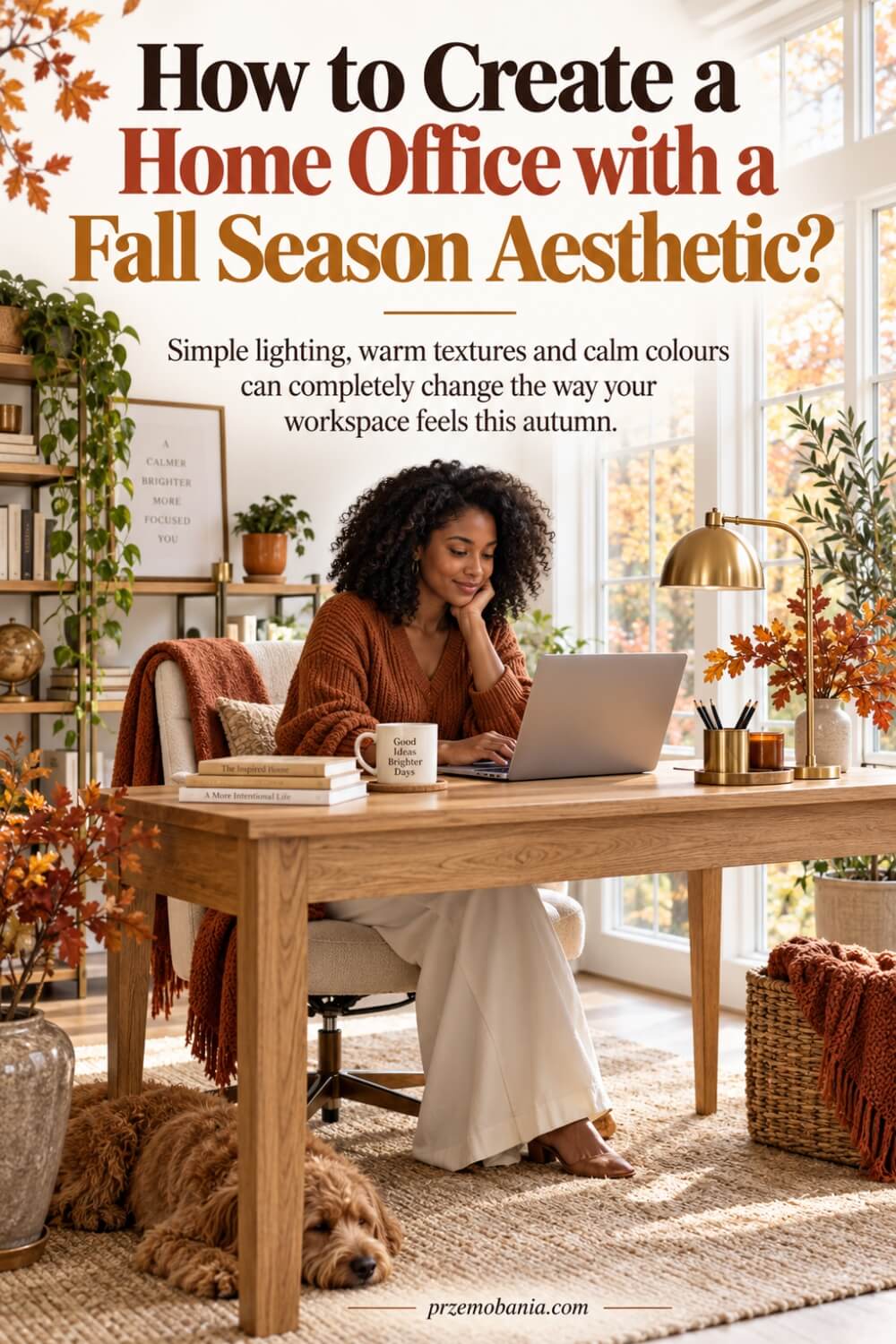
Layer Warm Task Lighting
Warm lighting can change the mood of a workspace quickly, but I never treat “cosy” as an excuse to make a desk too dark to work at comfortably. I like to keep one focused light near the task itself, then add a softer lamp slightly behind or to the side so the room feels warmer without sacrificing clarity. The important part is placement: if a bulb reflects in your screen, shines straight into your eyes or throws a harsh shadow across your keyboard, move it before adding anything else.
I have learned that the most inviting offices often use several modest light sources rather than one aggressive ceiling light trying to do everything. In autumn, I also pay closer attention to daylight because the room changes much earlier in the afternoon than it does in summer. That gradual shift is your cue to create layers, not gloom, so you can protect concentration while still getting that comforting seasonal atmosphere you came for.
Build Colour From Nature
When I choose autumn colours for an office, I look outside before I look at a shop display. Nature rarely gives you one loud shade on its own; it combines bark brown, mossy green, faded gold, deep red, clay, beige and the softer colours of leaves that are already drying at the edges. That is why I find a room looks more convincing when you pick one dominant autumn tone, one supporting shade and a neutral that keeps everything calm.
You do not need to repaint the walls to make this work. A rust-coloured desk mat, olive cushion, warm brown storage box or muted burgundy print can shift the character of the room without locking you into a permanent scheme. I made plenty of decorating mistakes by adding too many attractive things separately, then wondering why the room felt busy. Once I started choosing colours as a small family instead of individual purchases, my offices became easier on the eye and much easier to change again when the next season arrived.
Add Texture Without Clutter
Texture is one of my favourite ways to make a workspace feel warmer because it changes the room without demanding much physical space. A woven basket, linen shade, wool throw, wooden tray or matte ceramic pot can bring depth to a plain office while still leaving your desk free for the things you actually use. I would rather add three tactile pieces that belong there than ten seasonal ornaments that have to be moved every time you open a notebook.
This became especially important in our home because unnecessary clutter can turn an ordinary working day into another small task to manage. When my wife needs a surface clear, she should not have to negotiate around decorations just because I wanted the room to look autumnal. I now ask one question before adding anything: does this object make the space feel better without making work harder? If the answer is no, I leave it out, no matter how beautiful it looked in the shop.
Protect Comfort at Your Desk
Seasonal styling should never cost you the comfort that lets you stay at your desk for hours, and that lesson became very personal for me. I pay attention first to the chair, screen height, legroom, keyboard position and anything that might force your body into an awkward posture before I start thinking about cushions or décor. A beautiful throw is useful if it keeps you comfortable, but it should not bunch behind your back and push you forward.
A decorative box can hide cables, yet it becomes a bad idea if it blocks your feet or makes you twist every time you reach for something. Watching my wife work through difficult days taught me that comfort is not a luxury detail you earn after the room looks good; it is part of the design itself. Your office should support the version of you who is tired, distracted or sore as much as the version who feels energetic, because that is when thoughtful design proves its real value.
Rotate Small Seasonal Details
One of the easiest mistakes to make with seasonal decorating is changing too much at once, then feeling as though you have to undo the whole room a few weeks later. I prefer to keep the furniture, storage and larger pieces fairly stable, then rotate a small group of details that can be changed in minutes. That might mean swapping artwork, changing a cushion cover, bringing out a warmer desk mat, replacing a vase or using a different lampshade rather than redesigning the entire office every season.
This keeps costs under control and also helps the room retain its identity, which matters when you work there every day. I keep seasonal items together when they are not being used so autumn does not leave a trail of forgotten decorations around the house. The result feels more intentional and, importantly, easier to live with. You get the pleasure of a fresh atmosphere without turning your workspace into another project that needs constant maintenance.
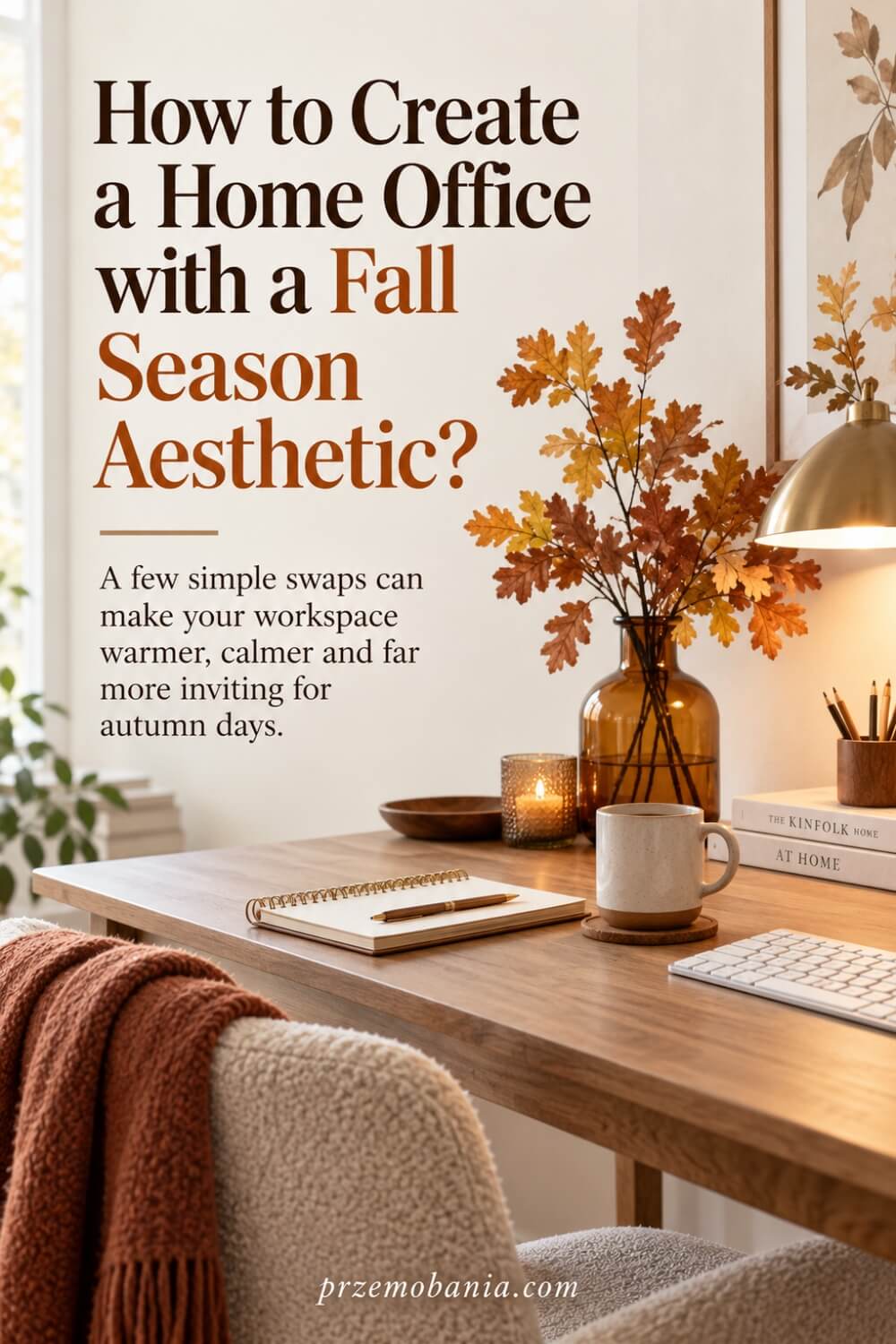
How to Make a Home Office with a Fall Season Aesthetic Feel Personal and Practical?
Once the colours, lighting and textures are settled, the next step is making the room feel as though it belongs to you rather than copying somebody else’s autumn office from a photograph. What makes a workspace memorable is usually not the amount of seasonal décor in it, but the way you arrange movement, storage, views and everyday objects around the way you actually work. I like to think of the room in small zones, with one area for focused work, one for storage and one softer visual area that gives your eyes somewhere pleasant to rest.
In a small room, that softer area might simply be the wall beyond your monitor, a shelf above the desk or the corner you see when you turn away from the screen. Instead of filling it, I would choose one or two meaningful objects, perhaps a framed photograph, an old book, a ceramic piece or something collected on a walk, because autumn feels much more personal when the room contains part of your own life. A seasonal office should still feel like your office in November, not like a shop display that happened to contain a desk.
Window placement deserves more thought at this time of year too, because the changing outdoor view becomes part of the room itself. If your desk faces a window, notice whether the trees, softer sky or afternoon light already provide enough seasonal character before adding more colour indoors. When the view is behind you, I often prefer to echo it subtly through materials and artwork rather than trying to compete with it.
Another detail I have learned to appreciate is the background behind your chair, especially if you spend part of your working week on video calls. A calm shelf, a simple print and one seasonal accent can make the room feel finished on camera without forcing you to style every corner, and that leaves more of your attention for the work in front of you. This is one of those small decisions that saves time because your office can look welcoming without needing to be constantly rearranged.
For me, a home office with a fall season aesthetic also works better when the season changes the rhythm of the room, not only its appearance. I tend to keep frequently used notebooks, chargers, documents and writing tools closer during autumn because darker mornings make me appreciate a workspace that is ready before I sit down. Fewer unnecessary movements, less searching and a clearer starting point can make the office feel calmer before you have even opened your laptop.
That idea became far more important after watching my wife continue working from home on days when getting through an ordinary shift demanded an amount of strength nobody on the other side of her computer could see. There were evenings when she would close the laptop exhausted, and I remember looking around the room and thinking that a home office should never ask more from you than the work already does. I cannot remove the difficult days for her, but I can make sure the space around her does not add another unnecessary obstacle, and that changed the way I think about design completely.
So when I arrange an autumn workspace now, I think about dignity as much as appearance, because being surrounded by a room that feels cared for can matter enormously when your energy is low. I want the chair to be easy to reach, the things you use most to be close, the background to feel peaceful and the room to offer a little warmth when the weather outside turns grey. If your own workdays sometimes feel heavier than anybody else realises, creating a space that quietly supports you is not indulgent; it is one of the most practical design choices you can make.
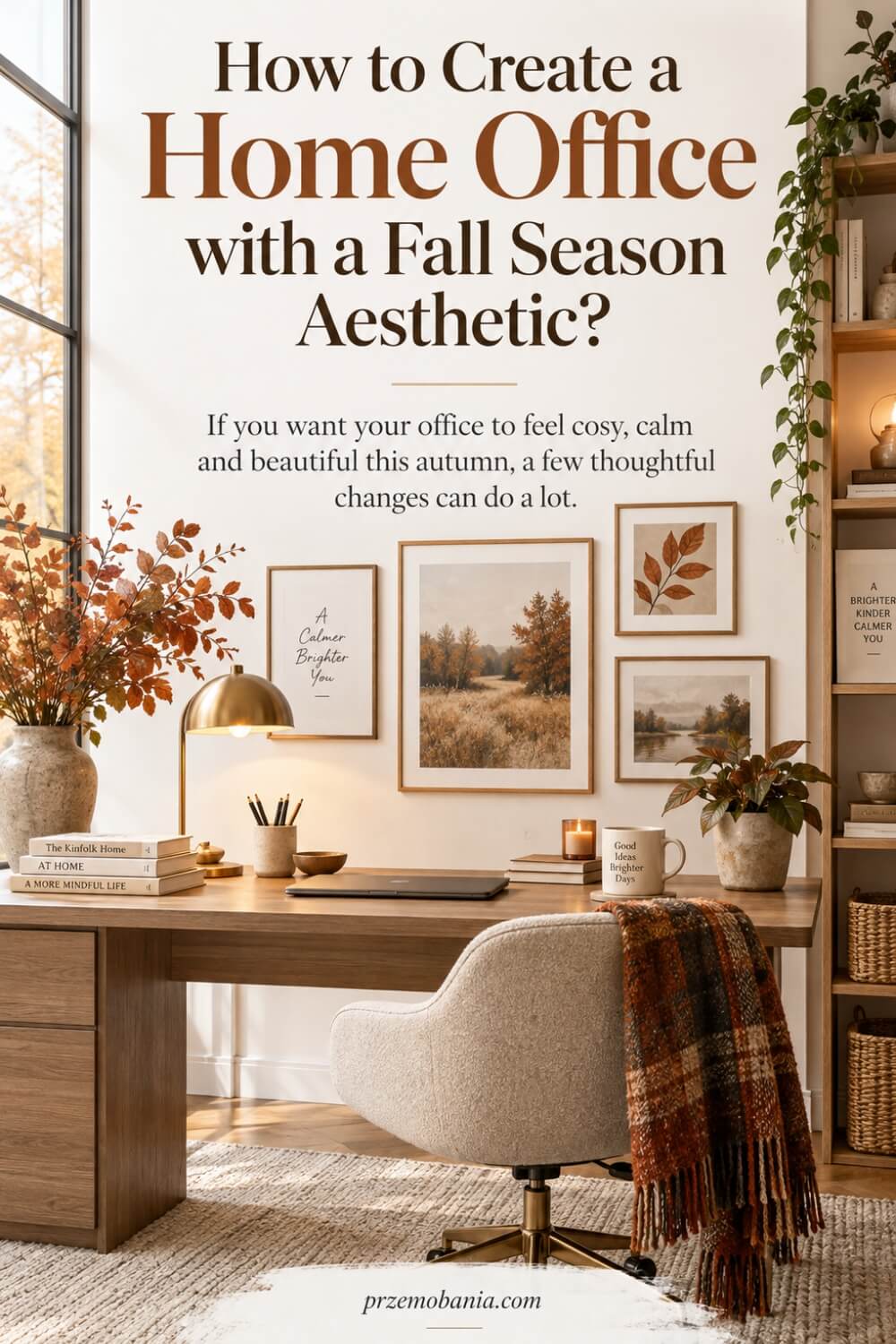
How to Keep a Home Office with a Fall Season Aesthetic Comfortable as Autumn Deepens?
As autumn moves towards colder, darker weeks, I start paying less attention to what looks seasonal and more attention to whether the room still feels pleasant after several hours of real work. A home office with a fall season aesthetic should continue supporting you when mornings become dimmer, windows stay closed more often and the temperature inside the house begins changing from one part of the day to another.
In our home, that matters because my wife can begin work feeling reasonably comfortable and find that the same chair, room temperature or sitting position feels completely different a few hours later. I have learned to keep useful layers within easy reach, leave enough space for her to adjust her position and avoid decorating the floor or surrounding area with anything that makes moving around the desk more difficult.
Temperature is another detail I used to underestimate, because a beautifully styled office can quickly become miserable if you are either shivering or sitting beside a radiator that makes the room unbearably warm. Rather than trying to heat the entire space purely for atmosphere, I prefer practical comfort such as an accessible throw, sensible clothing layers, curtains that help the room feel less exposed and furniture positioned away from unpleasant draughts where possible.
This affects me differently because I can become completely absorbed in writing and blogging, only to realise hours later that I have barely moved and the room has gradually become uncomfortable around me. Creating our workspaces together has made me much better at noticing those small signals earlier instead of assuming productivity means ignoring everything until the work is finished.
There is also something deeply reassuring about sharing a home where both of us can work in spaces that feel considered rather than improvised, particularly when life outside the office already asks a great deal from us. I cannot control how difficult my wife’s day will be, and she cannot always predict what her body will allow, but together we can control whether the room waiting for us feels calm, accessible and ready rather than another source of friction.
That is ultimately why my favourite autumn offices are never the ones with the most seasonal decorations; they are the ones you genuinely want to return to tomorrow morning because the space looks beautiful while quietly making everyday work a little easier.
Final Word on Home Office with a Fall Season Aesthetic
Creating a seasonal workspace should never become a race to buy decorations or copy whatever is popular on Pinterest that week. The best autumn office is one that still feels like your room, supports the way you actually work and adds warmth without making the space harder to use. If I could give you one final piece of advice, it would be to begin with how the room feels during an ordinary working day, then add seasonal character around that foundation.
For me, a home office with a fall season aesthetic works when comfort, function and atmosphere are treated as one idea rather than three separate jobs. Warm lighting can soften darker afternoons, richer colours can make a plain room feel grounded, and texture can add depth without filling every surface. At the same time, your chair still needs to support you, your screen needs to be easy to see, and the things you use every day should remain close enough that you are not constantly reaching, twisting or searching.
Living and working beside my wife has changed the way I judge a beautiful room. I used to notice the obvious things first, such as colour, furniture and whether everything matched. Now I notice whether she can settle into the space easily, whether she has what she needs within reach and whether the room gives something back when the day itself is already taking plenty from her. That lesson has shaped my own office too, because a workspace should not only photograph well. It should help you get through real mornings, long afternoons and the days when your energy disappears before your task list does.
You also do not need to finish everything in one weekend. Change the lighting first, then adjust colour, bring in texture, clear anything unnecessary and live with each choice long enough to notice whether it actually helps. Seasonal design becomes much more affordable and personal when you build it slowly, using pieces you already own alongside a few additions you genuinely love.
Autumn gives you permission to make your workspace warmer, calmer and more comforting, but you get to decide what that looks like in your own home. Keep what supports you, ignore what does not, and create a room that makes sitting down to work feel a little easier. That is the kind of home office I believe is worth designing every single day.
Your autumn office does not need to be perfect, expensive or filled with seasonal décor to feel special. Start with comfort, add warmth slowly and let the room reflect the way you genuinely live and work. Small thoughtful changes can turn an ordinary workspace into somewhere you are glad to return to each day.
If this helped you look at your workspace differently, leave me a comment below and tell me what you are changing this autumn. You can also check out the FREE eBook at the bottom of this post for more practical inspiration.


Przemo Bania is a blogger and writer who helps people get out of their traditional jobs to start a blogging career. Przemo also runs a health blog advocating for endometriosis and fibromyalgia…
Related Questions You May Be Asking About Home Office with a Fall Season Aesthetic
1. What colours work best for an autumn home office?
Warm neutrals, rust, ochre, olive green, burgundy, muted orange and natural brown all work beautifully because they reflect colours you actually see outdoors during autumn. I would choose one deeper shade as your main accent, support it with one or two softer tones, then use cream, beige or warm white to stop the room feeling dark or visually heavy.
2. How can I make my office feel autumnal without buying lots of decorations?
Start with things that change atmosphere rather than adding more objects. Swap a cushion cover, bring out a warmer throw, change your desk mat, introduce a textured basket or wooden accessory and adjust your lighting. Even moving existing books, ceramics or artwork into a more autumnal colour arrangement can make your office feel seasonal without spending much or creating extra clutter.
3. Can a small home office still have a strong fall aesthetic?
Absolutely, and I actually think smaller spaces benefit from restraint. Concentrate your autumn details around the desk, wall, shelf or corner you see most while working instead of decorating the entire room. One warm lamp, a coordinated colour palette, a tactile fabric and one strong visual feature can give a compact workspace plenty of seasonal personality without making it feel crowded.
4. When should I start changing my home office for autumn?
There is no rule saying your office has to change on a particular date. I usually think the right time is when the room itself starts feeling different, perhaps when mornings become darker, temperatures fall or you begin wanting a warmer atmosphere around your desk. Making changes gradually also lets you enjoy the transition rather than turning seasonal decorating into another exhausting weekend project.
Home Office with a Fall Season Aesthetic References
- https://en.wikipedia.org/wiki/Autumn_leaf_color
- https://www.sciencedirect.com/science/article/pii/S0272494425001112
- https://www.researchgate.net/publication/364114196_Evaluation_and_Improvement_of_Lighting_Ergonomy_in_Home-Office_Area
- https://www.housebeautiful.com/design-inspiration/a73820407/fall-lighting-trends-2026/
- https://www.hse.gov.uk/msd/uld/art/environment.htm
- https://www.hse.gov.uk/home-working/worker/
