
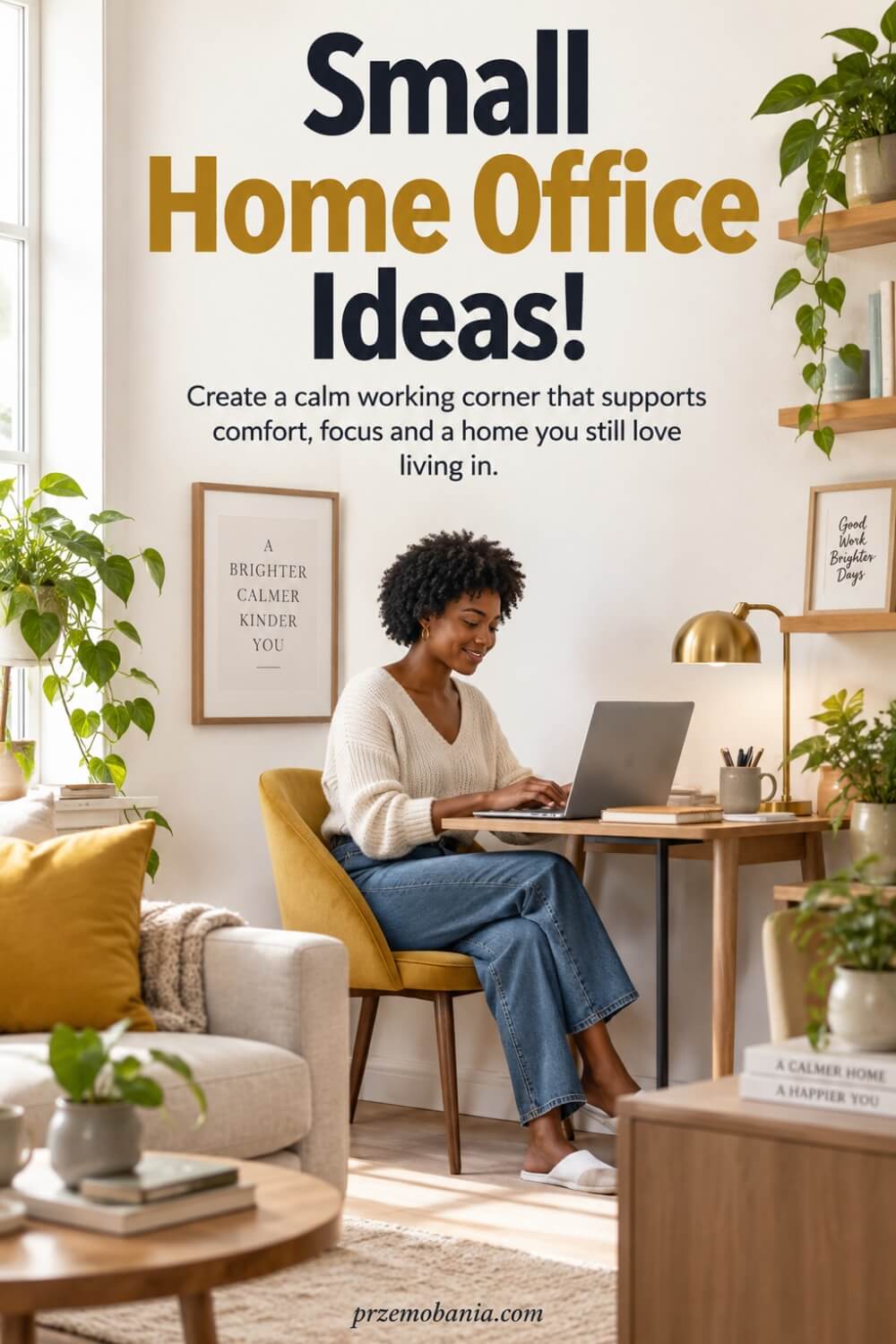
Small Home Office Ideas
Can a tiny corner really become a home office that feels calm, spacious and good enough to make you want to sit down and work? Small home office ideas can turn forgotten square metres into a practical, comfortable workspace without making the rest of your home feel crowded. If you have been balancing a laptop on the dining table, squeezing files into a bedroom corner or assuming your home is simply too small, I know exactly why this can feel frustrating.
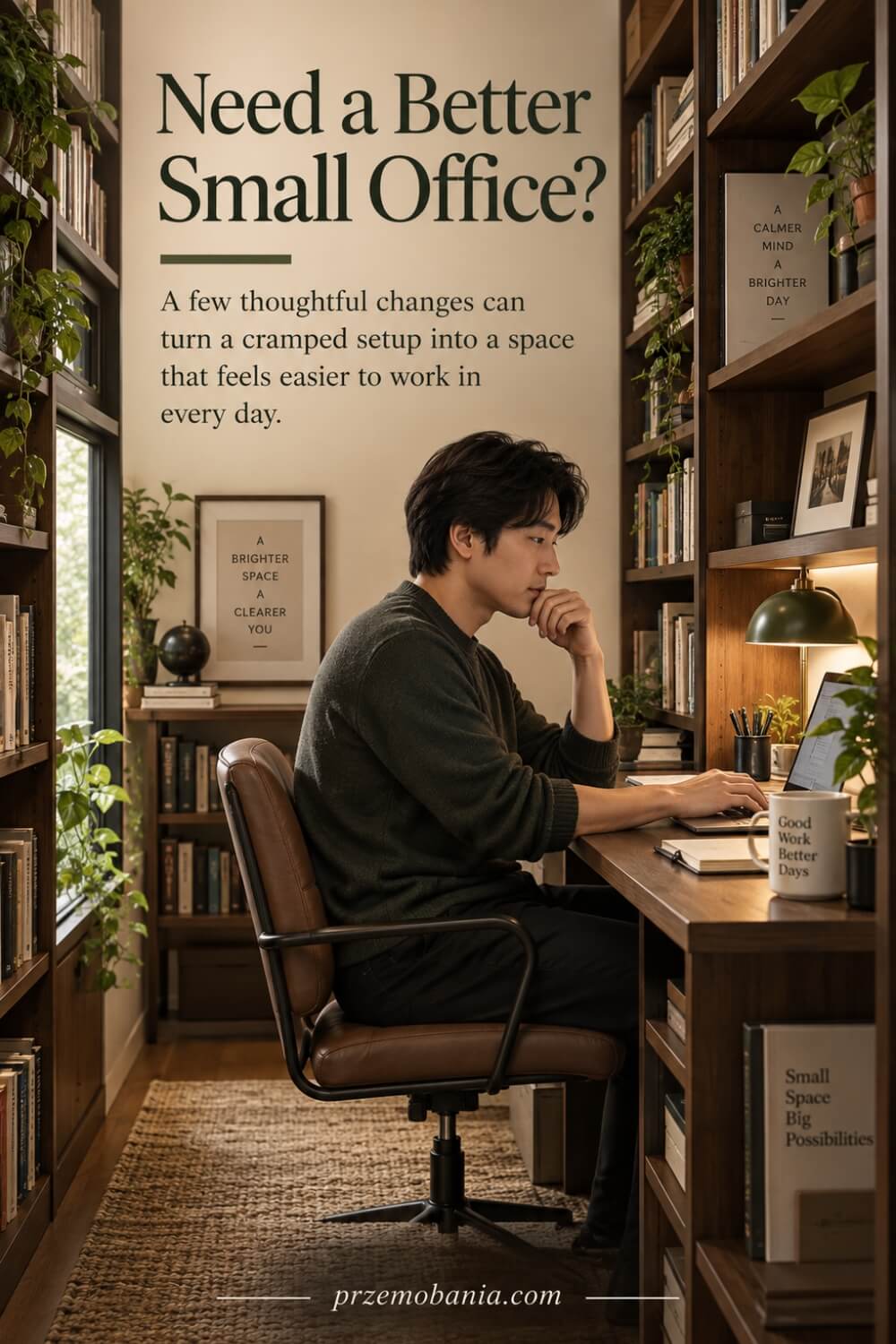
A small home office works best when every centimetre has a job: choose a compact desk, supportive chair, vertical storage, controlled lighting and tidy cables, then leave enough room to move. The aim is not to squeeze in more furniture, but to create a comfortable, focused workspace that fits you.
I write this as a passionate blogger whose life changed when chronic illness reshaped my wife’s days; the love of interiors my mum sparked in me as a child eventually helped me create a gentler workspace for my wife and a cosy home office where I could build my blogging income, and although much of what I share comes from living and testing these ideas ourselves, I have also placed the research and design sources I used at the bottom of this article so you can see where I keep expanding what I know.
What surprised me most when I dug into recent British research is how many people are still working without a dedicated room. Data from 2024, analysed in a 2026 Industrial Relations Journal paper, found that 29% of people working at home used spaces intended for other purposes and another 25% had a permanent workstation in the corner of a room, while 41% had a home office of their own.
Even more interestingly, 46% of those working in a home office said they produced more when working at home, compared with 38% of people working in spaces less protected from household activity. That does not mean you suddenly need a spare bedroom: HSE guidance focuses on practical things such as having room to change position, controlling lighting and glare, keeping cables safe, arranging equipment within comfortable reach and creating a sustainable working posture, which is exactly why a cleverly designed corner can sometimes serve you better than a badly planned full room.
Before choosing furniture simply because it fits, I would understand how layout, lighting, storage, comfort and equipment need to work together, and my guide to building a home workspace from the ground up gives you that wider foundation before we start making every precious centimetre count.
- How Small Home Office Ideas Turn Limited Space Into a Workspace That Works?
- Small Home Office Ideas That Make Daily Work Feel Lighter
- Small Home Office Ideas That Can Change With Your Life
- Small Home Office Ideas for Rooms That Must Do More Than One Job
- Small Home Office Ideas That Protect Focus and Energy
- Final Word on Small Home Office Ideas
How Small Home Office Ideas Turn Limited Space Into a Workspace That Works?
When I think about small home office ideas, I do not start with furniture; I start with the way you actually live and work in the room. A laptop-only job needs something very different from a setup with two monitors, a printer, notebooks and paperwork, so the first useful step is to list what must stay within reach and what can live elsewhere. That simple decision stops a tiny office from becoming a storage cupboard with a chair squeezed into it.
I also measure the space before I fall in love with a desk, because a piece can look beautifully compact online and still feel enormous once you need to pull the chair back, open a drawer or walk past it. In a small room, circulation is part of the design, not the empty space left over after decorating. The HSE’s home-working guidance makes the same practical point from a health angle: your working position should be comfortable and sustainable, and you should be able to move regularly rather than staying trapped in one posture.
Then I look for what I call borrowed space: an alcove, the end of a wardrobe run, a landing recess, a shallow wall beside a window or even a quiet section of a bedroom. These places are often too awkward for large furniture, yet that is exactly why they can be perfect for a narrow work zone. Recent interior-design advice also favours integrating a desk into the existing room, using overlooked areas and hiding work equipment where possible so the office does not take over the room after hours.
Once the position is right, I think vertically because the wall above a desk can work much harder than the floor beneath it. A shallow shelf, closed wall cabinet, pegboard or rail can keep the desktop clear without making the room feel crowded, especially when you limit what stays on show. I have learnt that visual calm matters almost as much as physical space: ten useful objects spread across a desk can make a corner feel smaller than twenty items stored neatly behind one door.
Light changes that feeling too, and I would rather place a compact workstation where daylight can help than compensate for a gloomy corner with a giant lamp and more furniture. Natural light is useful, but direct reflections on a screen can be tiring, so I position the monitor and window relationship first and then add task lighting where it is needed; HSE guidance similarly recommends using daylight where possible while managing glare and reflections. That is a small detail until you spend six hours there, and then it becomes the difference between a workspace you tolerate and one you can actually live with.
The final layer is visual separation: a change of wall colour, a rug, a timber panel, a curtain, a folding screen or even one framed print can tell your brain, “this is where I work”, without building another room. When the workday ends, being able to close a cabinet, slide the chair under the desk or put the laptop away helps the rest of your home feel like home again instead of an office that never switches off.
When my wife’s health changed, there were days when simply getting through the working day took more from her than anyone looking through our window could ever have understood. I stopped seeing a workspace as a pretty desk and chair and started seeing all the small details that could ask less from her body, while still giving her a place that felt like hers rather than a corner designed around illness. That stayed with me, because sometimes the most loving thing you can do with a small space is not fill it with more, but make every decision remove one little difficulty from someone’s day.
The practical lessons that came from those years are the ones I would start with in your own space:
- Measure Before You Buy Anything
- Match Your Desk to Work
- Use Awkward Corners Intentionally
- Take Storage Up the Wall
- Protect Comfort in Tight Spaces
- Control Daylight and Screen Glare
- Create a Clear Work Boundary
- Hide Work After Working Hours
- Make the Space Feel Yours
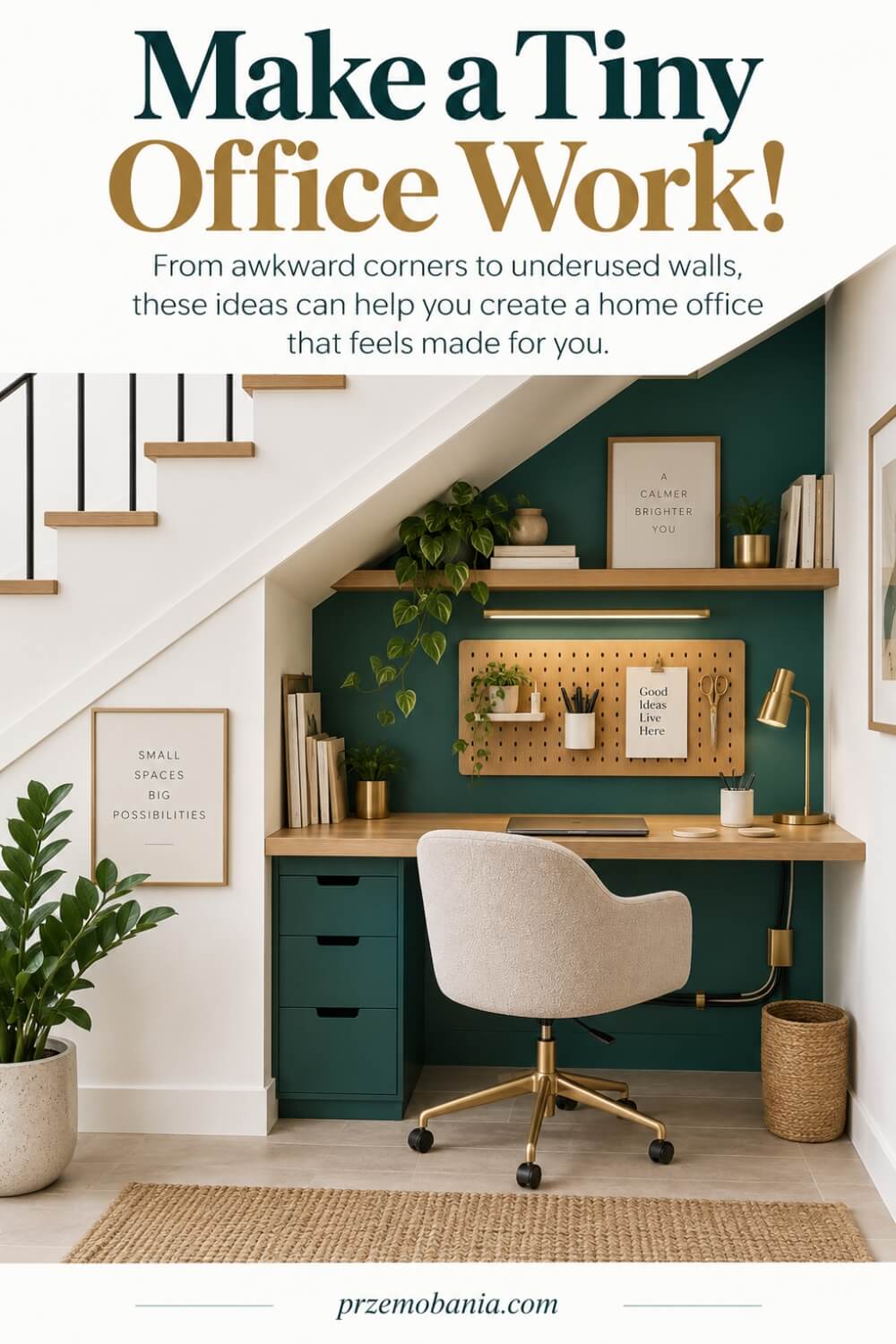
Measure Before You Buy Anything
I used to think measuring meant checking whether a desk would fit between two walls. It is more useful than that. I measure the full working zone, including the chair pulled back, the space my knees need, the direction drawers open and the path I use to walk past the desk.
In a small room, five centimetres can decide whether a setup feels effortless or irritating every single day. Mark the desk footprint on the floor with masking tape before ordering anything, then sit inside that outline with a chair and imagine reaching for your laptop, lamp and storage. Check skirting boards, radiators, sockets and window openings too, because these are the details photographs hide. I would rather discover on the floor that a desk is too deep than discover it after assembling it. Good small-space design begins with honest measurements, not wishful thinking.
Match Your Desk to Work
The right desk is not the biggest one you can squeeze into the room; it is the smallest one that comfortably supports the work you actually do. If you mainly use a laptop, a shallow desk may be enough, while a monitor, keyboard and paperwork need more depth so your screen is not sitting uncomfortably close to your face.
I learnt to separate “things I own” from “things I need while working”. That one habit can shrink the desk you require and leave more breathing room around you. A wall-mounted desk, compact writing desk, corner surface or narrow console can work beautifully when chosen for a specific job rather than because it looks fashionable online. If you regularly spread papers out, give yourself that surface instead of pretending you do not need it. Your desk should fit your working habits first and your décor second, because comfort quickly becomes part of the beauty.
Use Awkward Corners Intentionally
Some of the best workspaces I have created started in places that looked almost useless. A shallow alcove, a landing recess, the space beside a wardrobe or the end of a bedroom can become surprisingly effective when you stop asking, “What furniture fits here?” and start asking, “What function could this space perform?”
Built-in or made-to-measure solutions are wonderful, but you do not always need them. A narrow desktop cut to the exact width of an alcove, floating shelves above it and a chair that tucks fully underneath can make an awkward corner feel deliberate rather than improvised. Keep surrounding colours connected to the rest of the room so the office belongs there instead of shouting for attention. I love this approach because it gives forgotten space a purpose without stealing an entire room from the rest of your life.
Take Storage Up the Wall
When floor space is scarce, I look upwards before adding another cabinet beside the desk. Walls can hold shelves, slim cupboards, pegboards, rails and document pockets while keeping the area around your feet open, which immediately makes a small workspace feel calmer.
The trick is not to cover every centimetre above you. I usually keep the most-used items within easy reach, place occasional supplies higher up and hide visually messy things behind doors or inside matching boxes. Leaving some blank wall between storage pieces is important because your eyes need somewhere to rest too. Heavy items should be securely fixed to a suitable wall, and frequently used objects should not require awkward stretching. Vertical storage works best when it removes clutter from the desk without replacing it with clutter at eye level. Done well, it can make a tiny office feel organised rather than overfilled.
Protect Comfort in Tight Spaces
A small office should never punish your body simply because the room is compact. I have seen beautiful setups where the chair cannot move, the monitor is too low and the user twists sideways all day because the furniture was chosen for appearance before posture.
Give yourself enough room to sit squarely, place the screen in front of you and move your legs without constantly hitting drawers or storage. If space allows only one piece worth investing in, I would prioritise a supportive chair that suits your body over a decorative desk chair that photographs well. Raise a laptop when you work for long periods and use a separate keyboard and mouse so you are not forced to hunch forward.
My wife taught me, without ever needing to say it, that comfort is not an indulgence. When your body is already asking a lot from you, a workspace should quietly give something back.
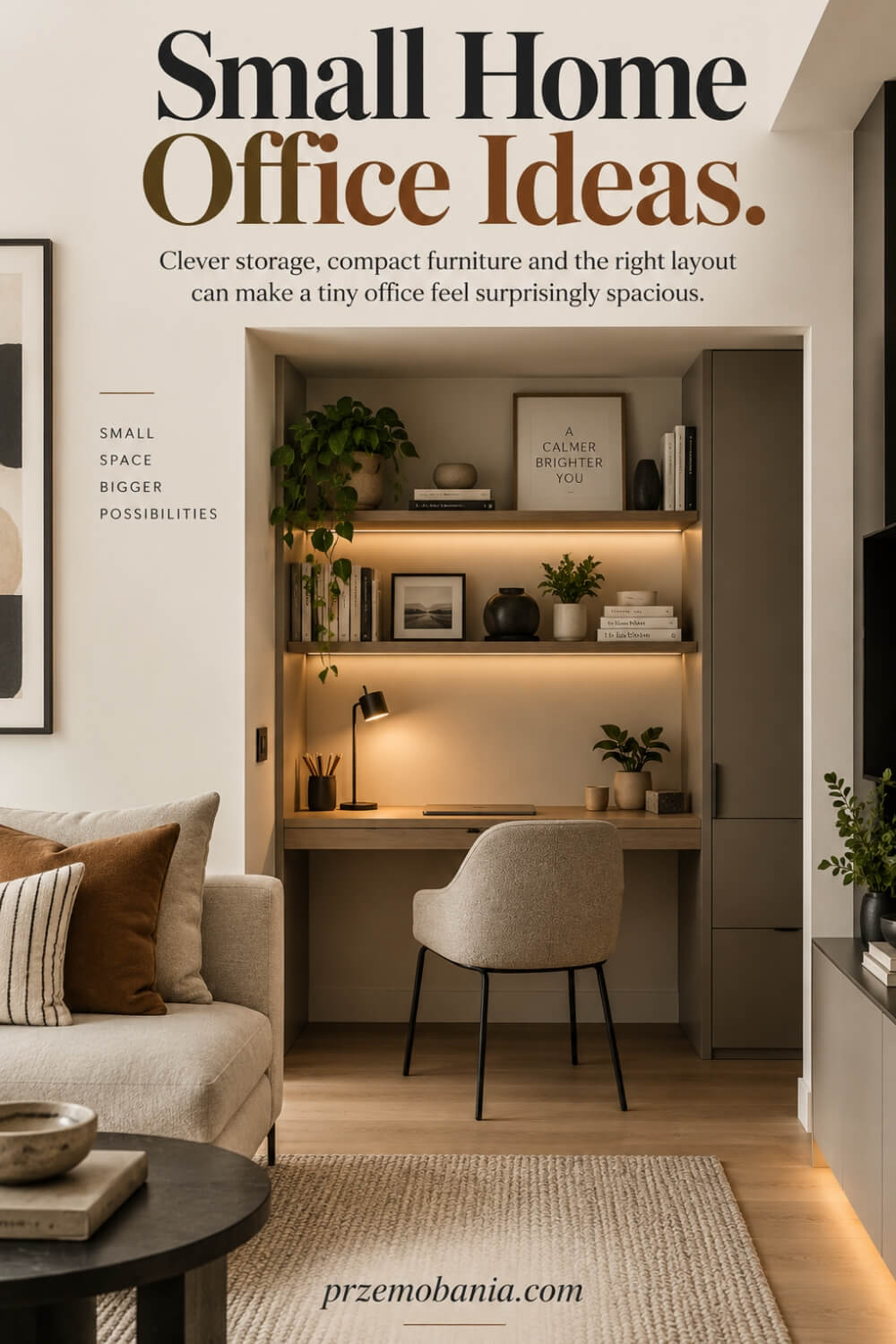
Control Daylight and Screen Glare
A bright workspace can feel larger and more cheerful, but more light is not automatically better light. I try to position a desk so daylight reaches the room without shining straight into my eyes or reflecting directly off the screen, because glare can turn an otherwise lovely corner into somewhere you avoid.
If you work beside a window, adjustable blinds, curtains or a sheer layer give you control as the sun moves through the day. Then add a focused task light for reading, writing or darker afternoons rather than relying only on one ceiling light. I also prefer warm, comfortable background lighting when I am working later because a harsh pool of brightness surrounded by darkness can feel tiring. The goal is balance: enough light to see clearly, enough control to prevent reflections and enough softness that the workspace still feels part of your home.
Create a Clear Work Boundary
When your office shares a bedroom, living room or dining area, the hardest problem is often not space but identity. One corner is expected to be both “work” and “home”, and without a visual boundary the working day can quietly spread into everything around it.
You can create separation without building a wall. A different paint colour, narrow rug, timber panel, curtain, open shelving unit or simply a deliberately framed section of wall can tell you where the workspace begins and ends. I like boundaries that are obvious enough to change the mood but subtle enough to keep the room feeling connected. This matters psychologically as much as visually. When I leave my desk, I want to feel that I have stepped away from work rather than merely turned my chair. In a small home, that tiny sense of separation can become surprisingly valuable.
Hide Work After Working Hours
A small home can feel exhausting when work equipment remains visible from breakfast until bedtime. I learnt that being able to close, fold or put away part of the office changes how the whole room feels once the working day ends.
A desk inside a cupboard, a laptop drawer, a lidded basket for cables, a printer hidden behind a cabinet door or even one attractive box for notebooks can create that sense of closure. You do not need to hide every pencil; the aim is to remove the strongest visual reminders of unfinished work. Build a two-minute closing routine where you clear the surface, plug devices in and put tomorrow’s essentials in one place. It sounds simple, but repetition turns it into a boundary between earning and living. When space is shared, tidying the office is not about perfection. It is about giving the room back to yourself.
Make the Space Feel Yours
After solving measurements, ergonomics and storage, I always leave room for personality because a functional office can still feel cold if it has nothing of you in it. The best small workspaces usually contain fewer decorative objects, but the ones that remain mean something.
Choose one or two things that genuinely lift you: a framed photograph, a piece of art, a favourite book, a beautiful lamp or a colour you never tire of seeing. Repeat tones already used in the room so the office feels intentional, then let texture do some of the work through timber, fabric, paper or a soft rug. I avoid filling tiny desks with decorative clutter because I want beauty to support the work, not compete with it. The point is not to copy a perfect Pinterest room. It is to create a corner that makes you think, “Yes, I can work here,” even on a difficult day.
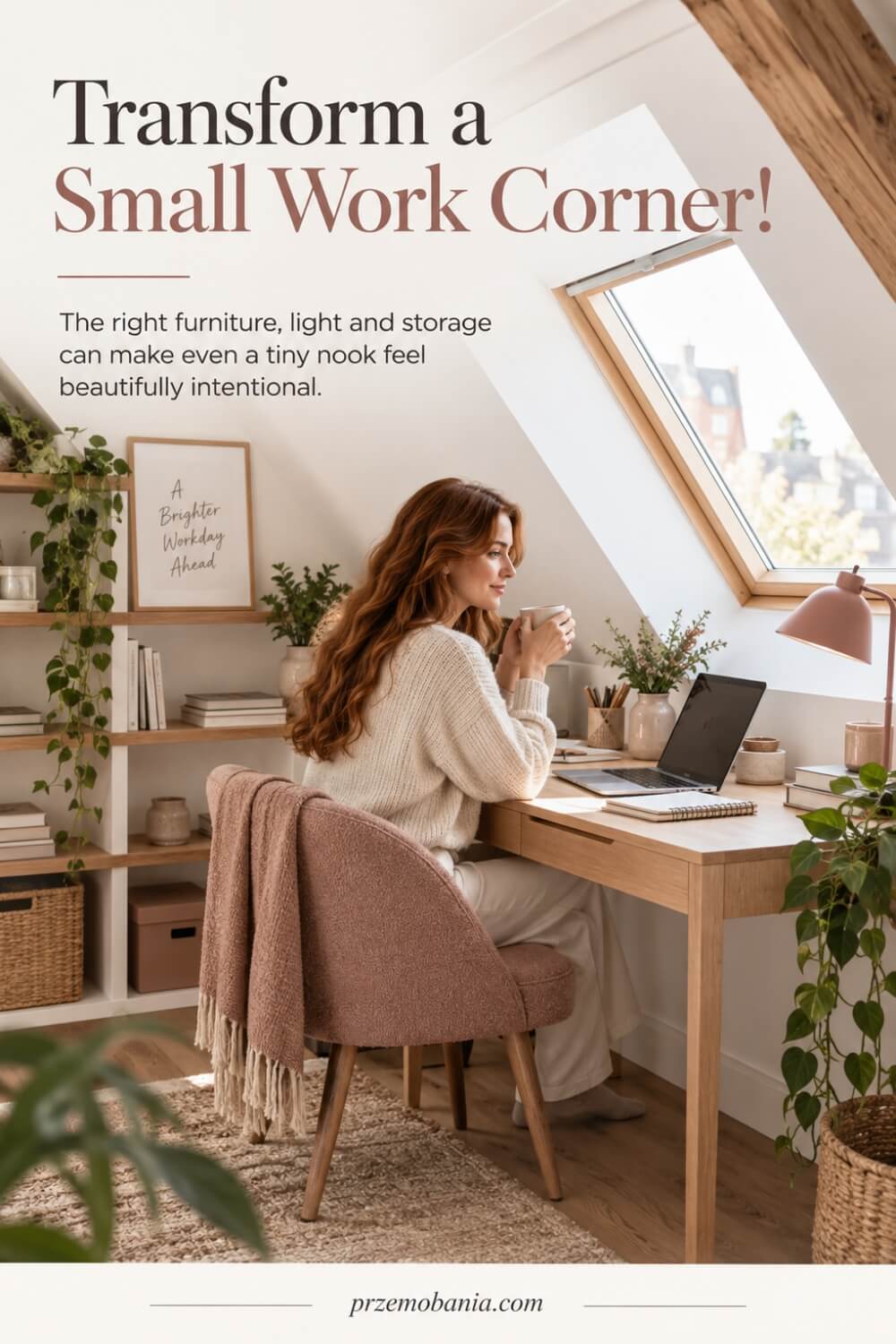
Small Home Office Ideas That Make Daily Work Feel Lighter
There is a point where designing a small workspace stops being about fitting furniture into a corner and starts being about removing friction from the hours you spend there. The most useful small home office ideas I have discovered came from watching how quickly tiny inconveniences become exhausting when somebody already has limited energy. That changed the way I looked at every drawer, cable, shelf and object around our desks.
On difficult mornings, my wife did not need a beautiful workspace that demanded effort from her before work had even begun. We learnt to keep the things she used most within an easy reach zone, so she was not repeatedly twisting, bending or getting up simply to find a charger, notebook or document. A drawer beside the chair could sometimes matter more to her than an expensive decorative feature across the room.
I began designing around different kinds of days rather than imagining every working day would feel the same. A small footrest, an extra cushion nearby, somewhere to rest her arms or a surface that could be cleared quickly gave us options when her body needed something different from what it needed yesterday. None of these things looked dramatic, but that was precisely the point because good design often works quietly in the background.
Noise became another detail I stopped dismissing once working from home became part of our normal life. Soft furnishings, curtains, a rug and even the position of shelving can reduce the hard, echoing feeling that makes a small room seem busier than it really is, while headphones can create another layer of privacy when two people share nearby spaces. Temperature matters too, because a desk beside a draughty window or directly against a radiator can become uncomfortable long before you realise the furniture itself was never the problem.
The deepest lesson for me came from seeing how much dignity there can be in a workspace that asks less of the person using it. When I watched my wife sit down on a difficult day and realise that everything she needed was already where her hands expected it to be, I understood that thoughtful interiors can become a quiet form of care without looking clinical or reminding somebody that they are struggling.
That is why I no longer design small offices simply to look clever in photographs; I want them to help you conserve energy, feel capable and finish the day with a little more of yourself left for the life waiting beyond the desk.
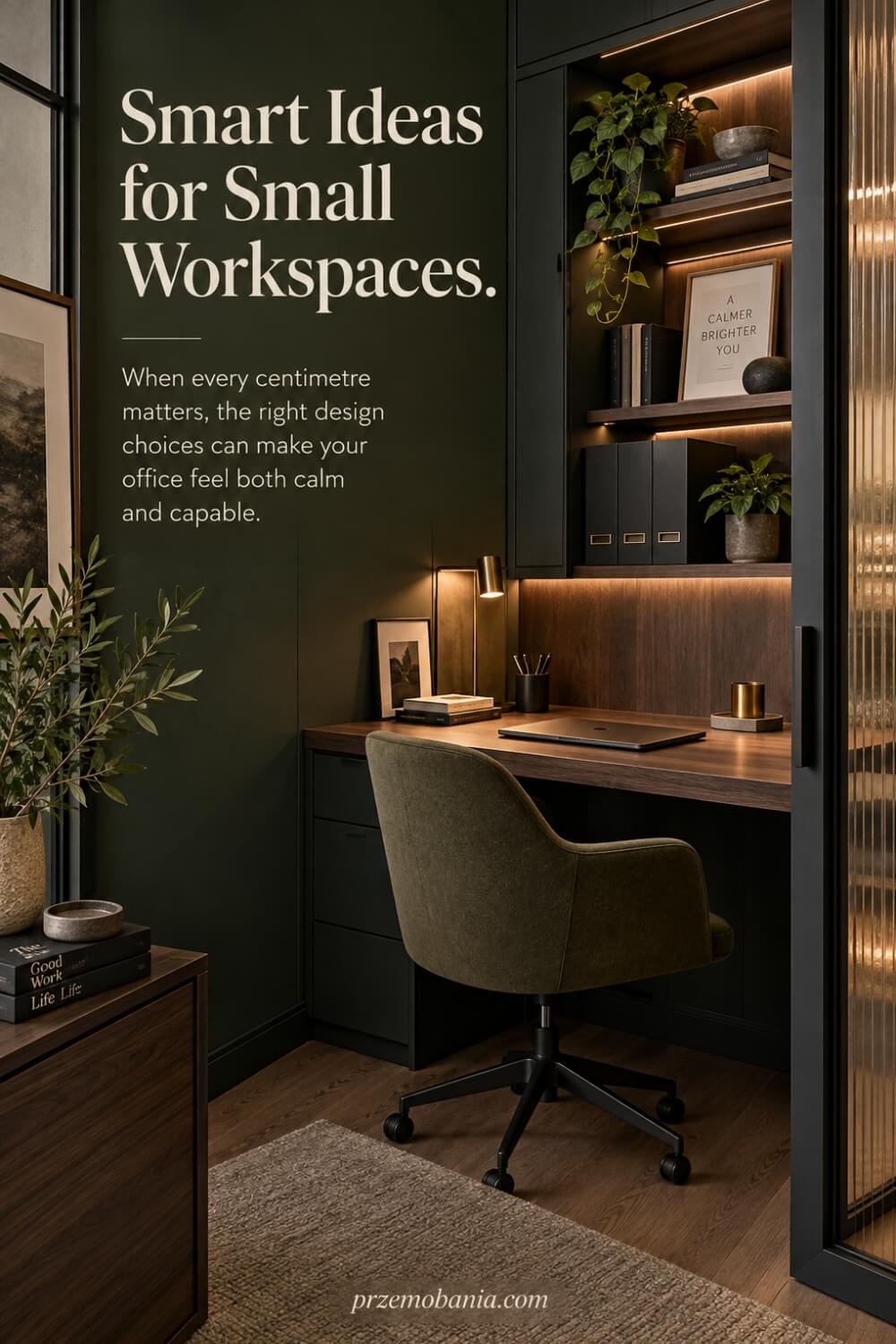
Small Home Office Ideas That Can Change With Your Life
The longer I have worked from home, the more I have understood that small home office ideas should not solve only the version of your life you are living today. Your job can change, your equipment can change, your health can change, and the room itself may need to serve a completely different purpose a year from now. That is why I prefer flexible decisions over layouts that lock every centimetre into one permanent arrangement.
I choose storage that can be reorganised, shelves that can hold different things later and furniture that can move without dismantling half the room. Even leaving one section of wall or floor deliberately unused can be valuable because it gives you somewhere to adapt when another monitor, piece of equipment or new need appears. A small workspace becomes much easier to live with when it has a little capacity to breathe and change.
I learnt this particularly through my wife because her working needs were never frozen in one perfect arrangement. Some periods demanded more support and easier access to everything around her, while better days allowed the room to work differently, and seeing that taught me not to design around an imaginary person who feels exactly the same every morning. For me, blogging changed too, with more screens, photography equipment, notebooks and projects gradually entering a space that had originally been much simpler.
Instead of treating every change as a reason to redesign the whole office, we learnt to make smaller adjustments and keep the strongest foundations intact. That saved money, reduced disruption and prevented our home from constantly feeling like another unfinished project. Most importantly, it gave both of us permission to accept that a workspace does not have to remain visually identical to remain beautiful.
I want your office to grow with you in the same way, because sometimes the smartest design choice is simply leaving enough flexibility for a future version of yourself that you have not met yet.
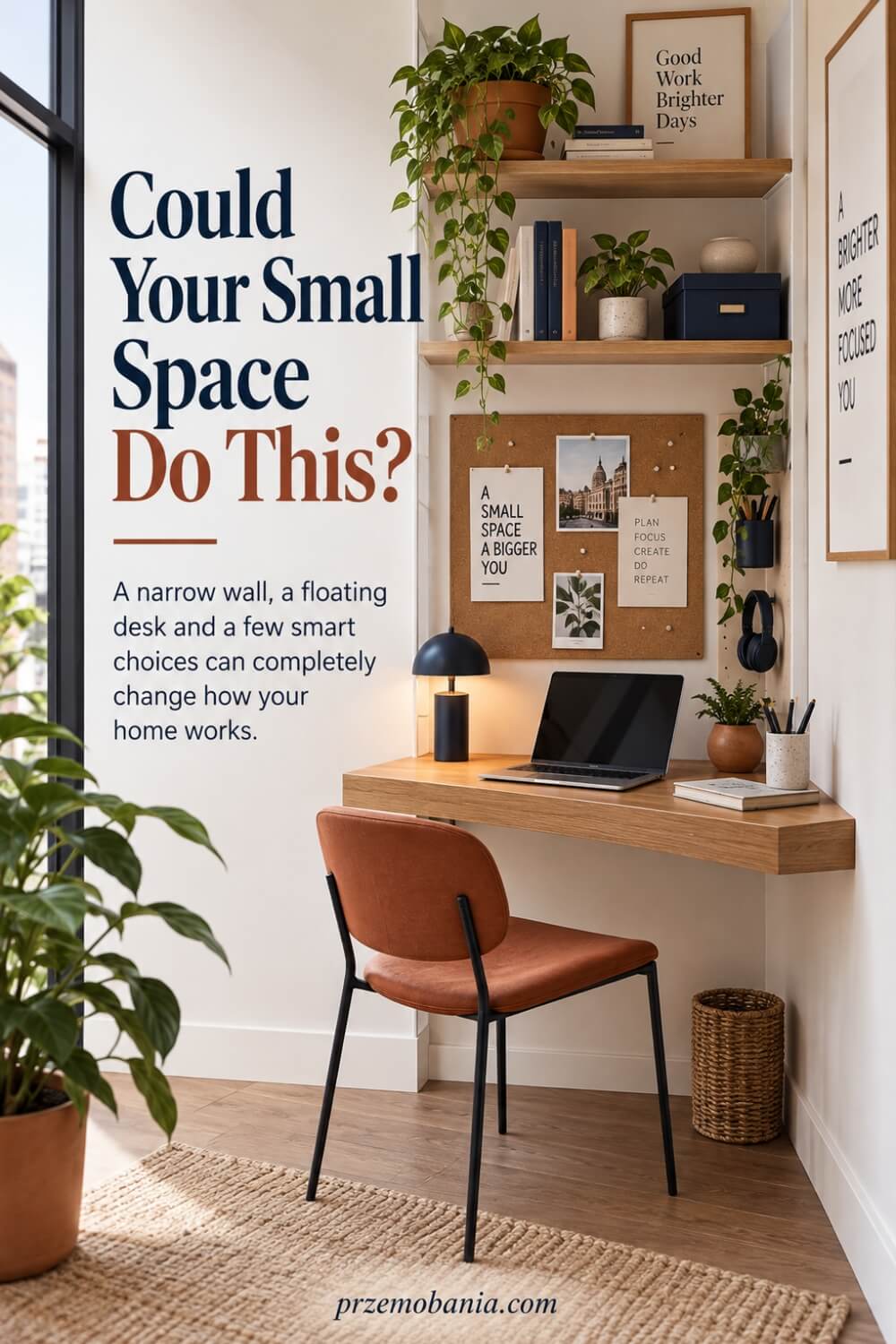
Small Home Office Ideas for Rooms That Must Do More Than One Job
One of the hardest parts of working from a smaller home is accepting that your office may never have a room completely to itself. This is where small home office ideas become less about creating a miniature corporate office and more about designing a space that can change character without becoming inconvenient. A spare bedroom may need to welcome guests, a dining room still has to host meals, and your living room deserves to feel relaxing once the laptop closes.
Rather than asking one room to look permanently divided into separate functions, I prefer to make individual pieces earn their place. A dining table can become an occasional workspace when work equipment has a proper home nearby, while a slim cabinet can hold stationery, chargers and documents without announcing itself as office storage. The less effort required to move between those uses, the more likely the arrangement is to work beyond the first enthusiastic week.
Furniture scale matters enormously here because visual size and physical size are not always the same thing. Desks and cabinets raised on legs allow more floor to remain visible, while shallow furniture and rounded corners can prevent a compact room from feeling boxed in. I also pay attention to depth before width, because a desk projecting too far into a walkway can disturb a room far more than a slightly wider surface sitting neatly against the wall.
Technology is another place where a shared room can become cluttered surprisingly quickly. A docking station, carefully routed charging cables and one permanent place for accessories can turn several loose pieces of equipment into something that takes seconds to connect and disconnect. Planning sockets before deciding the final furniture position also prevents extension leads from crawling across the floor or forcing the desk into an awkward location simply because electricity happens to be there.
Colour can help the office belong to the room rather than looking as though workplace furniture has accidentally landed in your home. Repeating timber tones, cabinet finishes, fabrics or metal details already found nearby creates continuity without requiring every object to match. I often prefer this quieter approach to creating an aggressively contrasting office zone because a multipurpose room still needs to feel whole when nobody is working.
The most successful shared spaces I have lived with are not necessarily the ones that hide every trace of work. They are the ones where the transition between working and living is fast enough that you actually bother making it. If changing the room takes twenty minutes every evening, eventually you will stop doing it, but if closing work means putting away a laptop, sliding in a chair and shutting one cabinet door, the room can feel like yours again almost immediately.
This became deeply personal for me because there were evenings when my wife had already spent every ounce of energy she had simply getting through work, and I could see how unfair it would be for the room itself to demand another complicated routine from her. Watching her close her laptop and leave a carefully organised little workspace behind taught me that good design can sometimes give somebody something far more valuable than style: it can give them an easier ending to a difficult day. In the next section, I want to show you five practical ways to create that kind of flexible setup without making your home feel as though work has taken permanent possession of it.
- Choose Furniture That Changes Role
- Let One Surface Do More
- Plan Power Before Furniture
- Reduce Visual Weight
- Reset the Room Each Evening
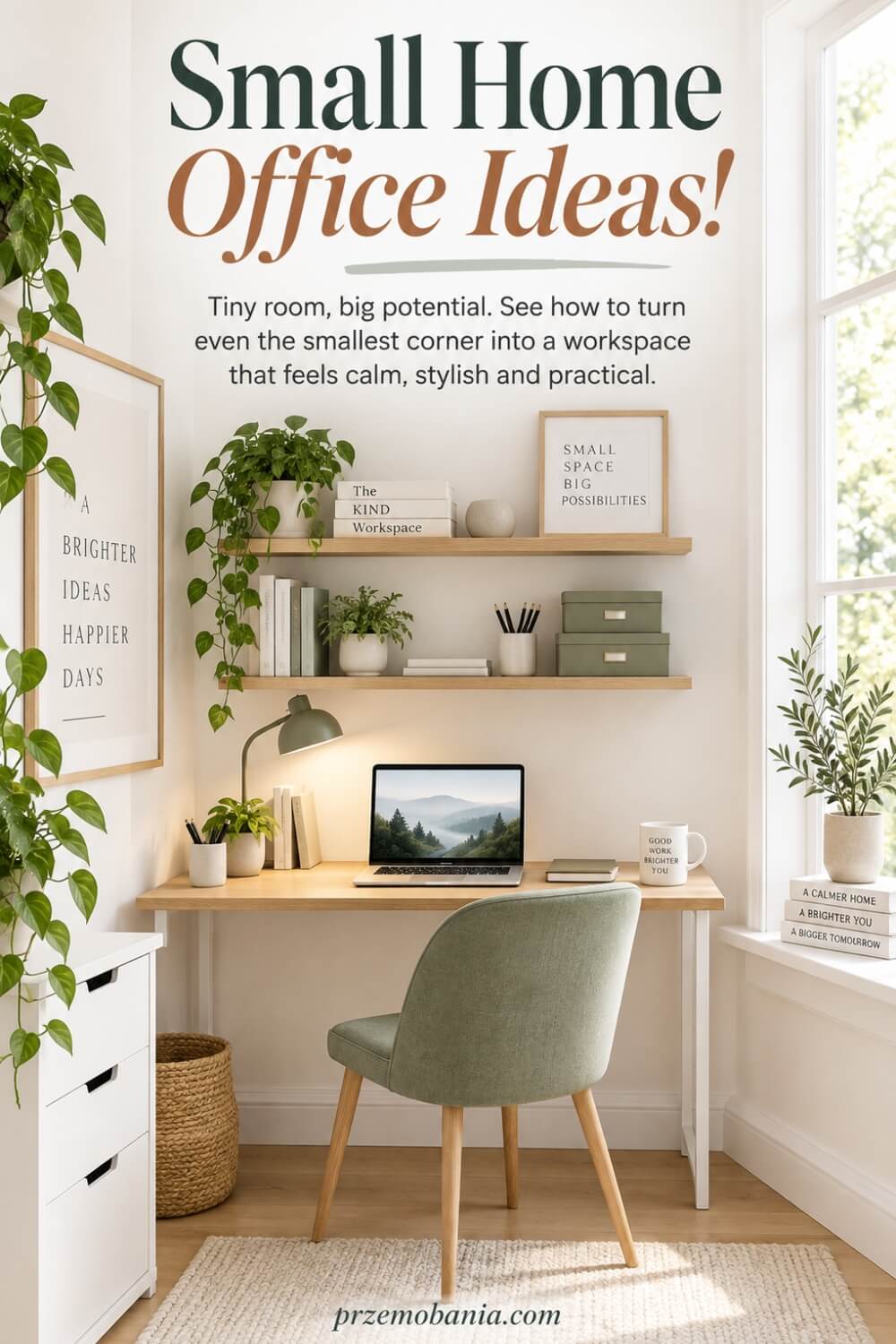
Choose Furniture That Changes Role
In a small room, I value furniture that can quietly change purpose because it lets the space adapt without feeling temporary or improvised. A compact desk that doubles as a console, a storage ottoman that becomes extra seating, or a fold-down surface that disappears after work can give you function without asking for permanent floor space.
The important part is choosing pieces that are genuinely easy to transform. If folding a desk away means unplugging six cables, moving a lamp and emptying three shelves, you will probably stop doing it. I look for simple movement, sensible hinges, stable surfaces and storage that keeps work essentials close to where they are used. Flexible furniture should make your day easier, not create another task. When one well-chosen piece can serve two roles beautifully, a small room starts feeling clever rather than compromised.
Let One Surface Do More
A single surface can sometimes solve several problems if you plan its use deliberately. A dining table may become your work desk during the day, a bedroom console can hold a laptop for a few hours, or a wide shelf can become a compact writing station without introducing another bulky piece of furniture.
What matters is how quickly you can reset that surface. I keep work equipment grouped together in one tray, drawer or nearby cupboard so the change from home mode to work mode takes minutes, not a full tidy-up. Protect the surface if needed, keep only daily essentials within reach and avoid building a permanent tower of office supplies on top of it. Shared surfaces work best when neither function feels like an inconvenience. If the table can return to dinner, reading or family life without a battle, you have created flexibility without sacrificing comfort.
Plan Power Before Furniture
I have learnt that sockets can decide the success of a small office long before colour or styling enters the conversation. A beautiful desk placed far from power can quickly lead to trailing extension cables, chargers stretched across walkways and equipment positioned where it is awkward to use.
Before moving furniture, list everything that needs electricity, including your laptop, monitor, lamp, phone charger, printer and any docking equipment. Then work out where the cables can travel safely and whether they can be clipped, routed or contained without becoming difficult to access. I prefer keeping the main power point close to the workstation and leaving enough flexibility to unplug things easily. This may sound like a boring detail, but it makes the whole setup feel calmer and more permanent. When power is planned first, the furniture can support your work instead of fighting the location of the nearest socket.
Reduce Visual Weight
A small room can feel crowded even when the furniture technically fits, which is why I pay attention to visual weight as much as physical measurements. Heavy cabinets, deep desks and solid furniture can make a compact corner feel closed in, while slimmer profiles, visible legs and lighter forms allow more of the floor and wall to remain in view.
I do not mean every small office must be pale or minimalist. Dark colours can look beautiful in a compact space when the shapes around them are balanced and the room has enough light. I simply avoid stacking too many visually dominant pieces in one area. A slim desk paired with closed storage, one strong artwork and a restrained selection of accessories can feel much calmer than several competing objects. Your eye needs pauses as much as your body needs space. When the room looks easier to understand, it often feels easier to work in too.
Reset the Room Each Evening
One of the simplest habits I use is a short evening reset because it stops work from visually following me into the rest of the night. I clear the desk, return loose items to their place, connect anything that needs charging and leave only what I need to begin again the next morning.
The routine should be small enough to repeat even when you are tired. My wife taught me how important that is, because on difficult days there simply was not energy left for elaborate organising after work.
A basket for cables, one drawer for paperwork and a permanent place for the laptop can be enough. I want the room to feel softer the moment work ends, not as though another job has started. That tiny reset gives the space back to us and creates a mental full stop at the end of the day. In a shared room, that sense of closure can be just as valuable as any piece of furniture.
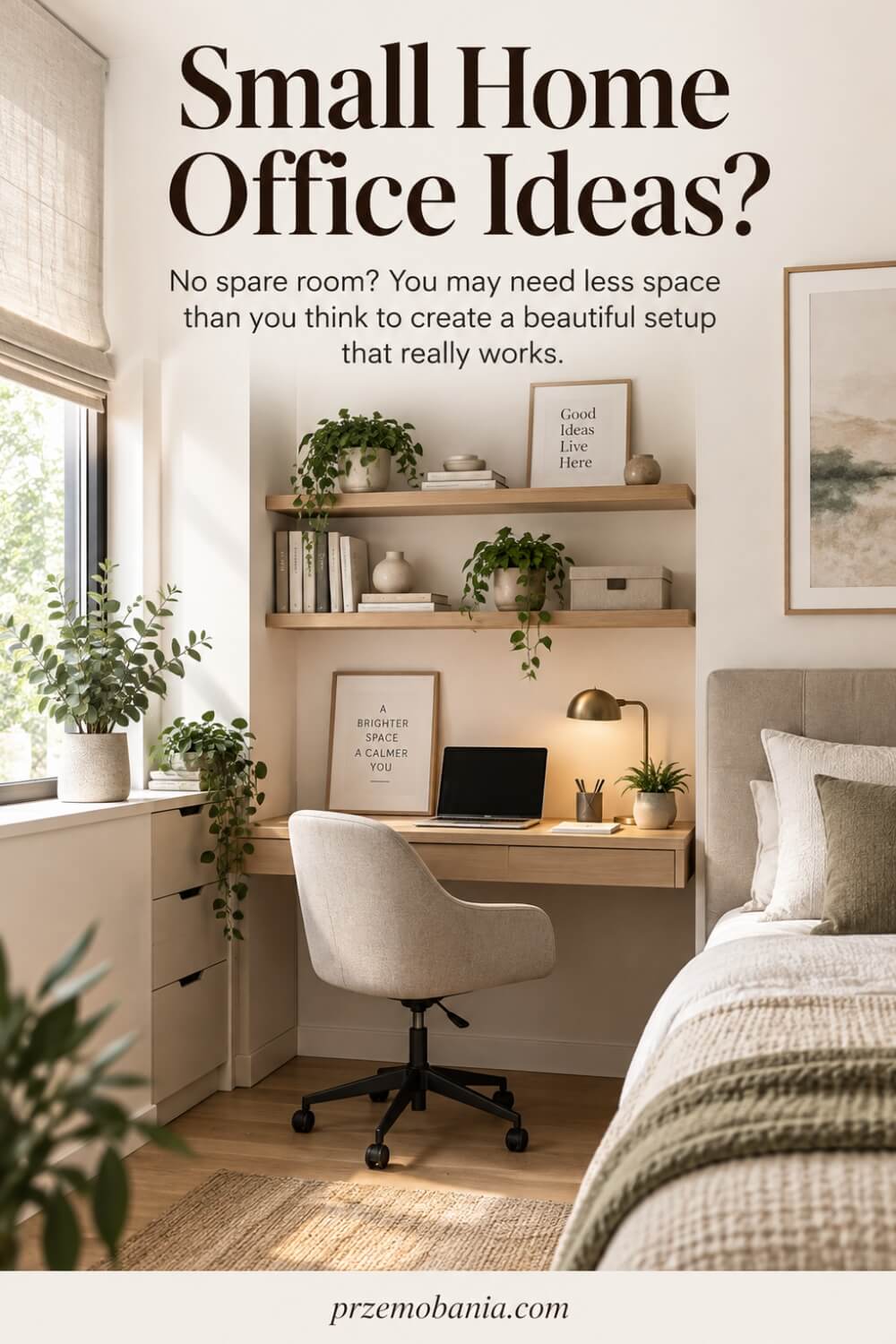
Small Home Office Ideas That Protect Focus and Energy
What I eventually realised is that a workspace can fit perfectly on paper and still drain you if it constantly competes for your attention. The small home office ideas that have helped us most are often the quiet ones that reduce background decisions, visual distraction and the little interruptions that slowly eat into concentration. When everything has a predictable place, your mind does not have to keep solving the room before it can solve the work.
I became especially aware of this while watching my wife work through days when her energy was already stretched thin. A chair scraping across the floor, paperwork piled beside the screen, somebody walking behind her or having to search for one missing charger might sound insignificant to another person, but several small irritations together could make an already demanding day feel much heavier. That taught me to design not only around what the room contains, but around what the person sitting there has to notice, reach for, hear and repeatedly think about.
For myself, simplifying the workspace made it easier to move into writing mode because fewer objects were competing with the article, research or project in front of me. I now prefer keeping tomorrow’s first task visible while putting unrelated work away, because opening the day with one clear direction feels very different from facing ten unfinished things at once. Even the position of my chair matters, since looking towards a calmer part of the room helps me concentrate better than facing household clutter or constant movement.
For us as a couple, these choices also reduced the feeling that work had colonised our home. When her working day was particularly hard, I wanted the room around her to become quieter rather than continue reminding her of everything she had not managed to finish, and I wanted my own blogging work to disappear enough that we could still share the same home as husband and wife rather than two people permanently sitting inside an office. That is why I now see focus as something you can support through design, not something you should blame yourself for losing.
Your workspace does not need to be silent, empty or perfectly styled to help you concentrate; it simply needs to remove enough unnecessary friction that your attention has somewhere safe to land.
Final Word on Small Home Office Ideas
After everything we have covered, I hope you can see that creating a good workspace in a limited area is not about squeezing an office into whatever space is left. It is about understanding how you work, how your home already functions, what your body needs during the day, and which details make the room easier to live with once work finishes.
For me, that lesson took years to understand. I used to look at desks, shelves and colour schemes first because those were the visible parts of a home office. Living and working alongside my wife changed that. I began noticing the things photographs rarely show: how far somebody has to reach for a charger, whether a chair can move easily, whether sunlight reflects from a screen, whether the room becomes stressful when work equipment stays visible all evening, and whether the setup still works on a difficult day.
That is where small home office ideas become genuinely useful. They are not tricks for making a tiny corner look larger on Pinterest. They are ways of making limited space work harder without asking more from the person using it. A narrow desk can be enough when it supports the job properly. One carefully placed shelf can be more useful than a large storage unit. A clear walking route, a comfortable chair, controlled lighting and somewhere to hide work at the end of the day can change how the entire room feels.
I would also resist the temptation to finish everything at once. Live with the space for a while. Notice what annoys you, what you reach for repeatedly and what you never use. Move the lamp if the light feels wrong. Remove a shelf if it makes the desk feel crowded. Add storage only when you understand what genuinely needs storing. The best home offices I have lived with became better through small corrections rather than one expensive transformation.
Your workspace should also be allowed to change with you. Jobs evolve, homes change and bodies do not always give us the same kind of day. A setup that can adapt will usually serve you longer than one designed around a perfect photograph. That flexibility became important in our home because some days demanded more comfort, less movement and fewer unnecessary decisions than others.
Most of all, I want you to remember that you do not need a spare room to create somewhere that supports meaningful work. You need a thoughtful corner that respects your space, your habits and your life. Start with what you already have, solve the biggest irritation first, and build from there. When each decision has a reason behind it, even a very small office can become somewhere you feel organised, comfortable and proud to sit down each morning.
That, for me, is what good home office design should achieve. It should not impress people who visit for five minutes. It should quietly make the hours you spend there better. Day after day, without demanding attention.
You do not need more square metres to begin. You need a space that understands what your working day asks of you and removes as much friction as possible. Start small, change what is not working, keep what helps, and let your office grow with your life. A thoughtful corner can become the place where your next chapter begins.
I would love to hear what you are working with, so leave a comment below and tell me about your space. You can also check out the FREE chapter of my eBook at the bottom of this post.


Przemo Bania is a blogger and writer who helps people get out of their traditional jobs to start a blogging career. Przemo also runs a health blog advocating for endometriosis and fibromyalgia…
Related Questions You May Be Asking About Small Home Office Ideas
1. Where is the best place to put a small home office?
The best position is somewhere with enough light, power access and separation from household distractions. An alcove, bedroom corner, landing, spare-room wall or quiet section of a living room can all work. I would choose the place that supports your daily routine rather than the one that simply looks best in a photograph.
2. How small can a home office desk be?
A compact desk can work perfectly well if it comfortably holds the equipment you actually use. For laptop work, a narrow surface may be enough, while monitors and paperwork usually need more depth. I would always measure your chair movement, legroom and working reach as well as the desktop itself before deciding how small you can realistically go.
3. Can I create a home office in my bedroom?
Yes, and it can work beautifully when the office has a clear visual boundary and can be softened after work. Choose furniture that complements the bedroom, contain cables and paperwork, and avoid letting the desk become permanent clutter. Being able to close a laptop, clear the surface or hide equipment helps the bedroom feel restful again in the evening.
4. What lighting works best in a tiny home office?
I prefer combining controlled daylight with focused task lighting rather than relying on one bright ceiling light. Position your screen to reduce glare, then use blinds or curtains when sunlight becomes too strong. A compact adjustable desk lamp can illuminate reading and writing without taking over the room, while softer background lighting helps the workspace feel comfortable later in the day.
5. How do I add storage without making my office feel crowded?
Use the wall before sacrificing more floor space. Shallow shelves, wall cabinets, pegboards and narrow storage can keep everyday items close while leaving the desk clearer. I also hide visually messy supplies wherever possible and keep only frequently used objects within easy reach. The aim is not maximum storage, but enough organised storage to make working simpler.
6. How can I make a small home office feel bigger?
Keep walking routes clear, choose furniture with appropriate proportions and avoid filling every available surface. Visible floor, tidy cables, controlled storage and good lighting can make a compact workspace feel far more open. I also like repeating colours and materials already used in the surrounding room, because visual continuity prevents the office corner from feeling like a separate bulky box.
Small Home Office Ideas References
- https://www.idealhome.co.uk/home-office/small-home-office-ideas-222302
- https://www.idealhome.co.uk/all-rooms/bedroom/ways-to-add-desk-to-bedroom-without-ruining-sleep
- https://onlinelibrary.wiley.com/doi/full/10.1111/irj.70032
- https://www.hse.gov.uk/home-working/worker/
- https://www.hse.gov.uk/humanfactors/topics/lighting.htm
