
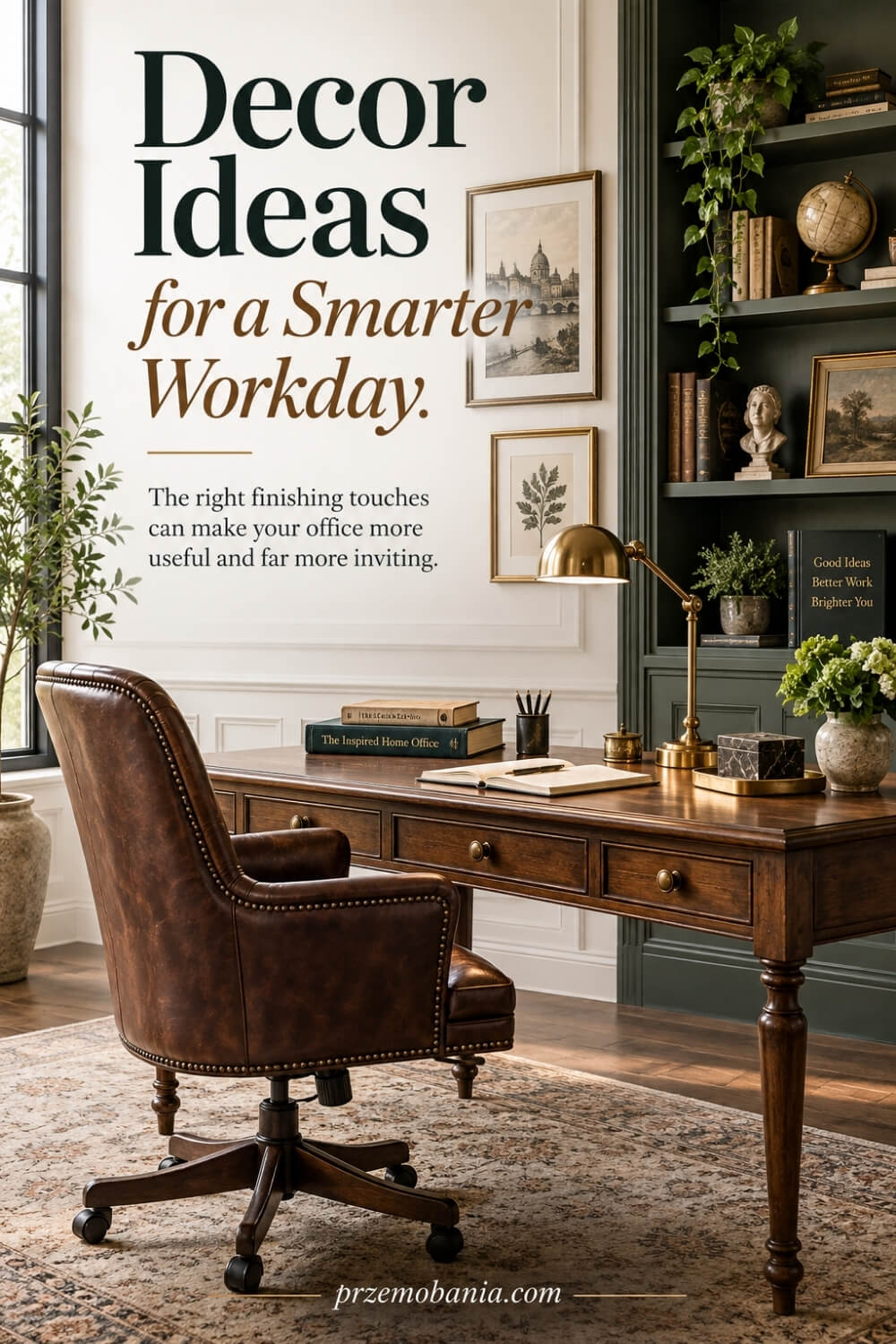
Home Office Decor Ideas
What if the reason your home office never quite feels right is not the desk at all, but everything surrounding it? Home office decor ideas can turn an ordinary work corner into a place that feels calmer, more organised and far more like you. If your workspace looks fine on paper but still leaves you restless, distracted or uncomfortable after an hour, I know exactly why you are searching for something better.
The best home office décor combines a comfortable work setup with purposeful lighting, practical storage, a coherent colour palette, personal objects, texture and natural elements. The aim is not to fill the room, but to make it easier to focus, organise your work and enjoy being there each day.
I write this as a passionate blogger whose life changed when my wife became chronically ill, but also as the boy whose mum first taught him how plants, light and thoughtful details could soften a room; years later, I used that love of interiors to help my wife shape a kinder workspace for working from home, while creating my own cosy office where I write, build my blogs and make a living, and because personal experience should never be the only source of advice, I have included at the bottom of this article the sources I used to keep questioning, learning and expanding what I know.
One thing surprised me as I dug deeper into this subject: the home office is really the modern descendant of the household study, a room once set aside for reading, correspondence, paperwork and private business long before a computer ever appeared on the desk. That once-specialised room has become part of ordinary working life, with ONS data showing that 28% of working adults in Great Britain were hybrid workers between January and March 2025.
Yet the strongest current design advice is not telling you to keep buying decorative things until every surface is full; it keeps coming back to a smarter relationship between colour, lighting, storage, furniture, texture, artwork, natural elements and the way you genuinely use the room. That is where this becomes far more interesting, because once you understand why certain details belong in your workspace and others quietly work against you, you can create a room that still feels good on a difficult Tuesday afternoon, not merely one that looked beautiful for five minutes after you finished decorating it.
Before you start changing wall colours or buying accessories, my practical foundations of a home office will help you understand how comfort, layout, lighting and everyday function need to work together underneath the decoration.
- How Home Office Decor Ideas Shape a Workspace You Actually Want to Use?
- Home Office Decor Ideas That Make the Room Feel Like It Belongs to You?
- Home Office Decor Ideas for Colour, Materials and Atmosphere
- Home Office Decor Ideas for Shared Life and Changing Energy
- Home Office Decor Ideas That Grow With Your Life
- Final Word on Home Office Decor Ideas
How Home Office Decor Ideas Shape a Workspace You Actually Want to Use?
Before you decorate anything, look at your workspace when you are actually using it, because the prettiest room can still frustrate you if the things you reach for, look at and move around every day are in the wrong places. The home office decor ideas that work best are the ones built around your habits first and the appearance of the room second.
I like to begin with what I call the working view: what you see directly in front of you, what sits within arm’s reach and what appears behind you during calls. That simple exercise quickly exposes tangled cables, awkward storage, distracting objects and empty walls that could be doing something useful rather than simply waiting to be decorated.
Your desk does not need to be covered with accessories to feel finished, and I have made that mistake myself by adding things because a photograph convinced me they belonged there. A better approach is to give every visible object a purpose, whether that purpose is storing something, improving comfort, providing useful light or simply giving you one meaningful detail that makes the space feel like yours.
Lighting deserves to be planned from where you actually sit rather than from the centre of the room, because your eyes experience the desk, screen and surrounding surfaces very differently from someone standing in the doorway. UK Health and Safety Executive guidance recommends adequate workspace lighting while controlling glare and reflections, particularly around display screens, which is why I prefer combining useful daylight with controllable local lighting instead of relying on one harsh ceiling light.
I also think about the amount of contrast around the monitor, because an extremely bright window beside a dark screen or a strong lamp reflecting directly towards you can make a beautifully decorated office surprisingly tiring. Even the colour and reflectiveness of surrounding surfaces can influence how light behaves, with HSE guidance noting that lighter surfaces can distribute reflected light more evenly while very dark finishes absorb considerably more of it.
Then there is scale, which is something photographs often hide from you. One large piece of artwork above a desk can make a small workspace feel calmer than six unrelated little frames, while tall shelving can use vertical space without stealing another section of precious floor.
I treat storage in much the same way, because putting everything into attractive baskets does not automatically make a room organised. Frequently used items should be effortless to reach, occasional supplies can live higher or deeper in cupboards, and the visual clutter that constantly catches your eye is usually the clutter worth hiding first.
Current interior-design guidance continues to favour practical combinations of proper storage, task lighting, comfortable seating and dedicated work zones rather than decoration for decoration’s sake. The useful lesson is that you can still make the room warm, characterful and personal, but the beauty should grow around the work you need to do instead of fighting it.
Another detail I learnt to appreciate is negative space, because an empty section of wall or desk is not wasted space. Leaving breathing room around the things you genuinely love gives them more visual importance and gives you somewhere to put a notebook, cup of tea or temporary project without the entire room immediately feeling chaotic.
Do not forget what happens beneath the pretty surface either, because cable routes, plug access and the ability to move your chair freely affect how pleasant the room feels every single day. HSE guidance specifically recommends arranging equipment and furniture so leads do not create hazards and making sure the working area remains clear enough for comfortable movement.
Perhaps the biggest shift for me was realising that a home office does not need to look permanently finished. Your work changes, your body changes, seasons change and sometimes your energy changes before breakfast, so a room that can adapt will serve you far longer than one designed around a perfect photograph.
I understood that much more deeply while watching my wife work from home on days when simply getting through the working day asked far more of her than anyone on the other side of a computer screen could see. There were moments when moving one lamp, clearing one surface or making something easier to reach felt insignificant to me, yet I saw how those small decisions could remove one tiny battle from a day already carrying too many of them. That changed the way I decorate forever, and the ideas below are the practical rules I now use when I want a workspace to look beautiful while quietly making everyday life easier.
- Start With How You Work
- Give Every Object A Job
- Build Around Your Best Light
- Control What Your Screen Sees
- Use Walls Without Crowding Them
- Hide Visual Clutter Before Styling
- Layer Texture Instead Of Trinkets
- Make Comfort Look Intentional
- Leave Space For Changing Days
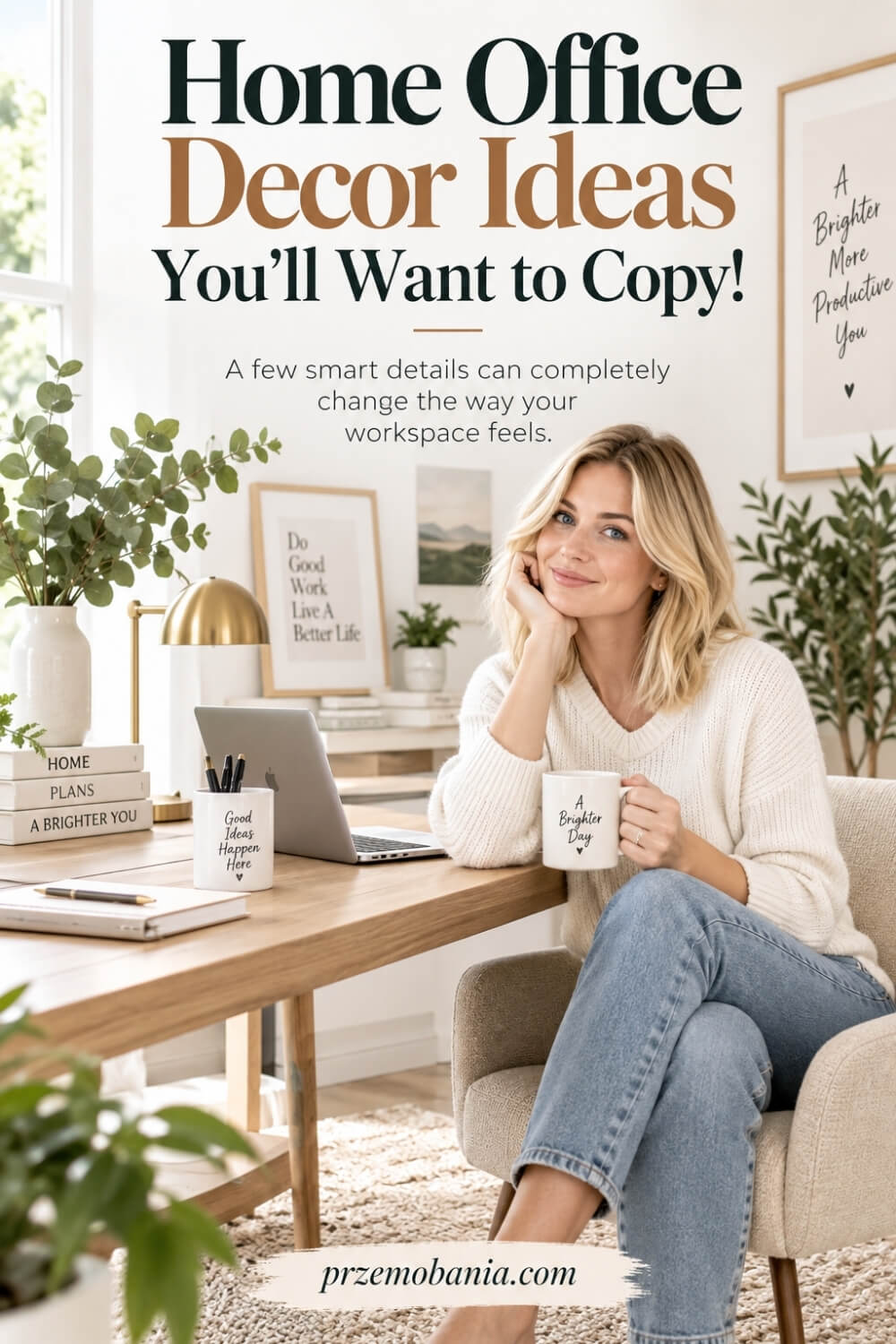
Start With How You Work
Before I choose colours, shelves or artwork, I watch how the room is actually used. Where do you put your notebook when a call begins, which hand reaches for the lamp, where does your phone land, and what do you keep getting up to fetch? Those tiny habits tell you more about the right layout than any styled photograph ever will.
I learnt this at home because my wife needed her workspace to remove effort, not add to it. If something used every hour was hidden in a beautiful box across the room, the room had failed her no matter how polished it looked. Map your normal working day first, then place storage, lighting and accessories around those movements. Decoration becomes far easier when the practical skeleton is already right, and the finished space usually looks more natural because every detail has a reason for being there.
Give Every Object A Job
I used to think a finished desk needed a collection of decorative objects, but clutter becomes tiring surprisingly quickly when you work beside it for hours. Now I ask one simple question before something earns a place in the room: what does this do for me? A tray can organise loose items, a plant can soften a hard corner, a framed print can make the wall feel personal, and a lamp can improve both mood and visibility.
That does not mean every object must be practical in the strict sense. Something can deserve its place simply because it makes you smile, reminds you of someone or gives the room warmth, but it should feel chosen rather than dumped there. When too many things compete for attention, none of them feels special. Keep fewer pieces, give them breathing space and let function and personality share the same surface.
Build Around Your Best Light
Light changes the character of a home office more than almost any accessory you can buy, so I always begin by noticing what the room does from morning to evening. Natural light may be wonderful for energy and colour, but it can also create glare on a screen or make one side of the desk uncomfortable at certain hours. A practical setup usually needs more than one source of light so you are not depending on the ceiling fixture alone.
I like to combine daylight with a good task lamp and softer background lighting when the room needs it. The goal is not to create a dramatic showroom effect but to make reading, typing and video calls comfortable without sharp reflections or gloomy corners. Once the lighting works, colours look richer, textures become more visible and even inexpensive furniture can feel more considered. Decor begins to feel intentional when the room is lit for real life, not just photographs.
Control What Your Screen Sees
The part of your office behind you matters more than it used to because colleagues, clients and friends may see it every time you switch on a camera. I do not believe you need a staged backdrop, but I do think it helps to check what the screen sees before you decorate blindly. A crooked shelf, bright window or pile of paperwork can feel much louder on camera than it does when you are sitting in the room.
I prefer a calm background with one or two points of interest, such as a framed print, a restrained shelf or a textured wall, while keeping distracting clutter outside the frame. This also protects the room from becoming overly performative because you are not designing every inch for other people. You are simply creating one composed view that works for calls and still feels like part of your home. That balance can make the space feel professional without stripping away its personality.
Use Walls Without Crowding Them
Walls are valuable in a home office because they can provide storage, personality and visual structure without taking over the floor. The temptation is to fill every blank area with shelves, prints and organisers, but too much vertical activity can make a small workspace feel restless. I prefer choosing one clear purpose for each wall and leaving enough empty space around it to keep the room easy on the eye.
A wall above the desk might hold one generous artwork, while another can carry shallow shelving or a noticeboard that genuinely supports your work. If storage is the priority, take it upwards rather than spreading cabinets across every available corner, especially in compact rooms. I have found that the room feels larger when the walls are used deliberately instead of continuously. Empty wall space is not unfinished decoration; it is part of the composition and gives the pieces you love more presence.
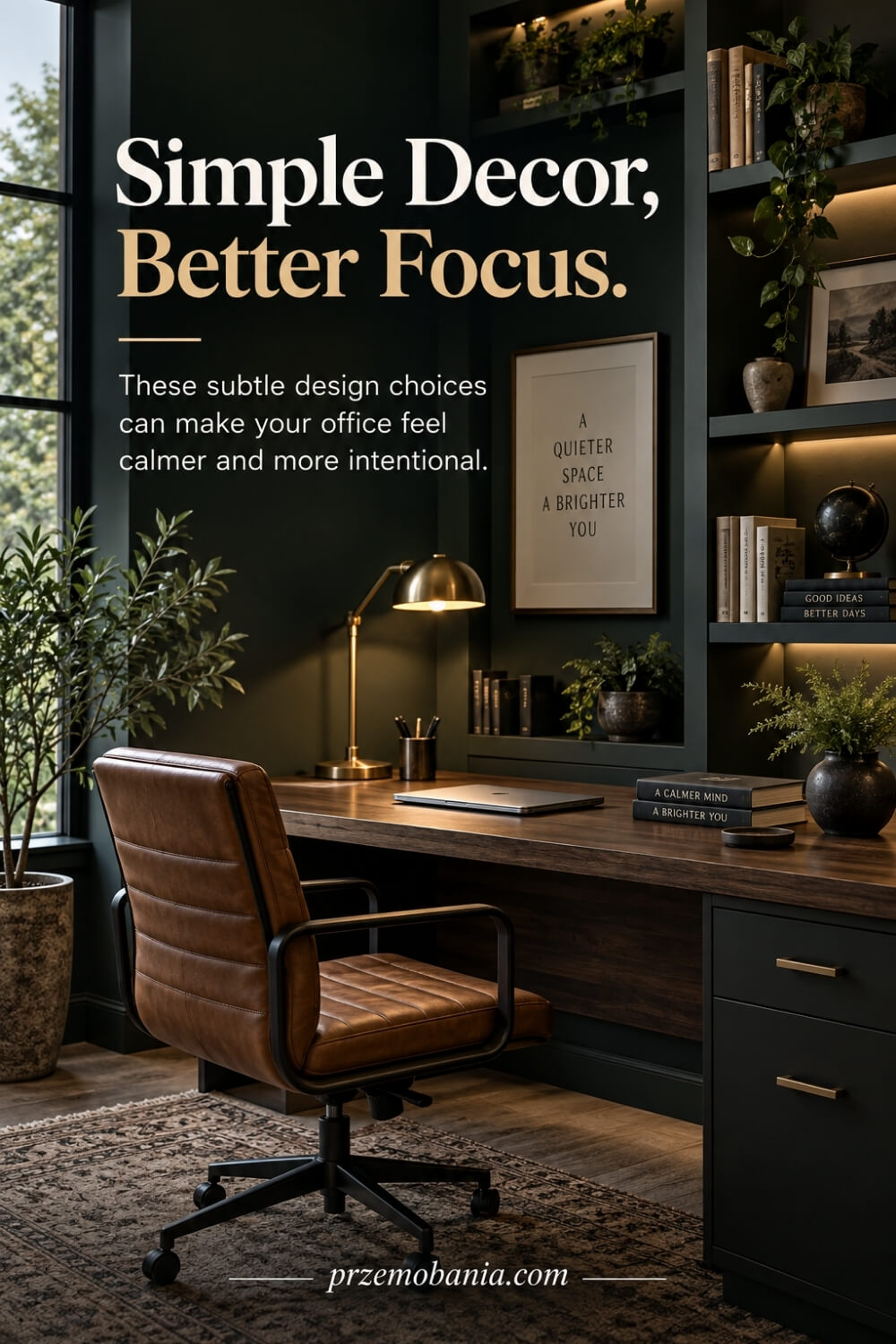
Hide Visual Clutter Before Styling
One of the fastest ways to improve a workspace is to remove the things your eyes keep tripping over before you buy anything new. Loose chargers, envelopes, spare cables, stationery packets and paperwork can create a constant background buzz, even when you think you have stopped noticing them. I always clear and contain first because styling a cluttered office usually means decorating around the problem rather than solving it.
Closed drawers, boxes and cupboards are useful for items you need but do not want to see all day, while trays and open storage work better for the things you use constantly. The secret is not to hide everything but to decide what deserves to remain visible. When my wife’s energy was low, easy access mattered more than perfection, so the best storage was always the storage she could use without effort. A calmer room comes from reducing visual decisions, not from pretending real work creates no mess.
Layer Texture Instead Of Trinkets
A home office can feel warm and finished without covering every surface in decorative pieces. I often get better results by adding texture through a rug, curtain, upholstered chair, woven basket, timber finish or tactile desk mat because these elements soften the room without creating extra clutter. Texture gives a workspace depth, especially when the colour palette is simple and you want the room to feel inviting rather than flat.
This approach also makes it easier to change the mood without replacing major furniture. A soft curtain can make a hard room feel quieter, natural wood can bring warmth to white walls, and a textured rug can define a small work zone inside a larger room. I like these details because they support the space instead of shouting for attention. You still get personality and comfort, but your desk stays clearer and your eye has somewhere to rest during a long working day.
Make Comfort Look Intentional
Comfort does not have to make a home office look clinical or temporary. A supportive chair, footrest, monitor stand or cushion can become part of the design when you choose finishes that sit comfortably with the rest of the room. I would rather make useful equipment look deliberate than hide it and end up with a workspace that photographs well but feels miserable after two hours.
That lesson became personal in our home because comfort could change how long my wife was able to remain at her desk on a difficult day. I stopped seeing practical adjustments as things that spoiled a room and began treating them as part of the room’s identity. Choose materials, shapes and colours that connect these pieces visually, but never sacrifice support just to keep a look consistent. The most beautiful office is the one that lets you work without constantly being reminded that the room was designed for appearance before it was designed for you.
Leave Space For Changing Days
A workspace should have enough flexibility to meet you differently from one day to the next. Some mornings you may need a clear desk for concentrated work, while another day might involve reference books, paperwork, equipment or a video call setup that temporarily takes over the surface. If every inch is permanently styled, there is nowhere for real work to happen without making the room feel immediately untidy.
I have learnt to leave spare surface area, flexible storage and at least one place where items can move without disrupting the whole room. That mattered even more for my wife because what felt comfortable or manageable could change from day to day, and the room needed to adapt with her rather than punish her for that change. Your office does not need to look identical every morning. Give it room to breathe, move and support the version of you who actually turns up to work that day.
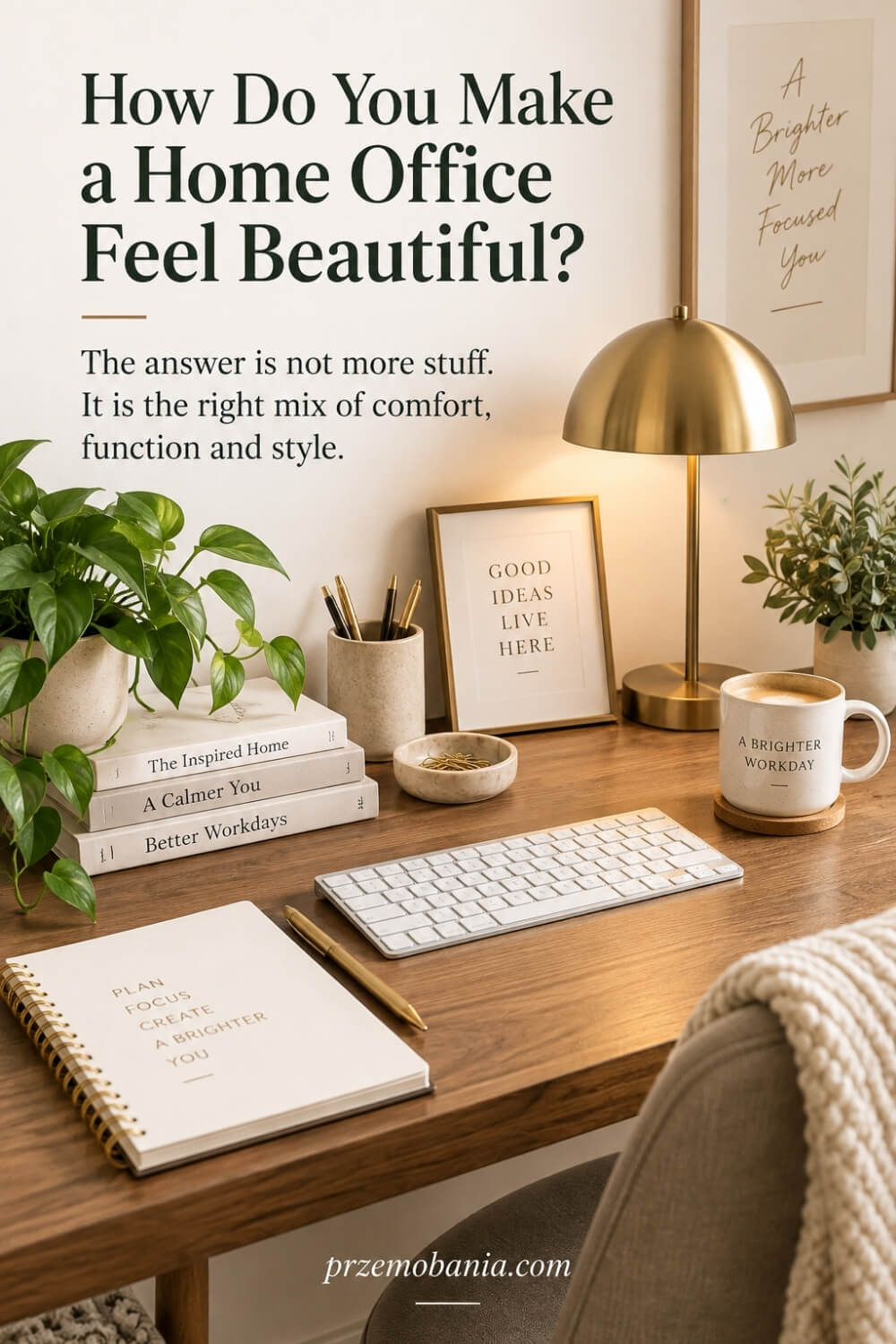
Home Office Decor Ideas That Make the Room Feel Like It Belongs to You?
The home office decor ideas that stayed with me longest were never the most fashionable ones; they were the choices that helped a room feel calmer, more private and more supportive of the person using it. I began to understand this properly when our home had to hold both ordinary life and the reality of my wife working through days when her body simply would not cooperate.
One of the most useful things you can do is create a visual boundary between work and the rest of the home, even if your office is only one end of a bedroom or living room. A rug, a different wall colour, a narrow shelving unit or a change in lighting can tell your brain that this small area has a different purpose without building a physical wall.
I also pay much more attention now to what you can see from the chair, because the view in front of you quietly influences how settled the room feels. Looking directly at laundry, household clutter or an overflowing storage area can make work feel tangled up with everything else you still need to do, while a calmer sightline gives your attention somewhere gentler to land.
Sound matters too, particularly when several people share a home during working hours. Curtains, rugs, upholstered furniture, books and other soft finishes can reduce the hard, echoing feeling that makes conversations and keyboard noise seem sharper than they really are, while headphones or a closed door can provide another layer of separation when you need it.
Then there is privacy, something I once underestimated because I thought mainly about how an office looked rather than how exposed it could make you feel. If you take calls, deal with sensitive information or simply need uninterrupted concentration, consider where the chair faces, who can walk behind you and whether a screen, curtain or bookcase could create a little more protection.
My wife taught me that a room can become emotionally exhausting when every object reminds you of unfinished work. We therefore learnt to create a simple end-of-day ritual where notebooks disappeared into a drawer, the laptop closed, the task light went off and the room stopped announcing that there was still more to do.
That small change mattered on evenings when she had already given everything she had just to finish her working hours. Watching her leave the desk tired and hurting made me realise that good design is not always about helping you squeeze more productivity from yourself; sometimes it is about giving you permission to stop.
I now think every home workspace should contain at least one detail that belongs to the person rather than the job, whether that is a photograph, a piece of artwork, a favourite book or an object with a story behind it. When work becomes difficult, those personal touches remind you that the person sitting at the desk is more important than whatever appears on the screen.
That is why I no longer judge a successful office by how closely it resembles a showroom. I judge it by whether you can sit down on a difficult morning, feel that the room is on your side and know that someone thought about the human being who would have to live and work there.
Home Office Decor Ideas for Colour, Materials and Atmosphere
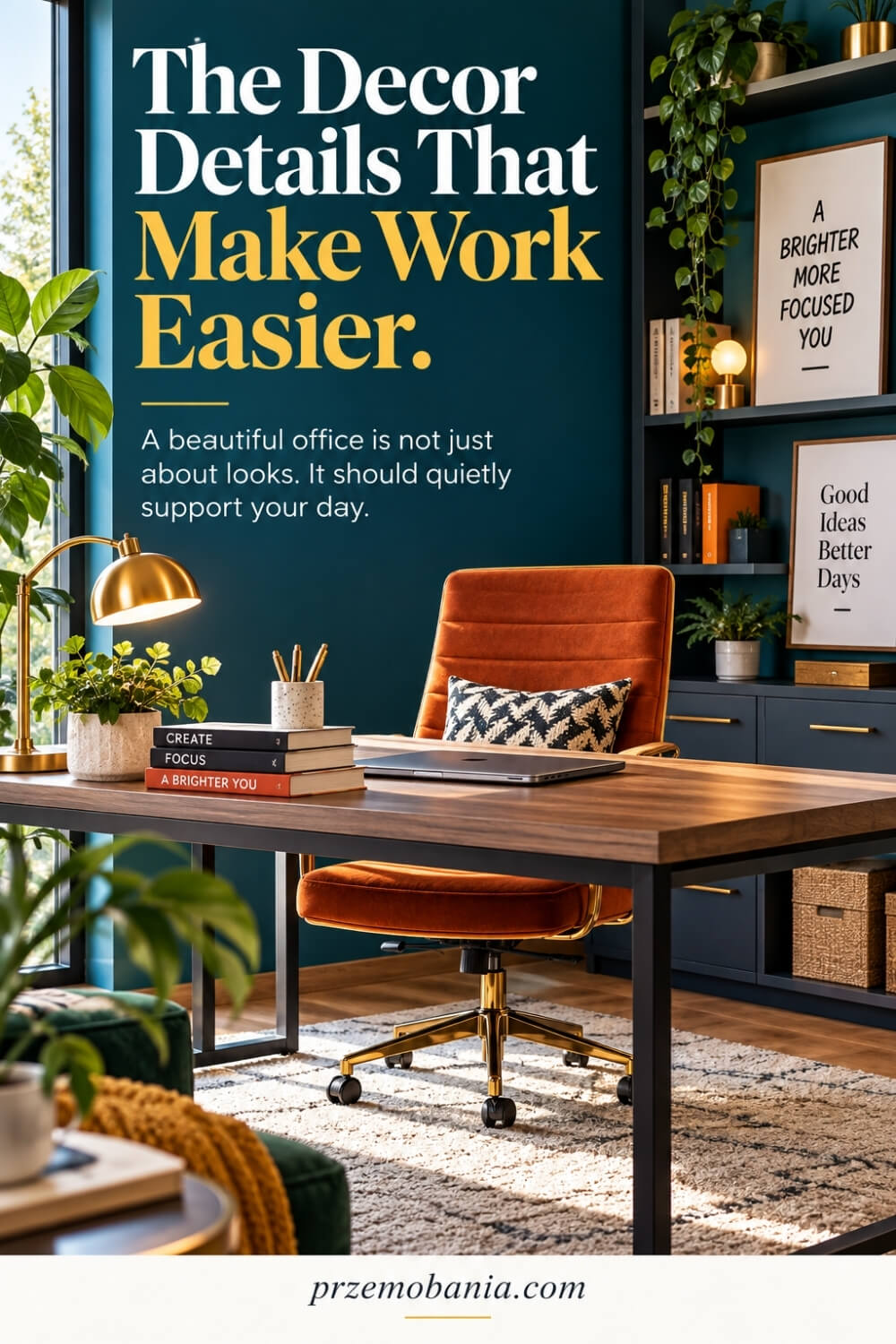
Once the room works properly, the next question is how you want it to feel when you walk into it every morning. This is where home office decor ideas become deeply personal, because colour, material and visual atmosphere can turn the same desk and chair into either a cold workstation or a room you genuinely enjoy returning to.
I would be careful with simplistic claims that one wall colour will automatically make you productive, creative or calm. Research into office colour has produced mixed results, with some studies finding differences in perceived satisfaction or performance while others found no significant performance or mood differences between red, blue-green and white environments, suggesting that personal response, exposure time and the wider setting matter too.
Rather than choosing paint because somebody has labelled it a “productivity colour”, I start with the amount and direction of daylight, the furniture already in the room and the atmosphere I want after several hours at the desk. A cool grey that looks elegant in a bright photograph can feel completely different in a darker room, while warm off-white, muted green, clay, soft blue or natural timber tones can shift character dramatically as daylight changes.
Paint samples are therefore worth observing on more than one wall and at different times of day before committing to an entire room. Finish matters as well, because matt and more reflective surfaces respond differently to daylight and artificial lighting, changing how bright, soft or visually active the surrounding space appears.
Materials can then carry warmth where colour alone cannot, which is why I love combining painted surfaces with timber, woven storage, ceramic pieces, metal details and soft furnishings rather than making every object match perfectly. Current home-office design guidance similarly tends to combine personality with greenery, artwork, practical furniture and layered decorative elements instead of treating the workspace as a purely functional box.
Plants deserve a place in this conversation, although I would never tell you that buying one fern will magically transform your health or productivity. Workplace studies have reported improvements in factors such as perceived workspace attractiveness, satisfaction, privacy, attention or productivity after greenery was introduced, but results are not identical across studies, so I see plants as one useful part of a supportive environment rather than a cure for a badly designed office.
That evidence actually makes me like biophilic design more, not less, because it gives us permission to use nature thoughtfully instead of turning it into another internet promise. For my wife, I became especially aware that a workspace can feel overwhelming long before anybody else notices anything wrong with it, so strong contrasts, too many competing patterns or an atmosphere that constantly demands attention are not automatically better simply because they photograph beautifully.
I began choosing fewer finishes and allowing the room to build its personality slowly, because the things we live beside every day deserve more consideration than whatever happens to be fashionable that month. When you build the palette around your own light, belongings, working habits and tolerance for visual stimulation, the result becomes much harder to date because it was never copied wholesale from somebody else’s room.
Some of the moments I remember most are not dramatic renovations but evenings when my wife was exhausted and I realised that even her surroundings were asking something from her. I wanted our home to stop demanding energy she did not have, and that changed my idea of beautiful design from something you admire into something that can quietly make life gentler. The next choices are the ones I now use when I want that sense of warmth and calm to come from the room itself rather than from more decoration piled into it.
- Choose a Colour Palette That Lasts
- Test Paint in Real Light
- Mix Materials With Restraint
- Bring Nature Into the Workspace
- Create a Calmer Sensory Background

Choose a Colour Palette That Lasts
I prefer a home office palette that gives you room to change your mind without forcing you to redecorate the whole room. Start with one main neutral or soft background colour, add one supporting tone through furniture or textiles, then use a stronger accent only in smaller details such as artwork, storage boxes or a desk lamp. This makes the room easier to update as your taste changes.
I also think about what will still feel comfortable after six hours of work, not just what looks impressive for six seconds on Pinterest. If you love deep green, navy, terracotta or burgundy, use it where it adds character without swallowing all the light. My own rule is simple: let the largest surfaces calm the room and let smaller pieces carry more personality. That balance gives you freedom to swap cushions, prints or accessories later without starting again from scratch.
Test Paint in Real Light
Never trust a paint colour from a tiny card alone, because the same shade can change completely between a bright morning, a cloudy afternoon and artificial light at night. I like to paint generous samples on at least two walls and live with them for several days before making a decision. Look at the colour from your desk as well as from the doorway, because that is the view you will actually spend hours with.
Pay attention to what sits beside the sample too. Timber, flooring, curtains, monitors and even a large white desk can make a colour appear warmer, cooler, darker or greyer than expected. I have saved myself from poor choices simply by waiting rather than rushing to finish the room. Paint is one of the cheapest ways to transform a workspace, but repainting because you chose under showroom lighting is unnecessary work, so give the colour time to show you what it really does in your home.
Mix Materials With Restraint
A room becomes more interesting when everything is not made from the same finish, but too many materials can make a small office feel restless. I usually begin with two or three dominant materials, perhaps painted walls, warm timber and black metal, then add softness through fabric, a rug or a woven basket. That gives the eye variety without making the room feel like a catalogue of unrelated ideas.
Repeating a material in more than one place also helps the design feel intentional. If your desk has oak tones, a small oak frame or shelf can quietly connect the room; if you use brass on a lamp, one other subtle brass detail may be enough. I have learnt that restraint creates more character than piling on every texture you like at once. You want each material to support the atmosphere, not compete to become the loudest thing in the room.
Bring Nature Into the Workspace
You do not need to turn your office into a greenhouse to make it feel more connected to nature. One healthy plant near a window, a view towards the garden, natural timber, a stone accessory or even artwork based on landscapes can soften the hard edges of screens, desks and storage. I like using natural elements where they can be noticed without becoming another maintenance job.
Choose plants according to the real conditions in the room rather than the photograph you want to copy. Some need bright indirect light, while others tolerate dimmer spaces, and a struggling plant rarely makes a workspace feel calmer. If keeping plants alive feels like one more task you do not need, use wood, linen, wool, rattan or nature-inspired imagery instead. The goal is to introduce visual softness and a sense of life, not to pass a test of how many pots you can fit beside your monitor.
Create a Calmer Sensory Background
A beautiful office can still feel exhausting when too many colours, patterns, noises and objects compete for your attention. I try to control the background first by reducing unnecessary visual clutter, softening echoes with fabric and keeping the area directly around the screen relatively calm. This matters even more on days when concentration is already difficult or your energy is low.
I learnt that lesson by watching my wife work through days when ordinary stimulation could feel like too much. We could not remove every difficulty from her day, but we could stop the room from adding another layer of demand. You might prefer muted colours, closed storage, softer lighting or fewer decorative objects, while somebody else may enjoy a busier space, so pay attention to your own response. Calm is not one specific style; it is the point at which your surroundings stop fighting for your attention and begin supporting it instead.
Home Office Decor Ideas for Shared Life and Changing Energy
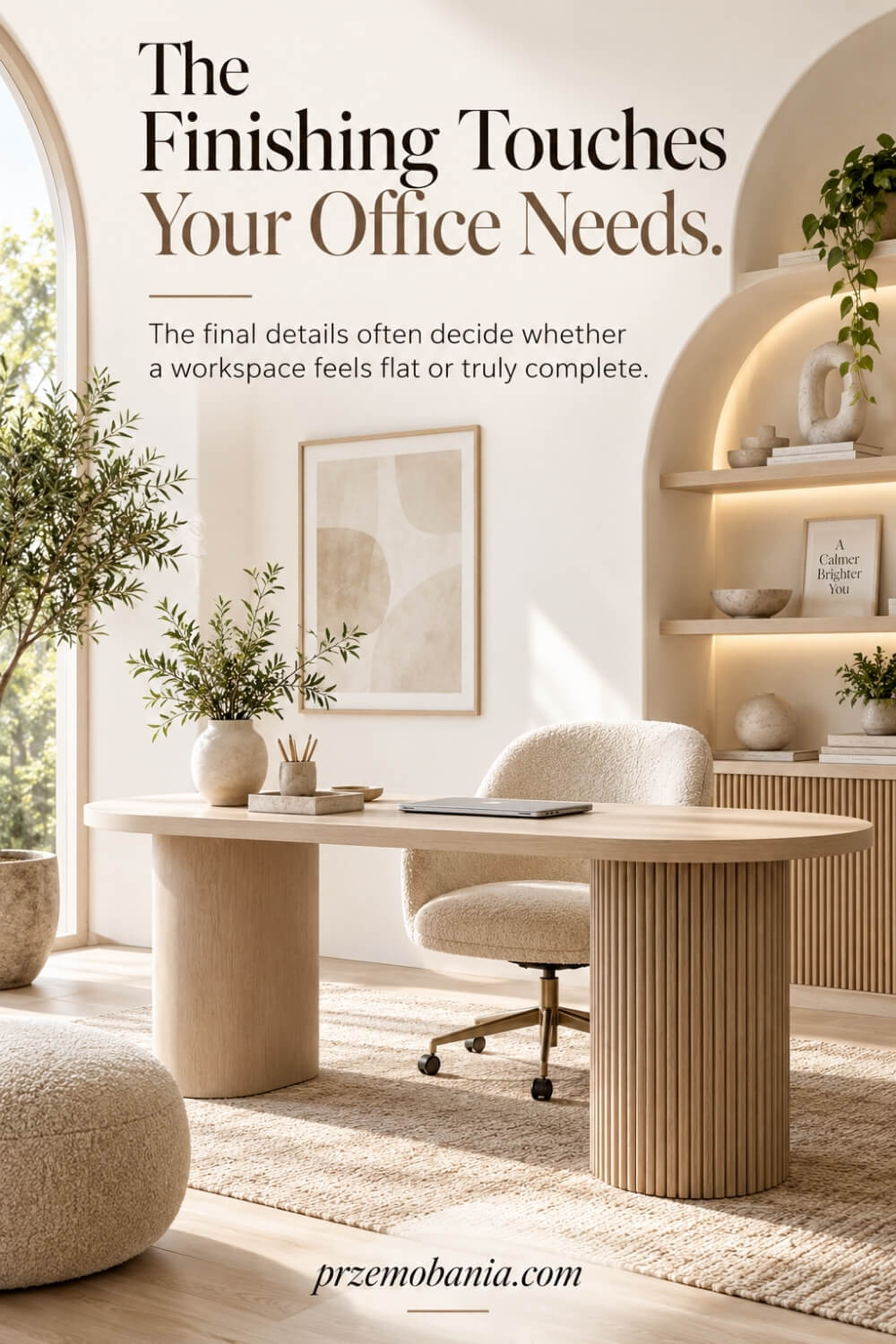
The more years I have spent working from home, the more I have realised that a workspace never exists separately from the life happening around it. Home office decor ideas become far more meaningful when the room has to support work, tiredness, interruptions, relationships and days that do not unfold according to plan.
My wife taught me this without ever needing to explain it, because I could see how differently the same room felt to her depending on how much energy she had available that day. A chair that felt perfectly comfortable one morning could become difficult later, while reaching for something stored too far away could feel like a much bigger task than I would ever have noticed myself.
That changed the way I arranged our surroundings, because I stopped asking only whether something looked right and started asking whether it made the next hour easier. I kept frequently used items close, reduced unnecessary movement and made sure that blankets, water, chargers, notebooks and other everyday essentials could be reached without turning the workspace into a cluttered medical-looking environment.
It affected me too, because loving someone means you begin noticing obstacles you once walked past without seeing. I learnt that helping to create a supportive room was not about hovering over my wife or trying to solve everything for her, but about making our shared home quietly cooperate with both of us.
There were days when I worked enthusiastically on my blogs while she was simply trying to finish her hours, and the contrast could hurt because we were sitting under the same roof but experiencing the working day very differently. Those moments made me value adjustable lighting, flexible surfaces, accessible storage and small comforting details more than any fashionable accessory I could have bought.
They also reminded me to protect space for myself, because a home office should support the person helping as well as the person struggling. When both of us can use our surroundings without constantly adapting ourselves to the room, home feels less like another problem to manage and more like the place that holds us together.
Home Office Decor Ideas That Grow With Your Life
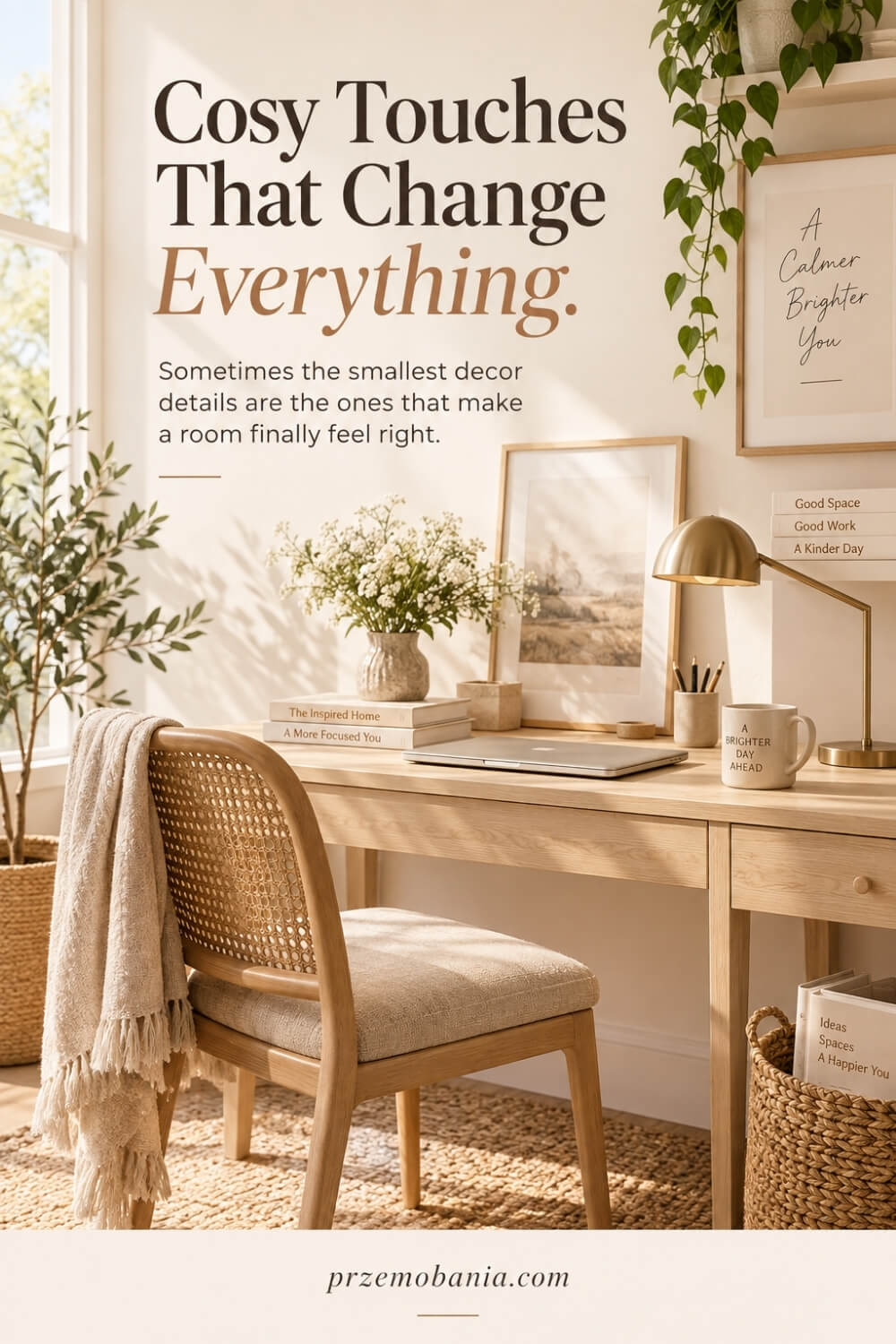
The final lesson I have learnt about home office decor ideas is that a workspace should never become so fixed that it cannot grow with the person using it. Life changes, work changes, health changes, routines shift, and sometimes the room that supported you perfectly two years ago simply stops fitting the way you live now.
I have seen this in our own home, where what my wife needed from her workspace could change far more quickly than any decorating trend ever could. Something as simple as moving storage lower, creating easier access around the desk or changing where a lamp stood could make the room feel less demanding without requiring an expensive makeover.
That taught me to favour furniture and decorative choices that can move, adapt and be reused rather than designing every centimetre around one permanent arrangement. A freestanding drawer unit, movable lamp, modular shelving, portable side table or lightweight chair can give you far more freedom than a beautiful feature that only works in one exact position.
I also leave room for our personalities to change because your office should not become a time capsule of the person you were when you first decorated it. Artwork can be replaced, books can move, photographs can change and colours can gradually evolve while the basic room continues doing its job.
For me, that flexibility became emotionally important because I did not want our home constantly reminding my wife of what she could or could not do on a particular day. I wanted the environment to meet her where she was, while still giving me a place where I could write, think, build my work and feel excited about what I was creating.
That balance is not always perfect, and I do not pretend our home is permanently tidy or beautifully styled. What matters to me now is that our workspace can change with us instead of expecting us to stay the same for the sake of the room.
Final Word on Home Office Decor Ideas
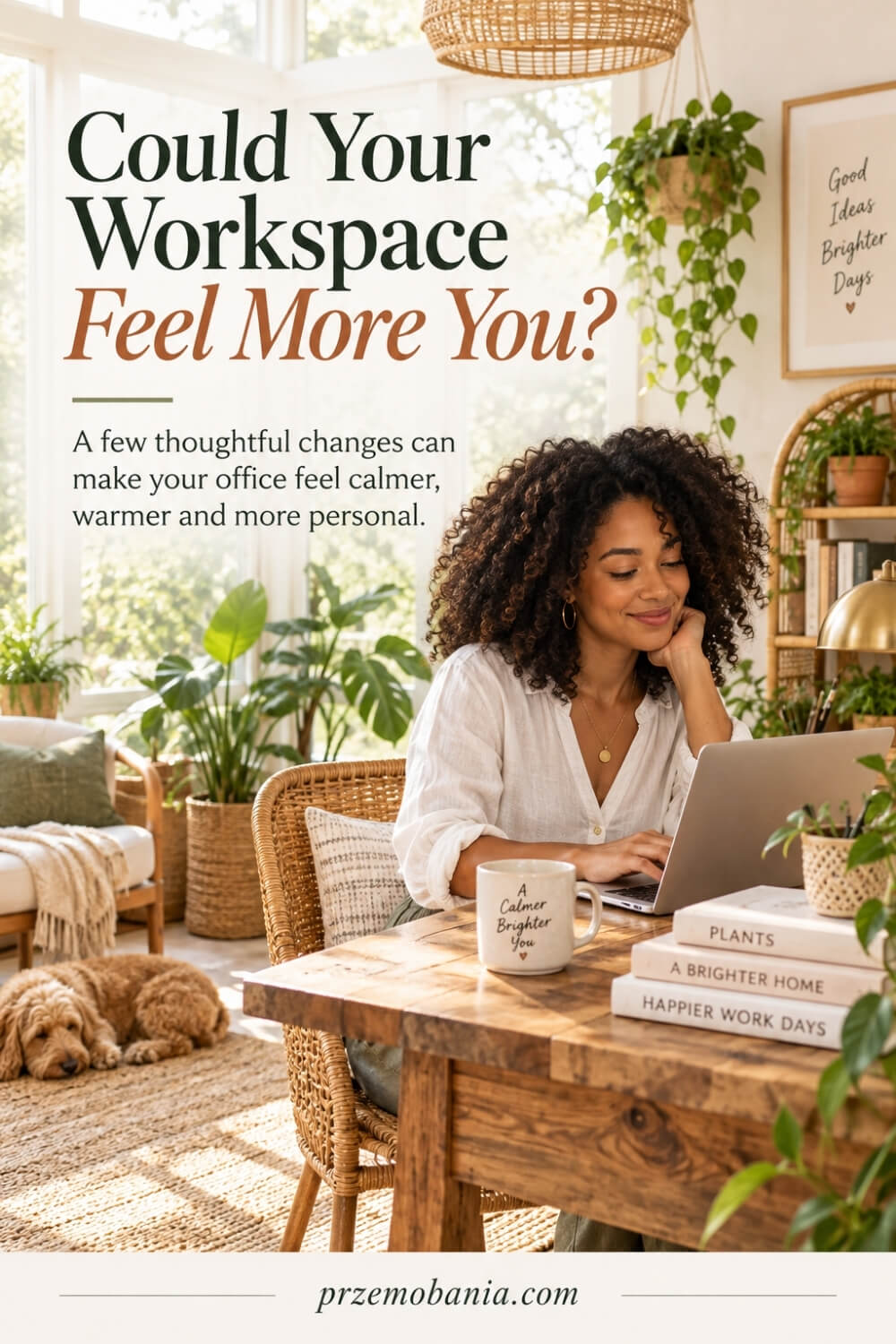
A home office becomes truly successful when it stops feeling like a collection of furniture and starts feeling like a place that understands how you live. That is the lesson I keep returning to after years of working from home, decorating rooms, making mistakes, changing layouts and watching how deeply our surroundings can affect an ordinary working day.
For me, the strongest home office decor ideas are never about copying a perfect photograph. They are about building a room around your own routines, your own energy, your own work and the things that make you feel settled when you sit down. A beautiful desk means little if the lighting strains your eyes, the storage makes everything harder to reach or the room leaves you feeling restless after an hour.
I also learnt that comfort and style do not have to compete. You can choose supportive furniture, accessible storage, softer lighting, meaningful artwork, natural materials and practical technology while still creating a workspace that feels polished and personal. In fact, I think a room often becomes more beautiful when every decision has a reason behind it.
My wife changed the way I understand this more than any interior magazine ever could. Watching her work through difficult days taught me that the smallest adjustment can matter enormously when energy is limited, discomfort is high or concentration is already being asked to work harder than usual. Moving a lamp, clearing a surface or placing something within easy reach may look insignificant, but sometimes thoughtful design is made of exactly those small acts.
That experience also changed the way I design for myself. I want my office to help me write, think, create and build my blogs, but I no longer believe productivity means squeezing every possible task from every possible hour. A supportive workspace should help you begin when you need to work and help you stop when the working day is over.
So take your time with your own room. Notice the light before buying paint, watch your movements before choosing storage, live with a layout before filling every wall and pay attention to how the space makes you feel after several hours rather than how it looks for a photograph. You do not need to finish everything at once.
Your office can evolve with you. Add what genuinely helps, remove what creates noise and allow the room to change as your work, taste and life change too.
I used to think successful decorating meant reaching a final version of a room. Now I think the better goal is creating a workspace that keeps supporting the person you are becoming. If your office gives you comfort, focus, breathing room and a sense that you belong there, then you have created something far more valuable than a fashionable room. You have created a place that works with your life. And when Monday morning arrives, that quiet sense of ease can be the difference between resisting your workspace and willingly returning to it again.
Your home office does not need to impress strangers. It needs to support the person who sits there every day. Build it slowly, choose what genuinely helps, and let comfort, function and personality guide the details. When the room begins working with you instead of against you, even an ordinary workday can feel lighter.
I would genuinely love to hear what you are changing in your own workspace, so leave a comment below and tell me what is working, what still frustrates you and what you want to improve next. You can also check out the FREE chapter of my eBook at the bottom of this post.


Przemo Bania is a blogger and writer who helps people get out of their traditional jobs to start a blogging career. Przemo also runs a health blog advocating for endometriosis and fibromyalgia…
Related Questions You May Be Asking About Home Office Decor Ideas
1. How can I decorate a home office without making it feel cluttered?
Start with the items that genuinely support your working day, then add personality in small, deliberate layers. Keep frequently used objects accessible, hide visual clutter inside drawers or closed storage, and leave some empty space on walls and surfaces. One meaningful print, a plant or a textured rug can create more character than filling every corner with accessories.
2. What colours work best in a home office?
There is no single colour that guarantees better productivity, so choose shades that suit your natural light, furniture and personal response. Softer neutrals, muted greens, gentle blues and warm earthy tones can create a calmer background, while deeper colours can add character in smaller areas. Always test paint at different times of day before committing to the whole room.
3. How can I make a small home office look more stylish?
Use the height of the room rather than filling valuable floor space with extra furniture. Wall-mounted shelves, a strong piece of artwork, compact storage and a consistent colour palette can make a small office feel intentional rather than squeezed in. Keep the desk relatively clear and repeat one or two materials throughout the space to create visual continuity.
4. What should I put on my home office walls?
Choose wall décor according to what the room needs rather than filling blank space automatically. Artwork can add personality, shelves can provide useful storage, and a noticeboard can support everyday planning. I prefer one clear focal point over many unrelated pieces because it creates visual interest without making the workspace feel busy, especially around the area directly behind your monitor.
5. How can I make my home office feel cosier?
Layer warmth through lighting, texture and personal details instead of simply adding more objects. A soft rug, curtains, timber finishes, an upholstered chair, warm task lighting and a few meaningful possessions can completely change the atmosphere. The aim is to create comfort without sacrificing function, so every cosy addition should still leave enough room for you to work comfortably.
6. How often should I update my home office décor?
You do not need to redecorate according to trends or seasons unless you enjoy doing so. I prefer making small changes when your work, comfort, storage needs or taste genuinely changes. Moving artwork, replacing a lamp, adjusting storage or introducing a different textile can refresh the room without wasting money or replacing furniture that still works perfectly well.
Home Office Decor Ideas References
- https://en.wikipedia.org/wiki/Study_(room)
- https://www.ons.gov.uk/employmentandlabourmarket/peopleinwork/employmentandemployeetypes/articles/whohasaccesstohybridworkingreatbritain/2025-06-11
- https://www.goodhousekeeping.com/home/decorating-ideas/g73534772/home-offices/
- https://www.architecturaldigest.com/gallery/best-home-office-decor-ideas
- https://www.hse.gov.uk/home-working/worker/
- https://www.hse.gov.uk/humanfactors/topics/lighting.htm
- https://books.hse.gov.uk/gempdf/hsg38.pdf
- https://pubmed.ncbi.nlm.nih.gov/8451130/
- https://pubmed.ncbi.nlm.nih.gov/16383082/
- https://www.mdpi.com/2075-5309/16/4/760
- https://www.tandfonline.com/doi/full/10.1080/17508975.2020.1732859
