
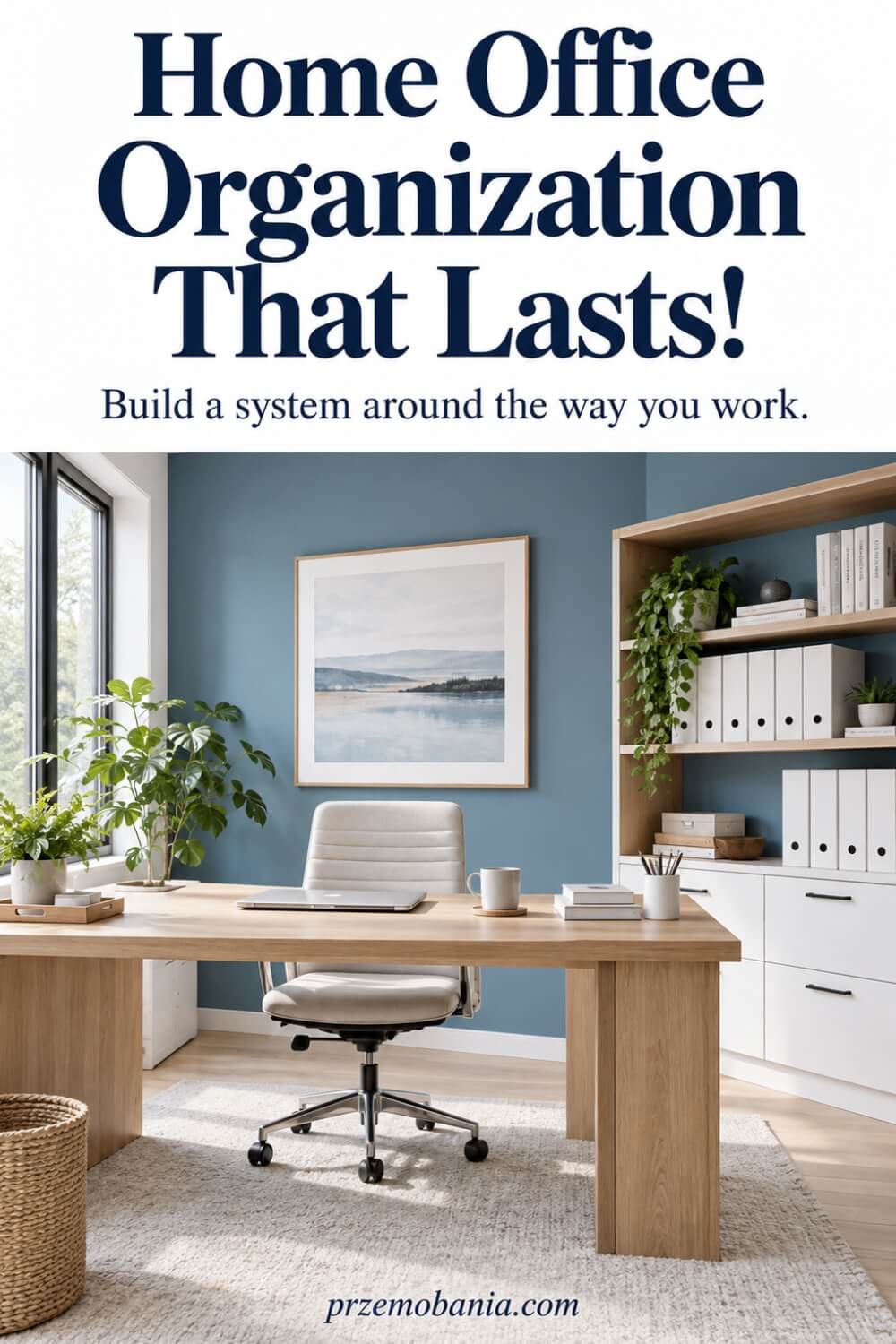
Home Office Organization
Why does a desk become difficult to use even when there seems to be enough storage? Good home office organization connects the things you own with the way you actually work. If you keep clearing the same pile only to see it return, the problem may be the system rather than your willingness to tidy.
Home office organization gives everyday tools, documents and supplies clear places to arrive, stay and leave. A useful system combines accessible storage, simple filing, manageable cables and repeatable routines, so you can find what you need and return it without constantly reorganising the room.
My passion for blogging grew alongside the changes my wife’s chronic illness brought to our lives, drawing on the love of interiors my mum gave me as a child to help my wife create a more suitable workspace, and I now enjoy working from a cosy home office and earning through my blogs while continuing to learn from the sources you will find at the bottom.
A drawer can look beautifully organised and still be inconvenient if the things you use most are at the back. A visible folder can be more useful than a hidden box if it reminds you of an unfinished task without taking over the desk.
The interesting question is not how much you can put away. It is how easily you can begin, pause and return to your work.
If you need to review the wider arrangement first, my guide to building a workable home office explains how the main parts of the workspace fit together.
Make Home Office Organization Fit Your Work
Watch what happens on your desk during an ordinary day. Notice where objects land before deciding where they should live.
The place where you naturally put incoming paperwork is useful information. So is the drawer you avoid opening because it is awkward to reach.
Separate things you use every day from those you rarely need. Give the most convenient space to the items involved in regular tasks.
Then identify what is waiting for a decision. A pending invoice needs a different place from a document you are keeping only for reference.
Treat unfinished work as a category with a purpose. Hiding it among stored papers makes it harder to recognise what still needs attention.
I would build home office organization around those distinctions before choosing containers. Otherwise, you risk buying attractive storage for a problem you have not yet understood.
Keep your first categories broad enough to use without hesitation. You can divide them later if the contents genuinely require it.
Leave some spare capacity in drawers and folders. A system that fits today’s belongings exactly has little room for tomorrow’s work.
My wife’s needs have made me pay attention to the effort hidden inside small routines. I want our surroundings to make ordinary actions easier, particularly when neither of us has much energy to spare.
These are the practical foundations I would put in place:
- Give Incoming Paper One Destination
- Separate Action from Reference Material
- Keep Daily Tools Within Reach
- Assign Drawers a Clear Purpose
- Make Cable Routes Easy to Follow
- Use Shelves for Appropriate Storage
- Label Things in Familiar Language
- Create a Place for Departures
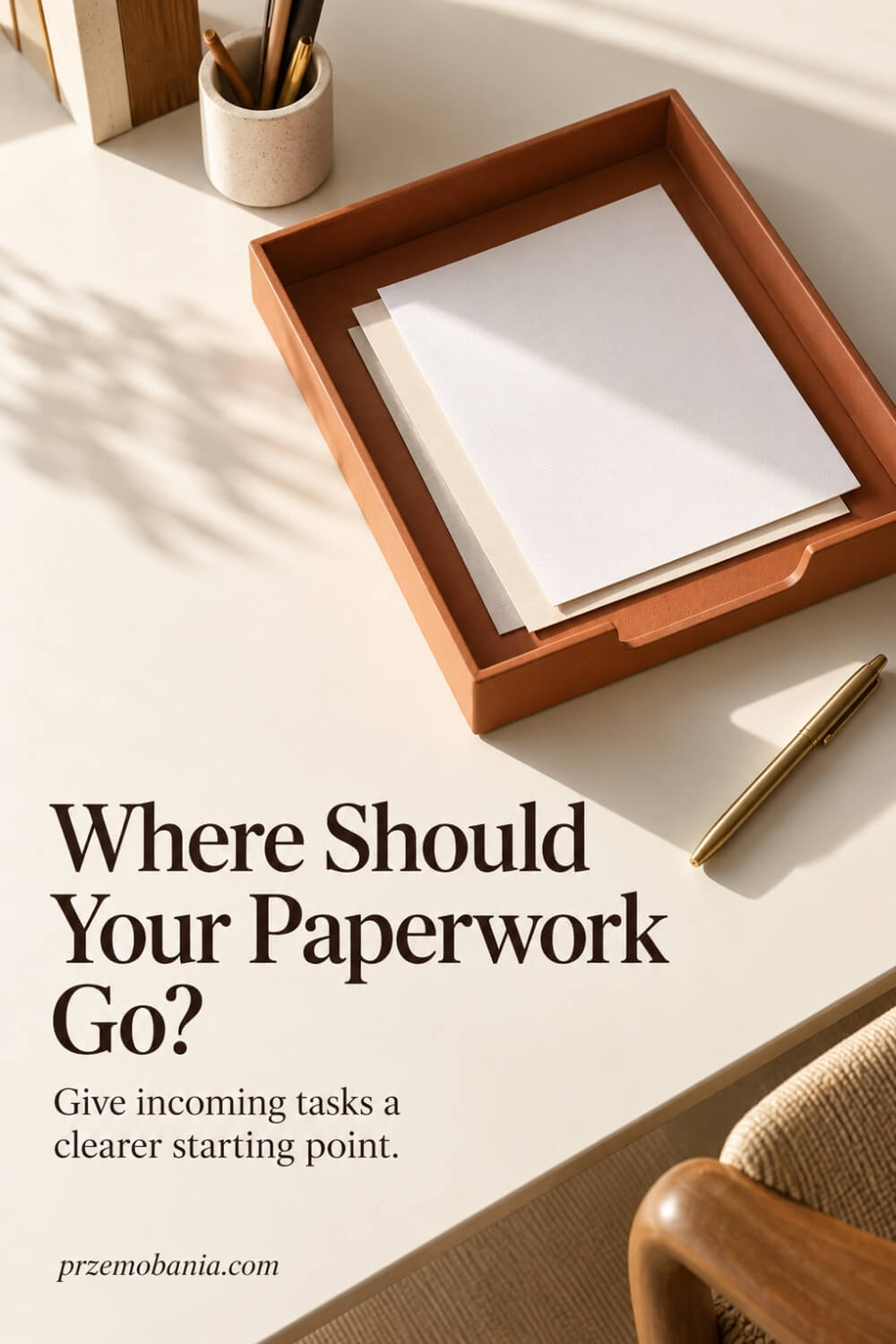
Give Incoming Paper One Destination
Choose one place where new paperwork arrives before you decide what to do with it. A shallow tray or upright file can work, provided it is easy to see and does not block your main working surface.
This is a temporary landing place, not a permanent home for every document. Decide when you will review it, and make that review frequent enough for the volume of paper you receive.
Remove obvious rubbish, identify anything requiring action and move reference material to its proper location. If a document has a deadline, record that deadline somewhere you actually check rather than relying on its position in the pile.
I would keep the container modest so that it remains easy to review. The useful habit is knowing that new paper has one starting point, which prevents several small piles from developing separate lives across the room.
Separate Action from Reference Material
A document can be important without requiring any action today. Keeping that distinction visible helps you avoid repeatedly examining the same papers to remember why you saved them.
Create a place for material connected with current tasks, then store completed reference documents elsewhere. A project folder might contain everything needed for one active piece of work, while a labelled file holds information you only occasionally consult.
Avoid creating too many stages at the beginning. “To deal with”, “waiting for a response” and “reference” may be enough if those labels match your work.
The system should tell you what happens next, not simply describe the colour of the folder. I would test it with a handful of real documents and check whether each one has an obvious destination before reorganising the entire collection around categories that look tidy but feel confusing.
Keep Daily Tools Within Reach
Give your most frequently used items the easiest places to reach without stretching or shifting equipment. That might mean a pen beside your notebook, headphones on a nearby hook or a small tray for the adapter you use every day.
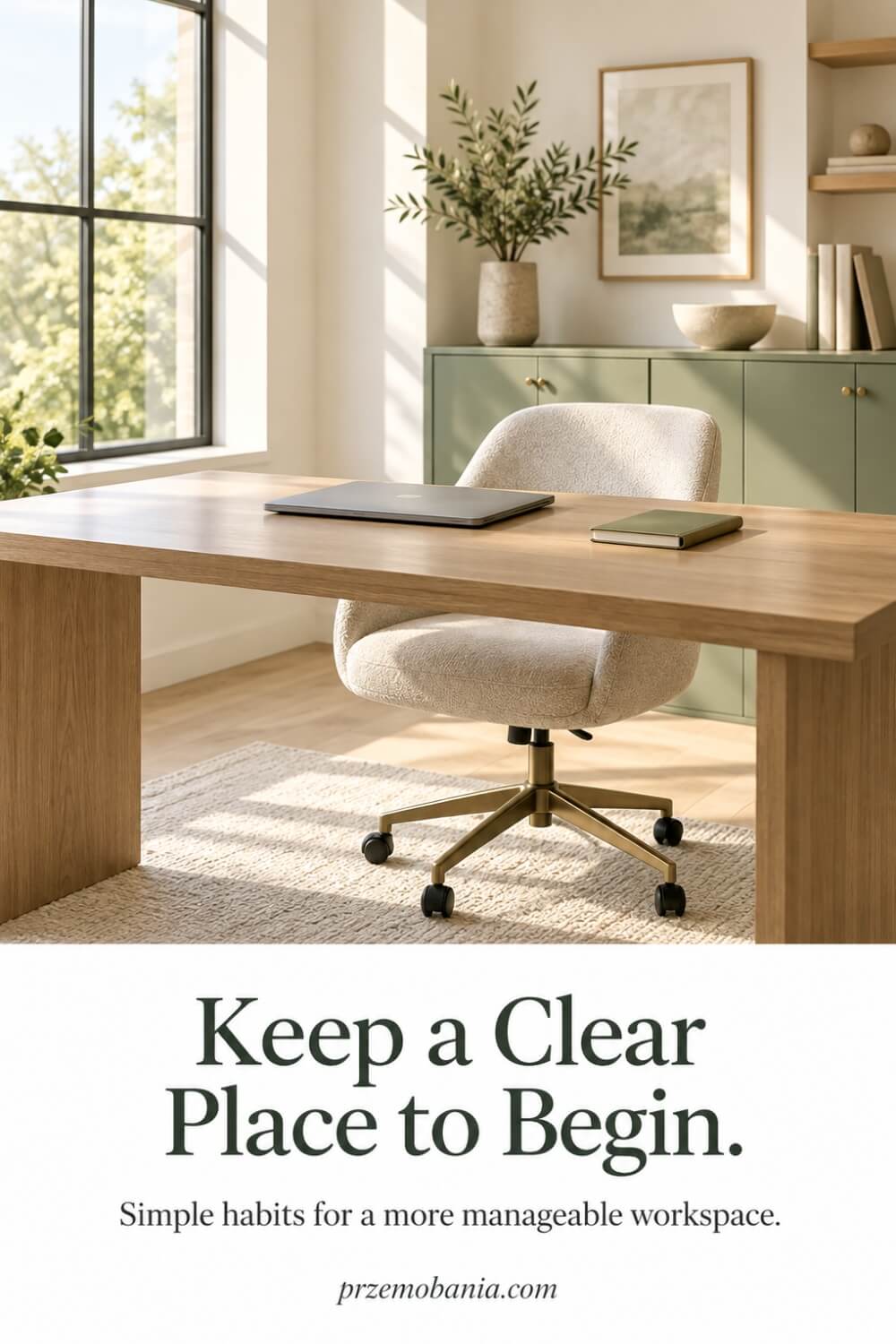
Do not interpret “within reach” as permission to fill every part of the desk. Keep the area needed for your keyboard, mouse and current task clear enough to use comfortably.
Move occasional supplies slightly further away, while keeping them easy to find. Spare stationery does not need the same prime position as the one pen you pick up throughout the day.
I like judging this arrangement by the number of small interruptions it removes. If you can begin a familiar task without searching through several containers, the system is helping, even if it looks less elaborate than the organised desks you have saved for inspiration.
Assign Drawers a Clear Purpose
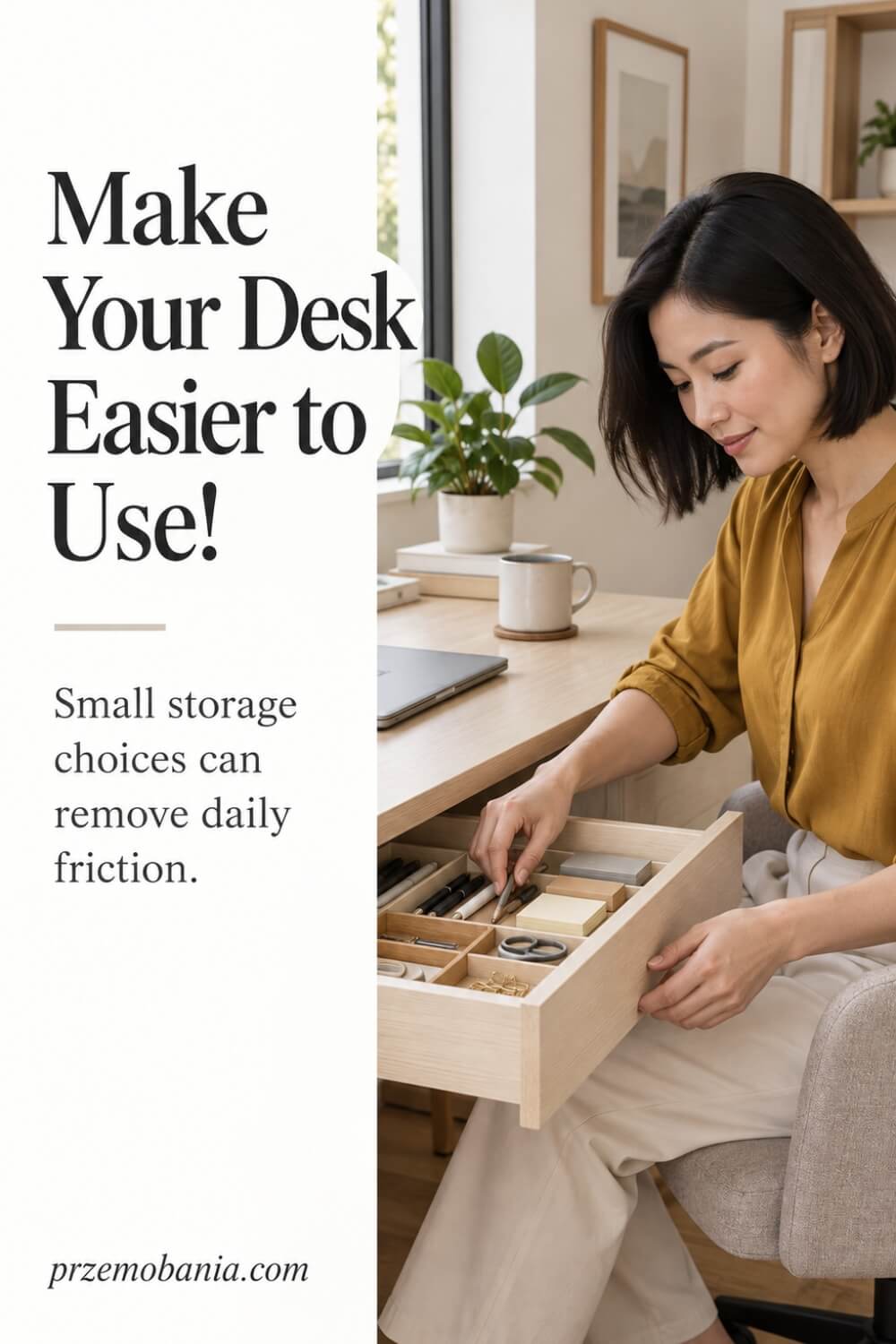
An unplanned drawer often becomes a place for objects that have nowhere else to go. Give each drawer a broad role, such as daily stationery, small technology accessories or occasional paperwork.
Empty one drawer at a time and remove items that no longer belong in the office. Test pens, match accessories to devices and separate useful spares from objects you cannot identify.
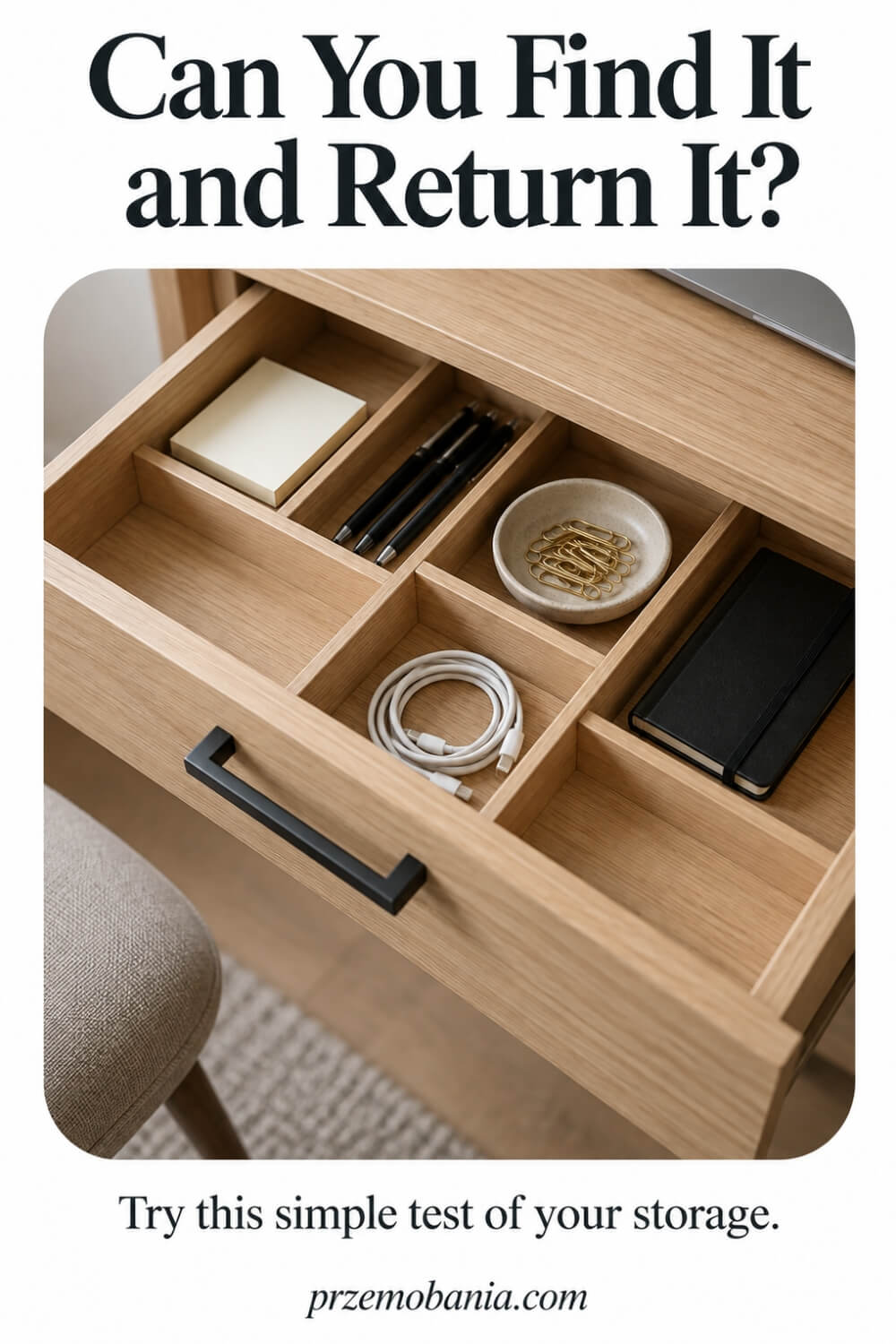
Use dividers only where they prevent things from mixing together. Measure the internal space and check that the drawer still closes easily before committing to an insert or a set of small boxes.
The arrangement should leave room to pick things up and put them back without rearranging everything else. I would rather see a simple drawer with a little empty space than a perfectly packed one that becomes frustrating as soon as a new cable or notebook enters the room.
Make Cable Routes Easy to Follow
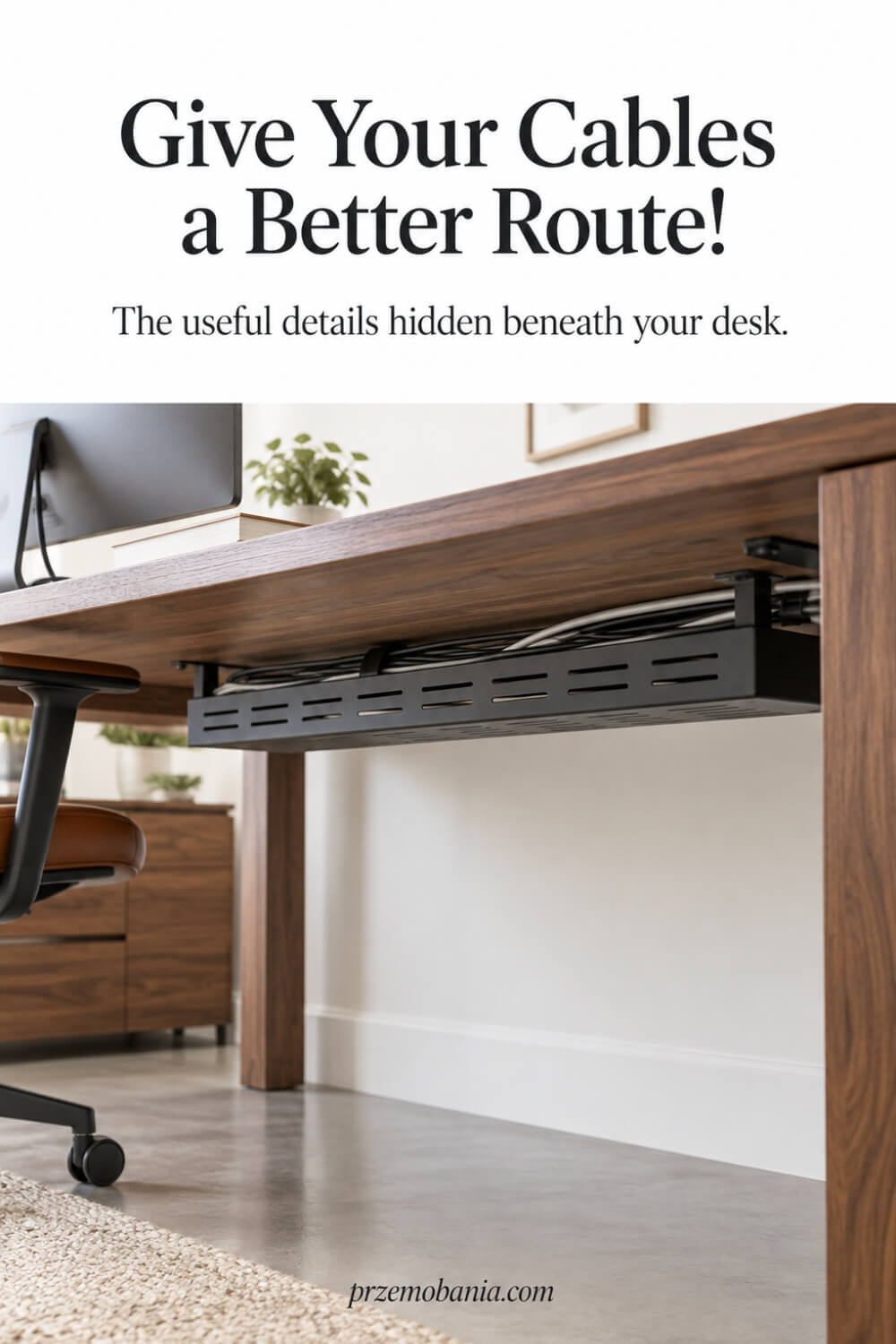
Begin by identifying which cable belongs to each device before bundling anything together. Disconnect or remove unused leads only when you know what they serve and can do so safely.
Plan routes that keep cables away from chair wheels and normal walking paths. Clips, reusable ties and suitable cable trays can keep the arrangement controlled while allowing you to reach connections.
Leave appropriate slack for equipment that moves, including an adjustable desk. Follow equipment instructions, avoid trapping leads under furniture and keep ventilation openings clear.
I would label similar-looking connectors where confusion is likely, rather than wrapping every cable into one tightly hidden bundle. Good cable management should make maintenance easier as well as improve appearance, so think about how you will unplug a single device when it needs attention or leaves the room.
Use Shelves for Appropriate Storage
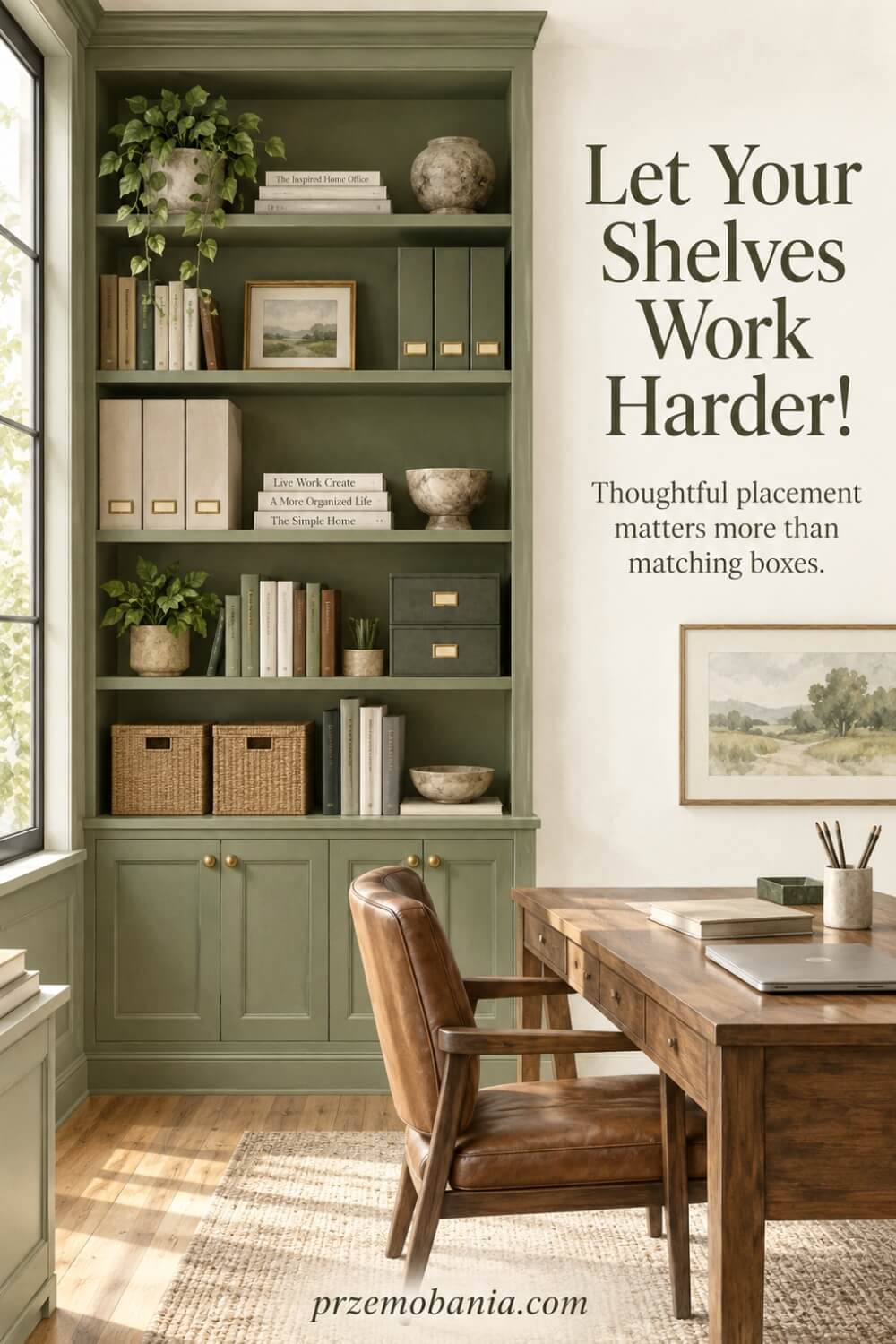
Shelves are useful when their contents match how easily you can reach them. Keep frequently handled materials at a convenient height and reserve less accessible positions for lighter items used occasionally.
Check the shelf’s stated load limit and the suitability of its installation before adding heavy files. A row of paper-filled folders can weigh more than its tidy appearance suggests.
Use upright files or boxes to keep categories together, but avoid deep arrangements that hide one collection behind another. If you need to remove several objects to reach a folder, its storage position may be asking too much of you.
I would also leave enough space to remove containers comfortably without scraping the shelf above. Shelving works best when it supports retrieval, not when every centimetre has been filled because an empty patch seemed like wasted space in the photograph.
Label Things in Familiar Language
Choose labels that match the words you would use while looking for something. “Printer Supplies” is usually more useful than a clever category name that requires you to remember its meaning.
Keep related labels consistent so that the system remains easy to scan. If you file by project name, use that same name on the physical folder and any corresponding digital location.
Make labels readable from the position where you normally access the storage. Tiny decorative lettering may look neat but becomes less helpful when you must lift every box to identify it.
You can begin with temporary labels while testing the arrangement. I would rather change a plain paper label after discovering a better category than preserve an awkward system because I had already invested time and money in making its first version look permanent.
Create a Place for Departures
An office needs a route out as well as a route in. Choose a small, clearly defined place for items ready to leave, such as borrowed equipment, outgoing post or supplies that belong elsewhere.
Keep this area separate from unfinished work so that ready-to-go objects do not disappear into active projects. Give it a regular check linked to something you already do, such as leaving the house or finishing the working week.
Decide how unwanted items will leave responsibly, rather than letting a donation or recycling pile become another permanent category. Handle sensitive paperwork appropriately instead of mixing it with ordinary waste.
I find this step easy to overlook because storage advice usually concentrates on keeping things. Yet a workspace becomes much easier to maintain when completed, redundant and misplaced items have a clear next destination beyond the desk.
Understanding What Home Office Organization Can Solve
Tidiness and productivity are related in practical ways, but they are not the same thing. A clear desk cannot decide your priorities or complete a difficult task.
It can make the materials for that task easier to find. It can also reduce the repeated effort of clearing a place to begin.
Think of home office organization as support for your work rather than proof of your discipline. A room can look busy while still having a reliable system.
Ask whether you can retrieve what you need. Then ask whether returning it feels reasonably easy.
Those questions matter more to me than matching containers. They help distinguish a useful arrangement from a staged appearance.
My wife’s experience has made me cautious about judging a day by how much gets done. I want an organised room to offer help, not become another measure against which either of us feels inadequate.
Maintaining Home Office Organization Through Busy Weeks
Every system encounters days when you cannot follow the usual routine. Plan for those days while you have the attention to do so.
Choose a temporary place for interrupted work. Make it clear what belongs there and what does not.
Avoid using that place as an excuse to postpone decisions indefinitely. A brief scheduled review keeps temporary storage from becoming forgotten storage.
Notice which parts of the arrangement repeatedly fail. The same object returning to the desktop may need a more convenient home.
Check whether categories have become too detailed. A system that demands several decisions for one sheet of paper may be harder to maintain than necessary.
I would judge home office organization by how easily you can recover after a busy spell. Perfect consistency is a less realistic goal than a clear route back.
Build maintenance around the volume of work you handle. Someone receiving little paper will need a different rhythm from someone managing several active projects.
Keep the routine short enough to repeat. It should support the working week rather than consume a large part of it.
For my wife and me, flexibility matters because energy and attention do not arrive in identical amounts every day. A forgiving system leaves us a way to pause without losing track of where things belong.
These habits help make that possible:
- Leave a Clear Restart Note
- Review One Category at a Time
- Keep Shared Storage Understandable
- Make Replenishment Part of Tidying
Leave a Clear Restart Note
Before pausing a task, write down the next useful action and keep that note with the relevant material. “Check the figures in the final table” tells you more than “finish report” when you return.
Include any detail you are likely to forget, such as the document location or the response you are waiting for. Keep the note brief enough to understand without rereading the entire project.
This is especially useful when you must stop unexpectedly or move between several pieces of work. It lets you put the materials away without relying on an open pile to preserve the thread.
As a blogger, I value anything that makes returning to a draft less demanding. A clear restart point can turn storage into a helpful pause, because the folder now holds both the work and a small explanation of how to pick it up again.
Review One Category at a Time
A complete office clear-out can be disruptive if you do not have time to finish it. Choose one contained category instead, such as spare cables, notebooks or a single group of reference papers.
Bring the relevant items together only when you have somewhere suitable to sort them. Decide what remains useful, what belongs elsewhere and what can leave through the appropriate route.
Keep the rest of the office usable while you work. That matters if the room must support tomorrow’s tasks even though today’s organising project is unfinished.
I would finish by returning the retained items to a clear location and removing the outgoing pile. Completing a small category gives you a genuine improvement, whereas emptying every cupboard at once can leave the room harder to use and make the whole idea of organisation feel exhausting.
Keep Shared Storage Understandable
If another person uses the office, agree which storage is shared and which is personal. A system that makes sense only to its creator can become a source of repeated questions and misplaced items.
Use straightforward names for common supplies and show the other person where things belong. Check that the position is convenient for them too, rather than assuming your own reach and routine apply equally.
Avoid moving someone else’s active papers into a new category without discussing it. A tidy surface is not a useful improvement if it removes the information they rely on to continue their work.
I would keep shared rules few and practical, such as returning the stapler to one drawer or putting new printer paper in one cupboard. Those small agreements support the room without turning everyday use into a complicated system of permissions.
Make Replenishment Part of Tidying
An organised container is less useful if it is empty when you need its contents. Include a quick check of frequently used supplies in your normal maintenance routine.
Decide what a reasonable spare quantity looks like for your work. One replacement notebook or a small reserve of printer paper may be enough, while bulk buying can occupy space for a long time.
Keep a simple note of items that genuinely need replacing. Check existing stock before ordering so that supplies do not accumulate in several different drawers.
I would also use this moment to notice things you have stopped using. Organisation includes adjusting what comes into the room, and reducing unnecessary replenishment can make the system easier to maintain without requiring another round of containers, labels or shelves to accommodate avoidable surplus.
Making Home Office Organization More Forgiving
Your system should still make sense when you are tired. That is a useful test of whether it has become too complicated.
Try returning an item while holding something in your other hand. Notice whether you must remove a lid, shift a box and rearrange several objects first.
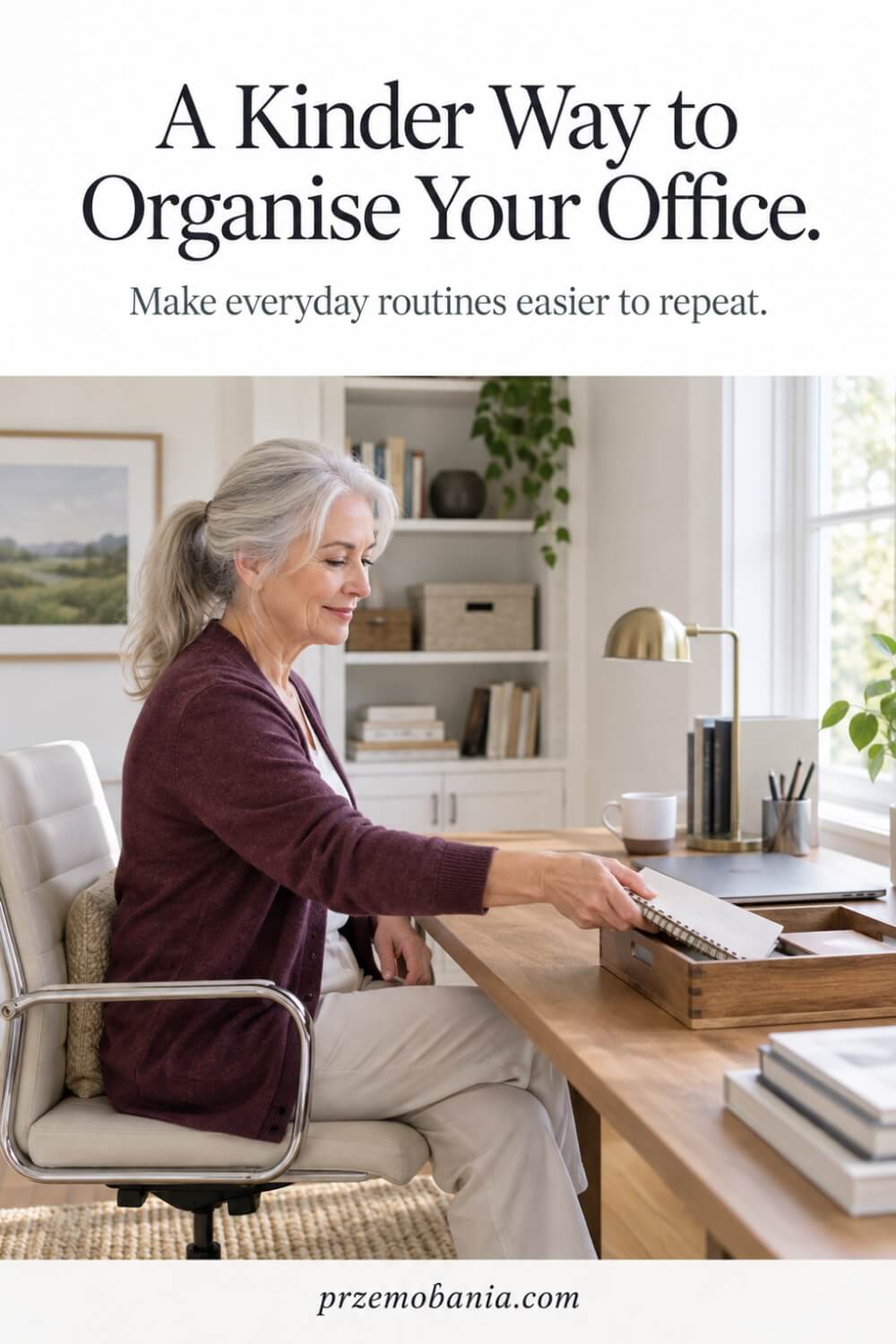
Home office organization becomes more practical when ordinary actions require fewer steps. An open tray may suit one task better than a beautiful stack of closed boxes.
My wife’s needs have influenced how I think about those small barriers. Convenience can make a meaningful difference without changing the appearance of the whole room.
That understanding has helped me be less rigid about what a well-kept workspace should look like. I would rather accept a visible folder than insist on a hidden system that is difficult to use.
Together, our experience has taught me to value arrangements that allow for variable days. The room should offer a straightforward way back when a routine has been interrupted.
Testing Home Office Organization in Real Use
Once the arrangement is in place, give it a practical test. Choose a task you perform regularly and gather everything it requires.
Notice where you hesitate or search. Then return the materials and see whether their destinations are equally obvious.
A successful home office organization system works in both directions. Finding something quickly is only half the job.
Watch for categories that keep overflowing. They may need a different boundary, less incoming material or a more suitable location.
As my blogging work develops, the materials I use can change too. I want the system to follow the work rather than preserve an arrangement simply because it once suited me.
Leave yourself permission to revise it. A small adjustment made at the right time is often more useful than waiting until the whole room feels unmanageable again.
Conclusion on Home Office Organization
The most useful organised office is the one you can return to after a demanding day and still understand. You know where incoming material belongs, which papers need attention and where to find the tools for your next task. That clarity matters more than whether every container matches or every surface remains empty.
Home office organization works best when it follows the movement of real work. Things arrive, become active, wait for a response, turn into reference material and eventually leave. When you give those stages sensible places, you reduce the need to make the same decisions repeatedly. The room begins to explain itself through familiar routines.
I would start with one troublesome flow rather than the whole office. If paperwork spreads across the desk, establish a clear arrival point and an action category. If small accessories disappear, give the useful ones a convenient drawer. If cables make equipment difficult to move, identify them and create routes that remain accessible. Choose the problem you meet most often.
Then pay attention to returning things. Many arrangements look successful immediately after tidying because everything has been placed carefully by someone with time and attention. The more revealing moment comes later, when you are busy and need to put something away quickly. If that action is awkward, the system needs adjustment rather than another promise to try harder.
My experience supporting my wife has made that distinction deeply important to me. A home should not demand the same level of effort from us every day. I want our surroundings to leave space for tiredness, interruptions and changing priorities. A useful office can hold an unfinished task safely without making it feel lost, and it can welcome you back without requiring a major reset.
That is why I value small habits such as a restart note, a clear label and a modest place for outgoing items. None looks dramatic in a photograph, but each can remove a little uncertainty from an ordinary day. Together, they make the room easier to trust.
You also deserve a system that reflects your preferences. You may need some active materials in view, while someone else prefers closed storage. You may work with paper, digital files or both. The practical question is whether the arrangement helps you find, use and return what matters without unnecessary effort.
Give your first version time to reveal its weak points. Change the label that confuses you, move the item that never stays put and remove the category that adds more decisions than value. Those revisions are evidence that you are learning how the room works.
Start small enough to finish, then protect the improvement with a routine you can realistically repeat. Your office does not need to become immaculate. It needs to become understandable, manageable and ready to support the work you want to do, even when life outside the desk is asking a great deal of you.
Give everyday items clear homes, keep unfinished work easy to recognise and make returning things as simple as finding them. You can build a more manageable office one category at a time. The goal is a room that supports your working day and offers an easy way back after the inevitable busy spell.
Share the organising problem that keeps returning in your office, and explore the FREE chapter of my eBook at the bottom of the post for more ways to make your workspace support you.


Przemo Bania is a blogger and writer who helps people get out of their traditional jobs to start a blogging career. Przemo also runs a health blog advocating for endometriosis and fibromyalgia…
Related Questions You May Be Asking About Home Office Organization
Do I need to organise everything before buying storage?
You do not need to finish the entire room, but sort and measure the category you want to store before buying its container. Otherwise, you may purchase the wrong size or preserve items you no longer need. Test a simple temporary arrangement first, then choose storage that improves a proven system.
Are transparent boxes better than closed storage?
Transparent boxes help when seeing the contents makes retrieval easier, while opaque containers can reduce visual busyness. Neither is automatically better. Consider how often you use the items, whether labels are enough and where the boxes will sit. Choose the option that makes identification and return easiest for your particular routine.
How should I organise notebooks with unfinished ideas?
Give active notebooks one consistent location and use a simple index, marked page or brief contents note to identify ongoing ideas. Separate finished notebooks from those still in use. Before buying another, check whether an existing one has suitable space, and decide how you will recognise the notebook connected with each project.
Can a small desk remain organised without drawers?
Yes. Use a nearby shelf, a compact mobile unit or a small portable container for items that do not need to stay on the desktop. Keep the desk’s main working area available for the current task. The storage does not have to be built into the desk to serve it effectively.
How often should I review old files?
Base the review on how quickly files accumulate and what the documents are for. A regular reminder can help, but avoid disposing of important records simply because they are old. Check any applicable retention requirements separately, then review duplicates, outdated working copies and material that no longer serves a useful purpose.
Home Office Organization References
- https://www.ikea.com/gb/en/cat/desk-accessories-10573/
- https://www.ikea.com/gb/en/cat/cable-management-accessories-16195/
- https://grovemade.com/desk-collection/
