
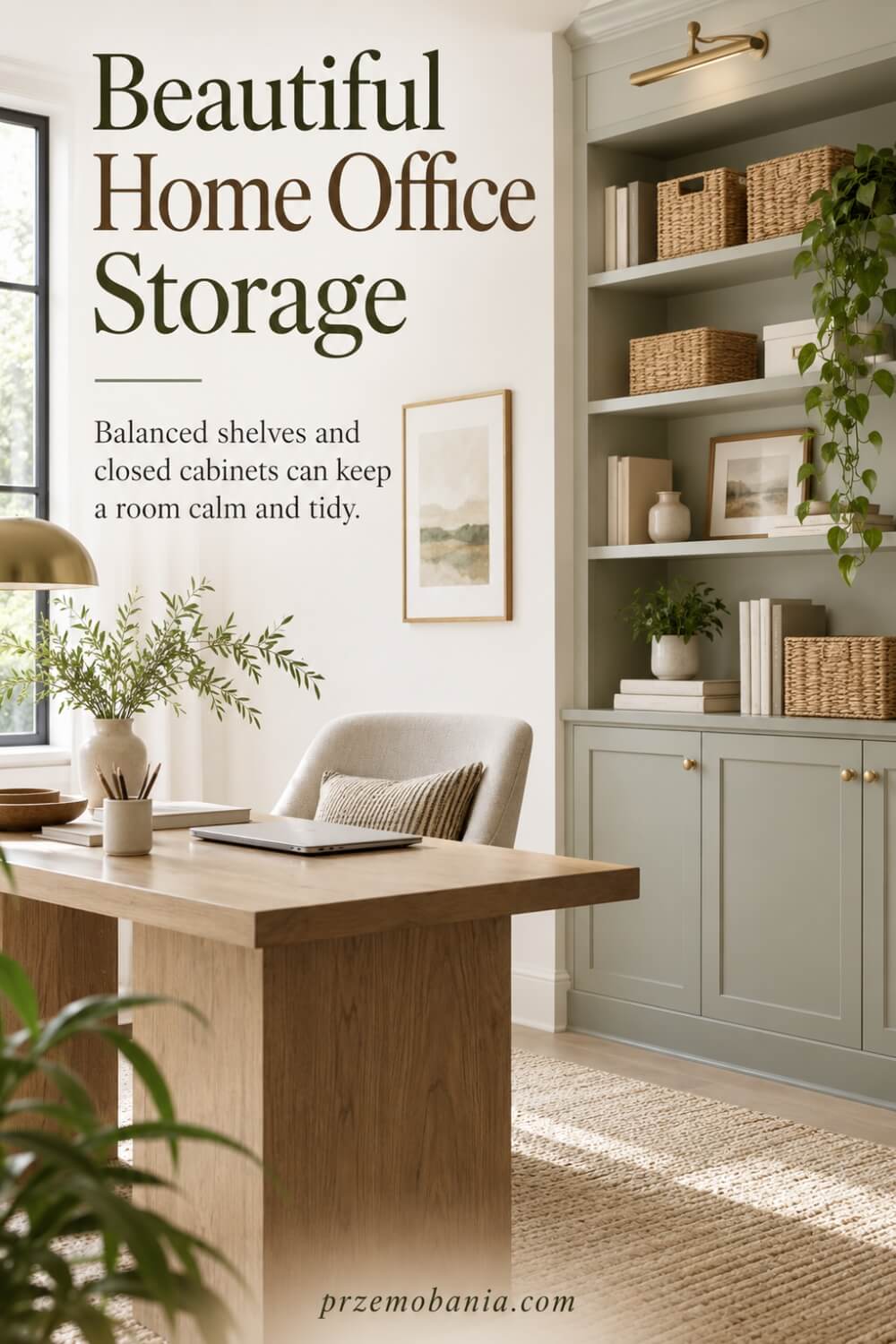
Home Office Storage
Could the reason your workspace always feels smaller, busier, and harder to use have less to do with the size of the room and more to do with where everything lives? Home office storage works best when it follows your real working habits, not when you simply squeeze more furniture around the desk. If papers, chargers, notebooks and equipment keep creeping back onto your work surface, I know how frustrating it feels when a room that should support you starts demanding more from you.
Home office storage is a planned system of drawers, cabinets, shelves, files and concealed zones that keeps work essentials organised, accessible and off the main desk surface. The best setup matches storage to your workflow, available space, reach needs and the items you use most often each day.
I am a passionate blogger whose relationship with home changed when chronic illness reshaped my wife’s working life, and the love of interiors my mum quietly planted in me during childhood eventually helped me design the closest thing to a perfect workspace for her needs and a cosy office for myself, where I could write, build my blogs and make money from home; alongside what I have learned from living this every day and from my own love of home décor, I have linked every source I used at the bottom of this article because I want my knowledge to keep growing with yours.
One detail changed how I think about a tidy office: the UK Health and Safety Executive does not treat a crowded desk as merely a styling issue; its workstation guidance says there should be enough surface space for necessary equipment and papers, and that frequently used items should be within easy reach.
Current home-office designers reach a similar conclusion from another direction: start by taking stock of what you actually need to store, then combine closed cabinets, drawers, open shelving and vertical space so the room supports your workflow instead of displaying every object you own.
That means the cleverest storage plan is not necessarily the one with the most cupboards. It is the one that gives your desk back to you, reduces unnecessary reaching and searching, makes awkward corners useful, and still lets the room feel warm enough that you actually want to sit down and work there.
And once you see storage that way, the question becomes far more interesting than “Where can I fit another shelf?” because you start asking what your workspace could stop making difficult.
If you are still deciding how storage should work with your desk, layout, lighting, and the rest of the room, my broader guide to building a workspace from the ground up will help you see those choices as one connected system rather than a collection of furniture.
- How Should Home Office Storage Actually Work?
- Keep Daily Essentials Within Reach
- Give Every Item One Home
- Use Your Walls More Wisely
- Combine Open and Closed Storage
- Protect Your Desk From Clutter
- Separate Active and Archived Papers
- Create a Dedicated Technology Zone
- Use Awkward Spaces With Purpose
- Leave Room for Storage Growth
- Design Around Your Real Routine
- Why Home Office Storage Should Make Work Feel Lighter?
- How Home Office Storage Can Make a Room Feel Bigger?
- How Home Office Storage Supports Changing Needs Over Time?
- Conclusion on Home Office Storage
How Should Home Office Storage Actually Work?
The biggest mistake I made when I first thought seriously about home office storage was assuming that more cupboards automatically meant better organisation. What matters far more is whether the things you reach for every day are close to where you actually use them.
I like to think of a workspace in small zones rather than one room full of furniture. Your keyboard, notebook, current paperwork, chargers and everyday stationery belong in the immediate working zone, while reference materials and less frequently used equipment can sit farther away.
That simple distinction can prevent your desk from slowly becoming the place where everything lands. UK Health and Safety Executive guidance takes a surprisingly practical approach too, recommending enough work-surface space for necessary equipment and papers while keeping frequently used items within comfortable reach.
I would therefore plan what needs a home before buying the furniture that will contain it. Empty shelves can look wonderfully organised on Pinterest, but filling a wall with storage before understanding what you own often leaves you with beautiful compartments that are the wrong depth, height or location.
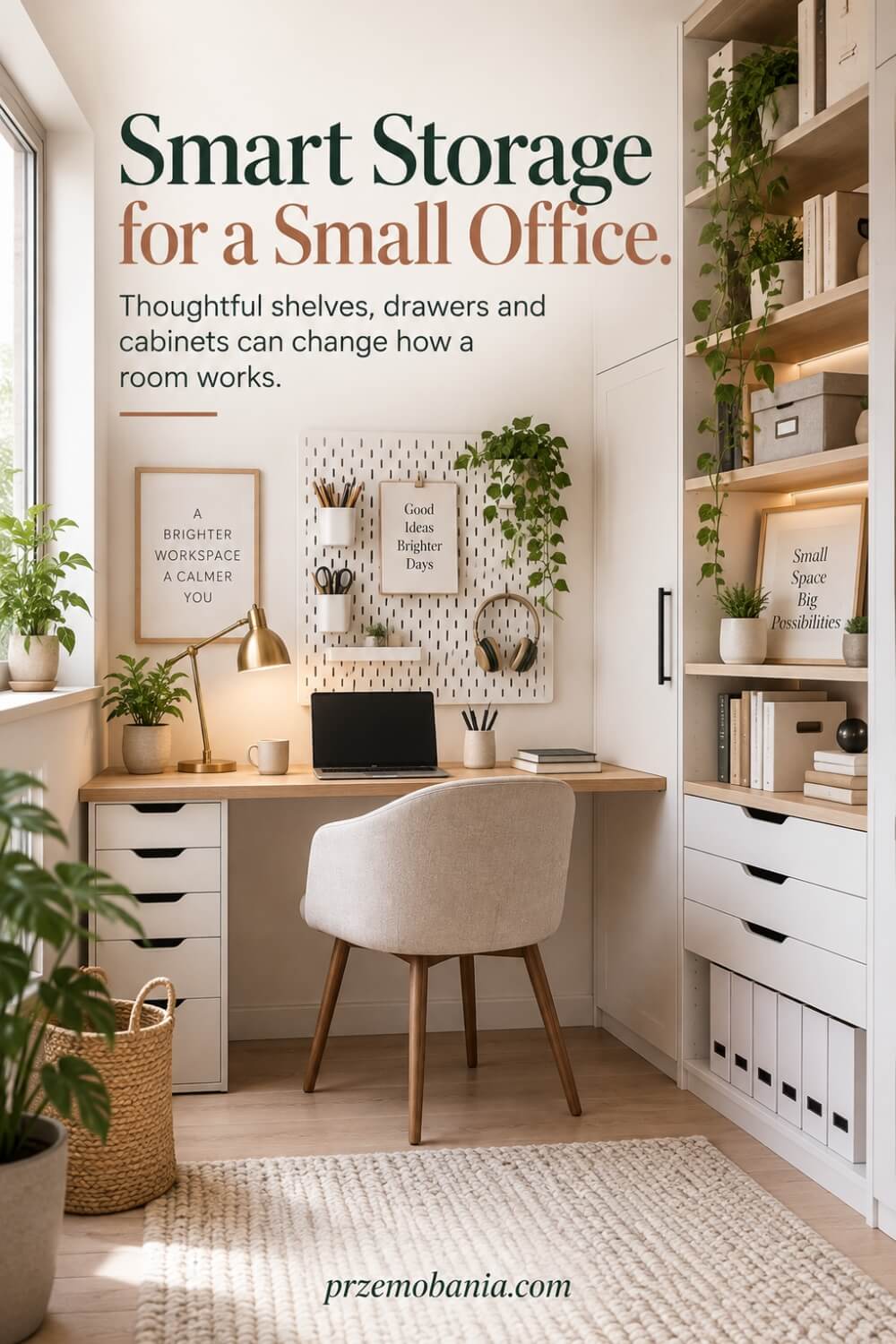
Drawers work particularly well for smaller things you need often because they keep visual noise below the worktop while allowing quick access. Deeper cupboards make more sense for bulkier equipment, spare supplies, archived documents and items that would make an open shelf feel busy.
Open shelving has another role altogether. I use it for books, attractive boxes, frequently referenced material and a few things that make the office feel personal, because I never want a productive room to resemble a stock cupboard.
This balance between concealed and visible storage is especially useful when your office shares space with a bedroom, living room or another part of the home. Current interior-design guidance repeatedly favours mixing drawers and closed cabinetry with accessible shelving rather than forcing one storage type to solve every problem.
Then look upwards, because many people run out of floor before they run out of wall. Shelves above a desk, cabinetry extending towards the ceiling and carefully used space above doorways can create capacity without making the chair area tighter.
I would still resist covering every available wall simply because you can. Storage should give the room breathing space, and leaving some visual emptiness between objects can make even a heavily used office feel calmer.
The area underneath the desk deserves the same thought. A slim drawer pedestal can be useful, but anything placed there should leave enough room for your legs, chair movement and the natural changes of position you make during a long working day.
Cable storage matters too because wires create their own form of clutter. Routing power leads behind the desk, giving chargers a dedicated drawer or tray and positioning equipment near sensible sockets can remove a surprising amount of daily irritation.
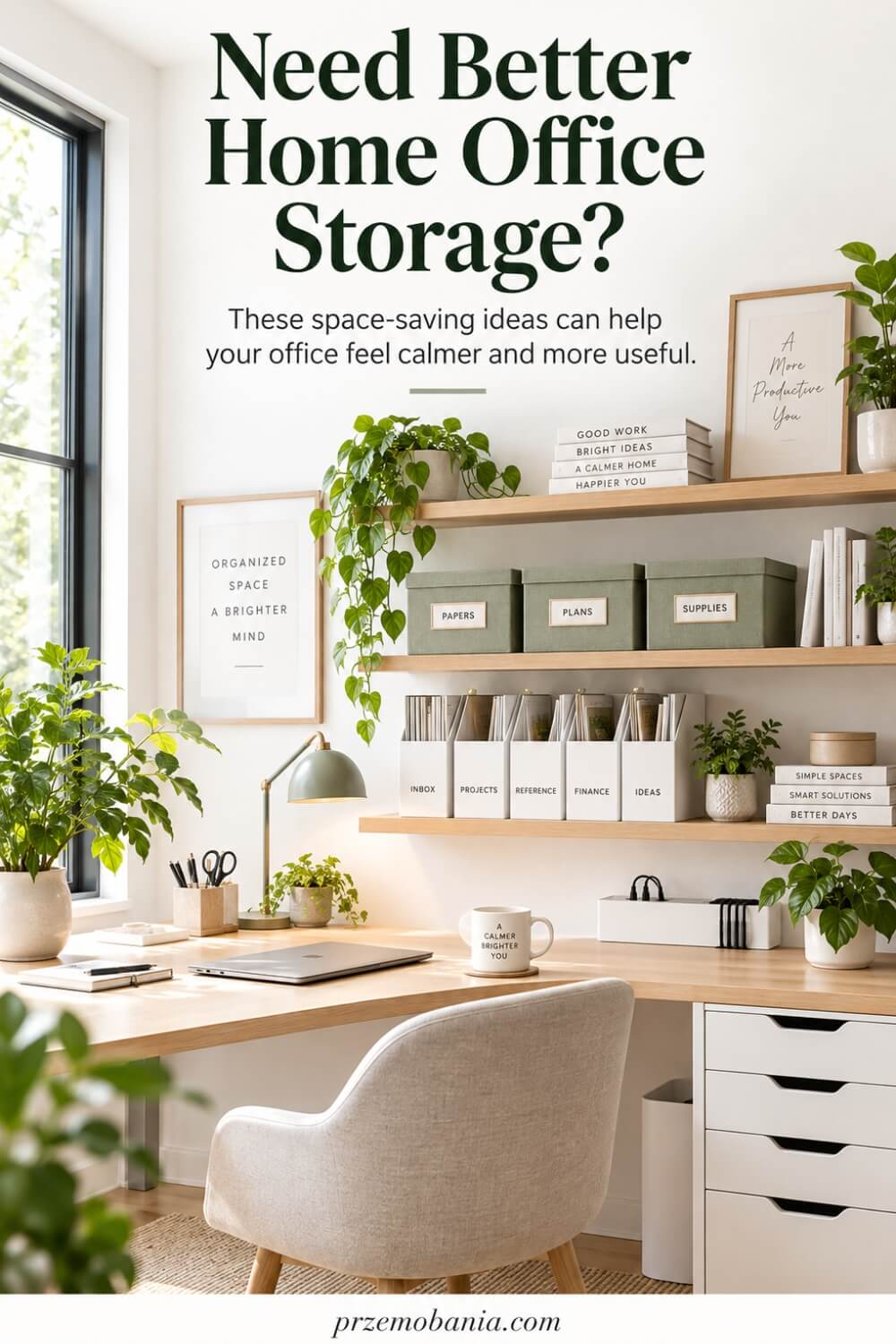
I also separate active paperwork from papers I am merely keeping. Current documents need quick access, while records you rarely touch can move into labelled folders, filing drawers or higher shelving rather than occupying prime space beside your hands.
Printers are another classic desk thief. If you use one regularly, giving it a dedicated shelf, cabinet surface or nearby unit can return a large piece of your worktop without pushing the machine so far away that using it becomes annoying.
Good organisation also needs permission to change. Your work evolves, equipment changes and projects come and go, so adjustable shelving, movable organisers and drawers that can be repurposed usually age better than a system designed around one perfect-looking photograph.
I have learned to leave a little unused capacity wherever possible. When every drawer begins completely full, the next notebook, cable, document or piece of equipment has nowhere to go, and that is usually when clutter begins spreading back across the room.
Most importantly, storage should reduce physical and mental friction rather than become another job you have to maintain. HSE guidance similarly emphasises keeping working areas tidy, free from obstructions and arranged so equipment can be used comfortably rather than requiring repeated awkward reaching or movement.
I understood that lesson much more deeply while helping my wife work from home, because there were days when simply getting through her working hours demanded far more energy than anybody looking through the window would ever have known. When someone you love is already exhausted, watching her spend precious energy searching for a cable, stretching towards a folder or clearing yesterday’s paperwork before she can even begin work stops feeling like a small interior-design problem.
That is why the ideas below are not about creating a showroom for photographs. They are the practical changes I would make first if I wanted your workspace to feel easier to use, easier to keep tidy and kinder to the person who sits inside it every day.
- Keep Daily Essentials Within Reach
- Give Every Item One Home
- Use Your Walls More Wisely
- Combine Open and Closed Storage
- Protect Your Desk From Clutter
- Separate Active and Archived Papers
- Create a Dedicated Technology Zone
- Use Awkward Spaces With Purpose
- Leave Room for Storage Growth
- Design Around Your Real Routine
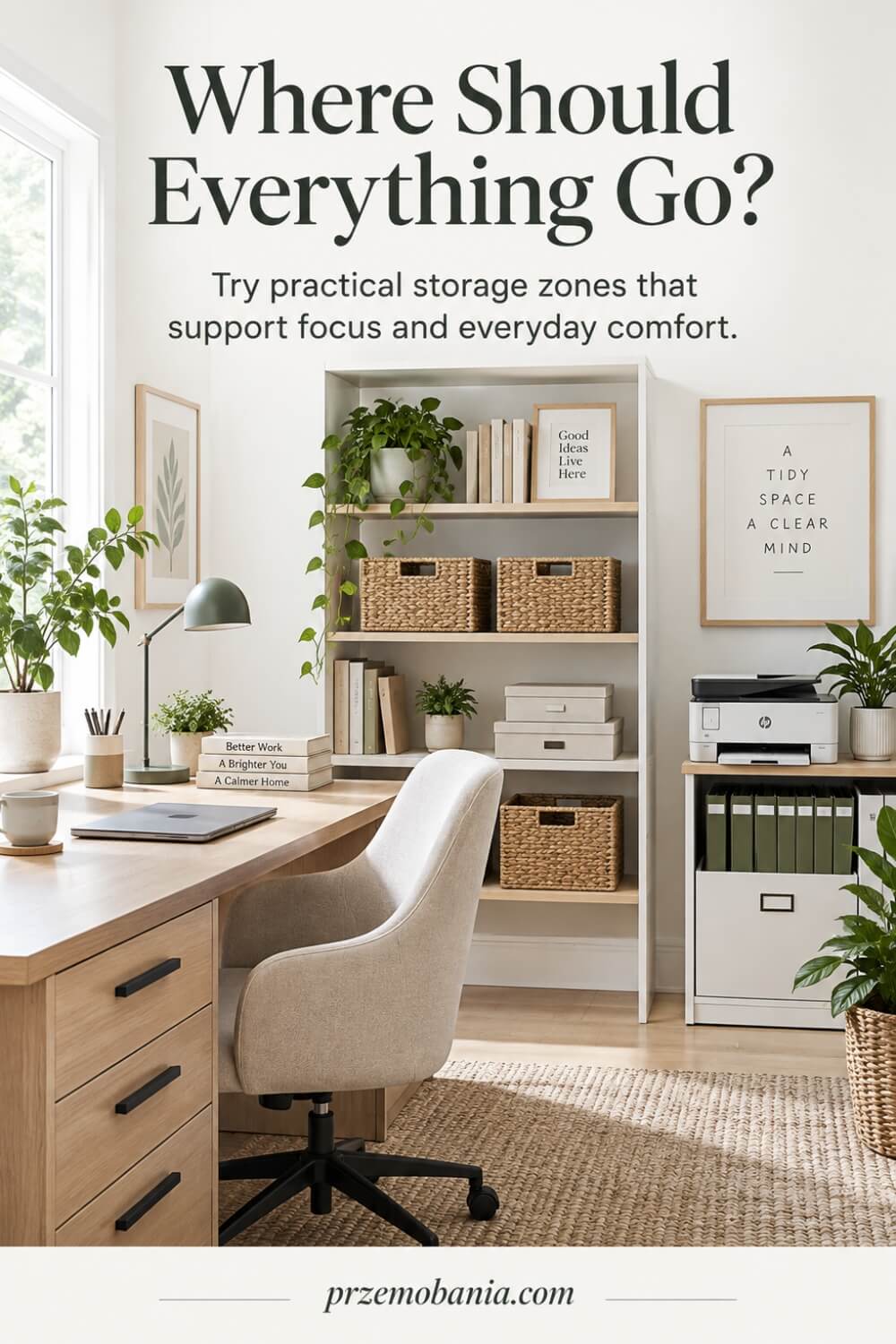
Keep Daily Essentials Within Reach
The things you touch every hour should never make you stand up, stretch awkwardly or dig through three drawers. I keep the most-used items close to the chair: a notebook, pens, charging leads, headphones, current paperwork and anything I need to begin work without breaking concentration.
This matters even more when energy is limited. Watching my wife work through difficult days taught me that five unnecessary movements can feel like fifty when your body is already asking for rest. I now treat the area around the desk as valuable working territory, not somewhere to fill with random furniture. Put everyday tools in the easiest drawer, keep frequently used folders at hand height and move occasional items farther away. The aim is simple: your storage should support the rhythm of your day so quietly that you barely notice it is there.
Give Every Item One Home
Clutter usually returns when an object has no obvious place to go. I learned this the hard way with cables, receipts, memory cards and paperwork, because each one seemed harmless until a dozen of them started living permanently on the desk.
I now try to give every regular item one clear home, and I make that home easy enough to use without thinking. Pens go in one drawer, charging accessories in another, papers into named folders and spare supplies into one cupboard instead of being scattered across the room. The system does not need to be elaborate, labelled like a warehouse or organised for anybody else’s approval. It simply needs to make putting something away easier than leaving it out. When the correct place is obvious, tidying stops feeling like a separate task and becomes part of the natural movement of your working day.
Use Your Walls More Wisely
A small office can feel impossible until you start looking above the desk rather than only around it. Wall-mounted shelves, shallow cabinets, pegboards and rails can hold useful things without stealing the floor area you need for your chair, legs and movement.
I especially like vertical storage when a room is narrow, but I would never cover every wall just because space is available. Keep the items you need most between comfortable waist and shoulder height, use higher shelves for lighter or less frequently handled things, and leave some wall visible so the room can breathe. My wife taught me another side of this without ever needing to say it: storage that looks clever but requires painful reaching is not clever at all. The best wall arrangement gives you more capacity while making the room feel calmer, easier and physically kinder to use.
Combine Open and Closed Storage
Open shelves can make a workspace feel warm and personal, but too many exposed objects quickly turn useful storage into visual noise. Closed cupboards do the opposite, hiding the mess beautifully, yet they can make everyday items irritating to retrieve if everything disappears behind a door.
I prefer a mixture because each type solves a different problem. Books, attractive boxes and things I reach for often can stay visible, while printer paper, spare cables, documents and less attractive equipment can live behind doors or inside drawers. This balance became important in our home because I wanted the office to feel like part of the house, not a back room filled with supplies. You should be able to look around and feel settled, while still knowing where the practical things are. Good storage does not force you to choose between beauty and function. It quietly gives you both.
Protect Your Desk From Clutter
Your desk is working space, not long-term storage. I used to let unopened post, notebooks, chargers and half-finished tasks gather around the keyboard, and each object seemed tiny until the surface stopped feeling like a place where I could think clearly.
Now I protect the desk by deciding what is allowed to stay there overnight. Usually that means the computer, one notebook, a pen and perhaps one active document, while everything else returns to a drawer, shelf or tray. A small inbox for papers can help, but only if you empty it regularly rather than turning it into another pile. This simple rule has changed how I begin work because I am no longer clearing yesterday before I can start today. When my wife has a difficult morning, I want her workspace ready for her, not asking her to organise it first. Your desk should welcome you into the day, not present you with unfinished housekeeping.
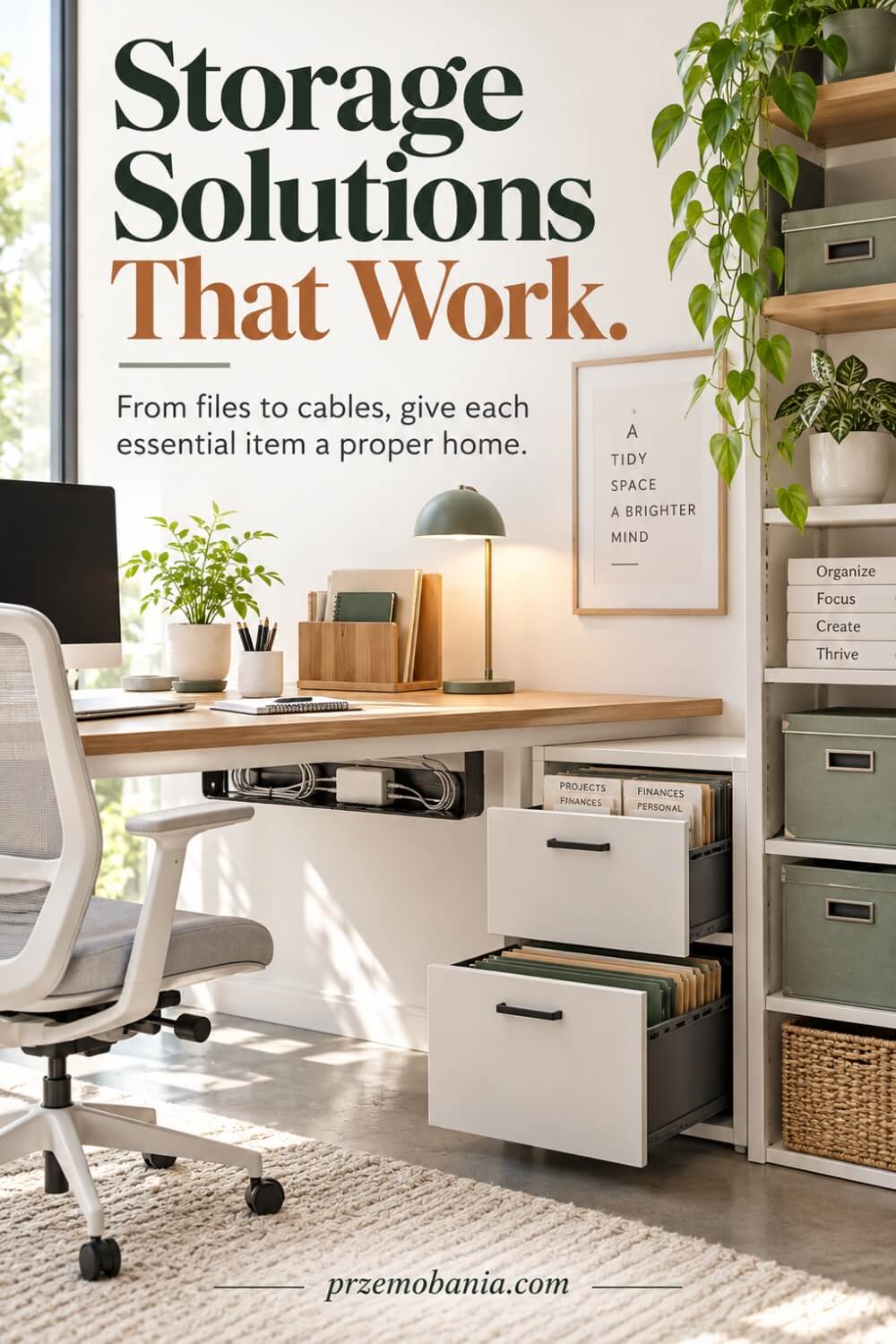
Separate Active and Archived Papers
Not every piece of paper deserves the same position in your office. The documents you are using this week should be quick to reach, while old records, completed projects and paperwork kept only for reference can move into labelled files, deeper drawers or higher shelves.
I use this distinction because piles grow when active and inactive papers are mixed together. A slim tray or small file beside the desk can hold current work, while archive boxes or filing drawers can take everything that no longer needs daily attention. Review the active pile often, because a system is only useful if things eventually move out of it. This also makes it easier to find what matters when you are tired, rushed or distracted. There is something reassuring about knowing that today’s work is in one place and yesterday’s history is safely somewhere else. That small sense of order can make a busy room feel far lighter.
Create a Dedicated Technology Zone
Technology creates some of the ugliest and most persistent clutter in a home office. Chargers, adapters, external drives, headphones and spare leads seem to multiply, so I prefer giving them one defined area instead of letting them spread across drawers and surfaces.
A shallow drawer with dividers works well for small accessories, while a cable tray or box can keep power strips and excess wire away from your feet. I also label unusual cables because six months later they all seem to belong to something mysterious. Keep frequently used charging points easy to reach and place larger equipment where ventilation is not blocked. I learned to care about this because a tangled cable is not merely untidy when somebody is exhausted or in pain; it is one more needless frustration. A dedicated technology zone removes that friction and makes troubleshooting much faster when something suddenly stops working.
Use Awkward Spaces With Purpose
Corners, alcoves, the area beside a chimney breast and the narrow gap next to a desk are often treated as wasted space, yet they can become some of the most useful storage areas in the room. The trick is matching the solution to the shape rather than forcing standard furniture where it does not belong.
A slim bookcase can suit a narrow recess, floating shelves can use a shallow wall and a low cabinet can fit beneath a window without dominating the room. Even the back of a cupboard door can hold lightweight organisers for small supplies. I would still avoid filling every odd gap, because a room needs empty space just as much as it needs storage. My goal is always to make an awkward area earn its place without making movement harder. When a previously useless corner starts holding exactly what you need, a small office can suddenly feel far more generous than its measurements suggest.
Leave Room for Storage Growth
One of the easiest mistakes is designing storage for what you own today and filling it completely on the first afternoon. Work changes, new equipment arrives, paperwork grows and projects create their own little collections, so a system with no spare capacity quickly begins spilling onto the desk again.
I now prefer drawers and shelves with some breathing room. You do not need to leave half the office empty, but keeping a little unused space means the next notebook, device or file already has somewhere to go. Adjustable shelving and movable drawer dividers help because they can change with your work rather than locking you into one arrangement forever. This has been especially useful as my own blogging work has evolved and our needs at home have changed. A good office should not make you start again every year. It should have enough flexibility to grow quietly with the life you are actually living.
Design Around Your Real Routine
The most beautiful storage system in the world can fail if it ignores how you actually work. Before changing anything, watch your own habits for a few days: where papers land, which drawer you avoid, what you keep reaching for and what constantly gets left beside the keyboard.
Those small behaviours tell you more than a showroom ever will. If you always charge your phone on the left side of the desk, create the charging point there; if you read reference books while working, keep them within reach rather than across the room. I learned this most clearly while adapting our workspace around my wife’s needs because the room had to serve the person, not the photograph. Your office should work on an ordinary Tuesday when you are tired, busy and surrounded by real life. When storage follows your natural routine, staying organised becomes far easier because the room is finally cooperating with you instead of asking you to behave differently.
Why Home Office Storage Should Make Work Feel Lighter?
There is another layer to organising a workspace that I did not fully understand until I watched my wife trying to work on days when her body simply had less to give. A room can be beautifully organised and still be exhausting if opening, reaching, lifting and putting things away requires more effort than the person using it can comfortably manage.
I began noticing the tiny movements most of us never think about, such as bending towards a low cupboard, stretching towards the back of a high shelf or repeatedly getting out of the chair for something used several times each morning. On a good day, these movements might mean nothing, but on a difficult one they become another withdrawal from an already limited supply of energy.
That changed the way I judge home office storage because I stopped asking only whether something fitted and started asking how much effort it would take to use. Instead of arranging the room around perfect days, I began thinking about the days when concentration is poor, movement feels harder and simply reaching the desk has already taken determination.
I prefer drawers that open easily, handles that are comfortable to grip and frequently needed equipment positioned between comfortable seated and standing heights wherever the room allows it. I would rather sacrifice a little theoretical capacity than create a beautifully fitted cabinet that forces you to crouch, twist or move furniture every time you need something inside.
I also learned that organisation should reduce decisions because mental clutter can be just as draining as physical clutter. A shallow drawer containing exactly what you need for your normal working routine can be more valuable than a huge cupboard filled with things you have to search through.
There is an emotional side to this that photographs of perfect offices rarely show. When you love somebody and watch her spend so much strength simply getting through an ordinary working day, you begin to understand how meaningful it can be when the room quietly removes one difficulty instead of adding another.
I cannot design away the days when my wife is exhausted, uncomfortable or desperate to finish work and lie down. But I can design a space that does not make those days unnecessarily harder, and that is the standard I now want your workspace to meet too.
How Home Office Storage Can Make a Room Feel Bigger?
Storage can solve clutter and still make a room feel smaller if the furniture is too deep, too tall or visually too heavy for the space around it. The room feels calmer when every cabinet, shelf and drawer looks as though it belongs there rather than competing with the desk for attention.
When I began thinking about home office storage this way, I stopped measuring success by how much I could squeeze into the room and started thinking about proportion. A cabinet that technically fits can still dominate a narrow office if its depth interrupts the natural pathway around the chair.
Depth matters because storage does not have to resemble kitchen cabinetry to be useful. Shallow cupboards, narrow drawer units and bookcases that closely match the objects inside them can often give you enough capacity without pushing unnecessarily far into the room.
Colour can influence the visual weight too, especially when large units sit against one wall. If cabinetry is close in tone to the surrounding wall, it can feel more integrated, while strong contrast can make the same piece appear larger and more prominent.
Repetition also creates a sense of calm that I have come to appreciate more over the years. Matching drawer fronts, consistent handles and a limited number of storage finishes can make several separate pieces read visually as one organised arrangement instead of a collection gathered at different times.
I also like leaving deliberate gaps rather than filling every available centimetre with something. A few open areas around shelving, artwork or the edge of a cabinet give your eyes somewhere to rest and stop practical storage from making the office feel crowded.
The desk itself should remain the visual centre of the working area rather than disappearing beneath surrounding units. When nearby storage is slightly quieter in shape and finish, the workstation feels easier to approach and the whole room develops a clearer purpose.
The result is not necessarily a minimalist office with hardly anything in it, because that has never been my aim. That is the real difference between simply owning storage furniture and designing a workspace where everything feels balanced, useful and comfortable enough that you actually want to spend your working hours there.
I became especially sensitive to this when I watched how differently my wife responded to a room that felt visually calm on difficult working days. I could not take away what her body was asking her to carry, but I could make sure the walls, furniture and clutter around her were not shouting for attention too, and the five choices below are some of the simplest ways I have learned to create that quieter feeling.
- Match Storage Depth to Room Size
- Keep Important Sightlines Visually Clear
- Make Separate Units Feel Connected
- Let Large Storage Blend In
- Create Breathing Space Around Storage
Match Storage Depth to Room Size
A storage unit should earn the floor space it takes. In a narrow office, a deep cabinet can make the room feel as though the walls have moved inward, while a shallower unit can hold plenty of books, files or supplies without crowding your chair or walkway. I always measure the usable depth of what I actually need to store before choosing the furniture.
That sounds obvious, but it is easy to buy a beautiful cabinet that is far deeper than your folders, boxes or equipment require. In our own workspace, I have learned that a few saved centimetres can make a surprising difference to how freely you move around the desk. I would rather have slightly less capacity and more breathing room than force the room to serve the furniture. When storage proportions respect the size of the office, the entire setup feels calmer, easier to navigate and much more deliberate.
Keep Important Sightlines Visually Clear
Where your eyes travel matters just as much as where your hands reach. If the first thing you see when you sit down is a wall of crowded shelving, stacked boxes or cables, the room can feel busy before you have even opened your laptop. I try to keep the main sightline from the chair as clear and settled as possible.
That may mean moving taller storage to the side, keeping the space above the monitor lighter or using closed doors for the items that create the most visual noise. I noticed how much this mattered when my wife was working through days when concentration was already difficult, because a calmer view asked less of her attention. You do not need an empty office, and I certainly do not live in one. You simply want your eyes to land somewhere that feels organised, balanced and quiet enough to let you focus on the work rather than the objects surrounding it.
Make Separate Units Feel Connected
Not every office can have custom built-in cabinetry, and mine certainly did not begin that way. Separate bookcases, drawer units and cupboards can still look intentional when they share something in common, such as similar heights, matching handles, related finishes or a repeated material. Those small visual links help the room feel designed rather than assembled piece by piece.
I often prefer this approach because it lets you improve the workspace gradually instead of spending a fortune at once. You can keep a perfectly useful cabinet, add a new drawer unit later and make the two feel connected through simple choices around colour or hardware. That flexibility matters when your needs change, which ours have many times. The goal is not to fool anyone into thinking everything came from one expensive collection. It is to create enough consistency that your storage quietly supports the room rather than making each individual piece fight for attention.
Let Large Storage Blend In
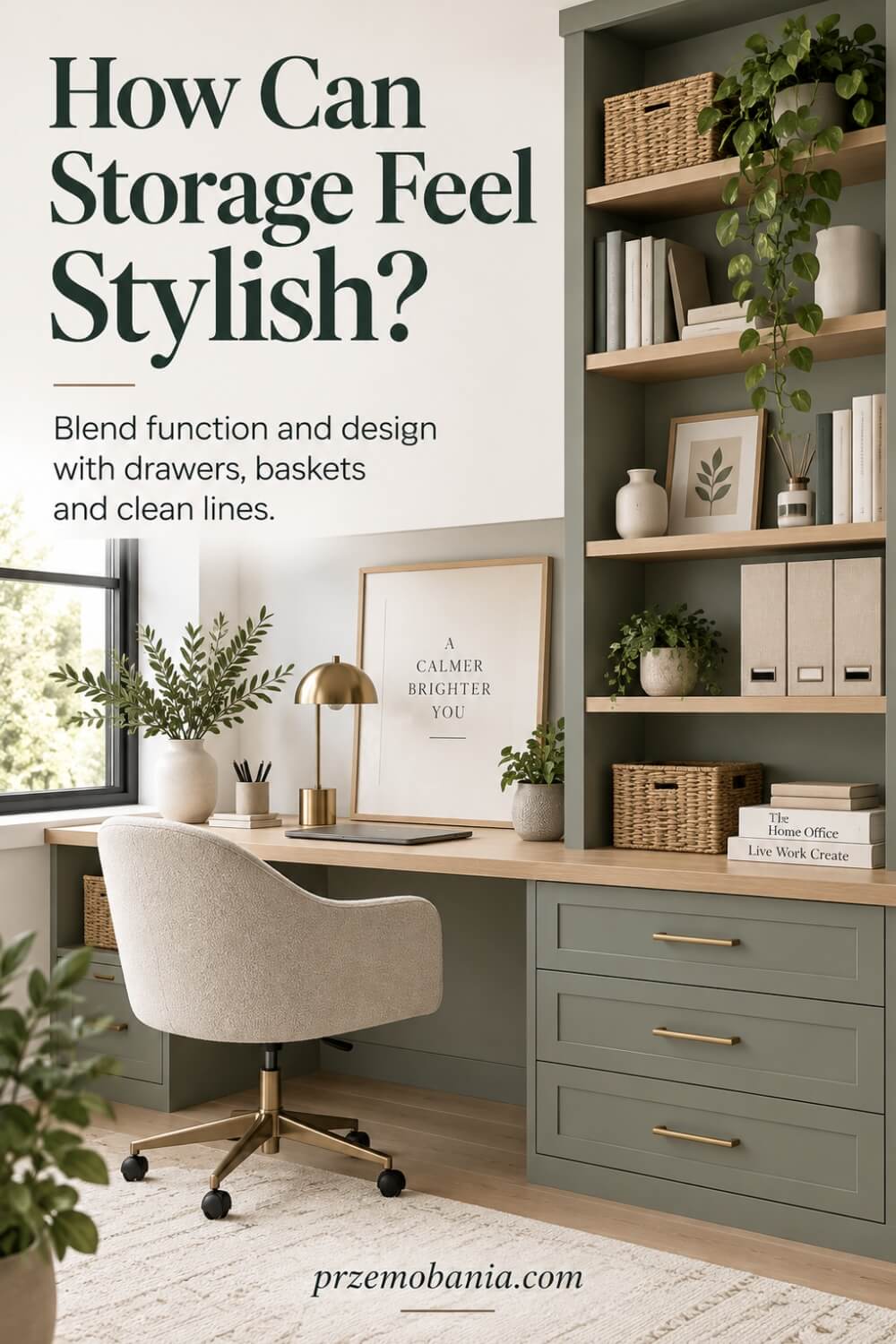
Large cabinets are sometimes unavoidable, especially when you work from home full-time and need space for paperwork, equipment or supplies. I have found that the easiest way to stop a big unit from dominating the room is to reduce the visual contrast between it and the wall behind it. Similar colours, simple fronts and restrained handles can help a substantial piece recede instead of becoming the first thing you notice.
This does not mean everything has to be beige, white or bland. A darker office can use dark cabinetry just as effectively, and timber can feel beautifully integrated when it repeats another finish already present in the room. I care more about visual continuity than following a specific colour rule. When my wife’s workspace feels settled, the storage becomes background support rather than another large object demanding attention. That is exactly what I want from any hardworking piece of furniture.
Create Breathing Space Around Storage
The temptation with a small office is to use every empty centimetre, but completely filling a room can make even clever storage feel oppressive. I like leaving small areas of wall visible, keeping a little space above low cabinets and avoiding the urge to place something in every corner. Those gaps are not wasted space; they are what allow the useful pieces to feel intentional.
This became one of the biggest changes in how I approach interiors because I used to see an empty area and immediately wonder what could fit there. Now I also ask whether leaving it alone would make the rest of the room work better. A calm office needs rhythm, and rhythm comes from alternating useful objects with places where the eye can rest. When my wife is already drained, that visual quiet matters more to me than squeezing in one more shelf. Sometimes the most valuable storage decision is knowing where to stop.
How Home Office Storage Supports Changing Needs Over Time?
One thing I have learned from both blogging and living beside chronic illness is that a workspace cannot be designed once and expected to stay perfect forever. Our routines change, our bodies change, the work changes, and the room has to be able to change with us rather than becoming another source of frustration.
That is why I now see home office storage as something flexible rather than fixed. A shelf that works beautifully today may need to become a printer station next year, while a drawer once filled with stationery might later hold medication notes, work documents or new equipment.
My wife’s needs have taught me to leave room for those changes instead of designing everything so tightly that nothing can move. Some days she needs certain things closer, some periods of work demand more paperwork, and sometimes an arrangement that seemed clever simply stops serving her.
My own needs have shifted too as my blogging work has grown, because I now deal with more devices, more documents and more moving parts than when I first started. I have had to rethink where equipment lives, what deserves immediate access and which things no longer need valuable space beside me.
For both of us, the most useful rooms have been the ones that allow small adjustments without turning every change into a complete redesign. Adjustable shelves, movable organisers, modular drawers and furniture that can serve more than one purpose have given us freedom when life refuses to stay predictable.
That flexibility has become emotional for me as well as practical. When I can change the room around my wife’s needs instead of asking her to keep adapting herself to the room, it feels like one small way of making home work with us rather than against us.
And that is the kind of workspace I want you to build too: not a perfect photograph frozen in time, but a room that keeps supporting you as your work, energy, responsibilities and life continue to change.
Conclusion on Home Office Storage
If there is one idea I hope you carry away from this article, it is that good storage is not about fitting more things into a smaller room. It is about shaping a workspace that removes friction, protects your attention and makes each working day feel easier to enter.
The most useful home office storage begins with your real habits. Look at what you reach for, what gets left on the desk, what you constantly lose and what forces you to stand, stretch or interrupt your concentration. Those patterns tell you where drawers, shelves, cabinets and files need to be.
I have learned to value accessibility just as much as appearance. A cupboard can be beautiful and still be wrong if it makes you bend awkwardly every morning, while a simple drawer beside the desk can quietly improve hundreds of ordinary working days. The same applies to visual calm because concealed storage, sensible proportions and a little empty space can help the whole room feel less demanding.
My wife changed the way I understand that more than any book could. Watching someone you love continue working when her energy is low teaches you to notice every needless movement, every obstacle and every tiny frustration that others might overlook.
That experience is why I no longer design a workspace for its best day. I think about the difficult morning, the deadline, the headache, the day when concentration disappears and the evening when you are still trying to finish something long after your energy has gone.
Your own needs may be completely different, and that is exactly the point. Your office should reflect your work, your body, your available space and the life happening around it rather than copying somebody else’s perfectly staged photograph.
Start with what bothers you most. Perhaps it is paperwork spreading across the desk, cables under your feet, a printer occupying valuable worktop space or shelves that look full but somehow never contain the things you actually need.
Solve one problem properly before buying another piece of furniture. Measure carefully, protect your movement space, use the walls where it makes sense and keep the most frequently used things close enough that accessing them becomes effortless.
Then allow the room to evolve. Your work may grow, your equipment may change and life can alter your priorities in ways you cannot predict today, so leave some unused capacity and choose systems that can be rearranged rather than locking yourself into one rigid setup.
Most of all, remember that you are not organising a photograph. You are creating a place where real work, tired mornings, ambitious plans, imperfect days and hopefully many proud moments will happen.
If that room helps you sit down with a clearer mind, find what you need without searching and finish the day without feeling surrounded by unfinished clutter, then the storage has done something far more valuable than simply making the office look tidy. It has given part of the room back to you once again.
A calmer workspace is rarely created by buying more. It comes from understanding how you work, removing the little frustrations that drain your energy and giving every useful thing a sensible place. Build around your real life, leave room for change, and let your office become a space that supports you instead of constantly asking something from you.
I would genuinely love to know what causes the most clutter or frustration in your own workspace, so leave me a comment below and share what you are trying to improve. And if my story or approach has connected with you, you can also check out the FREE chapter of my eBook at the bottom of this post.


Przemo Bania is a blogger and writer who helps people get out of their traditional jobs to start a blogging career. Przemo also runs a health blog advocating for endometriosis and fibromyalgia…
Related Questions You May Be Asking About Home Office Storage
1. What is the best storage for a small home office?
For a small workspace, I would prioritise shallow cabinets, wall-mounted shelves, drawer pedestals and vertical storage that uses height without stealing valuable floor space. Keep frequently used items close to the desk and move occasional supplies higher or farther away. The goal is not maximum capacity, but enough organised storage without making the room feel cramped.
2. Should I use open shelves or closed cabinets in my office?
I prefer combining both because they solve different problems. Open shelves are useful for books, attractive storage boxes and things you reach for regularly, while closed cabinets hide paperwork, cables, spare supplies and equipment that creates visual clutter. Mixing the two helps your office remain practical without making every working item part of the room’s decoration.
3. How can I organise office paperwork without creating piles?
Separate papers according to what you actually need to do with them. Keep current documents in one accessible tray or file, create another place for items awaiting action, and move completed records into clearly labelled folders or filing drawers. Review the active papers regularly so today’s work does not slowly become another permanent stack beside your keyboard.
4. Where should I store cables and technology accessories?
I like keeping chargers, adapters, external drives and spare cables together in one dedicated drawer or divided organiser near the desk. Cable trays beneath the worktop can keep power leads away from your feet, while labels help identify rarely used connections later. Keeping technology together makes troubleshooting easier and prevents small electronic accessories spreading throughout the room.
5. How do I add more storage without making my office look smaller?
Start by using vertical and underused areas rather than automatically adding deeper furniture. Shallow wall cabinets, floating shelves and narrow drawer units can provide useful capacity while preserving movement space. I also recommend keeping some wall visible and choosing large storage pieces that relate closely to the wall colour, helping them feel integrated rather than visually dominating the room.
6. How much spare storage space should I leave in my office?
I would avoid filling every drawer and shelf completely when you first organise the room. Leaving roughly enough free capacity for future files, supplies or equipment makes the system much easier to maintain as your work changes. Adjustable shelves and movable organisers are especially useful because they let the workspace evolve without forcing you to redesign everything whenever something new arrives.
Home Office Storage References
- https://en.wikipedia.org/wiki/Filing_cabinet
- https://www.hse.gov.uk/pubns/ck1.pdf
- https://www.hse.gov.uk/home-working/worker/index.htm
- https://haleandmurray.co.uk/how-to-design-home-office-storage/
- https://www.houzz.co.uk/magazine/9-storage-ideas-for-your-home-office-stsetivw-vs~116677690
