
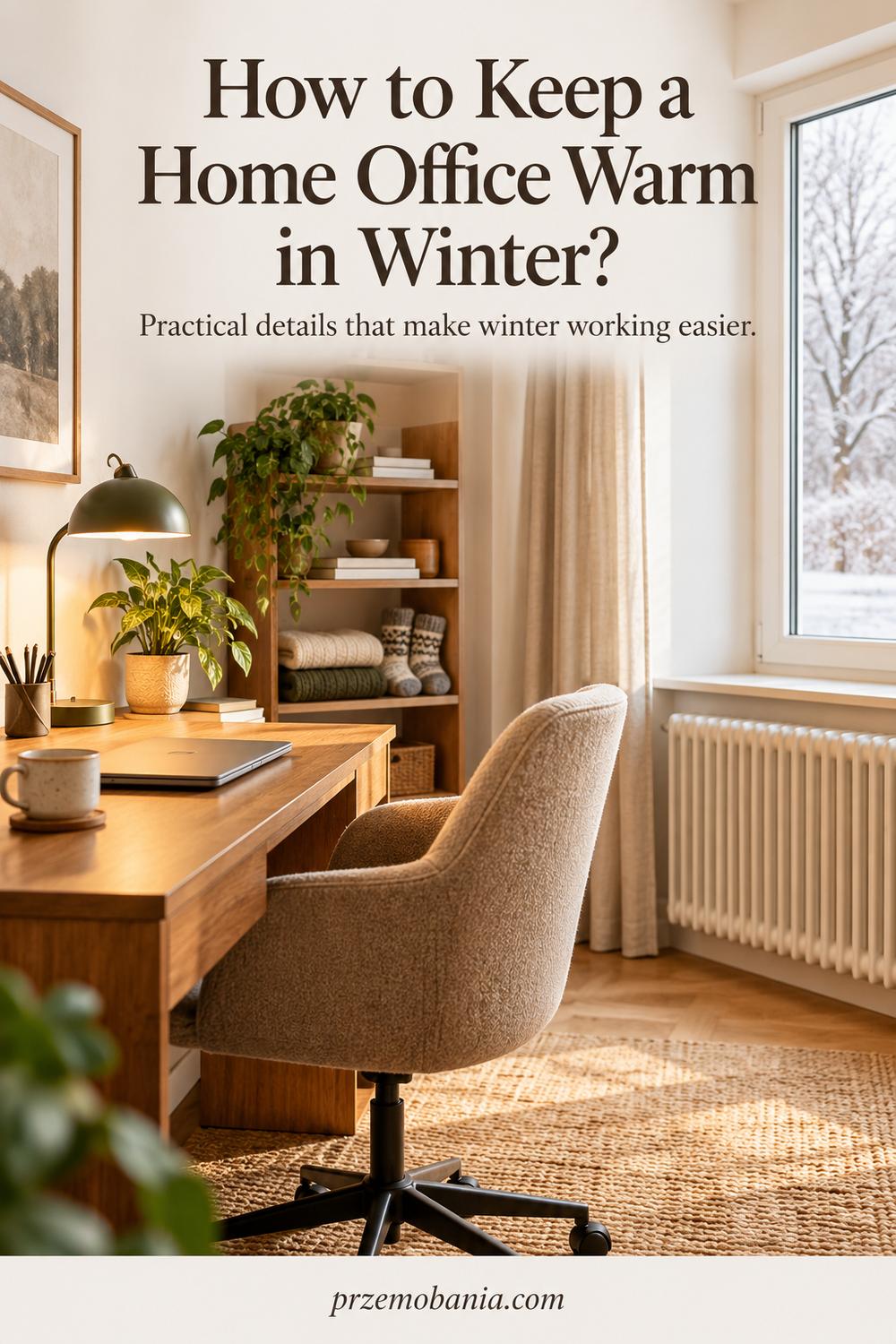
How to Keep a Home Office Warm in Winter?
Why can you still feel cold at your desk when the heating is already on? To keep a home office warm in winter, I would first identify where the discomfort comes from rather than immediately buying another heater. If you spend the morning shifting your feet and pulling your sleeves down, you deserve a more useful answer than ‘add a cosy throw’.
To keep a home office warm in winter, identify draughts and cold surfaces, use existing heating controls correctly and keep heat sources clear. Add personal layers, maintain required ventilation and assess any portable heater carefully, including its placement, electrical supply and running cost.
My mum’s love of interiors shaped my interest in comfortable rooms, and after my wife became chronically ill I helped adapt her working space alongside my blogging corner, drawing on the references below to understand more than appearances alone.
Cold discomfort is not always evenly distributed across a room. Your hands, feet and the side of your body nearest the window may tell different stories.
That distinction can help you decide whether the next useful step is a seating adjustment, a building repair or a better heating routine.
I put these decisions in context in my guide to preparing a comfortable workspace for winter, including the lighting and layout choices that sit alongside warmth.
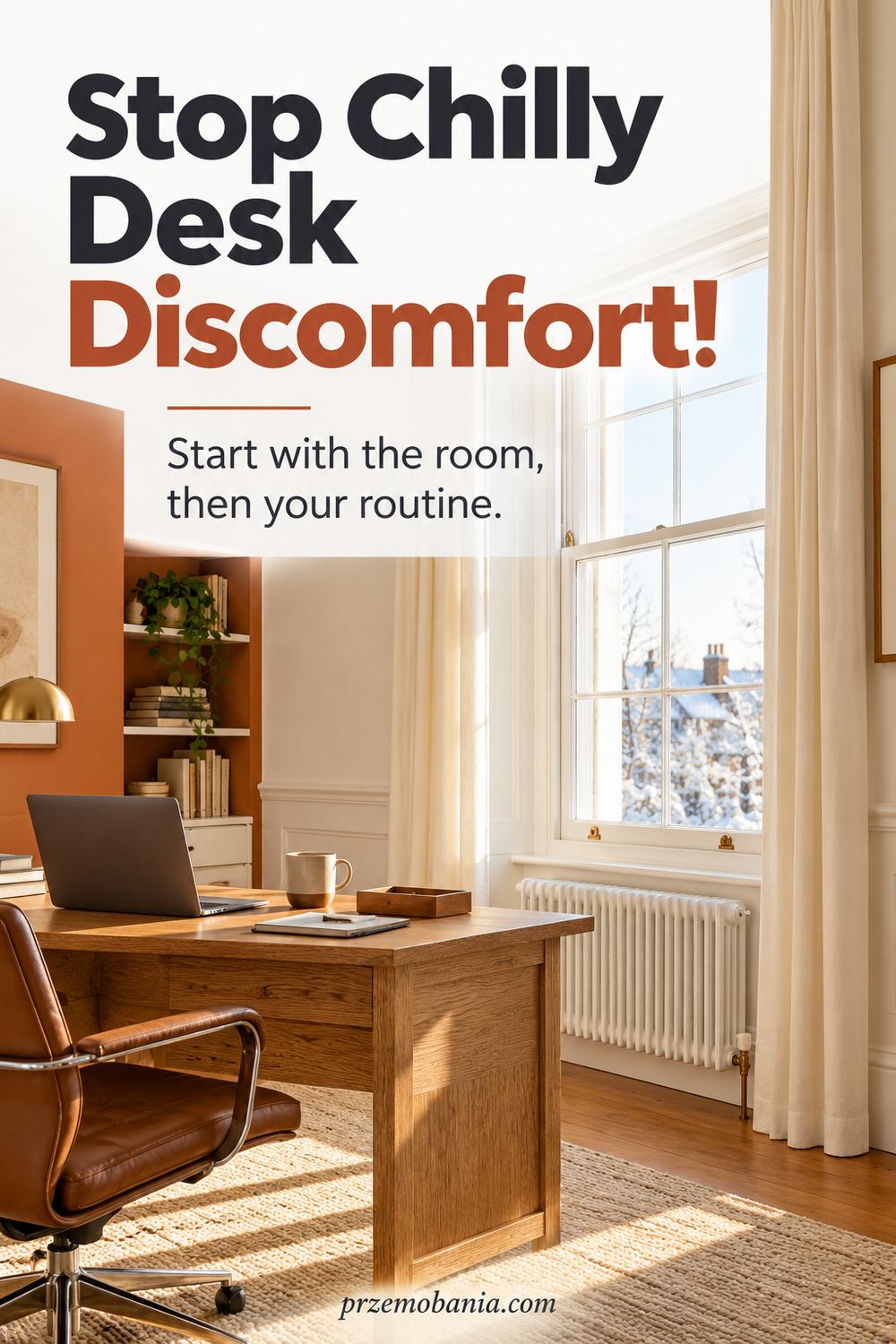
Keep a Home Office Warm in Winter by Finding the Cause
I would start with a short check from your usual seated position. Notice whether the discomfort affects your whole body or a particular area. Record when it begins and whether the heating is operating at that time.
To keep a home office warm in winter, you need to distinguish unwanted moving air from a generally cool room. A cold window or wall can also influence how comfortable you feel. A thermostat reading alone does not describe every condition around your chair.
Look for obvious gaps around opening windows and doors. Check whether a curtain moves in windy weather without a deliberate ventilation opening nearby. Avoid using a flame to investigate airflow.
Then look at how furniture interacts with the existing heating. A storage unit or hanging fabric may be obstructing the space around a radiator. A desk position may also put you unusually close to cold glazing.
Write down what you can adjust safely and what needs an appropriate repair. In a rented home, report defects instead of improvising permanent alterations. This gives you a practical order of work before you spend money.
I learned through supporting my wife that one person’s comfortable room can feel very different to someone else. Taking your experience seriously is more helpful than asking you to tolerate a setting because it seems fine to another person.
- Map Cold Spots Around Your Desk
- Address Draughts Without Blocking Ventilation
- Use Existing Heating Controls Deliberately
- Add Personal Layers That Allow Movement
- Assess Extra Heating Before Buying
Map Cold Spots Around Your Desk
Sit at the desk in the clothes you normally wear for work and notice where discomfort begins. Compare the side nearest the window with the side facing the room, then pay attention to the floor around your feet. I would make a simple note rather than try to diagnose the building from one sensation.
If you have a room thermometer, use it consistently and follow its placement instructions. Do not position it against a radiator or in direct sun and treat that reading as representative of the whole workspace. Combine what it shows with what you notice while working.
Try a modest change in chair or desk position if the layout allows it. Keep the screen, keyboard and walking route usable during the test. You are looking for a repeatable improvement, not proof that you can endure a colder setting. If the room remains difficult to use, record that clearly before seeking help with the underlying cause.
Address Draughts Without Blocking Ventilation
Unwanted gaps and designed ventilation are different things. I would check the window frame, door edges and other obvious openings, then establish what each opening is for before trying to seal it. Trickle vents, airbricks and required appliance ventilation should not be covered simply because you can feel air moving.
Suitable draught-proofing can help where a genuine unwanted gap exists, but the material needs to fit the type and size of opening. A strip that prevents a window closing properly is not an improvement. Older or unusual windows may need advice from someone familiar with their construction.
If you rent, discuss repairs and permitted alterations with your landlord or agent. Keep notes or photographs of the problem if useful. I prefer this practical route to hiding a defect behind a heavier curtain, particularly if there is recurring moisture, damage or a window that does not shut as it should.
Use Existing Heating Controls Deliberately
Find out what the controls in your home actually do before changing several settings at once. A room thermostat, timer and radiator valve have different roles, and the arrangement varies between heating systems. I would begin with the manufacturer’s guidance or reliable advice suited to your system.
Think about the hours when the room needs to be comfortable. A schedule that suited occasional evening use may not suit a full working day. Keep notes of the effect of a sensible adjustment instead of repeatedly turning controls up and down whenever you pass them.
Do not assume that setting a much higher target temperature makes the room warm faster. Avoid making technical boiler adjustments without appropriate guidance. If the office remains cold while other rooms are comfortable, that is useful information to give a heating professional. It is better than continually compensating with purchases that leave the original problem unresolved.
Add Personal Layers That Allow Movement
Personal layers can make a workable room more comfortable, but they should not become an excuse to ignore persistently unsuitable conditions. Choose clothing and footwear you can work in easily. I would check whether cuffs interfere with typing and whether your feet remain supported rather than balanced on a pile of soft objects.
A throw can be useful if it stays clear of wheels and lets you stand without untangling yourself. Give it a storage place within reach. If adding a cushion changes your seated position, check the relationship between your chair, desk and screen again.
For fabric selection rather than heating decisions, my guide to practical winter layers around your workstation explores the choices. Here, the test is whether the layer helps you work comfortably and can be adjusted without effort as your needs change through the day.
Assess Extra Heating Before Buying
If you are considering a portable heater, first decide where it could stand safely and which suitable wall socket it could use. A compact appliance still needs the clearances specified by its manufacturer. I would not buy one first and then try to squeeze it between the desk, curtain and wastepaper basket.
Electrical Safety First advises keeping combustible materials at least one metre away and not powering portable heaters through extension leads. Follow the appliance instructions as well, including any greater clearance and restrictions on use. Keep the unit stable, uncovered and away from places where it could be knocked.
Check the rated power, controls and your electricity tariff before estimating running costs. A small-looking heater is not automatically cheap to operate. If your room cannot accommodate the device properly, that is a reason to choose another approach, not to compromise its placement around your working area.

Keep a Home Office Warm in Winter Without Guessing Costs
I would compare options using your actual circumstances rather than a universal claim about the cheapest method. Homes differ in insulation, heating systems and the number of rooms being used. Your tariff and working hours also affect the result.
The cost to keep a home office warm in winter depends partly on how long equipment runs. For an electric appliance, multiply its power in kilowatts by operating hours and your price per kilowatt-hour. That gives a simple full-power estimate rather than a guaranteed bill.
A thermostatically controlled appliance may cycle instead of drawing its full rated power continuously. Weather and the chosen setting influence that behaviour. Keep those limits in mind when comparing an estimate with real use.
Do not assume that every hour an appliance is switched on is an hour at full output. Equally, do not assume that a low setting makes it free to run. Read what the controls change on the particular product.
I would also include the purchase price in the comparison. A repair or adjustment may solve a problem that a new appliance only compensates for. Ask for appropriate advice if you are unsure which applies.
Comfort still matters in the decision. Saving money should not depend on pretending that a persistently cold workspace is adequate.
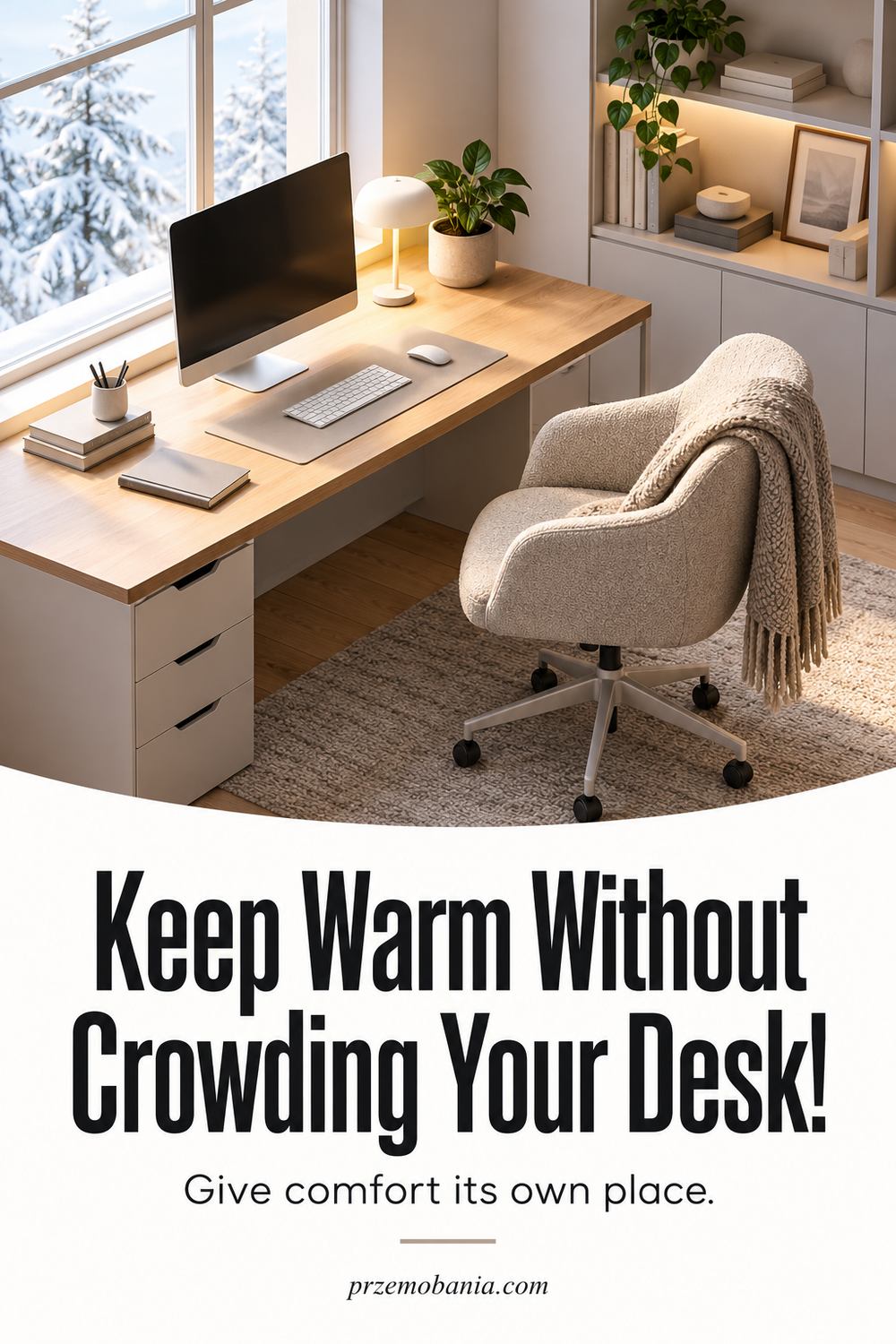
Keep a Home Office Warm in Winter as Needs Change
Shared rooms need a conversation as well as a thermostat. I would ask each person where and when they feel uncomfortable. That can reveal a seating issue that a single room setting overlooks.
To keep a home office warm in winter, review the arrangement after changes in weather or working hours. A solution tested during a mild week may need reassessment later. Keep the controls and useful personal layers easy to reach.
Do not cover recurring condensation with fabric or treat it as a styling problem. Investigate persistent damp or defects through the appropriate professional or landlord route. Retain the ventilation the building and its appliances require.
Write down the changes that helped. Next year’s preparation becomes much easier when you have your own observations instead of another collection of guesses.

Final Word on keep a home office warm in winter
I would like you to leave this with a clearer order of decisions, rather than a longer shopping list. First observe where the discomfort occurs. Then establish what you can safely adjust, what needs repair and whether your existing heating is being used in a way that suits your working hours. Personal layers and additional equipment come after that understanding, not before it.
Trying to keep a home office warm in winter can become frustrating because many photographs confuse a warm appearance with a comfortable environment. A room filled with rich colours, plush fabrics and glowing lamps may still have an awkward window, poor heating control or a chair in the wrong place. You do not need to reproduce those photographs to make a sensible improvement in your own home.
The useful question is whether you can work with less interruption. Are you constantly moving away from the window? Do you keep getting up to change a control? Does a blanket help, or does it make standing and reaching more awkward? Those everyday details provide better feedback than the impression the room makes when nobody is sitting in it.
I also want to leave space for limits. Some problems need a landlord, a competent installer or a repair budget rather than another small accessory. Recognising that does not mean you have failed to make your home welcoming. It means you have identified the point where a decorating suggestion stops being a useful answer. Keep a clear record of the conditions and the changes you have already tried.
In our home, my wife’s changing needs have made me cautious about assuming there is one arrangement that suits every day. I prefer adjustments that are easy to understand and easy to reverse. That approach also helps in shared spaces, where comfort is not identical for everyone and a conversation may be more useful than competing changes to the controls.
Choose one practical check today, then give the result time to become clear. You might move an obstruction, learn how a control works or report a window that does not close properly. An improvement does not have to be dramatic to matter. It needs to address something real, fit safely into the room and make the next working day a little less demanding.
Begin with the cause of the cold, not another decorative layer. Check your desk position, unwanted draughts and existing heating, then add personal comfort where it helps. Keep ventilation and safe clearances intact, and let real working-day observations guide what you adjust, repair or buy next. Start small.
Leave a comment about the change you want to make, and check the FREE eBook at the bottom for more ideas to help your workspace fit your life.


Przemo Bania is a blogger and writer who helps people get out of their traditional jobs to start a blogging career. Przemo also runs a health blog advocating for endometriosis and fibromyalgia…
Related Questions You May Be Asking About keep a home office warm in winter
1. Will warmer paint colours heat my office?
No. Colour can influence the atmosphere you associate with a room, but it does not replace heating or address a draught. I would choose a palette for enjoyment and handle physical cold separately. This prevents a decorative purchase from carrying expectations it cannot meet, especially when your budget is limited.
2. Is a portable heater always the cheapest option?
No. The comparison depends on your heating system, tariff, insulation, working hours and how much space needs heating. Consider purchase costs as well as energy use. A portable appliance also needs a safe location and suitable supply. Avoid blanket claims that one type of heater is cheapest in every home.
3. Should I seal every opening near my desk?
No. Some openings provide required ventilation and must remain available. Identify the purpose of an opening before changing it, especially around appliances, windows and suspended floors. If you cannot distinguish an unwanted gap from designed ventilation, seek appropriate advice. A more comfortable room still needs a suitable flow of fresh air.
keep a home office warm in winter References
- https://www.hse.gov.uk/temperature/thermal/index.htm
- https://energysavingtrust.org.uk/advice/draught-proofing/
- https://energysavingtrust.org.uk/take-control-your-heating-home/
- https://www.electricalsafetyfirst.org.uk/safety-advice/products-and-appliances/heating-cooling/portable-heaters/
