
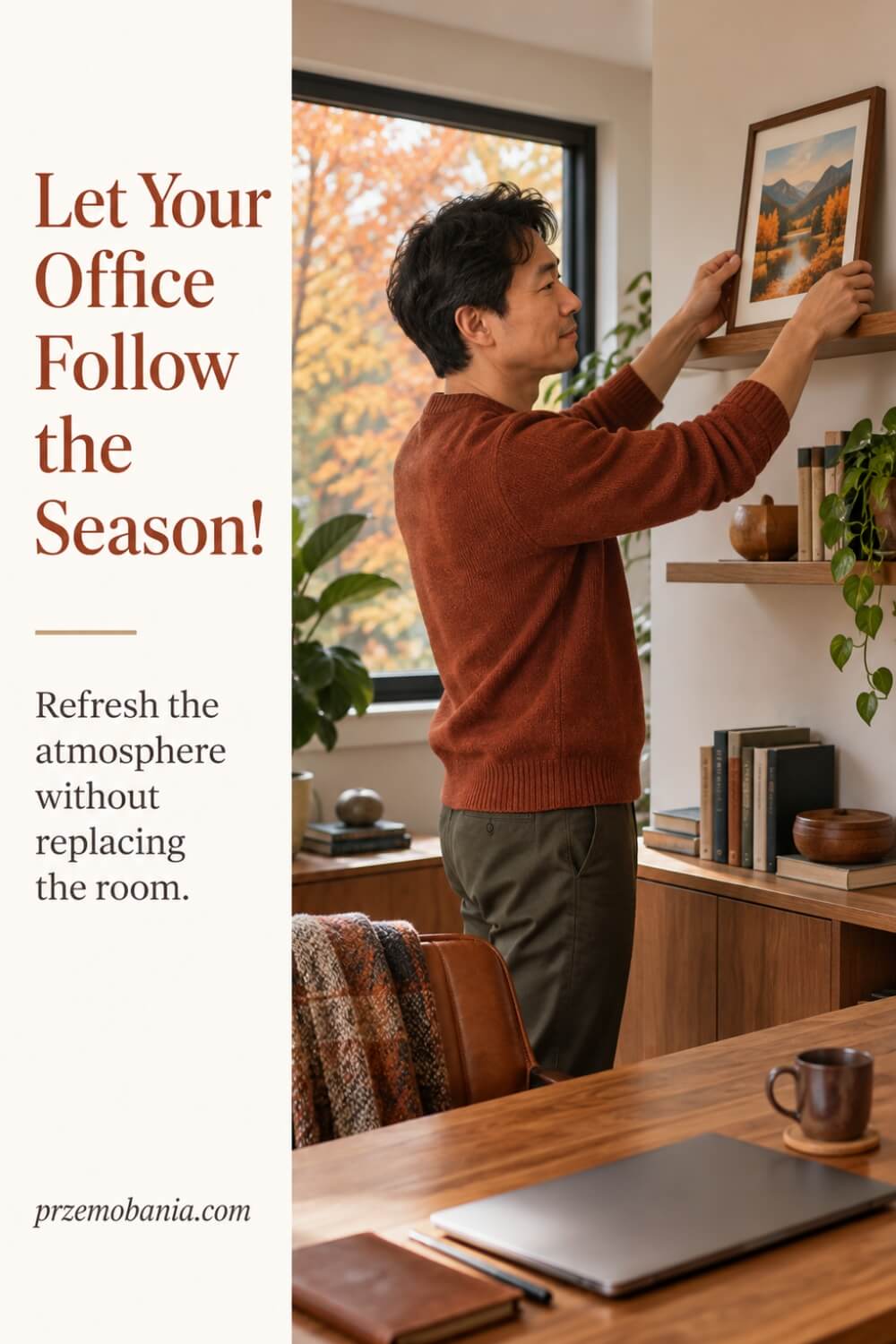
Seasonal Home Office
Does your workspace feel comfortable in one season and strangely difficult to use in another? A seasonal home office responds to those changes without asking you to replace the room every few months. If the afternoon glare, chilly mornings or darker evenings keep catching you out, a few thoughtful adjustments can make the year easier to work through.
A seasonal home office adapts to changes in daylight, temperature and daily routines while keeping its main furniture useful. Adjusting shade, task lighting, textiles and a few decorative details can help the workspace remain comfortable and inviting without needing a complete makeover each season.
I became a passionate home-working blogger after my wife’s chronic illness reshaped our lives, drawing on the love of interiors my mum gave me to help create her workspace and my own cosy place to write and earn, while continuing to learn from the references shared at the end.
The calendar is only a rough guide to what your room needs. A bright winter afternoon can produce a different problem from an overcast summer morning, even at the same desk.
I find it more useful to respond to the room than to a decorating deadline. That leaves space for seasonal enjoyment without turning every change in the weather into another project.
My guide to creating a practical workspace at home explains the lasting foundations that should remain useful beneath these smaller adjustments.
Plan a Seasonal Home Office Around Real Conditions
Notice when the room stops feeling comfortable. Record the time and the conditions. A brief note can reveal a recurring pattern.
Your seasonal home office does not need four separate furniture schemes. It needs a stable working arrangement with a few adaptable parts. Keep the changes proportionate to the problem.
Separate practical adjustments from decorative enjoyment. A blind may solve glare. A different print may simply help you enjoy the season.
Both can have a place. They do not need the same priority. Deal with the thing that interrupts your work first.
I would begin with the conditions you experienced last year. Consider what you kept postponing. Prepare one useful response before that situation returns.
My wife’s needs have made me more attentive to changes that others might dismiss as minor. For us, noticing early is often easier than trying to improve the room when the day already feels difficult.
These eight adjustments provide a useful starting point:
- Welcome Spring with a Clearer View
- Prepare Shade Before Summer Arrives
- Keep Summer Textiles Light and Practical
- Revisit Lighting as Autumn Approaches
- Add Winter Warmth Without Obstructions
- Change Colour Through Small Details
- Keep Seasonal Displays Away from Work
- Follow Your Climate Rather Than Trends

Welcome Spring with a Clearer View
Spring can be a useful moment to look again at what has gathered around the window and desk. I would remove anything that no longer needs to be there before buying new decorations. A clearer view can make the room feel different without changing its furniture or established style.
Check that the window covering moves freely and that you can reach its controls. If you clean the glass, use a safe method suited to the window rather than stretching awkwardly across furniture. Notice whether increasing daylight changes the reflections on your screen.
Choose one modest visual refresh if you would enjoy it. A different picture or a lighter cushion cover may be enough to mark the change. You do not need to recreate a spring display from a shop window. The useful result is a room that feels ready for your current working day, with the seasonal detail adding pleasure rather than taking up the space you need.
Prepare Shade Before Summer Arrives
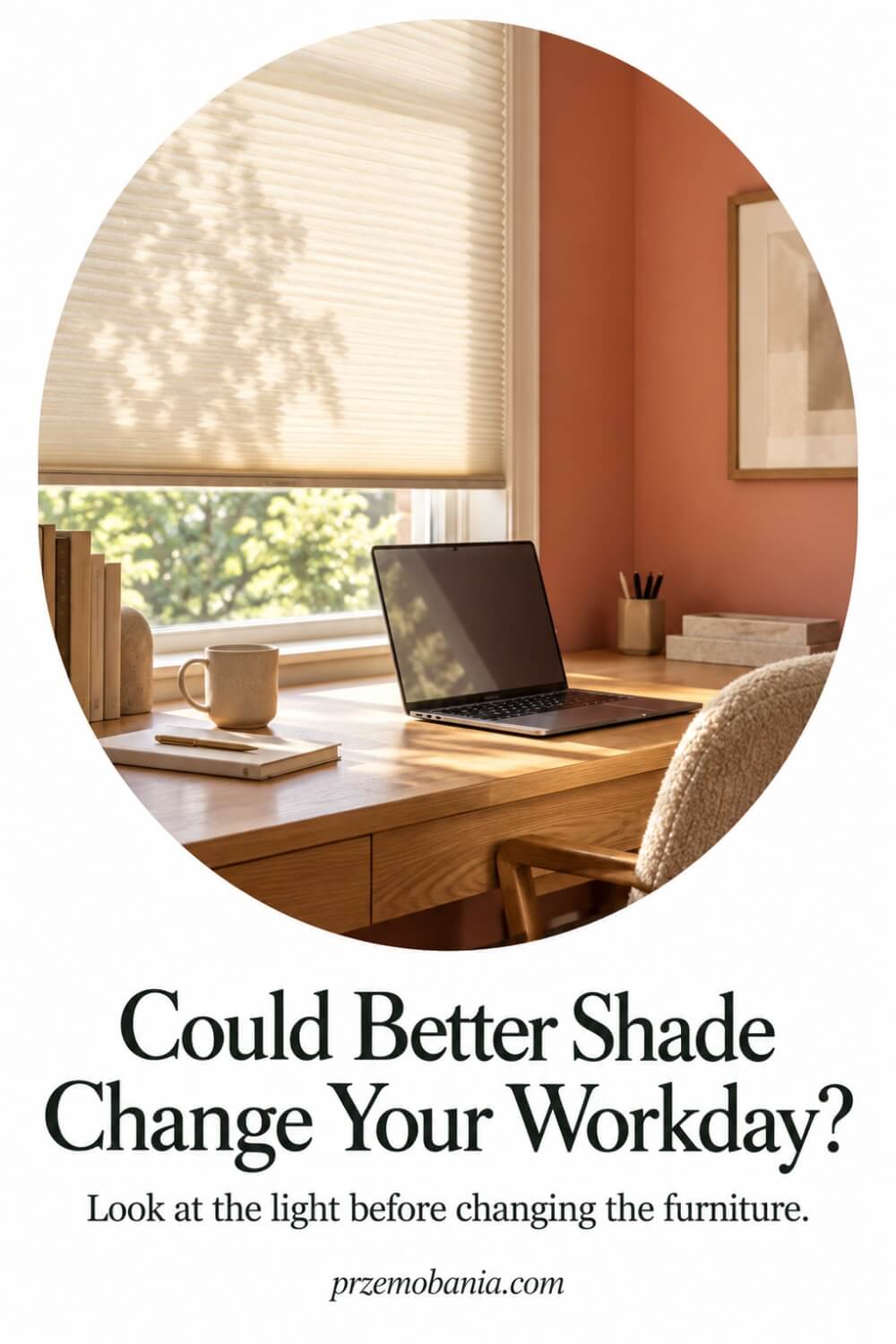
Look at when direct sunlight reaches your workspace and which surfaces it strikes. A room that feels pleasant early in the morning can become less comfortable later. I would test the available shading before a particularly hot or bright spell makes the problem urgent.
Check the view from your chair with the blind or curtain partly closed. You may be able to reduce glare without darkening the entire room. Consider the practical limits of any proposed change, including access to the window and whether the covering interferes with nearby furniture.
Do not assume that a decorative sheer will provide the same control as a more suitable shading arrangement. Compare what the product is intended to do and how it performs in your room. The aim is a manageable working environment through the brighter part of the day. A seasonal improvement earns its place when you can use it easily and adjust it as conditions change.
Keep Summer Textiles Light and Practical
If heavier fabrics feel unnecessary in warmer weather, store the ones you are not using rather than leaving them piled on another chair. I would keep a lighter layer available if you still want it, particularly where indoor conditions change during the day. Your own comfort is a better guide than a rule about summer colours.
Check how the remaining textiles work around the furniture. A loose cover should not slip under you, and a rug should not make the chair harder to move. A lighter appearance is only worthwhile if the room remains convenient to use.
You can create a seasonal feeling by changing one small element rather than replacing every textile. Try a washable cover or a simpler window treatment where appropriate. Keep the previous piece clean and ready for storage. This makes the change easier to reverse and prevents a pleasant seasonal idea from becoming a collection of fabrics with nowhere sensible to live.
Revisit Lighting as Autumn Approaches
Shorter days can expose a lighting arrangement that relied more on daylight than you realised. I would check the workspace during the hours when you actually use it, including late afternoon. Look at the notebook, keyboard and surrounding room rather than judging only the brightness of the screen.
Move or adjust a task lamp if it casts a shadow over your work or creates an unwanted reflection. Background lighting can help the room feel more inviting, but decorative glow is not a substitute for being able to see the task comfortably.
Check existing fittings before shopping for replacements. A dirty shade, an awkward lamp position or a control you cannot easily reach may be the simpler issue. Prepare the arrangement while there is time to try it calmly. Then the transition into darker working hours becomes a small adjustment you have already considered, rather than a repeated irritation at the end of each afternoon.
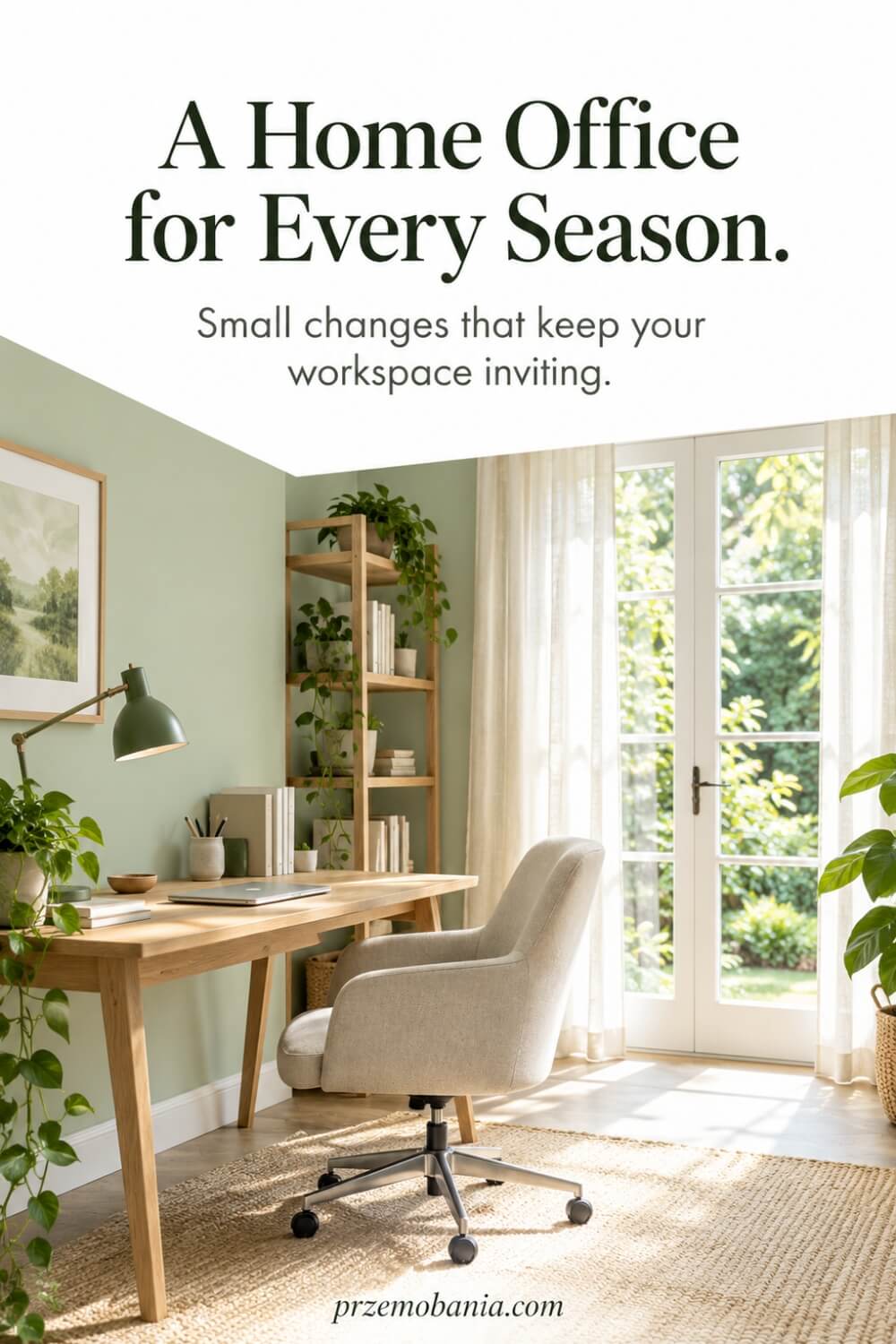
Add Winter Warmth Without Obstructions
Start by noticing where discomfort occurs rather than filling the room with heavier accessories. You might feel a draught near the window, cold at floor level or too warm beside a heat source. Those are different situations and deserve different responses.
Keep heating equipment and ventilation openings clear. Follow the instructions for any portable heater, including its placement and clearance from textiles. A throw should also stay away from chair wheels and places where you might catch your feet when standing.
Choose layers you can add or remove easily instead of assuming the room must stay equally warm all day. HSE guidance recognises that comfort depends on several environmental and personal factors, not air temperature alone. I would use that as a reminder to listen to your own experience. The goal is a workable setting for your body and tasks, with seasonal softness added only where it remains useful and safe.
Change Colour Through Small Details
You can acknowledge the season without repainting the room or buying a new collection of accessories. I would choose one place for colour to change, such as a print, a cushion cover or a small desktop item. Keeping the rest of the room familiar makes the change more noticeable.
Use colours you actually enjoy rather than follow a compulsory seasonal palette. Autumn does not require orange, and summer does not require a coastal theme. A deeper version of a colour already present can create a different feeling while remaining connected to your home.
Before buying anything, look at objects stored elsewhere in the house. Something you already own may feel fresh in a new position. Keep the change small enough that returning to the previous arrangement is easy. Seasonal decorating should offer a little pleasure, not create pressure to maintain four separate identities for one room that still has the same practical job to do.
Keep Seasonal Displays Away from Work
Choose a defined spot for seasonal objects instead of letting them spread across the desk. A shelf or small side surface may be more suitable than the space where your papers and equipment need to sit. I would keep the display modest enough that cleaning and using the room remain straightforward.
Check the objects from your working position. Reflective ornaments can catch light, and loose decorative materials can become irritating near a keyboard or fan. Avoid placing anything where it blocks a switch, window control or ventilation opening.
You can enjoy a festive detail without decorating every surface. One meaningful object may carry more personal value than a collection bought to fill a theme. When the season ends, put it away deliberately rather than allowing the next display to accumulate around it. That simple boundary keeps the office usable and gives each seasonal addition enough space to be appreciated while it is present.
Follow Your Climate Rather Than Trends
Seasonal images online often reflect a climate very different from your own. A room shown with open windows and light curtains may not resemble your conditions at the same time of year. I would treat those images as ideas rather than instructions tied to particular months.
Pay attention to your local weather and the way your building responds. A shaded room, a loft and a sunny garden office may need different adjustments even within the same town. The direction of the window and the hours you work also affect what you notice.
Keep a few simple notes about the changes that helped. You can then prepare for recurring conditions without assuming every year will follow the same pattern. This approach works across hemispheres and different homes because it begins with observation. Your workspace does not need to keep pace with someone else’s seasonal calendar to feel thoughtful, comfortable and current.

Keep a Seasonal Home Office Adaptable
Some days contain more than one kind of weather. A useful arrangement should allow small adjustments. It should not require moving heavy furniture whenever conditions change.
Your seasonal home office benefits from accessible controls. Keep the lamp switch easy to reach. Make sure the window covering can be adjusted without clearing the desk.
I would avoid changes that depend on a perfect morning routine. A practical solution should still be manageable when you are busy. That matters in our home because my wife’s needs can change unexpectedly.
Her experience has also made me more realistic about my own plans. I prefer an adjustment we can use easily. A complicated system is less helpful if it becomes another task we postpone.

Maintaining a Seasonal Home Office Without Extra Clutter
Every seasonal object needs a home when it is not in use. Think about that before buying it. Storage is part of the decision.
A seasonal home office can work with a very small collection. Choose pieces that are easy to rotate. Avoid buying a separate version of everything.
I would keep practical equipment distinct from optional decorations. A fan needs accessible storage before warmer weather. A decorative ornament does not deserve the same priority.
Check items before putting them away. Clean textiles according to their care instructions. Follow the manufacturer’s advice for storing electrical products.
Label the container clearly. Keep a note of anything that needs replacing or repair. That prevents an unwelcome surprise when you need it again.
My wife’s limited energy has made me appreciate preparation that removes a future job. For my own work, a simple seasonal routine also protects time that I would rather spend writing.
These four habits keep the process manageable:
- Store Textiles Ready for Their Return
- Check Equipment Before the Weather Changes
- Keep a Brief Record of Problems
- Choose One Manageable Seasonal Reset

Store Textiles Ready for Their Return
Put away textiles only when they are clean and fully dry, following the care instructions for the particular material. I would fold or store them in a way that suits the fabric rather than compress everything into the smallest possible space. The aim is to have a usable item when you bring it out again.
Label what is inside the container and keep the storage location realistic. A cover you want to change quickly is less convenient if reaching it requires moving several heavy boxes. Avoid saving items you no longer enjoy simply because they once belonged to a seasonal scheme.
When you unpack, check the condition before putting the textile straight back into use. This is also a chance to decide whether it still suits the room. You are allowed to simplify the collection over time. A smaller set of well-kept pieces can make seasonal changes more enjoyable because each one has a clear purpose and a sensible place to wait.
Check Equipment Before the Weather Changes
Bring seasonal equipment out early enough to inspect it calmly. Look for visible damage and follow the manufacturer’s instructions before use. I would avoid discovering that a fan is unstable or a control no longer works on the first day you urgently want it.
Consider where the equipment will sit and how its cable will run. A device may operate correctly but still create an obstruction in the room. Keep access and moving parts clear, and do not allow a temporary seasonal arrangement to become a repeated trip hazard.
If a product needs maintenance or repair, use an appropriate service rather than improvise. Also consider whether the room has changed since the equipment was last used. A new cabinet or different desk position may affect its placement. This modest check helps you prepare for the conditions ahead without assuming that last year’s arrangement will automatically remain suitable or convenient.
Keep a Brief Record of Problems
A few useful notes are enough. Record what happened, when it happened and what helped, such as glare reaching the screen in late afternoon or a lamp position that worked better on dark days. I would avoid turning this into a detailed monitoring project unless the problem genuinely calls for it.
Include photographs only when they explain something clearly. A picture of the sun’s position or an awkward cable route can be more useful than a long description. Keep the notes where you will find them before the same season returns.
Over time, remove suggestions that did not help and keep the practical discoveries. This makes the record a personal guide to your room rather than another collection of general advice. It can also help you decide whether a recurring issue needs a more permanent solution. Repeatedly decorating around the same discomfort is less useful than recognising its pattern and addressing the actual cause.
Choose One Manageable Seasonal Reset
Set aside a modest amount of time for the changes that matter most. I would choose one practical check, one small cleaning task and one optional visual refresh rather than attempt a complete room overhaul. The reset should fit around your life, not become a reason to lose an entire working day.
Begin with the adjustment that affects daily use. Check the light or shade before arranging decorative objects. If your time runs out, you will still have completed the most useful part rather than leaving the room dismantled halfway through a makeover.
Keep a simple stopping point. Once the workspace functions comfortably for the conditions ahead, it does not need endless improvement. You can enjoy the season without giving the office a completely new personality. A repeatable small routine is often more valuable than an ambitious plan that feels satisfying once but becomes too demanding to repeat when life is busy.

Sharing a Seasonal Home Office Fairly
Seasonal comfort can differ between people. One person may feel cold while another feels warm. A shared room needs room for discussion.
A seasonal home office should not be adjusted entirely around one preference without checking the other. Local task lighting may help. Personal clothing layers may also offer flexibility.
My wife’s experience has taught me to ask what feels uncomfortable rather than assume I know. That has helped me describe my own needs more clearly too. We can look for practical compromises without treating either person’s experience as unreasonable.
Revisit the arrangement when conditions change. An agreement that worked in one month may need a small adjustment in another.
Recognising the Limits of a Seasonal Home Office Refresh
Decoration cannot solve every building problem. Persistent damp, serious overheating or failing equipment needs attention beyond a new textile. I would keep that boundary clear.
A seasonal home office refresh is most useful for manageable adjustments. It should not conceal something that needs proper assessment. Repeated discomfort deserves investigation.
For my blogging, I want the room to support reliable work through the year. My wife’s needs make me particularly aware that simply enduring an unsuitable environment is not a design solution. We benefit more from noticing the cause than from making the room look seasonally appropriate.
Keep the enjoyable details. Give recurring practical problems the attention they actually need.

Conclusion on Seasonal Home Office
A room does not stay exactly the same throughout the year, even when the furniture never moves. Daylight reaches different surfaces, working hours extend into darkness and the atmosphere changes with the weather. Noticing those differences gives you a more useful starting point than following a decorating calendar that assumes every home needs the same adjustments in the same month.
Your seasonal home office can remain familiar while responding to those changes. Keep the useful desk, chair and working arrangement, then adapt the smaller elements around them. Shade, task lighting and accessible controls deserve attention before decorative details. Once the practical conditions feel manageable, a different textile or favourite object can bring a pleasant sense of change without taking over the room.
I would judge each adjustment by how easily you can use it. A blind that is awkward to reach may remain in the wrong position. A blanket that catches beneath the chair can create a new irritation. A seasonal display that occupies your writing space asks you to work around it every day. Attractive additions should still make sense when the room is being used.
My experience supporting my wife has made me value preparation that removes unnecessary effort. It has also taught me that comfort can change and that the person using the room needs to be heard. Those lessons apply to my own working life too. I want to spend time writing and building my blogs, rather than repeatedly negotiating a room that no longer suits the conditions outside.
Start with a pattern you recognise. Perhaps your screen becomes difficult to see in bright afternoon light, or the room feels uninviting when work continues after sunset. Try a proportionate response and observe whether it helps. You do not need to solve every possible seasonal issue at once. One useful change gives you information and makes the next decision easier.
Keep the decorative side enjoyable. Choose colours you like, rotate something meaningful and let the room acknowledge the season in a way that feels natural to you. You are not obliged to buy a new collection or reproduce a familiar online theme. A home office can feel fresh with very little added, especially when the existing objects have room to be noticed.
Think about the return journey as well. Clean and store the items you remove, check equipment before it is needed and keep a few notes about recurring problems. That preparation makes next year’s adjustments simpler. It also helps you recognise when a repeated issue deserves a lasting solution rather than another temporary workaround.
The aim is a workspace that remains useful through ordinary changes in the year. It can feel lighter when that suits you, warmer when needed and more inviting during darker hours, while retaining the practical foundations you rely on. Follow the room, listen to your own experience and keep the routine manageable. Small, timely adjustments can serve you better than four elaborate makeovers you never really wanted to maintain.
Let the changing light and weather guide a few practical adjustments, then add seasonal details only if you enjoy them. Keep the furniture that works, prepare useful equipment early and give stored items a sensible home. Your office can feel ready for the year without becoming another demanding project.
Tell me which season makes working in your room most challenging, and browse the FREE chapter of my eBook at the bottom of this post for more practical ways to make home working feel easier.


Przemo Bania is a blogger and writer who helps people get out of their traditional jobs to start a blogging career. Przemo also runs a health blog advocating for endometriosis and fibromyalgia…
Related Questions You May Be Asking About Seasonal Home Office
Do I need different decorations for all four seasons?
No, seasonal adaptation can be entirely practical. You may adjust lighting and shade while keeping the same artwork and accessories all year. If you enjoy decorating, choose a small number of reusable items. The room should respond to your preferences and conditions rather than create an obligation to maintain four separate decorative schemes.
Should I move my desk every summer?
Only if a different position meaningfully improves the room and remains practical. Try shade and smaller adjustments first. Moving a desk can affect power access, circulation and the working arrangement, so consider the whole result. A seasonal move should solve more problems than it creates and be manageable to repeat if necessary.
Can I use the same curtains throughout the year?
Yes, if they provide the control and appearance you want. You may find that adjusting their position or combining them with a suitable blind is enough. Consider actual glare, light and comfort rather than assuming curtains must be changed seasonally. Check that the arrangement allows normal window use and does not obstruct heating equipment.
How much seasonal storage should I allow?
Begin with the items you genuinely use and the space you can access comfortably. A small labelled container may be enough for covers and decorative details, while equipment needs storage suited to its instructions. Avoid buying seasonal objects before deciding where they will live during the rest of the year.
What if my local climate does not have four distinct seasons?
Respond to the conditions you experience, such as wetter months, intense sun or changing humidity, rather than copying a four-season schedule. Observe how your room behaves during your working hours. The same principles apply: preserve useful furniture, make practical adjustments and add decorative changes only when they bring you enjoyment.
Seasonal Home Office References
- https://www.hse.gov.uk/temperature/thermal/index.htm
- https://www.hse.gov.uk/pubns/ck1.pdf
- https://www.ikea.com/gb/en/rooms/home-office/how-to/6-bright-ideas-for-home-office-lighting-pub87dc3af0/
