
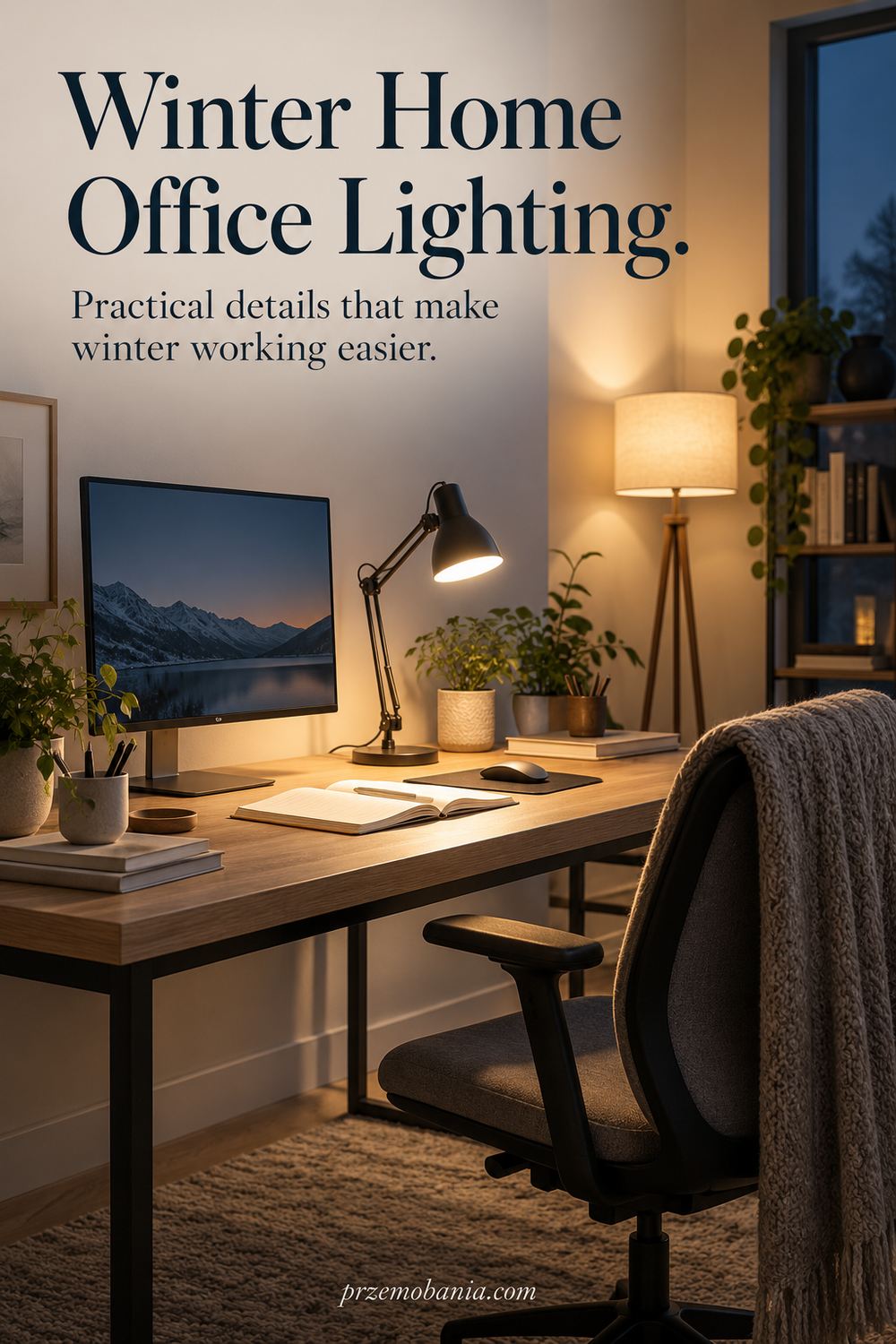
Winter Home Office Lighting
Does your desk feel bright enough until the afternoon suddenly leaves you working in a pool of screen light? Winter home office lighting works best when you plan for the tasks in front of you and the room around them. If you keep squinting at paperwork or moving a lamp to escape a reflection, the arrangement needs attention rather than more tolerance from you.
Winter home office lighting combines task light with comfortable background illumination as daylight fades. Adjustable lamp positions, accessible controls and suitable window shading help you manage shadows and reflections, while brightness and light colour should suit the work you actually do.
The interiors my mum loved taught me to notice atmosphere, but adapting working spaces after my wife’s chronic illness taught me to check usefulness too, so I bring both perspectives to my blogging and list the sources that inform me below.
A lamp can be attractive, bright and still be in the wrong place. The mistake often becomes obvious only when you sit down with your usual screen, notebook and dominant hand.
I would test that real working scene before choosing a new fitting or deciding that the whole room needs brighter bulbs.
For the other seasonal changes that work alongside light, see my guide to making your home workspace ready for winter.
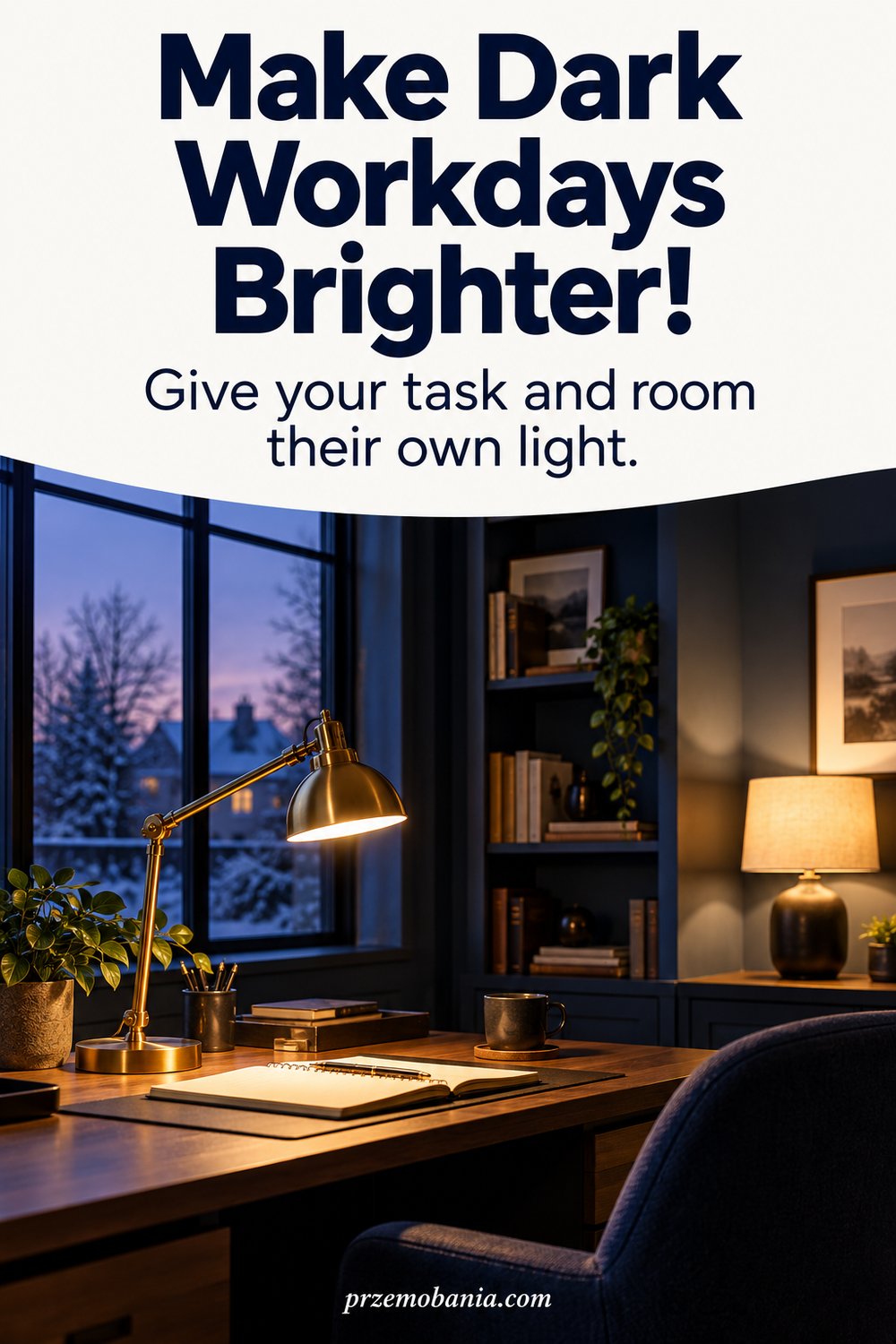
Plan Winter Home Office Lighting Around Your Tasks
I start by listing what happens at the desk. Reading paper, typing and making a video call do not place light in exactly the same role. Your arrangement should handle the tasks you repeat most often.
Winter home office lighting also needs to adapt as daylight changes. Test the room during a dull afternoon and after dark. A sunny lunchtime is not a complete test.
Look at the surface where you read or write. Notice whether your hand or monitor casts a shadow across it. Then look for bright reflections from the seated position.
Add or reposition light only after identifying the problem. A stronger bulb in the same awkward position may make a reflection more noticeable. A small change in direction may be more useful.
I like controls that can be reached without leaning across equipment. I also prefer an arrangement that another person can understand without instructions. Simplicity makes daily adjustments more likely to happen.
My wife’s experience has made me more attentive to the effort hidden inside an ordinary working day. A room should not ask you to keep adapting your body around a light that could be placed more thoughtfully.
- Check The Desk After Daylight Fades
- Place Task Light Beside Your Work
- Balance The Light Beyond Your Screen
- Compare Brightness And Colour Separately
- Make Daily Adjustments Easy To Reach
Check The Desk After Daylight Fades
Set out your usual work before testing the lighting, including the papers and devices that normally occupy the surface. Switch on the lights you expect to use after dark and sit in your normal position. I would resist tidying everything into an unrealistically empty desk, because that can hide the shadows and reflections you need to notice.
Read a page, write a few lines and look between the page and screen. Check whether you keep leaning, turning the paper or moving your head to find a clearer view. Those movements are useful feedback about the arrangement, even if the room looks bright from the doorway.
Repeat the check with the curtain or blind in its evening position. A dark window can behave differently from a daylight view. Note one change to test, then repeat the same tasks so you can compare fairly rather than relying on a general impression that the room seems cosier.
Place Task Light Beside Your Work
A task lamp should illuminate the work surface you need to see without putting the light source directly in your eyes. I would experiment with its position beside the task, taking account of which hand you use for writing. A lamp placed so your hand blocks the light will create a moving shadow across the page.
Adjust the head or arm within the product’s intended range, then check the screen for reflections. Moving the lamp slightly can be more helpful than increasing brightness. Keep its base stable and leave enough desk space for your mouse, notebook and normal movements.
If you use a clamp, check that it suits the desk edge and does not damage the surface or interfere with a drawer. If you use a monitor-mounted product, check compatibility with the display and camera. The right mounting choice is the one that works with your actual equipment, not simply the one that looks smallest in a product photograph.
Balance The Light Beyond Your Screen
I would avoid treating the desk as an isolated stage in an otherwise dark room. Some background illumination can make the surrounding space easier to use and help the office feel more welcoming after sunset. That does not mean every corner needs its own decorative lamp or that you need several new fittings.
Try the room’s existing light alongside the task lamp and observe what each contributes. If the overhead light produces an unwanted reflection, consider its direction and the screen position before discarding it entirely. A floor or side lamp may be useful where it can stand without narrowing the walking route.
Keep decorative accents secondary to visibility. A string of small lights can create atmosphere, but it may not illuminate a page or the path to the door adequately. I like to be able to explain the purpose of each light in one sentence, because that makes unnecessary additions much easier to recognise.
Compare Brightness And Colour Separately
Brightness and the colour appearance of light are different choices. Lumens describe a lamp’s light output, while a Kelvin figure describes its colour appearance rather than how much light reaches your notebook. I would read both pieces of information instead of assuming that a cooler-looking bulb must be brighter.
The fitting, shade, distance and direction also affect the result on your desk. A high-output bulb hidden inside an unsuitable shade may not solve the task you have in mind. Check the fitting’s requirements and limits before buying a replacement bulb, including compatibility with any dimmer.
For visual comfort, test a setting you can actually work with instead of following a rigid rule that winter must mean very yellow light. If your work involves judging colours, look more carefully at colour rendering and consistency. An ordinary decorative lamp should not be promoted as a treatment for a seasonal health condition.
Make Daily Adjustments Easy To Reach
Imagine changing the light while a document is open, a drink is beside you and the desk is in normal use. Can you reach the switch without stretching around the monitor? Can you adjust the lamp without tipping something over? I would resolve those small practical questions before deciding that the arrangement is complete.
Route cables where they will not catch the chair or cross a walking route. Check that opening a drawer or moving the lamp does not pull a plug tight. Use the manufacturer’s instructions for any mounting or electrical accessory rather than improvising a connection to reach an awkward corner.
A simple evening routine can help: adjust the window covering, switch on the light needed for the task and check for reflections. If you share the workspace, leave the controls understandable and accessible for the next person. The best arrangement remains useful when you are busy, tired or working at a different time from usual.
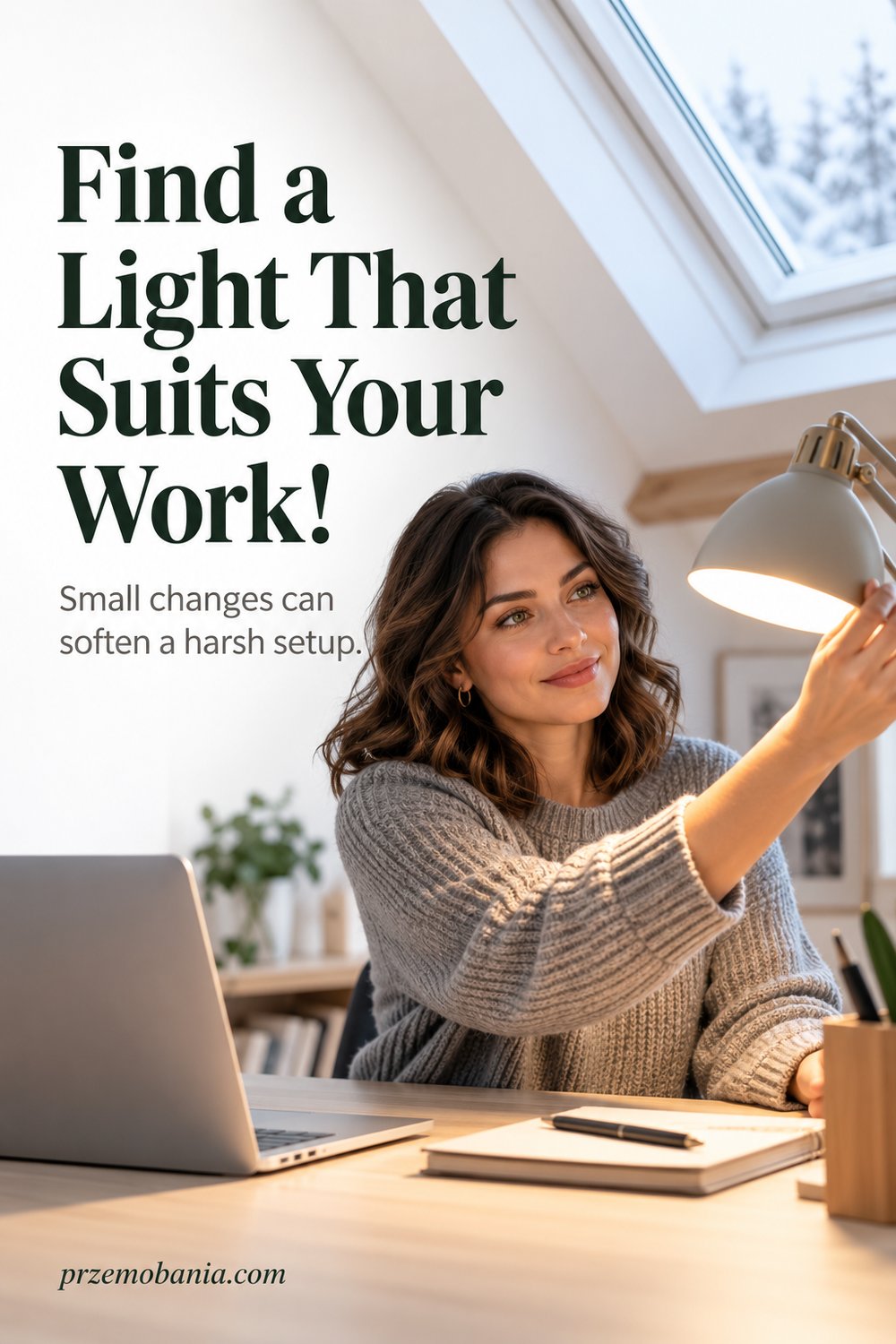
Test Winter Home Office Lighting Before Spending More
I would compare a new lamp with the arrangement you already own using the same task. Keep the notebook and screen in their usual positions. Change one thing so the result is easier to judge.
Winter home office lighting should be assessed from your chair, not only through a camera. A photograph may hide a bright source that bothers you in person. It may also exaggerate how dark another part of the room feels.
If you are considering a dimmable product, check the compatibility of the whole setup. The bulb and dimmer need to work together where separate components are involved. Read the product information before assuming an existing switch will be suitable.
Check the lamp’s reach as well as its height. A tall lamp with a short arm may not place light where your paperwork sits. A broad shade can occupy more working space than the base suggests.
For video calls, test your camera preview separately. A light positioned well for reading may create a shadow on your face. That does not mean the reading arrangement is wrong.
Make a note of any task the setup still handles poorly. Use that specific gap to guide the next adjustment.
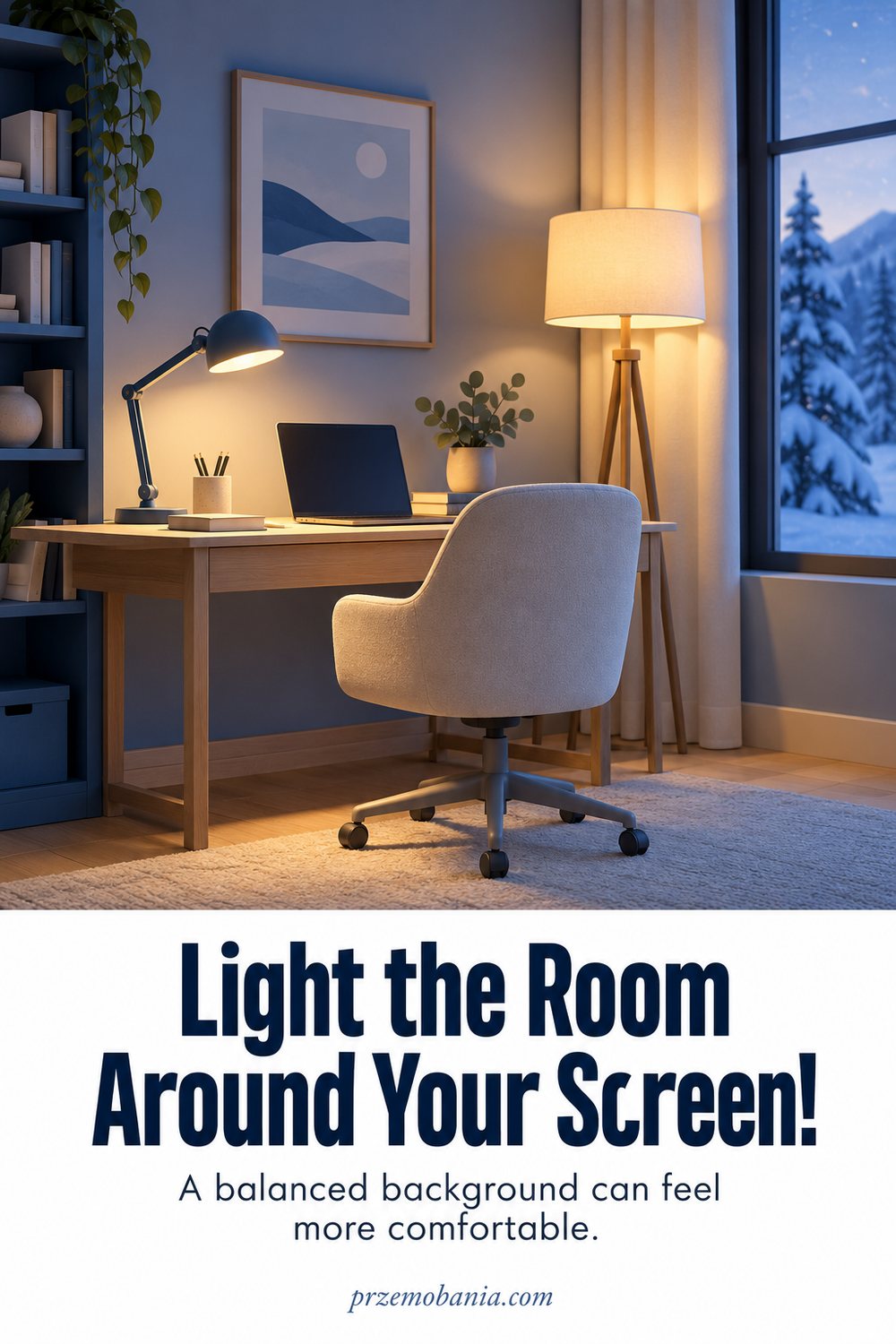
Keep Winter Home Office Lighting Adaptable
Daylight and artificial light need to work together rather than compete. I would make modest adjustments as conditions change. Avoid leaving a blind shut all day simply because it solved a brief reflection earlier.
Your winter home office lighting may need different settings for different tasks. Keep those changes simple enough to repeat. Complicated controls are less useful if you stop using them.
If low sun is the recurring problem, consider the window covering as part of the solution. My guide to balancing winter daylight with window coverings examines that decision. Buying another lamp will not necessarily solve glare from outside.
Review the arrangement when you move equipment. A second monitor or a different desk position can change where shadows and reflections appear.
Final Word on winter home office lighting
I would judge the finished arrangement by how little you have to think about it during work. You should be able to see the task, adjust the light and move around the room without turning those simple actions into a series of interruptions. An attractive lamp is a pleasure, but its shape and finish should sit alongside those practical qualities rather than compensate for their absence.
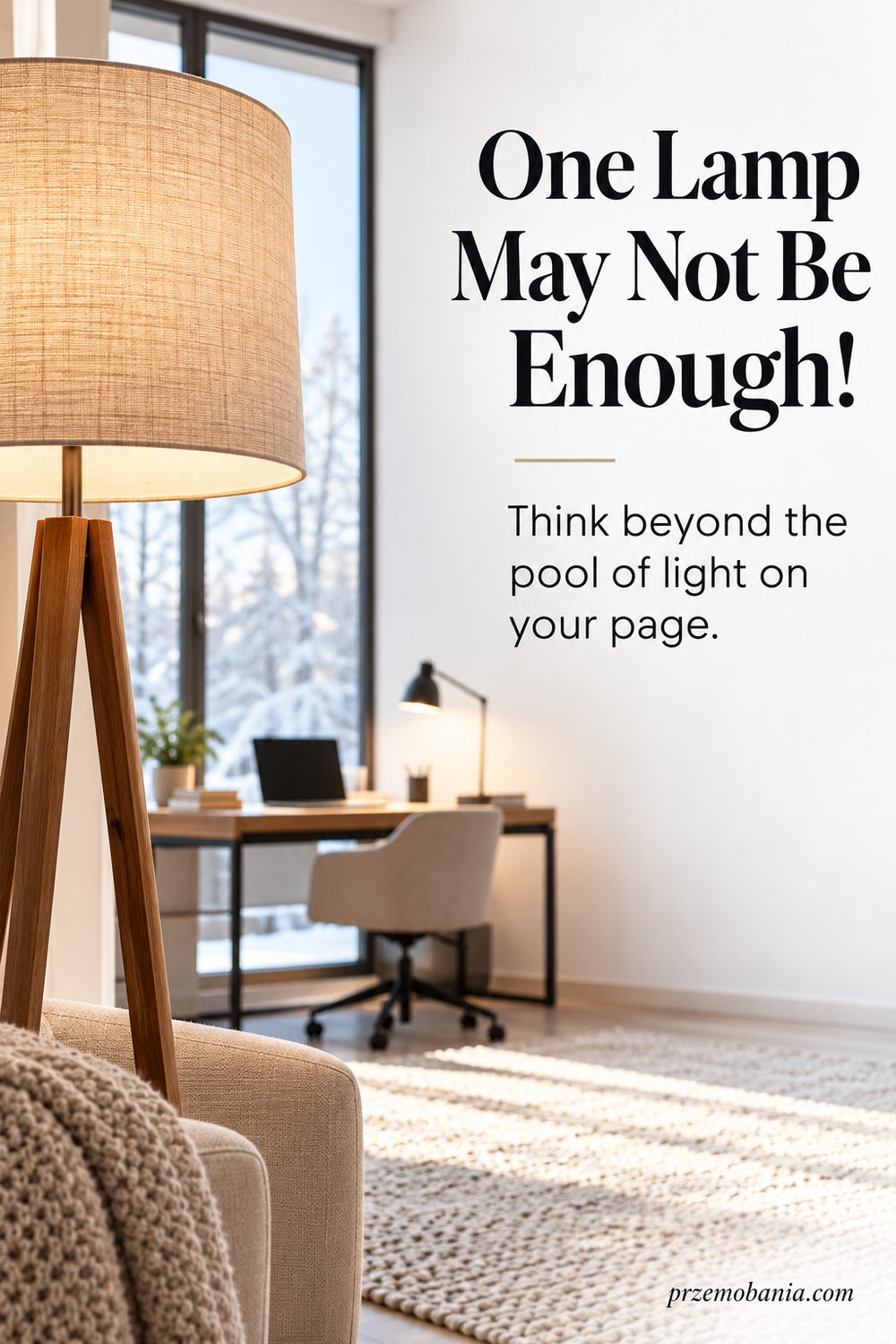
Winter home office lighting is often presented as a choice between a cosy glow and a bright workspace. In practice, you can decide where light is needed, how it is directed and which parts of the room need a gentler background. The balance does not require a large collection of fittings. It requires attention to the view from your chair and the work you actually do there.
Give yourself permission to experiment with what you own. Move a lamp, turn its head within its intended range or compare the room with a different existing light switched on. Keep the same notebook or task in front of you so the comparison means something. A useful result is more specific than ‘it looks nicer’; you can read the page without shifting it, or the reflection no longer sits over your document.
I also think it helps to stop expecting one product to solve every part of the day. A fitting that works beautifully for paper may need a different position for a video call. Window shading may matter more than lamp brightness during a low winter sun. Recognising those differences lets you make a flexible arrangement instead of searching indefinitely for a supposedly perfect bulb.
The personal side still matters to me. I want my blogging space to feel like somewhere I enjoy returning to, and I want my wife’s working environment to feel considered rather than merely equipped. A shade, material or familiar object can contribute to that feeling. I simply give the practical light its job first, so the atmosphere supports the room instead of making it harder to use.
Start with an evening check and one clearly described problem. Test a change, notice whether it helped and keep the controls within reach. That patient approach can produce a calmer, more dependable working setup without promising that lighting will transform your health, productivity or whole life. It is enough for the room to serve tomorrow’s work a little better.
Test your lighting with real work on the desk and daylight out of the picture. Adjust direction, shadows and reflections before buying more brightness. Keep task light useful, background light comfortable and controls easy to reach, so a darker afternoon calls for a small adjustment rather than a struggle.
Leave a comment about the change you want to make, and check the FREE eBook at the bottom for more ideas to help your workspace fit your life.


Przemo Bania is a blogger and writer who helps people get out of their traditional jobs to start a blogging career. Przemo also runs a health blog advocating for endometriosis and fibromyalgia…
Related Questions You May Be Asking About winter home office lighting
1. Does a higher Kelvin number mean a brighter bulb?
No. Kelvin describes the colour appearance of the light, while lumens describe output. The fitting and its position also affect the light reaching your work. Compare the relevant specifications separately, and check how the product performs in your room rather than using the colour temperature as a shortcut for brightness.
2. Can fairy lights replace my desk lamp?
Usually they serve a decorative role rather than provide dependable illumination for reading or detailed work. Check the actual visibility of your task instead of judging the atmosphere alone. You can enjoy decorative lights alongside suitable working light, provided their cables and placement do not interfere with normal use of the room.
3. Should every lamp in the room match?
Not necessarily. A consistent colour appearance can look calmer, but different tasks may call for different controls or directions. I would prioritise how the lights work together from your seated position. Matching shapes or finishes is a styling choice, and it should not force you into a less useful arrangement.
winter home office lighting References
- https://www.hse.gov.uk/msd/dse/training-information.htm
- https://www.hse.gov.uk/pubns/priced/hsg38.pdf
- https://www.energy.gov/cmei/femp/purchasing-energy-efficient-light-bulbs
- https://www.benq.eu/en-uk/knowledge-center/knowledge/best-home-office-lighting-for-computer-work.html
