

Can either of you open the folder and tell which copy has been approved? You open the project folder to ring the printer and find two proofs. One says “looks good”, the other has a price crossed out, and the person who spoke to the printer yesterday is out until lunchtime. Everything has been filed together, yet you still cannot make the call.
A shared paper project folder needs to answer three questions even when the other person is away. Which sheet can I act on, what has already been agreed, and who has the next move? Here is a way to make those answers visible using a folder you already own, a scrap of card and a paper clip.
Give the agreed copy one address and leave the next decision visible for the person taking over.
My test for a shared folder is whether it still makes sense when the other person is busy. A clear cover sheet can save both of you a conversation you should only need to have once.
This folder builds on my guide to a home filing system for active paperwork.
- Give the working copy one address
- Make the front cover do the handover
- Separate the pages by what the next reader can do with them
- Try a handover with a real decision
- Leave a marker when the folder travels
- Check whether the arrangement works for both of you
- Follow one decision from discussion to handover
- Make it clear when two copies serve different jobs
- Final Word on Sharing a Paper Project Folder
Give the working copy one address
Choose a landing place you can both reach without opening the other person’s drawers. In a home office that shares space with the dining room, that might be an upright file on a bookshelf. If the papers include private details, use a closed cupboard accessible to the people doing the work.

Put the project name on the spine or outside flap in words either person would look for. “Autumn price list” will mean more than “Print job” once you have another job with the same printer. If paperwork from several projects shares that shelf, the filing system for active paperwork explains how to sort the incoming sheets before they reach a project folder.
Make the front cover do the handover
Clip a folded sheet inside the cover and leave it visible when the folder opens. The person who last handled the project writes one short handover on it before returning the folder. Keep the most recent entry at the top, with a date and initials, so a second reader can tell which note still applies.
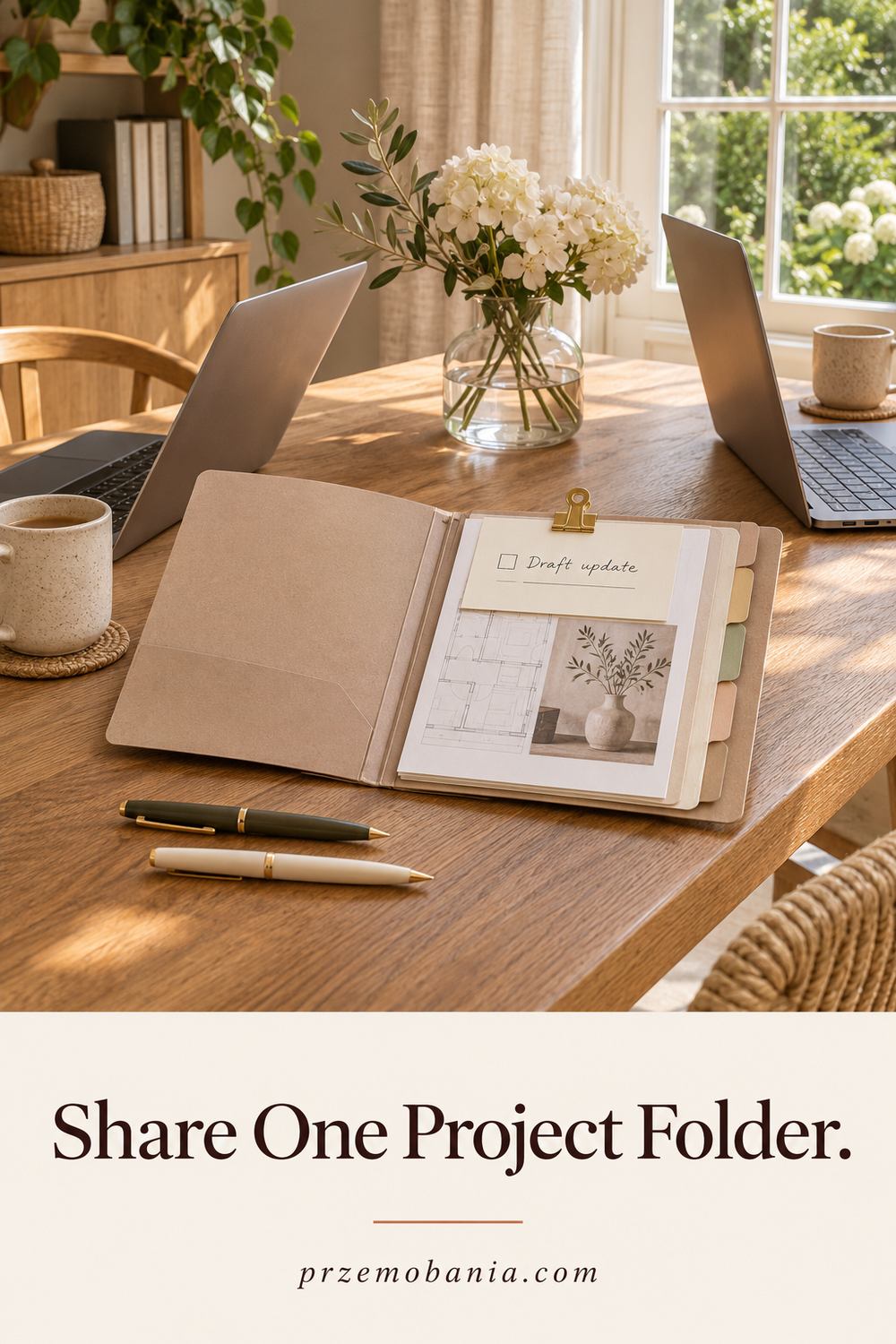
| Working sheet | Price list, proof B, two pages, dated 24 November |
|---|---|
| Decision made | Delivery charge agreed by phone. Printed price still needs checking. |
| Next person and action | Jo to check page two against the supplier email before approving print. |
| If the answer is missing | Hold approval. Ask Sam for the supplier’s revised figure on Thursday. |
Leave enough room for a sentence in each field. A tick beside “checked” tells your colleague very little if you checked the spelling and they think you checked the price. Write the actual thing you checked and leave the other decision open.
Distinguish a suggestion from an agreed change
Agree a pair of plain labels. For example, write “Query” beside a proposed change and “Agreed” beside a decision, followed by the date and the initials of whoever confirmed it. A different coloured pen can help you find a note quickly, but the words still work on a photocopy.
If a decision arrived by phone, attach a short note identifying the conversation and what was agreed. When only one line of a quotation has changed, name that line. Writing “quote approved” across the front could send the whole order ahead when you meant to agree the delivery charge alone.
Separate the pages by what the next reader can do with them
Open the folder as though you were picking up the job for the first time. Put the sheet that can actually be worked on immediately behind the handover slip. Clip supporting documents behind it, with a pencilled note on the top one if their purpose is not obvious.
Keep a superseded proof only if there is a reason to consult it, such as a disagreement over a correction. Write “Superseded by proof B” on a removable cover sheet and place the old copy behind a divider. If the underlying document is an original that must stay clean, label its sleeve instead.
When two people need the same sheet at once
Decide who holds the working copy before making a duplicate. Label the duplicate “Comments for Jo” or “Reference for telephone call”, so the person using it knows where any change must go. A page number or revision letter on both copies makes it easier to reconcile the notes afterwards.
Bring comments back to the working copy before either person sends instructions outside the project. If the two sets of notes disagree, circle the disputed point and give one person the task of resolving it. A later date on a handwritten note tells you when it was written, but says nothing about whether anyone approved it.
Try a handover with a real decision
Imagine Sam takes a call while Jo is out. The printer can move collection to Friday, but only if the corrected artwork arrives on Wednesday. Sam writes both parts on the slip, leaves the correction visible on proof B and gives Jo the next action of sending the artwork.
Jo opens the folder the following morning and spots an error on the second page. Instead of quietly correcting a photocopy, Jo marks the working proof and records that dispatch is on hold. Sam can now answer a call about collection without promising a date that depends on unfinished work.
Once the file has been sent, Jo adds the filename and the time of the email to the slip. There is no need to print the whole email chain. The short reference lets Sam find the exact outgoing version if the printer asks which attachment to use.
Leave a marker when the folder travels
If someone takes the folder to a meeting, put a folded card in its usual place with the holder’s name and expected return. For a folder that stays at home while one page travels, leave the card inside instead and identify the missing sheet. That small distinction saves the other person from searching for a document that is elsewhere.
On return, put new notes on the handover slip before shelving the folder. If the meeting produced a fresh drawing, check its page count and identifying date against the slip. A perfectly tidy folder can still contain the wrong second page.
Check whether the arrangement works for both of you
At the next change of hands, ask the incoming person to find the working sheet and describe the next action without prompting. If they pick up the wrong proof, adjust the divider or the wording on the cover. If they find the right sheet but still need to ring you, the missing detail usually belongs on the handover slip.
When the project ends, lift out that slip and use it to identify the final agreed copy and any outstanding promise. Once both people can see what was delivered and where the final record lives, the folder can come off the active shelf ready for the next job.
Follow one decision from discussion to handover
Suppose you and a colleague are preparing a small batch of printed invitations. You discuss moving the reply date, but the person paying for the printing has not yet agreed. Pencil a question on a working copy and write “reply date awaiting approval” on the handover sheet. Keep the last approved proof identifiable so nobody sends a suggested change to print by mistake.
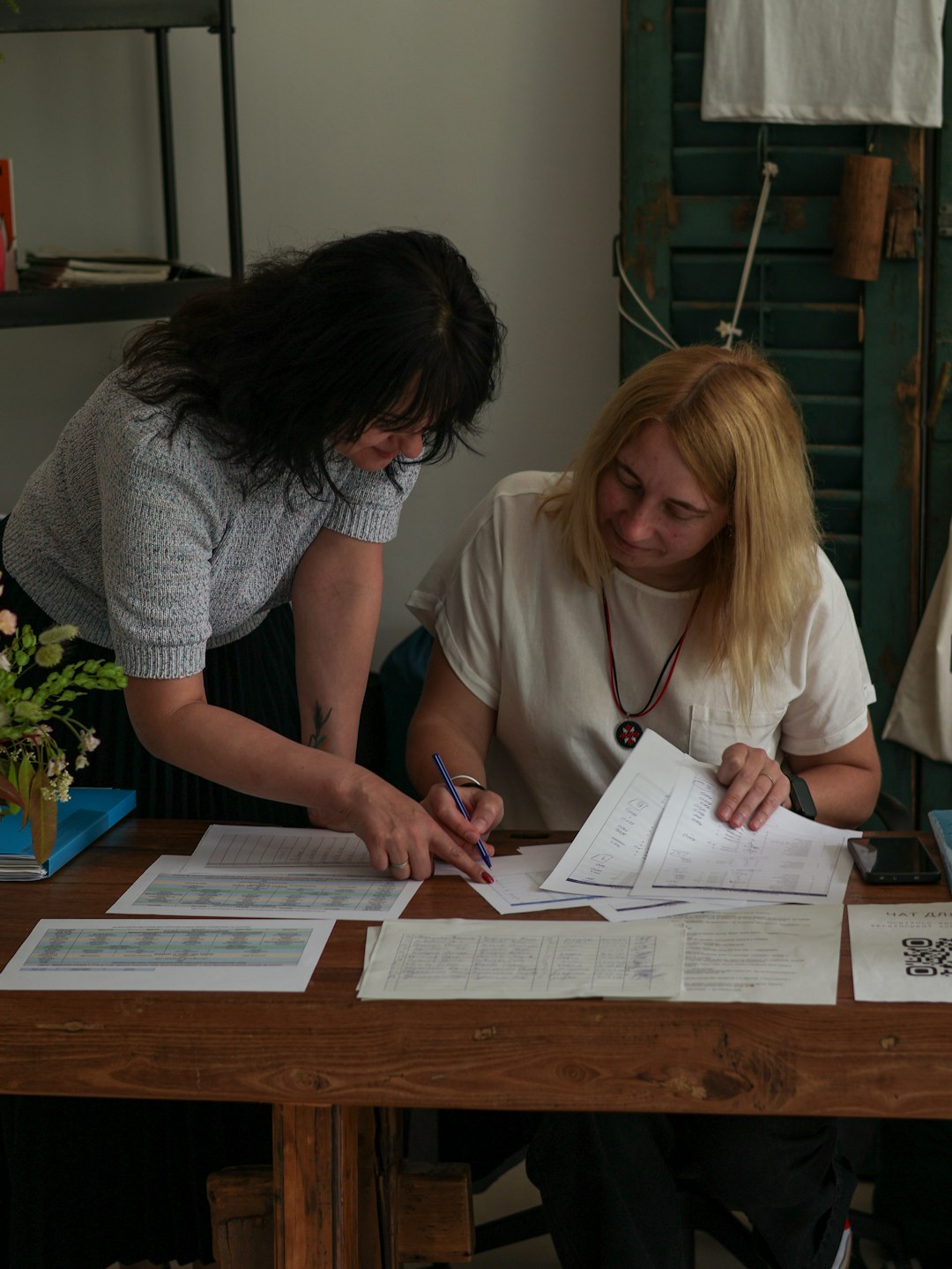
The client then replies by email while the folder is with your colleague. Add a dated note to the agreed shared record that identifies exactly which date was approved and where the message is held. When the paper returns, put the approved change alongside the proof it applies to. You can now explain both what should happen and the evidence for doing it.
Ask the person who was away to complete the first check. Give them the folder without a spoken summary and ask which version should go to the printer. If the answer depends on recognising your handwriting or remembering what happened last Tuesday, add the missing evidence where you would want to find it yourself.
Make it clear when two copies serve different jobs
Two people can use copies of the same drawing without either copy becoming the master by accident. Write the specific purpose on each temporary copy, such as “measure display stand” or “mark spelling corrections”. Put the date and a way to find the agreed original beside that purpose. Each person can then return a useful observation without claiming to have approved a revised drawing.
Before the next handover, bring those observations together on one working sheet. Where two notes conflict, record the question and the person expected to settle it. Keep both notes available until you know what was agreed. Trying to tidy the folder by making one suggestion disappear too early can remove the very reason a decision was needed.
When one person works away from home, decide how they can request an update without requiring someone to photograph the entire file. A brief reference to an approved shared record may do the job. Match the method to the privacy of the material and any rules applying to the project before sharing a document or image outside the workspace.
Final Word on Sharing a Paper Project Folder
A shared folder should let the next person pick up a real task without reconstructing your conversation. Leave the approved version easy to identify, the outstanding question visible and the next action attached to a name. Then hand it over once in silence to see what the folder can explain for itself.
Which detail makes the biggest difference when you hand over a folder? I’d love to hear in the comments. You can also read the free chapter of my cosy home office eBook.

Find Out More About Me

Przemo Bania is a blogger and writer who helps people get out of their traditional jobs to start a blogging career. Przemo also runs a health blog advocating for endometriosis and fibromyalgia…
Related Questions You May Be Asking About Sharing a Paper Project Folder
Do we both need to sign every sheet?
Choose a level of formality that suits the decision and the project’s requirements. A dated note identifying who confirmed a routine choice may be enough for everyday coordination. Use the required approval process whenever an agreement, employer or client specifies one.
What if we disagree about which version was approved?
Pause the action that depends on the disputed version and look for the dated confirmation or ask the decision-maker. Keep both candidates identifiable in the meantime. A clean printout is easier to read, but its neat appearance says nothing about whether it was approved.
Can the working folder leave the house?
Consider who needs it, what information it contains and any policy governing transport or access. If movement is appropriate, record who has it, when it is expected back and what the other person can use meanwhile. A reference copy may be enough for a meeting.
How do we prevent an old copy reappearing next month?
Mark superseded working copies clearly or dispose of them appropriately under your retention arrangements. Preserve anything required as evidence. Update the cover to identify the current version and tell anyone holding a temporary copy which detail changed before their next action.
Sharing a Paper Project Folder References
- The National Archives guidance on organising shared records
- ICO guidance on working from home securely
