
Will the colour you love at noon still suit the room when the desk lamp goes on? Test a home office paint colour at the times you actually use the room. In winter that may mean an overcast morning, a short interval of daylight and several hours under lamps. Paint a movable sample, put it beside the desk and compare those conditions before committing to a full wall.
A shade can be attractive at noon and disappointing during the afternoon when you spend most time looking at it. You can learn this from two or three well-chosen boards and a few brief observations. A photograph on its own is a poor substitute for looking from your usual chair.
Test dry paint samples upright, beside the furniture and under the lighting you usually work with.
My love of interiors began with my mum, and colour is still one of the things that makes a room feel personal to me. For a working room, I would give the evening view as much attention as the shop swatch.
For the daylight and other conditions around the test, see my guide to the winter home office.
- Choose two serious candidates and one reference
- Test on the plane you will paint
- Compare colours against real objects
- Decide which hours matter most
- Keep a record you can use when ordering
- Run a two-wall comparison without losing track of the boards
- Compare the paint with the things that will stay
- Final Word on Testing Paint Samples in Winter
Choose two serious candidates and one reference
Pick the two colours you are genuinely considering. Add an existing reference such as a piece of skirting, a curtain sample or a desk drawer front. The question is how a wall colour sits beside things that are staying in the room. A wide spread of unrelated tester shades makes that harder to see.
Use sample boards prepared according to the paint maker’s directions, or a test area on the intended wall if that is permitted. Check what finish the tester provides and whether it matches the finish you plan to buy. A colour sample may help you choose a hue while leaving the reflection from the final finish unresolved.
Paint and label the boards consistently
Use the same sort of board, preparation and application for both colours. Follow the stated coat and drying instructions for the product. An uneven or still-wet patch can give you a false reason to reject a colour.
Make the painted area large enough to see from your chair. An A4-sized piece is a practical starting point if it fits the space. Write the colour name, finish, number of coats and date on the back. A discreet A or B on the edge lets you take notes without the paint name influencing every description.
Test on the plane you will paint
Hold or support the sample vertically against the intended wall. A board lying face up on the desk catches different light from the wall behind your monitor. Use a removable support suitable for the surface, particularly in a rented space.
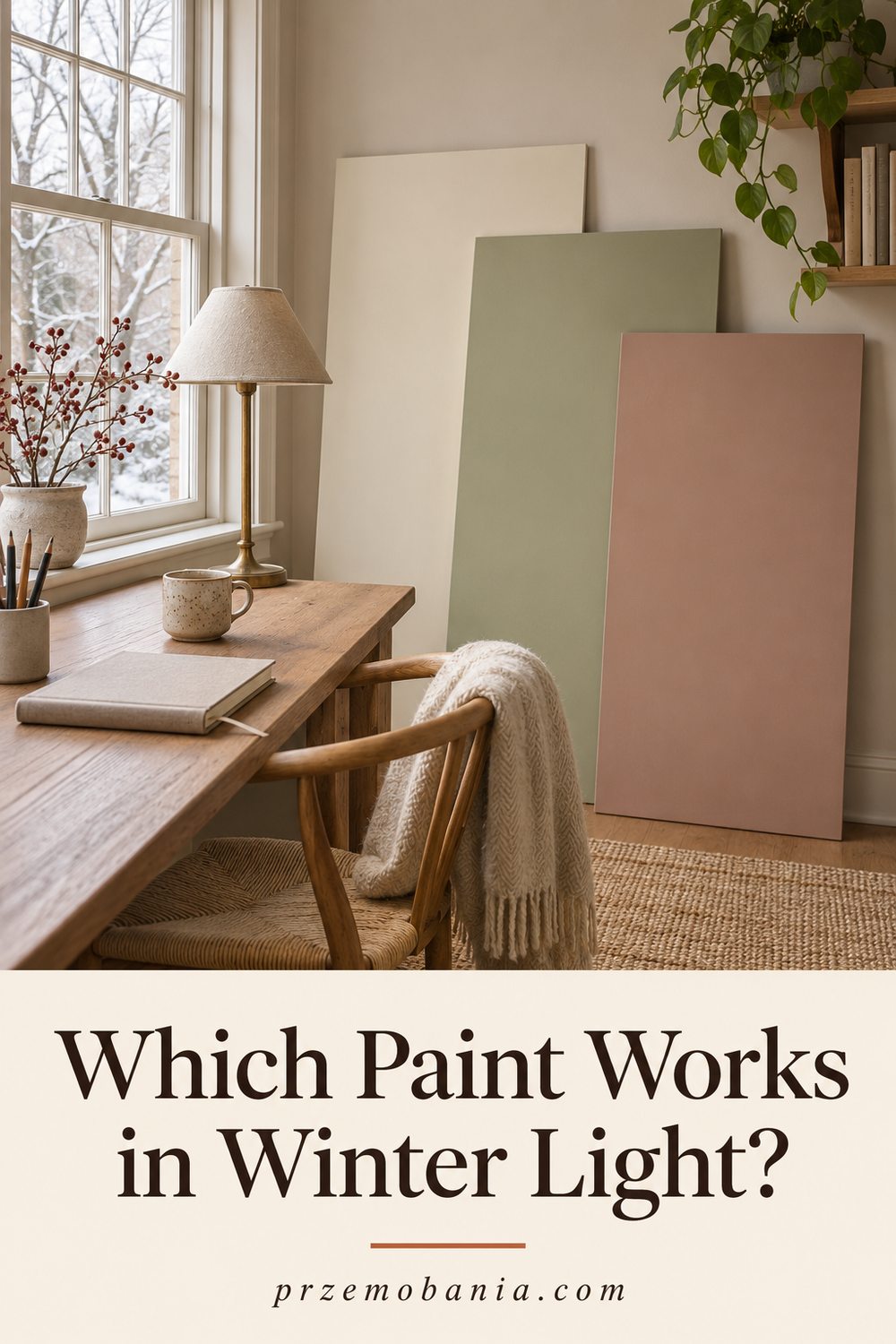
Try each board in exactly the same spot first. If you put A beside the window and B in a shadowed corner, you are comparing position as well as colour. Then move your preferred candidate to the second wall or alcove you intend to paint. It can behave quite differently there.
| Working condition | Place to look | Question to record |
|---|---|---|
| Morning daylight | Beside the desk or window reveal | Does it suit the floor and woodwork? |
| Overcast working hour | At seated eye level | Does the colour still have the character you wanted? |
| After dark with usual lamps | Behind the screen and beside the shade | Do you like it through a whole evening task? |
Compare colours against real objects
Put the board next to the desk edge, upholstery and a sheet of ordinary white paper. You may notice that one neutral looks pink beside pale oak while another looks dull next to a grey carpet. Describe the relationship rather than deciding a paint colour is “wrong” in the abstract.
If the room doubles as a guest room or dining space, repeat the comparison from that part of the room. The most important view might be from the doorway with the desk lamp on, rather than from the office chair at midday. Give both activities a line on your note.
Keep the lighting you expect to live with
Turn on the lamps you normally use after sunset. If you habitually use a desk lamp and leave the main ceiling light off, that is a more useful test than switching on every light to make the board easier to see. Keep the lamp positions steady while comparing the candidates.
If you already intend to replace a lamp, decide whether you can test the new arrangement before choosing the paint. Changing lamps and paint together makes an unexpected result difficult to explain. For the wider relationship between daylight, evening light and the rest of the room, see the guide to a comfortable winter home office.
Decide which hours matter most
Imagine two sample colours in a north-facing study. A looks lively by the window at noon but uncomfortably pink beside the lamp at four. B looks quieter at noon and still sits well with the desk in the evening. If your working hours are mainly afternoons, B might be the better choice even though A wins the brightest photograph.
Use phone photographs as reminders of the positions you tested. Automatic exposure and white balance can make different views look surprisingly similar. Make the final choice with the physical samples in the room.
What if neither sample works all day?
Name the moment each sample fails. If both look uncomfortable only when a strongly coloured desk lamp is on, put a familiar neutral object beside them under the same lamp. If the neutral changes in the same direction, you have learned something about the evening setting as well as the paints. Compare once under another normal lamp you already own before ordering further testers.
If the preferred colour works beside the desk but fights a fixed curtain fabric, hold the board at the other plausible wall. You might use the shade on one wall and keep a calmer existing colour behind the curtain. Check the view from the doorway before adopting that compromise.
Set an end point for the test. Once two candidates have been seen under the same conditions and you know which difficulty remains, select one new sample aimed at that specific issue. Five more similar neutrals bought without a reason can make the comparison less decisive.
Keep a record you can use when ordering
Write the chosen colour, finish, range and intended wall on one card. If the tester finish differs from the final product, check a representative final-finish sample where available. Keep the board until the job is complete so you can compare the result under the same lights.
You are ready to choose when you can explain where each colour worked, where it changed and which condition matters most to your day. That decision is worth more than a perfectly styled picture taken during the brightest ten minutes of winter.
Run a two-wall comparison without losing track of the boards
Suppose your shortlist is a pale grey and a warm off-white. On the wall immediately beside the window both look almost white at lunchtime. The wall behind your monitor receives light from the side and shows a much clearer difference. If you move only your favourite board there, you have changed the colour and the wall at the same time.
Put both dry sample boards on the second wall together. Stand at the doorway first, then sit where you normally read or type. Swap the left and right positions to check whether the nearest corner or curtain is influencing the result. Write down the combination you are judging, such as “grey beside oak shelf, seated view, lamp off”.
Choose a simple description that helps you make a buying decision. “The edge of my white shelving looks pink beside this sample at four” is something you can check again. “Feels a bit off” may be perfectly true, but will do little to help you when you find a third possible shade in the shop.
Compare the paint with the things that will stay
Collect a small number of materials that already have a permanent place in the office. A drawer front, a piece of curtain fabric or the cover of the chair can be useful. If you cannot move the item, take the dry boards to it and view them upright against the wall. An office viewed from the doorway may contain much more floor and curtain colour than you notice while sitting at the desk.
Check which surrounding objects are temporary. A bright parcel on the windowsill or a coloured blanket thrown over the chair can influence your impression of a pale wall. Put the room back into its ordinary working state before the final comparison. Equally, if a coloured blind is down every afternoon, include that colour in the test.
Before ordering, check the information on the tester and the intended wall paint. Record the product range, colour name or code and finish. If the tester finish differs from the finish you intend to buy, ask the manufacturer what you can reasonably judge from that sample. Keep your reference board until the finished wall has dried according to the product instructions.
Final Word on Testing Paint Samples in Winter
Let the office decide which sample to buy during the hours you will actually be there. When two colours seem equally attractive, choose the one that works with the things you already own under the light you actually use. Keep the labelled board as a reference for the next coat or adjoining wall.
Which two shades are you comparing in your office? I’d love to hear in the comments. You can also read the free chapter of my cosy home office eBook.

Find Out More About Me

Przemo Bania is a blogger and writer who helps people get out of their traditional jobs to start a blogging career. Przemo also runs a health blog advocating for endometriosis and fibromyalgia…
Related Questions You May Be Asking About Testing Paint Samples in Winter
Can I choose from photographs taken at several times of day?
Photographs can remind you where each board was placed and when a change was noticeable. Phones adjust brightness and colour, and another screen can change the appearance again. Make the final choice in the room with the dry sample in front of you.
What if I only see the room in daylight at weekends?
Set up the boards before your next day at home and leave the labels on the back. Make one observation during daylight and another during your normal evening routine. Give each result weight according to how often you actually work under those conditions.
Should I compare the samples touching one another?
Try them together to identify the difference, then give each a turn on its own beside a fixed item. Two adjacent colours can exaggerate a contrast you would barely notice across a complete room. Record whether the problem persists once the competing sample is removed.
What if the desk lamp changes again next month?
If the replacement is already available, test it before purchasing the full paint quantity. Otherwise record the current bulb and lamp position so you know what informed the decision. You can then revisit the lighting before assuming the wall itself needs repainting.
Testing Paint Samples in Winter References
