
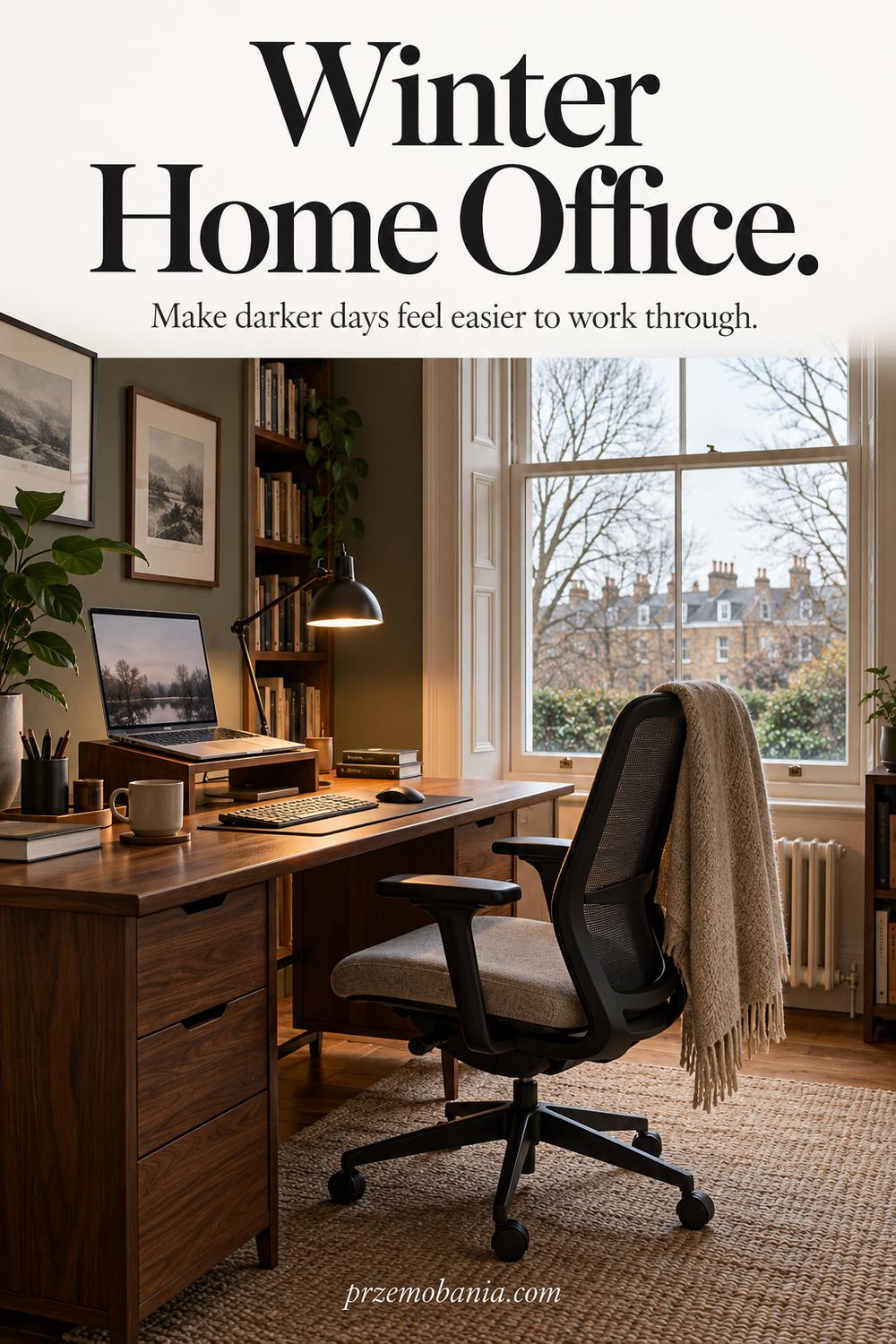
Winter Home Office
Why does a workspace that felt perfectly comfortable in September become somewhere you struggle to settle into once winter arrives? A winter home office needs to respond to shorter days, colder surfaces and the way you actually use the room. If you keep adding cosy things but still feel uncomfortable at your desk, you are not failing at decorating.
A winter home office is a workspace adapted for colder weather and shorter daylight hours. It combines good lighting, manageable warmth, useful textiles and an uncluttered layout, while preserving ventilation, comfortable desk use and the flexibility to adjust conditions throughout the working day.
After my wife’s chronic illness changed our lives, I drew on the love of interiors my mum had given me to help shape her working space and my own cosy blogging corner, and I have listed the sources that continue to broaden my knowledge at the bottom.
The most useful first step is to separate what looks warm from what feels warm. A beautiful rust-coloured cushion cannot solve a draught around your ankles, just as a bright monitor cannot light the paperwork beside it.
I want to help you decide which changes deserve your time before you spend money on a room that only works in photographs.
For the wider year-round approach, I explain how to adapt your workspace as the seasons change without replacing the furniture every few months.
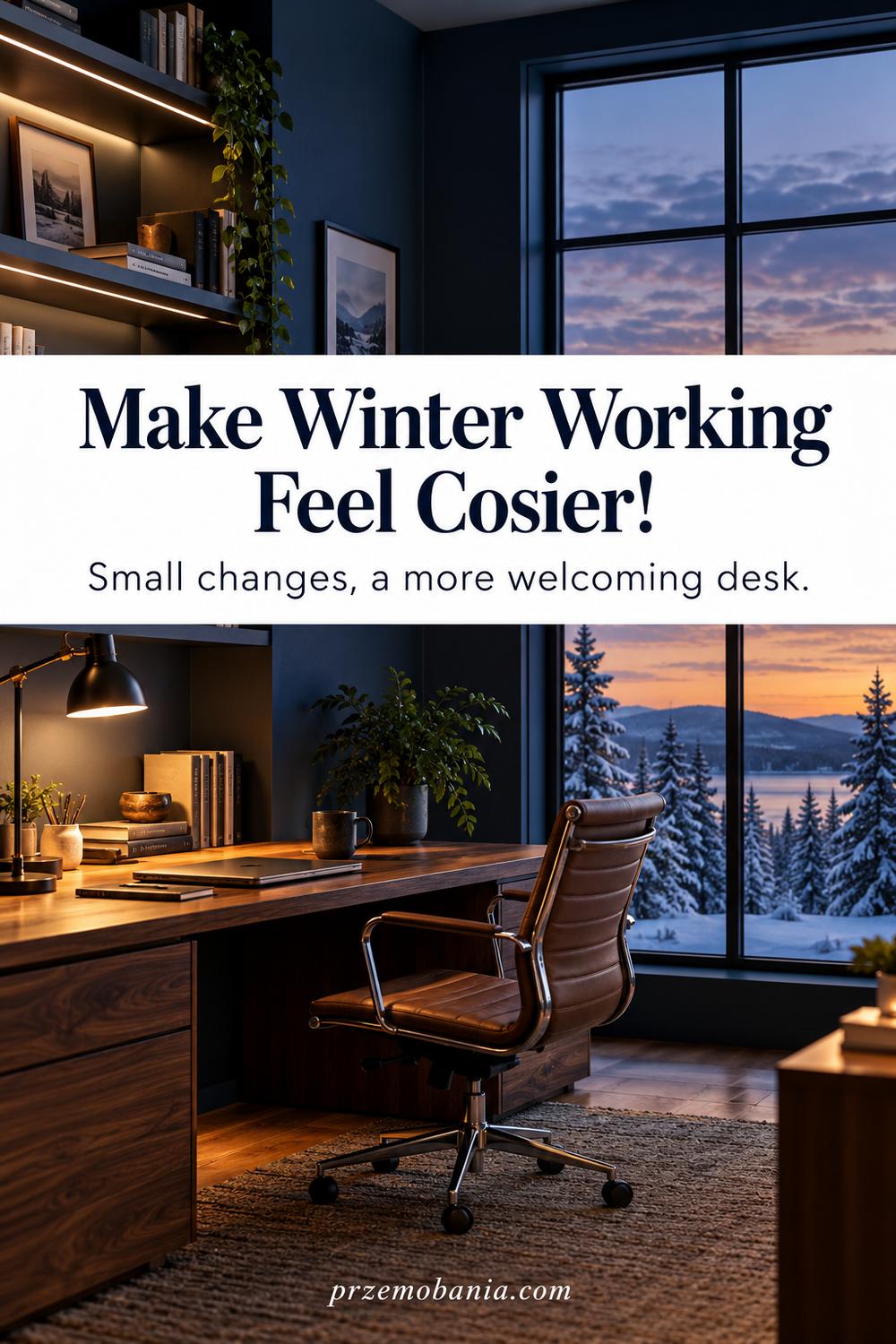
Plan Your Winter Home Office Around Real Needs
I would begin with an ordinary working morning rather than a shopping list. Sit where you normally work and notice the first thing that makes you adjust yourself. It might be cold feet, a dark notebook or the need to move a blanket every time you reach a drawer.
Your winter home office should respond to those specific interruptions. Write them down in the order they affect your day. Separate a practical problem from a change you would simply enjoy looking at.
A useful plan usually begins with the room, then the workstation, then the decorative details. Check the position of the window and existing heat sources before deciding where extra objects belong. Look again later in the afternoon, because an arrangement that works at breakfast can feel very different after sunset.
I prefer to keep the furniture that already serves its purpose. Replacing a serviceable desk will not necessarily solve poor lighting or an awkward curtain. Small adjustments are easier to judge when you make one at a time.
Choose a manageable budget for the first problem rather than dividing your money between every attractive idea. Borrow a lamp or textile from another room to test the effect before buying. Keep track of what genuinely helps after a full working day.
You do not need to finish the whole room in one weekend. You need a clear next step that makes tomorrow easier.
Helping my wife work from home taught me to take small discomforts seriously, even when they were invisible to anyone looking at the room. I want your workspace to offer that same practical kindness, without creating another demanding project for you.
- Notice When Comfort Starts Changing
- Separate Warmth From Winter Styling
- Prepare Light Before The Afternoon
- Choose Softness That Remains Useful
- Let Window Coverings Work Harder
- Protect Space Around Your Chair
- Keep Seasonal Colour Easy To Change
- Make Your Evening Reset Manageable
Notice When Comfort Starts Changing
I would give yourself three brief checkpoints: when you begin work, around the middle of the day and before you finish. Notice what changes rather than deciding that the whole room is simply wrong. The window might feel pleasant in the morning but produce a reflection later, while a chair near the door may become chilly whenever someone passes through.
Write one plain observation at each checkpoint, such as ‘my notebook is difficult to see after lunch’. Avoid jumping straight to a product name. That makes it easier to compare a free adjustment with something you might buy.
After a few ordinary days, look for the repeated problem. A single unusually cold morning does not tell you everything about the room. This small record gives you a sensible starting point and helps you recognise an improvement when you make one, rather than continually changing things because another photograph looks appealing.
Separate Warmth From Winter Styling
A room can look soft and inviting while still leaving you cold at the desk. I treat physical comfort and decorative atmosphere as two related decisions, because confusing them can lead to purchases that solve the wrong problem. First notice where you feel cold, whether air is moving and how close you sit to the window or an outside wall.
The practical sequence in my guide to keeping your workspace warmer through winter helps you investigate those conditions. Here, the useful principle is simply to address the cause before adding another layer of styling.
Once the room is workable, choose colours and materials because you enjoy them. A brown lampshade or textured basket can make an office feel more personal, but it should not be presented as insulation. Keeping those expectations separate makes a modest budget work harder.
Prepare Light Before The Afternoon
Do not wait until you are leaning towards your notebook to decide that the daylight has faded. I would test the existing lamp while you can still compare it with daylight, then check the arrangement again after dark. Look for light on the task itself, rather than judging the room by how brightly your monitor glows.
My guide to arranging lighting for darker winter workdays explores lamp position, background light and screen reflections in more detail. The starting point is a setup you can adjust without standing up and rearranging half the desk.
Keep switches accessible and make sure a new lamp does not introduce a trailing cable. I also like a little light beyond the immediate work surface so the office does not become a bright rectangle floating in darkness. The right balance depends on your tasks, your room and your own comfort.

Choose Softness That Remains Useful
Before adding a throw or rug, ask what job it will do and where it will live when you are not using it. I enjoy texture, but a seasonal layer stops feeling comforting if you have to pull it out of the chair wheels every morning. Choose pieces that fit your working habits as well as the photograph in your mind.
I explain the practical choices in my guide to using winter textiles around a working desk. A washable throw, a stable floor covering or a small fabric accent may be enough to soften an otherwise plain room.
Keep the chair’s adjustments and your normal movement available. You should not have to sit differently just to preserve a decorative arrangement. I would rather repeat one lovely texture in two useful places than introduce five materials that compete for attention and create extra washing, storage and tidying.
Let Window Coverings Work Harder
Your window has several jobs to do during winter, and they do not always agree with each other. You may want daylight at breakfast, control over low sun later and privacy once the room is lit after dark. A single covering can sometimes manage those needs, but it is worth checking the actual window before assuming that thicker always means better.
My guide to choosing window treatments for winter working considers those trade-offs. Measure the surrounding space as well as the glass, including any radiator, opening handle or desk edge.
Keep ventilation openings accessible and consider how easily you can use the covering from your normal position. An attractive curtain that catches behind the monitor is unlikely to be adjusted when you need it. I prefer a straightforward daily routine over a complicated arrangement with several layers I rarely touch.
Protect Space Around Your Chair
Winter additions tend to arrive one at a time: a basket, a throw, perhaps another lamp. Each can look harmless until the chair no longer rolls back comfortably. I would mark out the movement you need before deciding where those extras belong, especially if your workspace shares a bedroom or living room.
The examples in my guide to planning a small workspace for winter focus on fitting comfort into limited space. Here, keep the route between your chair, door and everyday storage clear enough for normal use.
Test the arrangement while carrying the things you actually use, such as a notebook or a drink. Open drawers fully and move the chair as you would during work. A layout that only functions when everything is tucked away is not finished. Your room should work in its ordinary, slightly untidy state too.
Keep Seasonal Colour Easy To Change
I would choose a small colour story from something already in the room: the timber of the desk, a print you enjoy or the cover of a favourite notebook. Repeat one or two tones through modest details instead of buying a complete winter collection. This keeps the office connected to the rest of your home.
Try the colour in the room during both daylight and lamplight before committing to a larger purchase. A pale shade can look very different beside a dark window at night. You do not need to name a trend or follow a prescribed palette to notice what feels right to you.
I like changes that are easy to reverse, such as moving a print or changing a removable cover. My mum’s influence still makes me look for those small relationships between objects. The pleasure comes from recognising your own taste in the space, rather than making every surface announce the season at once.
Make Your Evening Reset Manageable
At the end of the day, I would leave the room ready for the first useful task tomorrow. Put the throw where it can dry or air if needed, return loose papers to their place and check that the chair can move freely. This should take a few minutes rather than become a second shift of housework.
Close suitable window coverings when you no longer need the view or daylight, while keeping required ventilation available. Switch off equipment according to its instructions and your working arrangements. If you use portable heating, follow the manufacturer’s directions rather than treating it like a decorative lamp.
Leave yourself a short note about anything that needs attention. A sticking blind or awkward cable is easier to address deliberately than to tolerate every morning. I want the reset to reduce tomorrow’s effort, not to make you feel that an office must be perfectly styled before you are allowed to stop working.
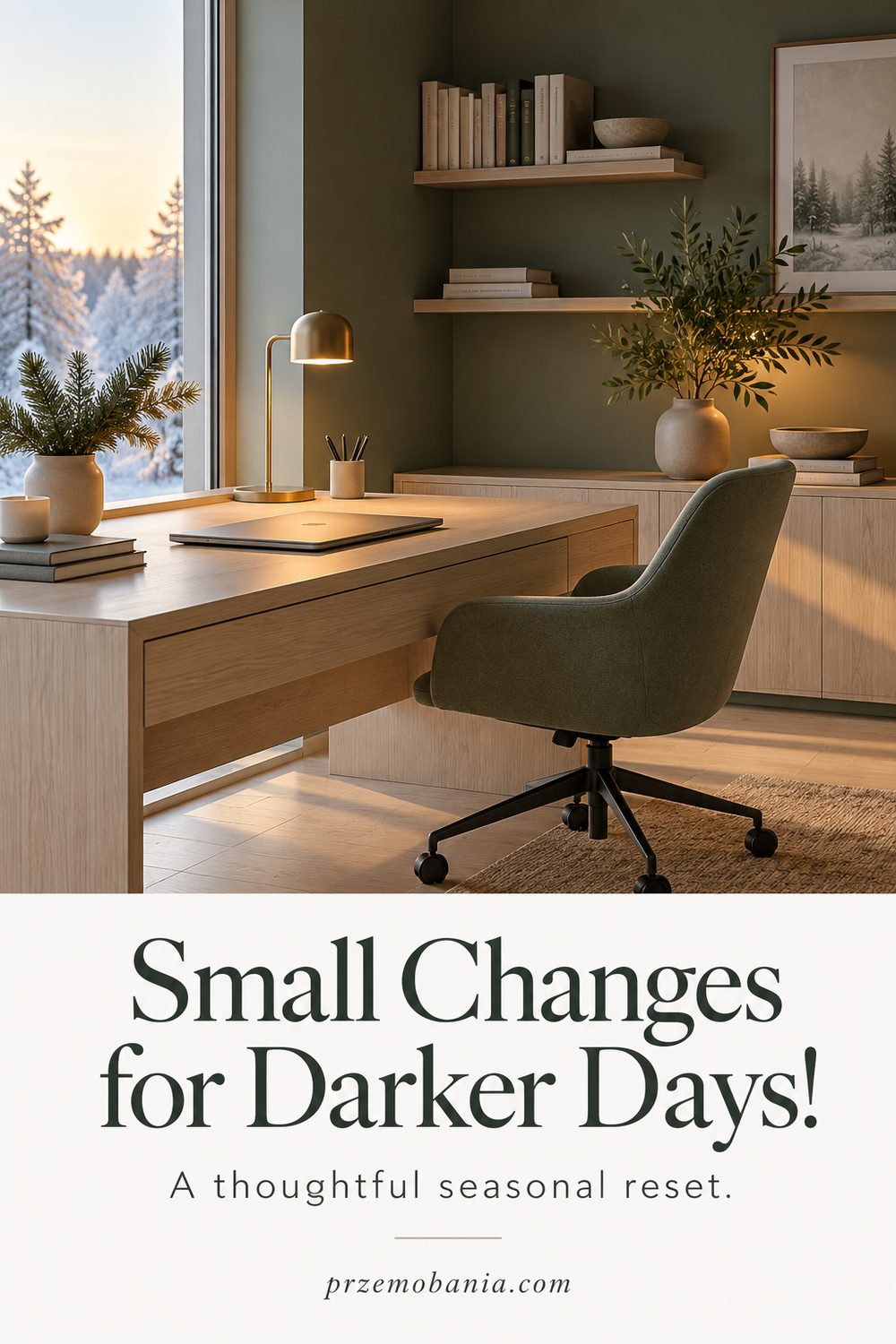
Give Your Winter Home Office A Sensible Budget
A budget is easier to protect when each proposed purchase has a named purpose. I would divide your list into things to adjust, things to borrow and things that genuinely need buying. Start with the first group while you learn what the room needs.
Your winter home office may already contain most of the useful pieces. A lamp on the wrong side of the desk can be moved. A basket used elsewhere might provide a better home for a folded throw.
Before ordering anything, measure its working footprint as well as its advertised dimensions. A lamp needs room for its base and the movement of its arm. A storage unit needs space for its doors to open.
Check the care requirements of fabrics and the controls on electrical items. A low purchase price is less attractive if the object is difficult to maintain or inconvenient to use. I would also keep a little of the budget unspent until the first changes have been tested.
That pause gives you permission to learn rather than pretend you can predict everything. In our home, allowing for changing needs has often been more useful than trying to buy a supposedly perfect solution.
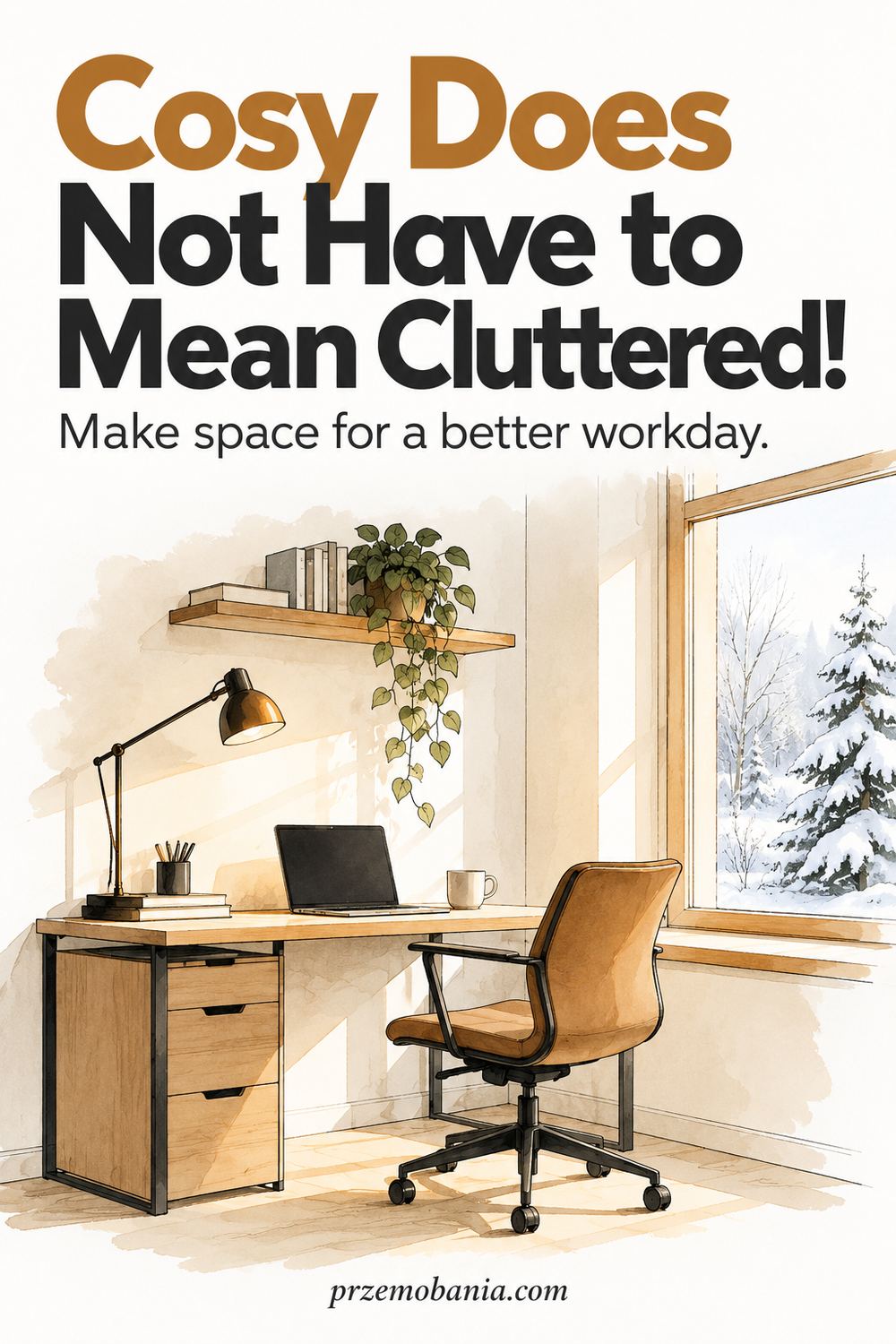
Keep Your Winter Home Office Flexible
The room should still belong to your life after winter ends. I would avoid seasonal changes that make everyday storage or cleaning permanently harder. Think about where each removable piece will go in spring.
A winter home office can feel personal without becoming a themed set. Choose one detail that makes you smile when you sit down. Let the other choices earn their place through usefulness.
If you share the room, compare what each person finds comfortable. Agree which controls can be changed and where personal layers will be stored. Similar working hours do not mean identical preferences.
Review the arrangement after a normal week rather than after a particularly good afternoon. Keep the changes that helped, simplify the ones that created work and leave room for your needs to change again.

Final Word on Winter Home Office
I think the most valuable thing you can give yourself is permission to make the room work for the life you actually have. An office does not need to resemble a styled winter retreat to deserve your care. It may be a spare room with mismatched furniture, a desk beside the bed or a corner that returns to family use in the evening. The limitations are real, but they do not make small improvements pointless.
A winter home office becomes more useful when you stop treating every discomfort as a decorating problem. You can admire a photograph and still recognise that its deep rug would catch your chair, its lamp would reflect in your screen or its beautiful window would leave you exposed after dark. Taking those observations seriously is a form of good design. It means you are choosing for the person who will actually spend time there.
I would begin with one sentence about what you want to change. Perhaps you want to read paperwork without moving towards the window, or stand up without untangling a throw. That sentence becomes a practical test for your next decision. If a proposed purchase does not help with it, the purchase can wait. This does not take the enjoyment out of decorating; it gives that enjoyment a place alongside your everyday needs.
Once the first problem is easier, you may notice that you feel less urgency about the rest. A familiar desk can seem more welcoming when the light is right. A modest room can feel more generous when the chair moves freely. You can then add colour, softness or a personal object because you want to, with a clearer sense of how much space and attention you have available.
My wife’s illness changed the way I look at rooms because it made comfort less abstract. I learned to ask whether a space was easy to use on a difficult day, rather than whether it looked impressive on a good one. That question still guides the little decisions I make around our working areas. I hope it gives you a kinder way to assess your own room too.
You are allowed to adapt the advice to your circumstances. Renting, sharing a room, working irregular hours or having a tight budget will change what is possible. None of those situations requires you to pretend that a blanket fixes a building problem or that a new lamp will transform your whole working life. A useful improvement can be small, specific and honest about its limits.
Choose a first step you can complete and observe. Give it a few working days, ask what became easier and keep a short note for next winter. Over time, those ordinary decisions create a space that reflects your judgement rather than somebody else’s shopping list. That is the kind of room I want you to enjoy returning to, even when the afternoon outside is already dark.
Start with the part of your working day that feels hardest, then make one useful change. Give light, warmth and movement the space they need before adding seasonal details. Your office can become more welcoming through patient, practical choices that respect your budget, your home and the way you really work.
Leave a comment and tell me what your workspace needs most this winter, then check the FREE chapter of my eBook at the bottom for more practical inspiration.


Przemo Bania is a blogger and writer who helps people get out of their traditional jobs to start a blogging career. Przemo also runs a health blog advocating for endometriosis and fibromyalgia…
Related Questions You May Be Asking About Winter Home Office
1. Does a winter office need Christmas decorations?
No. You can create a seasonal feeling through texture, colour and lighting without using a festive theme. I would choose details you enjoy throughout the colder months, then add Christmas decorations separately if you want them. This also makes the room easier to keep comfortable after the holiday period finishes.
2. Should I move my desk every winter?
Only if a different position addresses a problem and still supports comfortable working. Before moving heavy furniture, check the proposed position for sockets, reflections, heating, storage access and chair movement. Try a small adjustment first where possible. Seasonal preparation does not require rebuilding a layout that already serves you well.
3. Can I improve a rented workspace?
Often, yes. Start with changes you can reverse, such as repositioning existing items, using suitable removable textiles and adjusting lamps. Check your tenancy terms before drilling, fitting coverings or changing fixtures. Report building defects through the appropriate route instead of trying to disguise them with decorative additions around the desk.
4. How do I avoid buying too much?
Give each purchase a specific purpose and a place to live. I would test a borrowed item first when possible, then wait until you have used it during ordinary work. Include storage and care in the decision. An object that needs constant moving may cost more in effort than it adds in pleasure.
5. When should I start preparing the room?
Begin when you notice changing conditions, rather than waiting for a particular date. Earlier darkness or recurring cold discomfort can be useful prompts. Check what helped last year and prepare one adjustment before it becomes urgent. Your local climate and working hours matter more than a seasonal decorating calendar does.
Winter Home Office References
- https://www.hse.gov.uk/home-working/worker/index.htm
- https://www.hse.gov.uk/humanfactors/topics/lighting.htm
- https://energysavingtrust.org.uk/advice/draught-proofing/
