
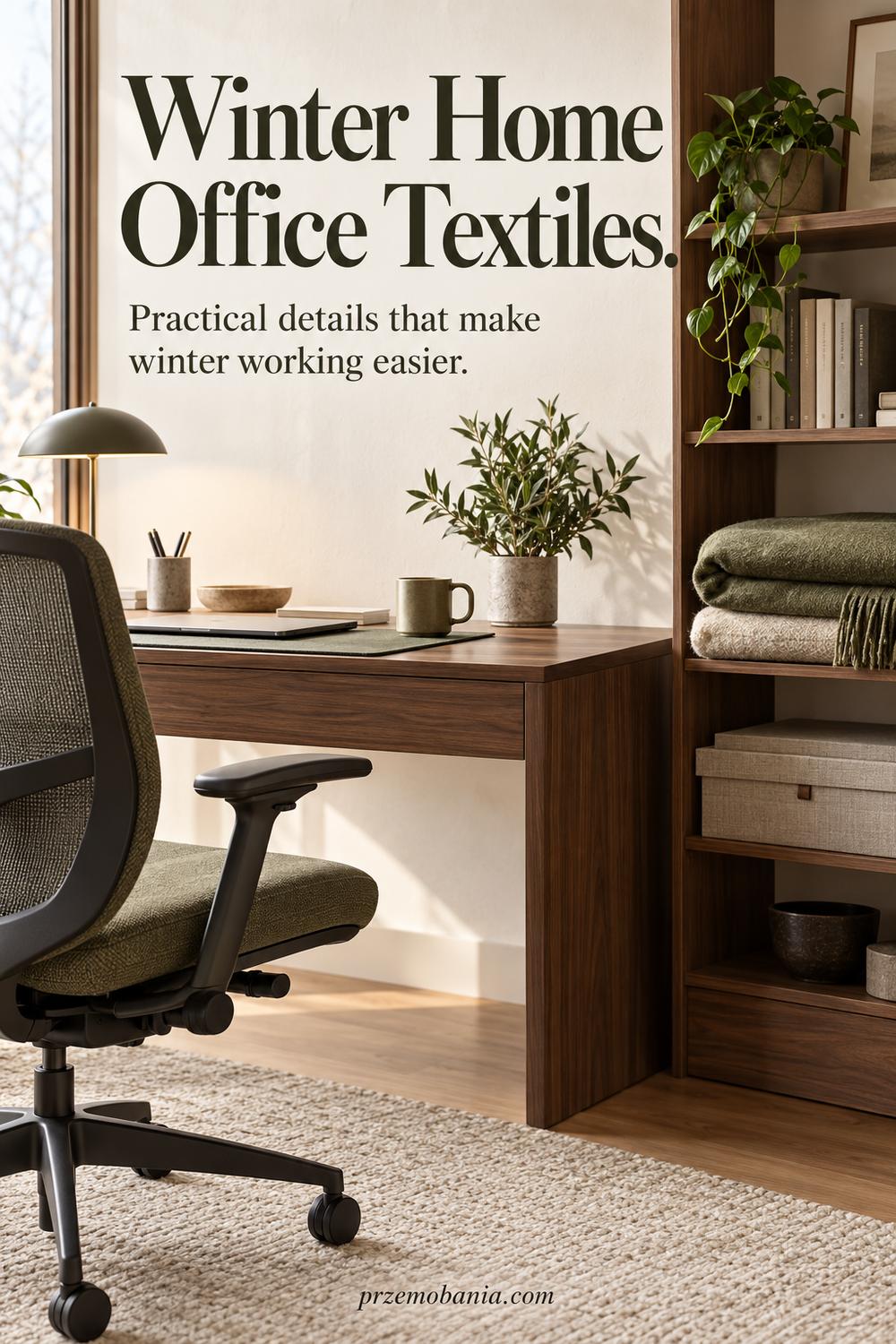
Winter Home Office Textiles
Can a room feel softer for winter without your desk disappearing beneath blankets and cushions? Winter home office textiles should add comfort and character while leaving the working parts of the room easy to use. If cosy styling keeps turning into another pile you have to move, I would simplify the layers rather than blame your lack of space.
Winter home office textiles include throws, cushions, rugs and fabric accents selected for comfort, texture and daily care. Choose pieces that suit your skin, chair and floor, keep loose fabric away from wheels and heat sources, and check washing and storage needs before adding more seasonal layers.
My mum encouraged my love of tactile, welcoming interiors, and helping my wife work from home after chronic illness reshaped our lives taught me to balance that pleasure with practical needs, which I explore through my blogging and the sources below.
The most beautiful fabric in a shop may feel wrong against your wrists or behave badly beneath a moving chair. Size, backing, weave and care requirements matter just as much as colour.
I want you to choose pieces for their place in your day, including the moment you stand up or put them away.
For the room as a whole, my guide to creating a practical winter workspace puts textiles alongside light, warmth and layout.

Choose Winter Home Office Textiles With A Clear Purpose
I would begin by naming the surface you want to soften. That might be the appearance of a bare corner or the feel of a throw across your lap. Those are different uses and may call for different materials.
Winter home office textiles do not need to form a matching collection. A small number of compatible pieces can create a considered look. Repeating a colour quietly is often enough to connect them.
Check the scale before you buy. A generous sofa throw may be awkward around a desk chair. A small rug can put its edge exactly where the chair wheels travel.
Think about how often each item will be touched. Fabric beside your hands needs a different practical test from a decorative cover on a spare chair. I would also consider whether the texture catches jewellery or feels irritating against bare skin.
Read the care label while the purchase is still optional. Decide where the item will dry, air or be stored. A piece that fits the room but not your routine may not be the right choice.
My wife’s needs taught me that comfort cannot be judged by appearance alone. I would rather help you find one layer you actually enjoy using than encourage a room full of softness that adds effort to your day.
- Choose A Throw For Seated Use
- Test Cushions Against Your Chair Setup
- Keep Rugs Clear Of Wheel Problems
- Build Texture With A Restrained Palette
- Plan Washing Drying And Seasonal Storage
Choose A Throw For Seated Use
Measure the space a throw needs to cover while you are seated, then consider where its edges will fall. I would choose enough coverage to feel useful without leaving fabric pooled around the chair base. Test standing up and turning before deciding that the size works, especially if your chair has wheels or an exposed mechanism.
Check the feel against the skin and clothing you normally wear. A texture that looks lovely from across the room may catch a sleeve or feel scratchy after a while. Your own preference matters more than a claim that one fibre is universally the cosiest.
Give the throw a simple resting place when it is not in use, such as a suitable shelf or hook away from heat sources. Avoid turning another chair into permanent overflow storage. An everyday layer should be easy to pick up, easy to put down and easy to keep clear of the movements that make your workstation function.
Test Cushions Against Your Chair Setup
A decorative cushion changes the space you occupy in a chair, so I would test it while using the keyboard rather than leaning back for a photograph. Notice whether it pushes you forwards, raises your shoulders or makes you reach farther. More padding does not automatically mean better support for the task.
If you need additional back support, consider how it works with the chair’s existing shape and adjustments. Check the rest of the workstation after making a change. Your feet, desk height and screen position still need to work together, and a cushion should not hide a chair that is unsuitable for regular use.
For colour and texture alone, a spare chair may be a better place than the main working seat. A removable cover can also be easier to maintain than an elaborate layered arrangement. I would keep the working chair straightforward and use decorative softness where it does not ask your body to accommodate it.
Keep Rugs Clear Of Wheel Problems
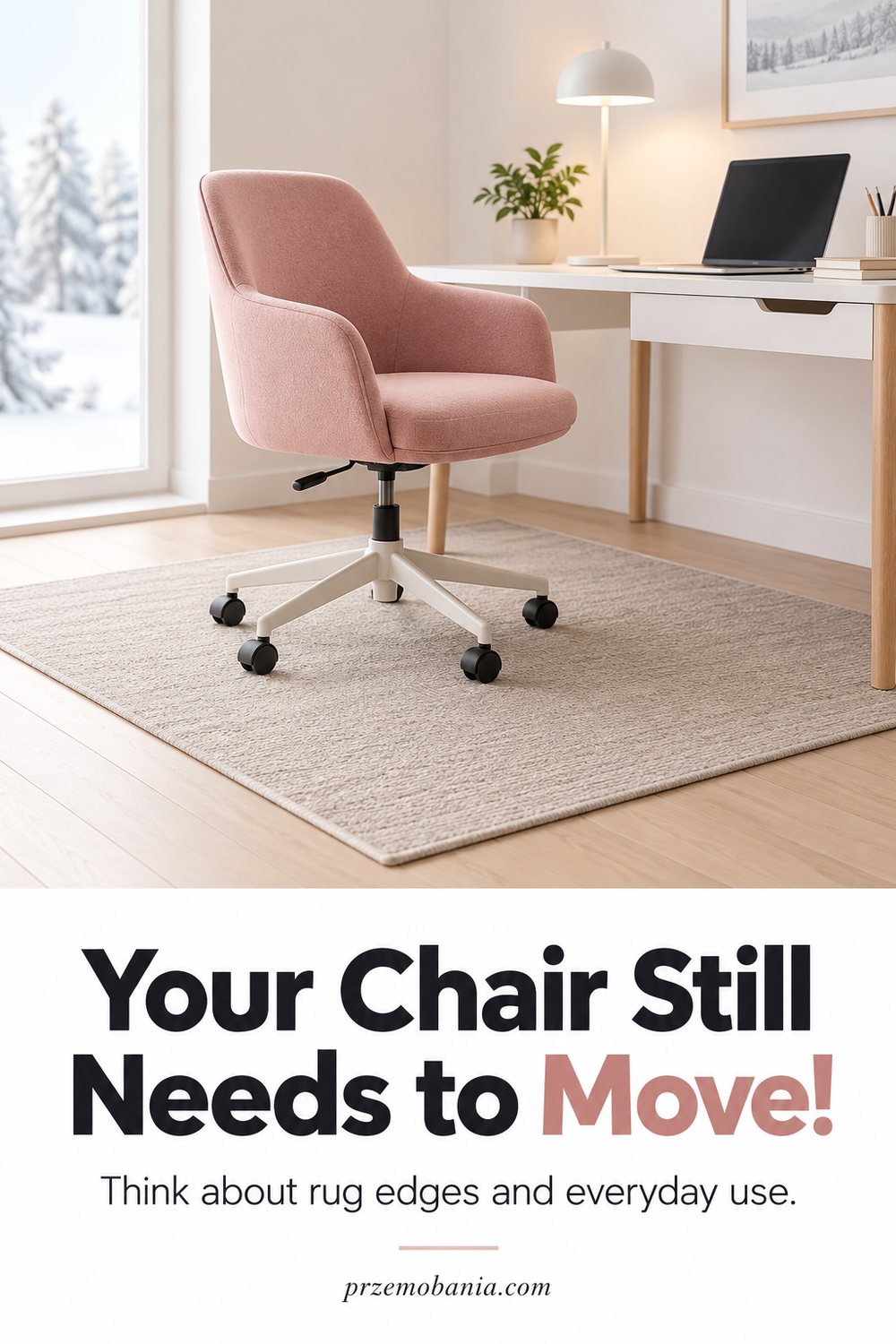
Think about the full path of the chair before choosing a rug size. Roll back, turn and move towards your storage as you normally would. I would avoid placing a rug edge directly across that movement, because an arrangement can look centred and still be awkward every time you stand.
The pile, backing, floor surface and chair wheels all affect the result. A flatwoven or low-pile option may be easier to consider than a deep shag rug, but you still need to check the actual product and setup. No rug type is automatically suitable for every rolling chair or floor finish.
Follow guidance on underlay and floor compatibility, and make sure edges remain flat. If a rug makes movement harder, use softness elsewhere rather than trying to work around it. You can still enjoy a textured room with a clear practical floor beneath the desk, which is often a better compromise in a small working corner.
Build Texture With A Restrained Palette
I like to choose one existing material as the starting point, such as the desk’s timber or a favourite fabric already in the room. Then I add contrast through texture rather than introducing many unrelated colours. A smooth surface beside a woven one can create enough interest without a busy pattern on every object.
Look at samples together in the room if possible. Check them in daylight and under the lights you use after dark, because their appearance may change. I would also consider the background seen on calls, without allowing the camera view to dictate the whole room.
Leave some plain surfaces visible so each chosen texture has room to be noticed. A desk does not need a fabric runner simply because the chair has a throw. The most convincing winter arrangement often comes from restraint: a few materials you enjoy, repeated with purpose, rather than a complete catalogue of seasonal finishes.
Plan Washing Drying And Seasonal Storage
Read the individual care label rather than assuming all wool, cotton or synthetic fabrics can be treated in the same way. Construction, finishes and blends can change the instructions. I would keep those instructions somewhere accessible, particularly for a seasonal item you may not wash very often.
Think about the practical drying space before choosing a large textile. If the label calls for a method you cannot manage comfortably at home, include professional care in the decision or choose another piece. Do not improvise by draping fabric over a portable heater.
Store textiles clean and fully dry according to their care needs, somewhere suitable and away from persistent damp. Check the space you have before adding a second seasonal set. A modest collection that is easy to maintain is more useful than a cupboard packed so tightly that each change of season begins with an exhausting search for one particular cover.

Use Winter Home Office Textiles Without Adding Clutter
I would assign each textile a working position and a resting position. The working position is where you use it. The resting position is where it belongs when you stand up or finish for the day.
Winter home office textiles become clutter when only the first position has been considered. A throw ends up on the floor. A cushion moves between the desk and another chair.
Test the arrangement through a full working day. Notice which pieces you repeatedly remove. That is useful information rather than a failure to maintain the styling.
You can keep a beautiful item elsewhere in your home if it does not suit the office. There is no need to force every purchase into the original plan. I would also avoid adding storage solely to accommodate unnecessary seasonal accessories.
Choose a manageable number of pieces to clean. Consider pets, drinks and the kinds of work you do. A pale textured surface may be enjoyable, but its care should fit your circumstances.
Leave the desk’s active area available for work. Softness around the workspace can be enough.
Let Winter Home Office Textiles Support Real Comfort
Fabric can contribute to comfort without solving every cause of a cold room. I would keep expectations realistic. A warm-looking palette is not a substitute for addressing a draught or unsuitable heating.
Winter home office textiles should work alongside those practical conditions. If physical cold is the main issue, my guide to investigating warmth at your desk is the more useful starting point. Add decorative layers once you understand what the room needs.
Keep loose material away from heat sources and electrical equipment that requires ventilation. Follow the relevant product instructions. Do not let styling hide switches or moving parts.
Review the layers as the weather changes. Removing something that no longer helps is part of a successful seasonal arrangement.

Final Word on winter home office textiles
I think softness is most valuable when it asks very little of you. You can reach for the throw, use the chair, move to the drawer and finish the day without rearranging a decorative scene first. That is a modest ambition, but it makes a real difference to whether the room feels welcoming in ordinary use. The best-looking arrangement is not always the easiest one to live with.
Winter home office textiles give you a way to bring personal taste into a functional room without replacing its furniture. You can choose a texture that reminds you of a favourite place, a colour that belongs with your desk or a fabric that feels pleasant in your hands. Those decisions are worth making carefully because they are part of the environment you experience every day, not just details for a photograph.
I would keep your body and movements at the centre of the choice. A cushion should not make typing more awkward. A rug should not turn standing up into a struggle. A throw should not trail into wheels or need rescuing from the floor repeatedly. If an item creates one of those problems, moving it elsewhere is a sensible design decision rather than a waste of the idea.
The care routine deserves the same honesty. You may enjoy looking after delicate pieces, or you may need something that fits a straightforward household wash. Neither preference is more stylish. A textile earns its place when you can maintain it with the space, time and energy you have, including during the busiest part of winter.
My mum’s influence makes me notice the warmth that materials can bring to a room, while my wife’s experience keeps me attentive to the effort they can also create. I try to hold both thoughts together. I want a space with character, but I do not want its character to depend on constant tidying or on someone tolerating a surface that feels wrong to them.
Choose one useful piece first and live with it before adding another. Notice where it spends most of its time and whether you are pleased to reach for it. If the answer is yes, you have already made a meaningful improvement. You can build the rest slowly, leaving enough room for work, movement and the ordinary life that happens around your desk.
Choose textiles for the way you sit, move and care for your room. Test throws, cushions and rugs during real work, keep loose fabric clear of wheels and heat, and give every piece somewhere to rest. A few useful layers can feel far more welcoming than a seasonal collection you are constantly moving.
Leave a comment about the change you want to make, and check the FREE eBook at the bottom for more ideas to help your workspace fit your life.


Przemo Bania is a blogger and writer who helps people get out of their traditional jobs to start a blogging career. Przemo also runs a health blog advocating for endometriosis and fibromyalgia…
Related Questions You May Be Asking About winter home office textiles
1. Must I use wool to create a cosy office?
No. Choose a material that feels pleasant to you and suits the intended use and care routine. Fibre content alone does not tell you how a finished item will feel or behave. I would compare the actual fabric, size and construction rather than treating one material as compulsory for winter.
2. Can I put a thick cushion on any office chair?
It may change how you sit and how the chair relates to your desk. Test the full workstation after adding it, including reach, support and foot position. A decorative cushion is not a universal ergonomic fix. If it makes working less comfortable, remove it or use it on another seat.
3. How many different textures should I combine?
There is no required number. I would start with one or two additions and judge them alongside the materials already present. Leave enough plain space for each to be noticeable. Add another only if it contributes something you enjoy without creating more care, storage or movement problems around the working area.
winter home office textiles References
- https://www.woolmark.com/care/washing-instruction-symbols-explained/
- https://www.hse.gov.uk/msd/dse/good-posture.htm
- https://www.ikea.com/gb/en/cat/rugs-10653/f/flatwoven-rugs-f-type–51780/
