
Why is your screen easy to read at breakfast and difficult to see after lunch? If your screen is comfortable at nine and almost unreadable by two, observe the desk at the troublesome time before changing the room. A short winter sunlight log can show whether light is striking the display, reflecting off a pale surface or coming straight into your line of sight. Each calls for a different adjustment.
Use a rough sketch of the desk and window, a clock and a few notes made from your usual seat. You are mapping a problem during your working day. A precise compass bearing or light meter is unnecessary for this comparison.
Observe the light from your normal seat at the hour the problem occurs, then test one adjustment.
When I think about comfort at home, time of day matters as much as furniture position. I would rather watch what the window does during a real task before shifting a whole desk.
- Start from the position in which you actually work
- Keep a log across your working hours
- Change one thing during the difficult period
- Decide whether the furniture really needs moving
- Leave yourself one useful instruction
- Map the reflection as well as the patch of sunshine
- Record a useful adjustment for an awkward room
- Final Word on Low Winter Sun at Your Desk
Start from the position in which you actually work
Set the chair, screen and blinds as you normally use them. Choose a familiar task such as reading an ordinary document or comparing two photographs. A black screen makes reflections easy to see, but the test that matters is whether you can comfortably do your work with your normal display settings.
Sketch the window, monitor and any glossy surface near the desk. Mark your seat with a cross. If another person uses the room at a different height, take a separate observation from their chair. A reflection that reaches one viewer may pass above the other.
Distinguish three visible problems
A patch of sunshine falling across a page has a visible edge that moves over time. A reflection shows part of the room or a bright rectangle on the screen. A bright window directly behind the monitor can leave the display difficult to read even when its surface is free of obvious reflections.
Write down what you actually see. “Window shape on right half of monitor” is a better starting point than “office too bright”. It narrows the next test to the angle between the window, the screen and your eye. Observe the effect on the desk without looking directly at the sun.
Keep a log across your working hours
Take a note when you start work, when the problem first appears and when it clears. Add an observation at a regular call time if video meetings matter. If you only check at lunchtime, you may miss the twenty minutes that repeatedly interrupt an afternoon task.

| Time, example only | What you see from the chair | What changed |
|---|---|---|
| 09:15 | Desk bright; document easy to read | Blind fully open |
| 13:40 | Bright rectangle at right of display | Sun reaches facing wall |
| 14:00 | Reflection clear of main text after small angle change | Screen turned slightly; chair still faces it |
| 15:20 | Room noticeably dimmer; reflection gone | Blind can reopen; task lamp useful |
Record the weather and whether a lamp is on. A clear day and an overcast day can produce quite different results in the same room. Two comparable clear afternoons are more informative for testing direct sun than a sunny Monday compared with a heavily overcast Tuesday.
Change one thing during the difficult period
Begin with an adjustment you can reverse immediately. Tilt a blind, move a shiny desktop accessory, adjust the screen’s direction or shift a lightweight reading task to the other side of the desk. Look back at the same document from the same working position.
If rotating the display clears the reflection but leaves you sitting with your torso twisted, it is a poor permanent arrangement. Try moving the keyboard and chair with it, or test a window adjustment instead. The result needs to suit the person on the chair as well as the photograph of the room.
Use a second view to identify a reflection
From your usual position, notice what is mirrored on the display. A bright picture frame, white cupboard door or pale wall can reflect light even when the sun never strikes the screen itself. Temporarily move the small object or change the blind angle and see whether that specific shape disappears.
For a bright window beyond the screen, test partial shading before closing the whole room. You may be able to cover the bright portion and preserve useful daylight elsewhere. A renter can learn this with the existing controls before considering any new fitting.
Decide whether the furniture really needs moving
A fifteen-minute problem during an occasional task may be solved by a temporary blind position. A reflection that covers your primary screen through your busiest two hours deserves a more permanent trial. Write the time, affected task and successful adjustment together so you can judge that trade-off.
Before moving a full desk, try the candidate position with a chair and a portable device if available. Check it at the problem hour, then again after sunset with your ordinary lamps on. Plan more general seasonal changes with the guide to a comfortable winter home office.
Account for a second screen or a shared desk
On a two-screen desk, note which display shows the reflection and what you use it for. A bright patch on the secondary screen may only matter during a particular task. If a short afternoon call uses the clear screen while a detailed proof sits on the affected one, try switching their on-screen jobs for that interval before moving both displays.
Keep the experiment reversible and check it with an ordinary task. If switching the windows means constantly turning your head to read, record that drawback as well. Clearing a reflection is only half the decision if it makes the work itself harder.
If somebody else uses the desk on alternate days, put their observations on a separate line. Differences in chair position and working hours can explain why the same room feels manageable for one person and difficult for another. A pencil mark on a blind control or a simple note about the successful position may allow both arrangements without rearranging the room.
Leave yourself one useful instruction
Turn your observations into something you could use tomorrow: “On clear afternoons, angle the right blind before the two o’clock call and reopen it when the bright patch leaves the cupboard.” That is a decision tied to a visible change, so it still works when the clock time shifts over the season.
Revisit the sketch if your hours, screen or window coverings change. The aim is to stop rearranging the desk on the strength of a single bright afternoon and keep the daylight you enjoy during the rest of the day.
Map the reflection as well as the patch of sunshine
Imagine you work at a dining table beside a window. At eleven the light reaches the corner of the table nearest the wall. At half past eleven the bright patch has travelled away from your laptop, yet you are still leaning sideways to read a spreadsheet. If you record only where the sun falls on the furniture, you will miss the second half of the problem.
On a scrap of paper draw the screen, window and your usual seat as three simple shapes. Beside the drawing, write what you actually see from that seat. A bright rectangle reflected in dark parts of a screen, a stripe of light falling across printed paper and a bright window directly behind the display each call for a different trial.
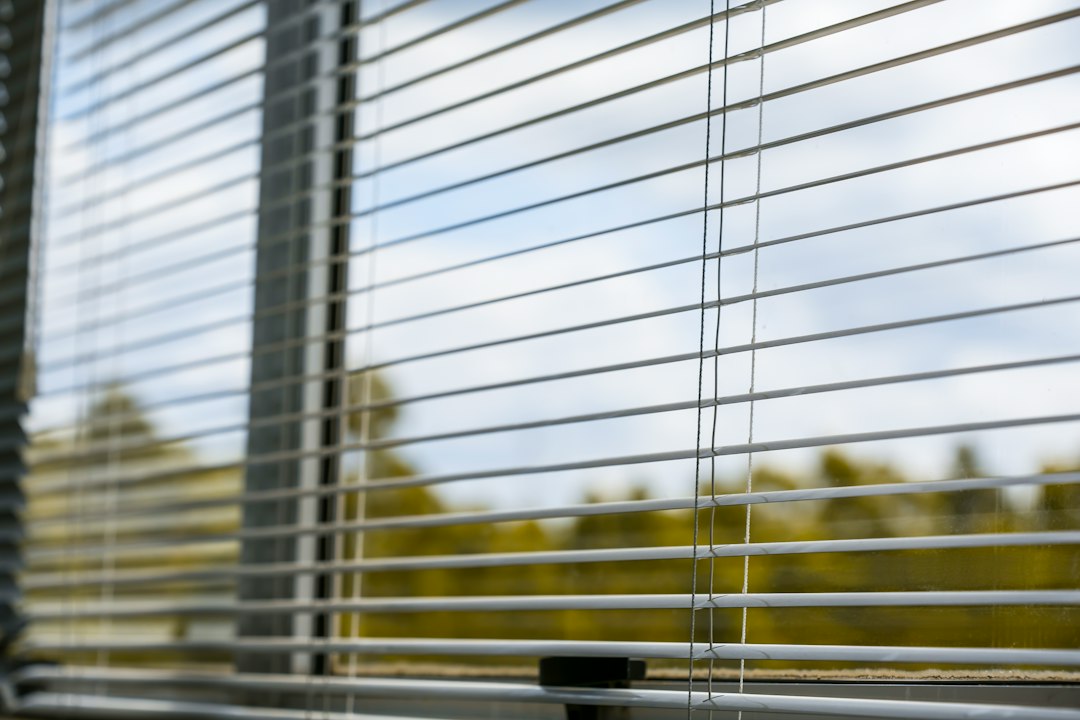
Try closing the blind only far enough to cover the bright strip, keeping the rest of the desk as it was. At the same point in your next ordinary task, check both the page and the screen again. If a small adjustment solves the reflection but makes the paper too dark, note that trade-off and test a change to the task light separately.
Record a useful adjustment for an awkward room
A shared room might rule out turning the entire desk. Start with something reversible, such as shifting the monitor sideways along the worktop or changing which side holds your paper. Mark the starting position in a sketch. Keep the keyboard and seat comfortable when testing a different screen position so an awkward sideways reach does not quietly replace the lighting problem.
Suppose Tuesdays are spent largely on calls and Wednesdays on close reading. On a call you might notice a bright stripe across your face while the display itself remains easy to see. Write the task beside the time in your log. An adjustment that matters for ten minutes of calls may be quite different from the one you want throughout an afternoon of reading.
After several observations, condense the result to an instruction you could follow on a busy morning. “Lower the left blind to the window catch before reading proof pages at midday” is easier to repeat than “sort out the light”. If the weather was overcast during the whole trial, keep the result provisional and repeat it when the problem returns.
Final Word on Low Winter Sun at Your Desk
Use the log to give yourself one repeatable adjustment for the part of the day that causes trouble. Keep the position of your body, the task and the weather beside the time. Those details explain why a change helped and make it easier to revisit the decision as winter light shifts.
When does winter light cause the most trouble at your desk? I’d love to hear in the comments. You can also read the free chapter of my cosy home office eBook.

Find Out More About Me

Przemo Bania is a blogger and writer who helps people get out of their traditional jobs to start a blogging career. Przemo also runs a health blog advocating for endometriosis and fibromyalgia…
Related Questions You May Be Asking About Low Winter Sun at Your Desk
What if the bright patch moves before I can test a second arrangement?
Keep the original observation and try the change on another day at a similar time. Note cloud cover and which room lights are on. Two short observations under comparable conditions will tell you more than a long session during which both the sun and the furniture move.
Should I use a photograph to decide if there is glare?
Use a picture to remember the location, then judge readability from your normal seated position. A phone can change exposure, brighten shadows and make a reflection look milder or stronger. What matters is whether you can read the material comfortably while doing the task.
Can I leave the blinds closed throughout winter?
You can test that arrangement against the room’s other uses. Check your paperwork, video calls and any person sharing the table. If only one short period causes difficulty, a partial adjustment at that time may give you a more usable room during the rest of the day.
When does this need an assessment at work?
If you use display equipment for work and the problem persists, describe it to your employer through the appropriate route. Share the task, time and changes you have tried. That gives the person assessing the workstation something more precise to investigate than a report that the spare room feels too bright.
Low Winter Sun at Your Desk References
