
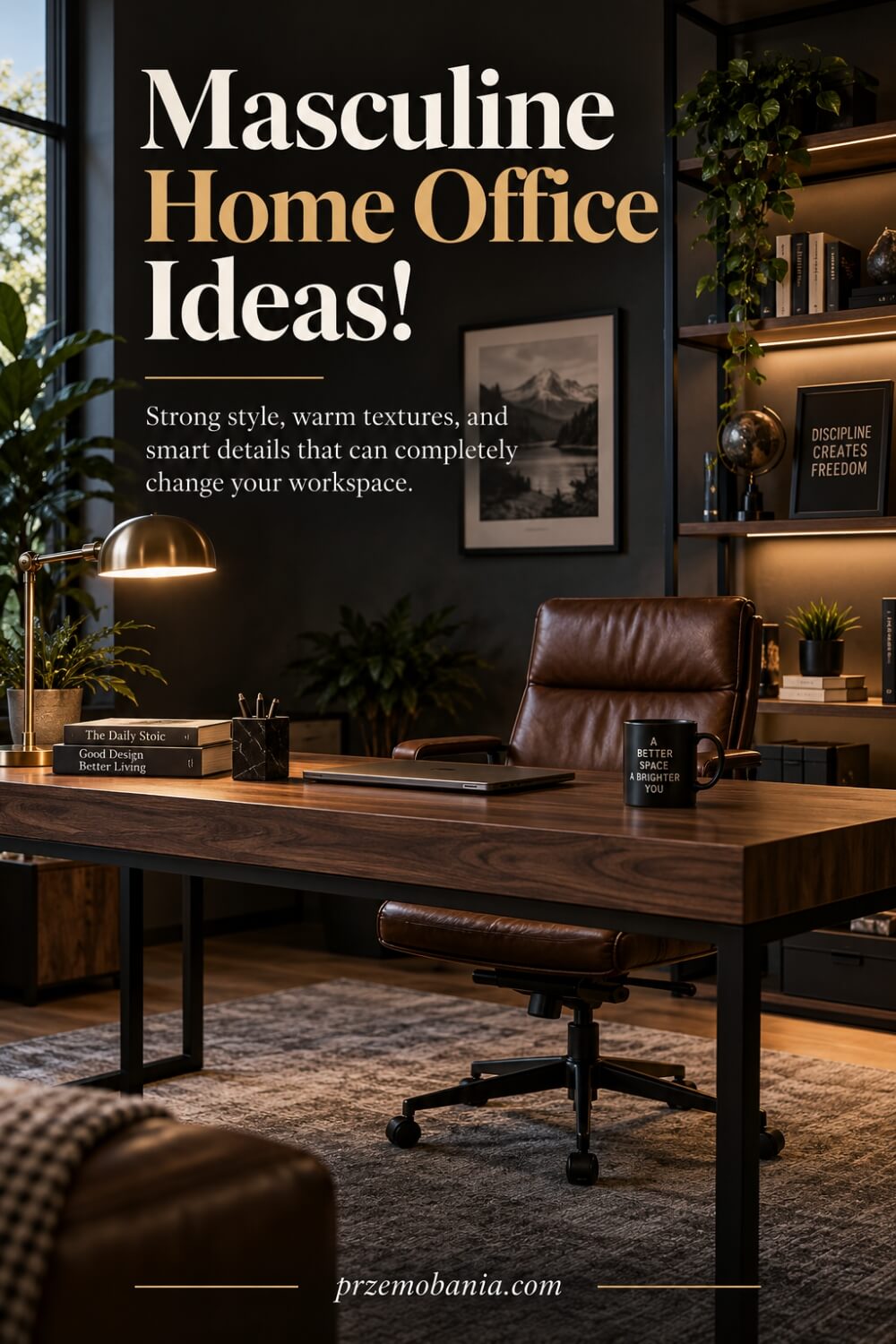
Masculine Home Office Ideas
Have you ever looked at a home office full of dark wood and black paint and wondered why some rooms feel confident and inviting while others simply feel heavy? A masculine home office works best when colour, texture, lighting, furniture and storage create a grounded, purposeful space that still feels comfortable enough to use every day. If you want a workspace with strength and character but you are worried about making it gloomy, cramped or like a cliché, I understand exactly what you are trying to avoid.
A masculine home office is a functional workspace shaped by strong lines, restrained colour, natural materials, layered lighting and purposeful storage. It can be dark or light, traditional or modern; the key is a grounded, uncluttered look built around comfort, focus, function and personal taste.
I’m a passionate blogger whose life changed when my wife became chronically ill; alongside the love of interiors my mum sparked in me when I was a boy, that experience pushed me to help my wife shape a home workspace around comfort and real-life needs while I built my own cosy office for writing and earning online, and beyond what I have learned through living and designing these spaces myself, I have linked every source I used at the bottom of this article so you can see where I keep expanding my knowledge.
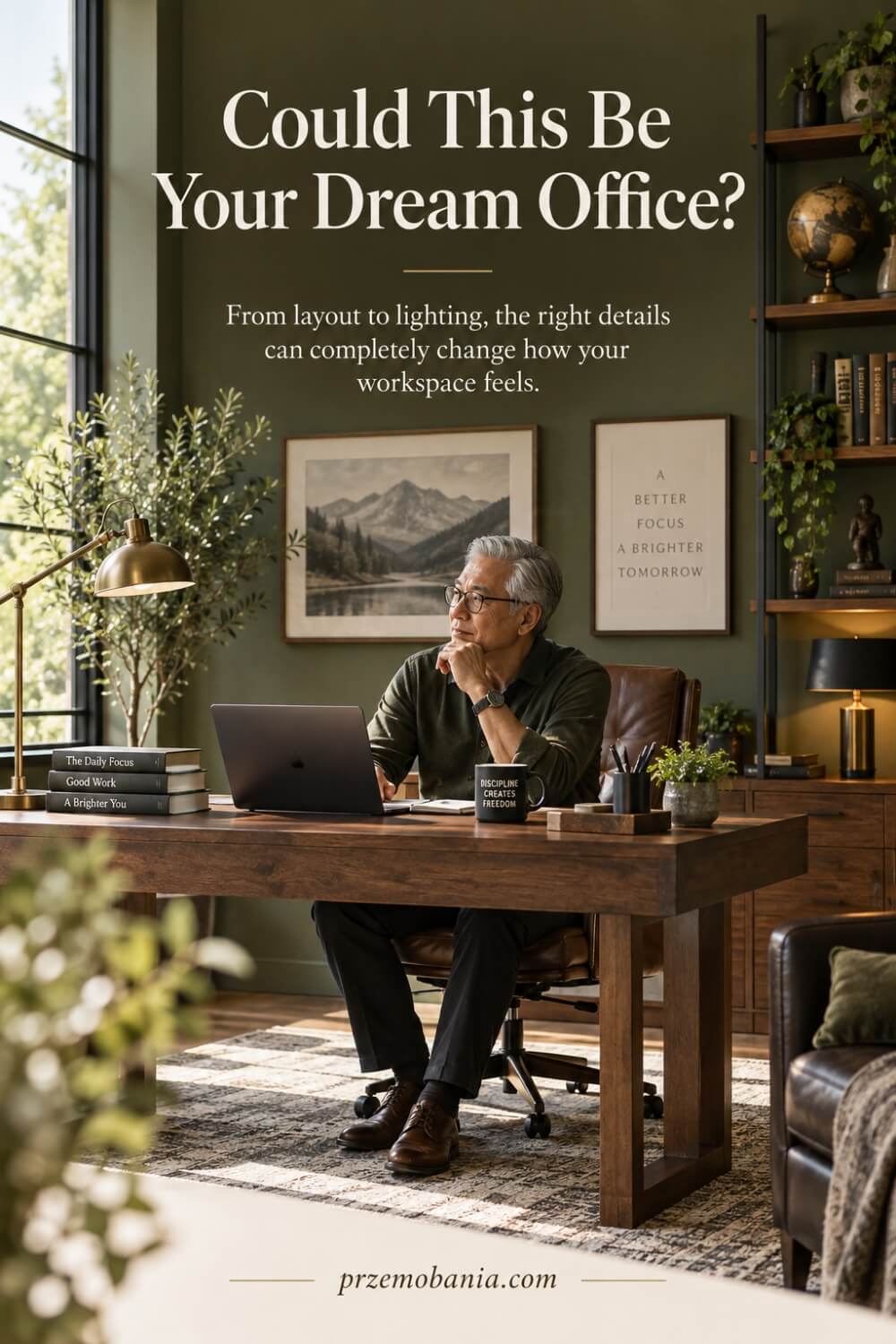
The detail that surprised me most while researching this is how far masculine office design has moved from the old idea that everything needs to be black, oversized, and heavy. Current designer examples are mixing deep navy, charcoal and olive with warm timber, leather, brass, textured walls, vintage details and lighter contrasting pieces, creating rooms that still feel strong and structured without swallowing the light or making a smaller workspace feel oppressive.
That balance goes much deeper than decoration because interior design is ultimately about improving how a space looks and how it works for the person using it, while UK workplace guidance recommends enough working space, comfortable positioning, sensible screen height and control of glare and reflections.
A stunning office can therefore still fail you if your chair, lighting, monitor, storage or desk keeps fighting your body every working day, which is why I want to show you how to build this look from the inside out rather than buying dark furniture and simply hoping the room will somehow feel masculine.
Before you choose the first paint colour, timber desk or leather chair, I would get the practical foundations right with my guide to planning a home office from the ground up, because layout, lighting, power, storage and comfort decide whether the finished room merely looks impressive or genuinely works for you.
- How Do You Design a Masculine Home Office That Feels Good to Work In?
- Why a Masculine Home Office Should Feel Personal, Not Performative?
- How Can a Masculine Home Office Improve Focus and Productivity?
- How Can a Masculine Home Office Support Your Wellbeing?
- How Can a Masculine Home Office Grow With Your Life and Work?
- Final Word on a Masculine Home Office
How Do You Design a Masculine Home Office That Feels Good to Work In?
Once the practical foundations are in place, I would stop thinking about how masculine the room needs to look and start asking what you actually want to feel when you sit down to work there. A workspace can be visually impressive in a photograph yet become exhausting after six hours if the desk position, light, chair, storage and objects around you were chosen for appearance before comfort.
I would begin with the room itself, because its natural light, proportions and existing finishes should influence every decision that follows rather than forcing somebody else’s Pinterest photograph into a space where it simply does not belong. Dark charcoal, ink blue, forest green and warm brown can create wonderful depth, but you certainly do not need to cover four walls in them to build a masculine home office that feels grounded and confident.
If the room is small or receives limited daylight, try bringing deeper colour onto one substantial surface, cabinetry, shelving or furniture while allowing lighter walls, ceilings or flooring to keep some visual breathing room. Instead of thinking only in colours, I prefer thinking in layers: painted surfaces, visible timber grain, a substantial desk, tactile upholstery, metal details, a rug and a few objects with enough character to earn the space they occupy.
A walnut, oak or reclaimed timber desk can become an anchor because natural grain introduces warmth that an entirely black room often lacks, while blackened steel, aged brass or darker hardware can provide sharper definition without making every object compete for attention. Texture matters for the same reason, so a room containing timber, leather, wool, woven fabric, stone or even a slightly textured wall normally feels more considered than one filled with matching flat surfaces.
Leather can be beautiful here, but I would use it because you genuinely enjoy its texture and ageing rather than because somebody decided a man’s office must contain a brown leather chair. The same goes for dark paint, whisky-coloured furniture, industrial shelving and vintage accessories because the strongest workspace is not a costume assembled from masculine stereotypes but a room that gradually starts looking unmistakably like the person using it.
Lighting is where darker office schemes can succeed or fall apart, and current interior-design guidance continues to favour combining ambient, task and decorative light rather than asking one ceiling fitting to do everything. UK Health and Safety Executive guidance also stresses adequate workplace lighting and controlling glare, reflections and unsuitable workstation conditions, which matters far more to me than whether a desk lamp happens to photograph beautifully.
That means I would place your desk where daylight helps rather than fights you, then add a focused task lamp for reading or detailed work and softer surrounding light for the hours when the sun disappears early in a British winter. If you work at a computer for long periods, build the visual scheme around a position where you can maintain a comfortable, sustainable posture instead of squeezing yourself into an attractive corner that makes your neck, shoulders or back complain by lunchtime.
Storage should feel equally deliberate because visual calm becomes much easier when cables, paperwork, chargers, stationery and work equipment have proper homes instead of slowly colonising the desk. Closed cabinets can hide practical clutter while open shelving gives you space for books, framed photographs, objects from your travels, artwork or pieces connected with your profession, which is how an office begins gaining personality without becoming overloaded.
I also like leaving some surfaces deliberately empty because negative space makes strong furniture, artwork and materials feel more important and gives your eyes somewhere quiet to rest while you are trying to concentrate. When colour, timber, texture, lighting, storage and personal details begin supporting one another rather than competing, the room stops feeling like something you decorated for approval and starts becoming somewhere you genuinely want to return to every morning.
That last point became much more important to me after watching my wife work from home while her body could make an ordinary working day feel anything but ordinary. I realised that the most beautiful thing I could help create was not a room somebody would admire for thirty seconds, but a place where she could close the door, adjust what she needed and feel that at least this small part of the day was working with her rather than against her.
That changed the way I look at my own office too, because when your living depends on hours spent writing, designing and building something from home, every apparently small decision eventually becomes part of how you feel while doing that work. So before you start shopping, these are the practical choices I would get right first:
- Start With Your Colour Palette
- Choose One Anchoring Desk
- Layer Different Lighting Sources
- Mix Warm Natural Materials
- Invest In Genuine Comfort
- Build Storage Around Your Routine
- Keep Your Technology Visually Quiet
- Add Meaningful Personal Details
- Leave Purposeful Breathing Space
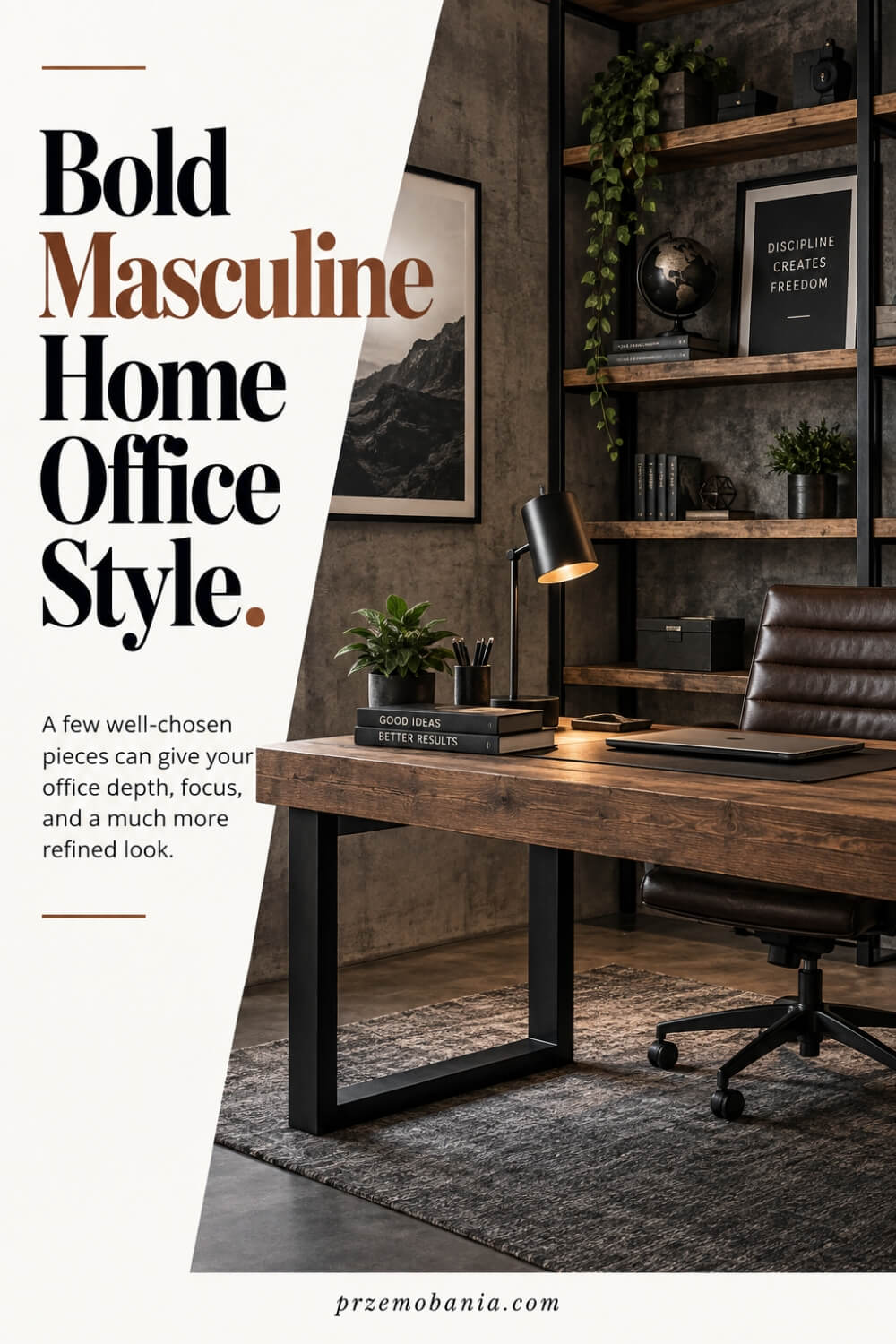
Start With Your Colour Palette
Before you buy furniture, decide what kind of atmosphere you want the room to create when you walk into it. Deep navy, charcoal, olive, tobacco brown and warm grey can give a workspace weight and confidence, but I rarely use all of them at once because the room can quickly feel flat or oppressive. I prefer choosing one dominant shade, one lighter balancing tone and one or two warmer accents through timber, leather or metal.
If your office is small or north-facing, use the darker colour with more restraint and let the ceiling, flooring or larger wall areas reflect some light back into the room. If you have generous daylight, you can be braver with deeper walls or cabinetry. The aim is not to make the space look stereotypically male; it is to build a calm backdrop that feels settled, focused and personal enough that you still enjoy seeing it after months of everyday work.
Choose One Anchoring Desk
Your desk is usually the visual and practical centre of the room, so I would choose it before filling the office with smaller pieces. A solid timber desk, a simple black frame with a warm wood top, or a more traditional writing desk can all work beautifully when the scale suits the room and the surface gives you enough space for the way you actually work. An oversized desk in a tight room can make everything feel cramped, while a tiny one can leave you constantly juggling equipment.
I learned to value function first because a desk is not a prop; it becomes the place where hours of your life happen. Check the depth you need for a monitor, notebook, keyboard and lamp, and leave enough clearance around the chair to move comfortably. Once the desk feels right, the rest of the room becomes much easier to organise because you finally have a strong centre to design around.
Layer Different Lighting Sources
One ceiling light is almost never enough for a home office, especially if you enjoy darker colours and richer materials. I like combining general room lighting with a proper task light at the desk and one softer secondary source, such as a floor lamp or wall light, so the space can change character as the day changes. That layering gives you useful brightness when you need to concentrate without making the room feel harsh at night.
Pay close attention to reflections on your screen and avoid placing a very bright lamp directly in your line of sight. I also prefer warmer light later in the day because it makes timber, leather and darker paint feel inviting rather than clinical. Good lighting should help your eyes, make reading easier and reveal texture in the room. When you get it right, the office can feel focused at nine in the morning and relaxed at eight in the evening without changing anything except which lights you turn on.
Mix Warm Natural Materials
A strong office becomes far more interesting when you stop relying on colour alone and start thinking about what each surface feels like. Wood grain, leather, wool, linen, stone and metal each react differently to light, and that mixture gives depth to a room without forcing you to add more decoration. I particularly like warm timber against charcoal or deep green because it stops the scheme becoming cold and gives the eye something natural to rest on.
You do not need expensive finishes everywhere to achieve this. A wooden desktop, a wool rug, a leather desk mat or a stone lamp base can introduce enough tactile contrast to make a simple room feel considered. I would rather have three honest materials used well than ten decorative effects fighting for attention. When natural surfaces are allowed to show their grain, texture and small imperfections, the workspace starts feeling lived-in and grounded instead of looking like a showroom assembled in a single afternoon.
Invest In Genuine Comfort
Comfort is one of those things you barely notice when it is right and cannot ignore when it is wrong. A beautiful chair that leaves your lower back aching, a desk that forces your shoulders upward or a monitor positioned too low will eventually dominate your experience of the room, no matter how impressive the décor looks. I would always test the working position first and then make the visual choices fit around it.
Watching my wife work through difficult days made this lesson impossible for me to treat as an afterthought. Sometimes a small adjustment to support, height or reach can decide whether working feels manageable or unnecessarily draining. Choose a chair that supports you, keep frequently used items within easy reach and position your screen so you are not constantly bending your neck. Your office should not ask your body to pay a daily price for looking stylish; good design is at its best when you almost forget it is helping you.
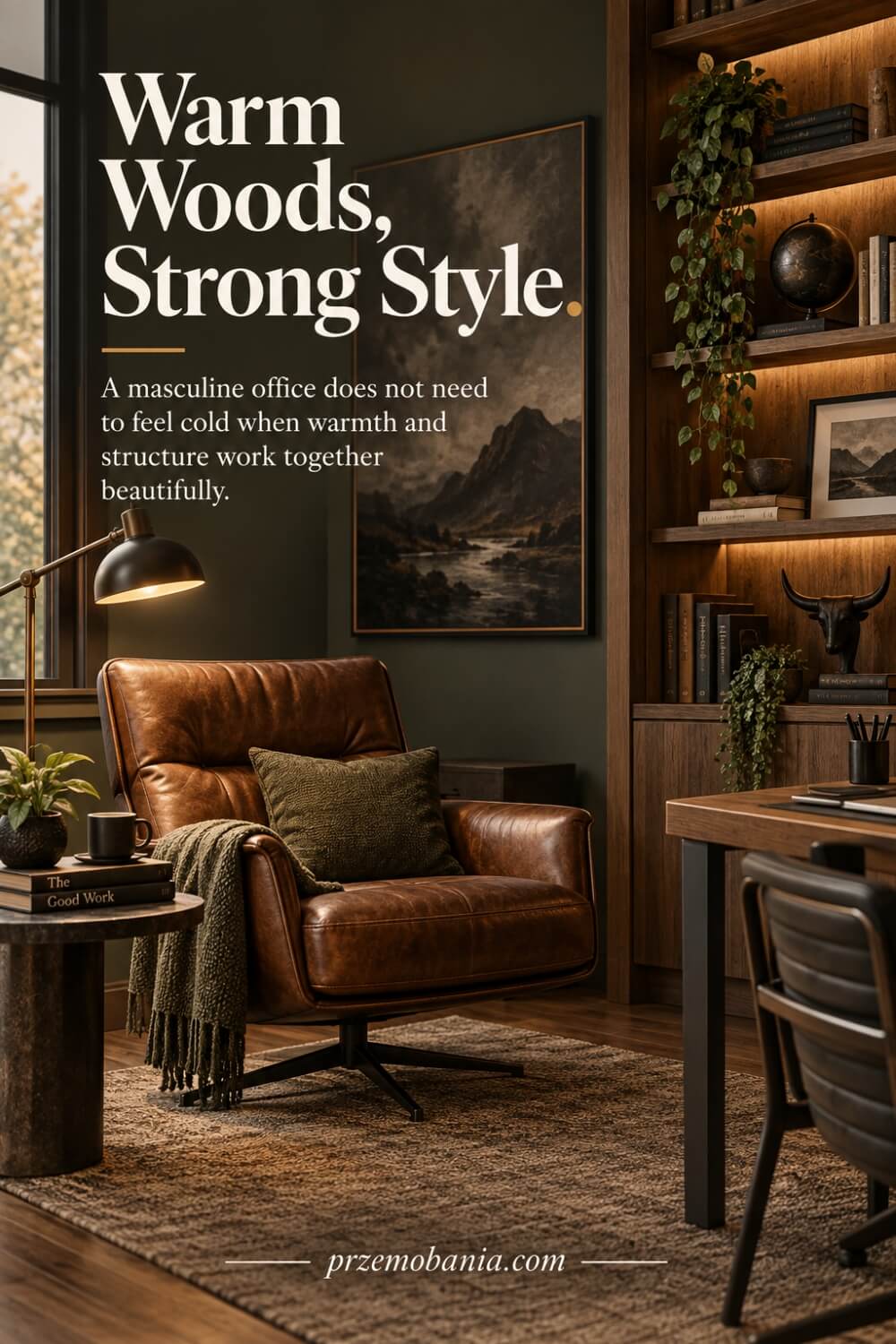
Build Storage Around Your Routine
Storage works best when it follows your habits instead of forcing you into somebody else’s idea of organisation. Before buying shelves or cabinets, pay attention to what actually lands on your desk during a normal week: paperwork, chargers, notebooks, camera equipment, headphones, samples, stationery or whatever your work requires. Then give those things homes close enough to be useful but hidden enough that they do not constantly steal your attention.
I like a mixture of closed and open storage because they solve different problems. Cabinets and drawers can absorb the untidy practical side of working, while open shelves can hold books and a few objects that give the room identity. Leave some shelf space empty rather than filling every gap the day the unit arrives. A tidy office is not one with no possessions; it is one where the important things are easy to reach and the unimportant things are not permanently shouting at you from every surface.
Keep Your Technology Visually Quiet
Modern workspaces need technology, but that does not mean every cable, charger, hub and power strip needs to become part of the décor. I try to make technology easy to use while allowing the desk, materials and proportions of the room to remain visually dominant. Cable trays under the desk, adhesive clips, a nearby charging drawer and a sensible power position can remove an extraordinary amount of visual noise.
This matters even more in a darker, more refined office because loose white cables and blinking devices can break the calm very quickly. Group equipment by function, keep only the devices you use frequently on the desktop and give occasional accessories somewhere specific to live. I also prefer choosing peripherals that look coherent together rather than collecting mismatched gadgets over time. The goal is not to hide technology because you are ashamed of it; it is to stop the tools from becoming more noticeable than the work you bought them to support.
Add Meaningful Personal Details
This is the point where the room stops looking designed and starts feeling like yours. A framed photograph, an old camera, a favourite book, a piece of art, something connected with your family or an object brought home from a meaningful place can say far more about you than another generic decorative accessory. I like personal pieces because they give a workspace history, and history is difficult to imitate with things bought purely to fill a shelf.
Be selective, though, because meaning becomes harder to see when every surface is crowded. Choose a handful of objects that genuinely make you pause, remember or smile, then give them enough space to be noticed. Your office does not need to explain your entire personality to a visitor. It only needs to feel familiar to you when you sit down. I have always found that the rooms we become attached to are rarely the most perfect ones; they are the ones containing small reminders of why we are doing the work in the first place.
Leave Purposeful Breathing Space
One of the easiest mistakes to make is assuming an unfinished corner or empty wall needs something added to it. In practice, some of the most confident rooms work because the designer knew when to stop. Empty desk space, a clear stretch of wall or a partially open shelf gives stronger furniture and artwork room to stand out, while also reducing the constant visual information your brain has to process while you are trying to work.
I learned this slowly because I enjoy interiors and naturally want to keep improving them. Yet every addition should solve a problem, add comfort or bring genuine character; if it does none of those things, the room may be better without it. Give yourself permission to finish gradually rather than buying everything at once. Living with the office for a few weeks will reveal what is truly missing. Sometimes the most useful final design decision is not another object at all, but the decision to protect a little calm, clear space around you.
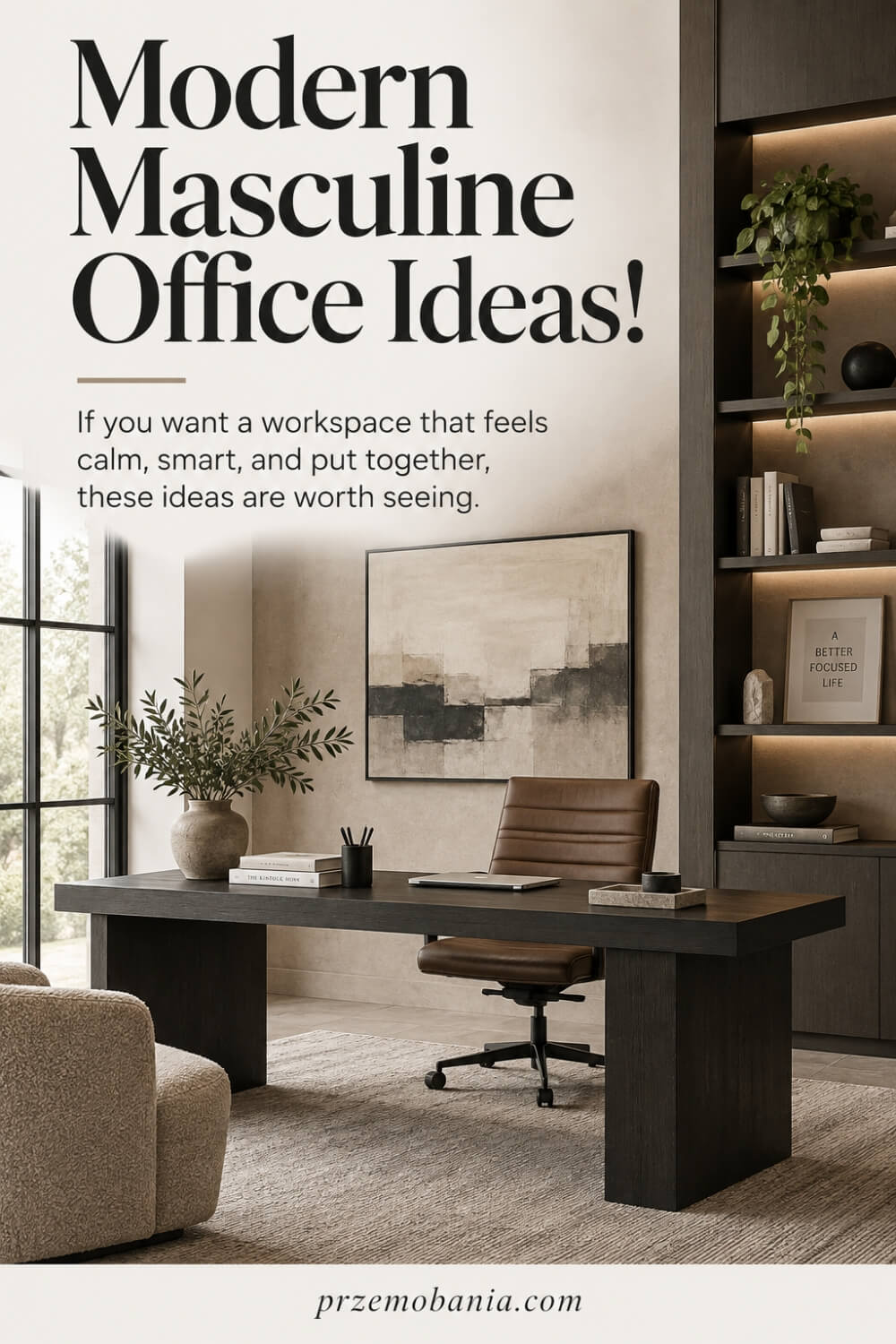
Why a Masculine Home Office Should Feel Personal, Not Performative?
After you have sorted the colour, furniture, lighting and storage, I think the most important question becomes much more personal: does this room actually feel like somewhere you belong? A masculine home office should never feel like a stage set built from somebody else’s idea of success, because you are the one who has to live, think and work inside it every day.
I have seen beautiful rooms filled with expensive furniture that somehow still feel cold, while a much simpler space with the right chair, a familiar photograph and a desk positioned exactly where the owner likes it can feel instantly right. That taught me that atmosphere comes from the relationship between you and the room, not from the price of what is inside it.
My own understanding of that changed dramatically when my wife became chronically ill and working from home stopped being simply convenient for her. The room around her became part of how she got through difficult days, and suddenly decisions that once seemed decorative became deeply practical and emotional.
There were days when she needed quiet, days when comfort mattered more than appearance and days when even a small unnecessary inconvenience could feel enormous because she was already carrying more than most people could see. Watching that made me realise how cruelly easy it is to design a room for the photograph while forgetting the human being who has to function inside it.
That experience changed the way I look at my own workspace as well. I love beautiful interiors, but I now believe the best office is one that makes your working life slightly easier every time you enter it rather than asking you to adapt yourself to the room.
Your desk should sit where you naturally feel comfortable concentrating, your lighting should suit the hours you actually work and your storage should reflect the things you genuinely use. Even the artwork should mean something to you rather than simply filling an empty section of wall because a design rule said something ought to be there.
I also think this is why masculine spaces become more interesting when you allow softness into them. A comfortable rug, warm light, curtains, an upholstered chair or a photograph of someone you love does not weaken a strong design; it gives that strength somewhere human to land.
When I think about the room my wife works in, I do not measure its success by whether a stranger would call it stylish. I think about whether she can sit there on a difficult morning, adjust what she needs, reach what she needs and feel that this one small environment is not adding another battle to her day.
That matters to me far more than following a trend. When someone you love is already fighting their own body, you begin to understand that thoughtful design can be a quiet form of care.
The same principle applies even if your own circumstances are completely different. Your office should acknowledge the real version of your life, including your routines, your tired days, your ambitions, your distractions and the work you are trying to build.
I want you to create a space that feels strong without being hard, organised without being sterile and personal without becoming cluttered. If you manage that, you will not just have a room that looks masculine; you will have a room that quietly supports the person you are becoming every time you sit down to work.
How Can a Masculine Home Office Improve Focus and Productivity?
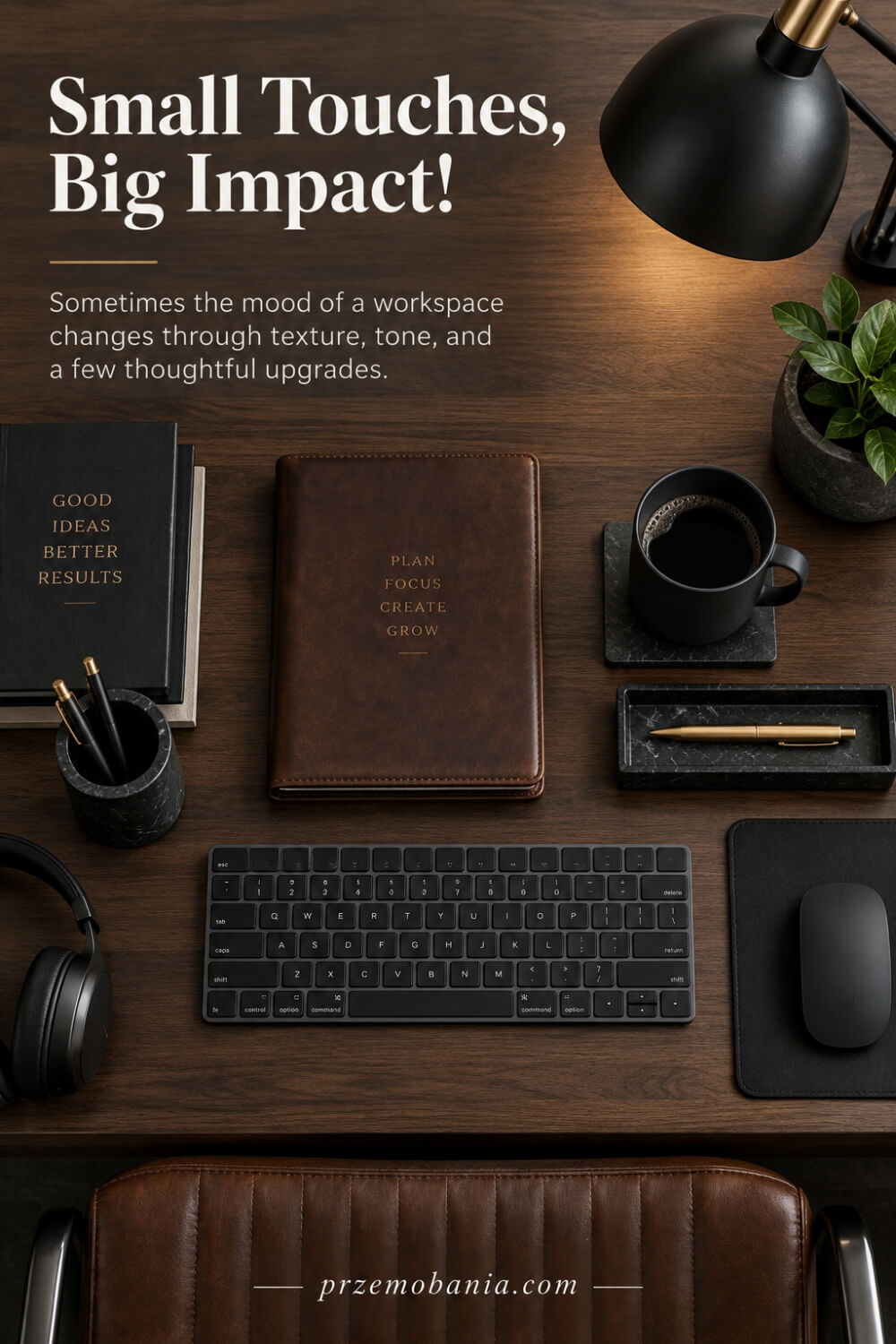
A masculine home office becomes much more powerful when the design helps you concentrate instead of simply giving you something attractive to look at. I have learned through years of blogging from home that productivity is rarely about pushing yourself harder; very often, it is about removing the small interruptions that quietly drain your attention throughout the day.
Noise is one of those interruptions, especially when your office shares walls with a living room, kitchen or busy household. Rugs, curtains, upholstered furniture, bookshelves and other softer surfaces can help reduce the hard, echoing quality that makes a room feel uncomfortable when you are trying to think, speak on a call or write for several hours.
I also like creating small functional zones, even when the office itself is not large. Your main desk can remain the serious working area while a chair beside a bookshelf becomes somewhere to read, plan, make a phone call or simply move away from the screen for ten minutes without leaving the room completely.
That change of position matters more than I once realised because sitting in exactly the same posture for hours is not what our bodies were designed to do. I now prefer designing movement into the room by keeping some frequently used items within comfortable reach while deliberately placing others far enough away that standing up occasionally becomes a natural part of the working day.
Daylight deserves the same attention because it influences far more than the appearance of your paint colour. Positioning your workspace so you can benefit from natural light without staring directly into glare can make the office feel more alive during the day, while blinds or curtains give you control when the sun begins reflecting across a monitor.
I also think the view from your desk is underrated. If possible, give your eyes somewhere beyond the screen to travel, whether that is a window, artwork, shelving or simply a quieter section of wall, because staring continuously at equipment and paperwork can make even a beautifully decorated room feel mentally crowded.
Then there is temperature, something photographs never tell you about. A dark office can look wonderfully cosy in winter, but if the room becomes stuffy in summer or cold around your feet for half the year, your concentration will notice long before your interior-design instincts do.
Think about airflow, radiator placement, draughts and where direct sunlight lands before permanently positioning your desk. A small design adjustment made at the beginning can prevent months of constantly moving fans, heaters or blinds around while you are supposed to be working.
I have also become quite protective of what sits directly in my field of vision. When I am writing, I do not want twenty unrelated objects asking for my attention, so I keep the things closest to the screen purposeful and let personality appear more strongly around the edges of the room.
That does not mean creating an empty office. It means understanding that visual restraint can be useful, particularly when your work already demands decision-making, problem-solving or creativity for hours at a time.
Another habit I value is giving the working day a physical ending. Closing a notebook, putting cables away, clearing a mug and resetting the desk may sound insignificant, but it changes how the room greets you the following morning.
This became especially meaningful in our home because work and illness do not always respect neat boundaries. I have watched my wife finish a difficult working day while already exhausted, and I learned that the last thing a tired person needs the next morning is yesterday’s disorder waiting for them before the day has even begun.
For me, that small evening reset became less about tidiness and more about kindness towards tomorrow’s version of yourself. When I sit down to blog the following morning and the desk is clear, the lamp is ready and everything I need has a place, I can begin with the work itself instead of spending my first precious minutes fixing my surroundings.
The room should also make stopping possible. If your office constantly reminds you of unfinished tasks after working hours, introduce a way to visually close the day, whether that means shutting cabinet doors, placing a laptop in a drawer, switching off task lighting or simply leaving the desk deliberately clear.
I know how tempting it is when you work from home to keep going because the office is only a few steps away. But designing a space that supports focused work should also mean designing one that allows you to walk away from that work without feeling as though it follows you into the rest of your evening.
That is the deeper reason I care about these details so much. I have seen what happens when somebody already carrying physical exhaustion still has to negotiate an uncomfortable environment, and I never want design to become one more thing working against the person inside the room.
Watching my wife taught me that sometimes the most valuable improvement is not another beautiful object but a quieter room, an easier movement, a better place to sit or one less frustrating task at the end of a hard day. Those experiences are why the next practical ideas focus less on appearance and more on making your workspace genuinely easier to live with.
- Create Clear Working Zones
- Control Noise and Echo
- Design Movement Into Your Day
- Manage Daylight and Glare
- Build an End-of-Day Reset
Create Clear Working Zones
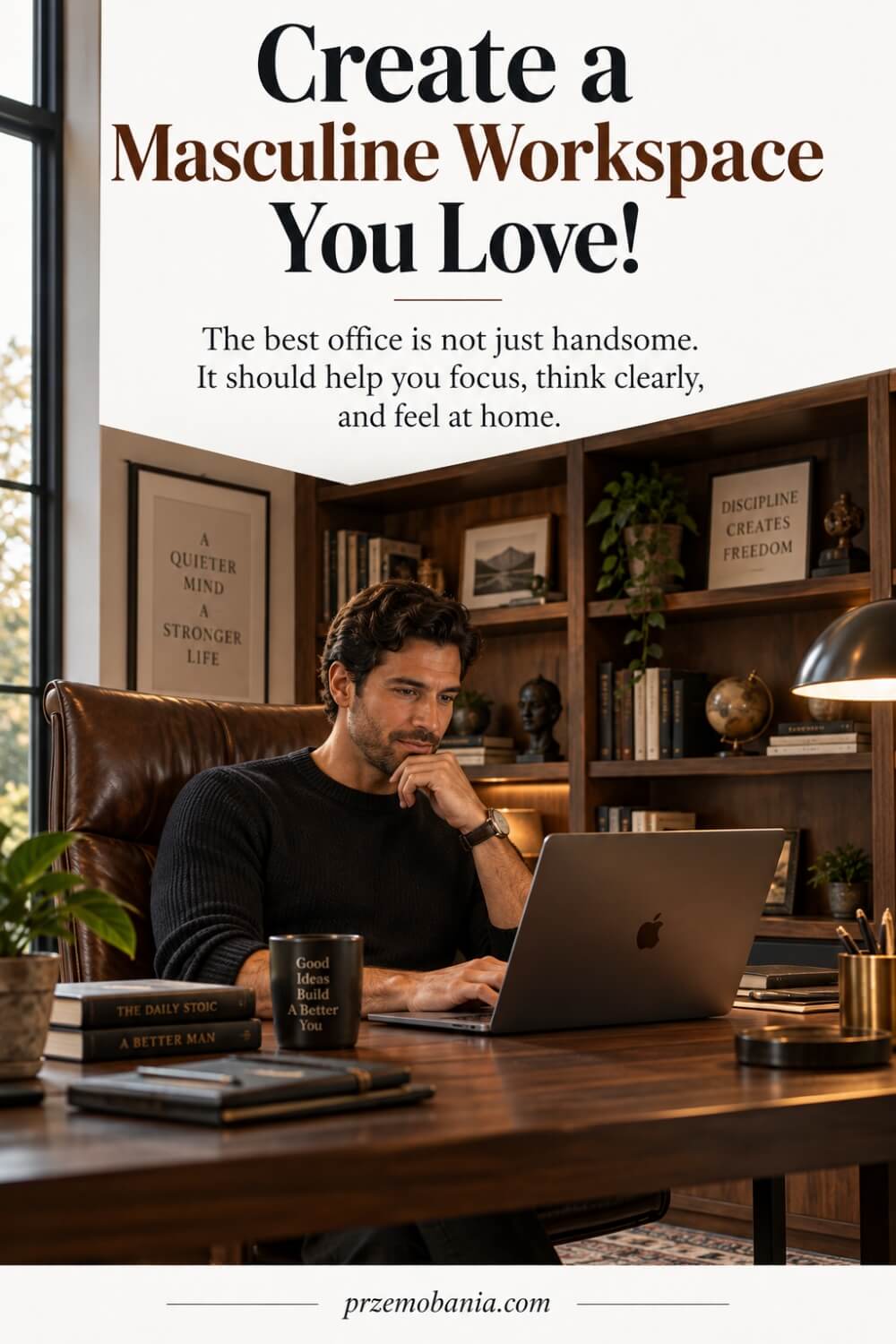
You do not need a huge room to create separate zones; you only need to give different activities their own logical place. I like keeping the main desk reserved for concentrated computer work, then using another chair, a small side table or even one section of shelving for reading, planning and thinking away from the screen. That separation can help your brain recognise when you are changing tasks instead of making every activity happen in exactly the same position.
Even in a compact office, a rug, lamp or change in furniture direction can define an area without adding walls or bulky dividers. Keep the busiest work close to your desk and quieter activities towards the edges of the room. I have found that this makes the office feel more purposeful while giving you reasons to stand, move and reset your attention. You are not creating zones for decoration; you are creating small environmental signals that make the working day easier to navigate.
Control Noise and Echo
A room can look calm while sounding surprisingly harsh, particularly when it contains hard flooring, bare walls, large desks and little fabric. If you notice every keyboard tap, telephone conversation or sound travelling through the house, begin introducing materials that absorb rather than reflect some of that noise. A substantial rug, lined curtains, upholstered seating and shelves filled with books can soften the acoustic character without making the office look like a recording studio.
I also pay attention to where the desk sits in relation to doors, televisions and busy rooms because sometimes moving it a metre makes more difference than buying another accessory. If outside noise is unavoidable, headphones or gentle background sound can help during focused work. What matters is recognising that sound belongs to interior design too. Your ears experience the room all day alongside your eyes, and a workspace that sounds calmer often feels calmer before you have changed a single paint colour.
Design Movement Into Your Day
One mistake I made when I first worked from home was assuming the perfect setup meant arranging everything so I never needed to leave my chair. Convenience matters, but complete stillness does not. I now prefer keeping the keyboard, mouse and everyday tools comfortably accessible while allowing certain tasks, such as collecting paperwork, reaching books or making a drink, to give me natural reasons to get up throughout the day.
You can also leave enough clear floor space beside the desk to stand, stretch or simply change position without bumping into furniture. An adjustable desk can be useful for some people, but you do not need one to create more movement; the layout itself can encourage it. Watching my wife cope with days when movement was much harder made me appreciate the difference between helpful movement and unnecessary effort. Your office should never make you struggle, but it can gently stop your body becoming forgotten while your mind is busy working.
Manage Daylight and Glare
Natural light can make darker timber, charcoal walls and leather details look beautiful, but the brightest desk position is not automatically the best one. If a window sits directly behind your monitor, reflections can become frustrating, while facing strong sunlight may leave you squinting for hours. I prefer placing the screen at an angle to the main window whenever the room allows it, then using blinds or curtains to control changing light rather than permanently blocking it.
Watch the room at different times before committing to a layout because morning light can behave completely differently by late afternoon. This is especially useful in a home office where you may work longer hours than you originally expected. Add task lighting so cloudy British days do not dictate whether you can work comfortably. The goal is control: enough daylight to make the room feel open and alive, but enough flexibility that sunlight never becomes another distraction you have to fight.
Build an End-of-Day Reset
I have come to love the small ritual of returning the office to neutral before I finish for the day. I clear cups, put loose papers where they belong, close unnecessary browser tabs, place chargers back in position and leave the desk ready for tomorrow. None of this takes much effort, yet it changes the emotional experience of walking into the room the following morning because yesterday is no longer physically waiting for you.
You can make this easier by designing storage around the reset itself. Give notebooks one drawer, cables one container and unfinished paperwork one designated place instead of moving piles from one side of the desk to another. Then switch off your task lamp and let that action become the signal that work has finished. Living beside someone whose energy can disappear without warning taught me not to take tomorrow’s energy for granted. Preparing the room tonight can be a quiet favour to the version of you who sits down there next.
How Can a Masculine Home Office Support Your Wellbeing?
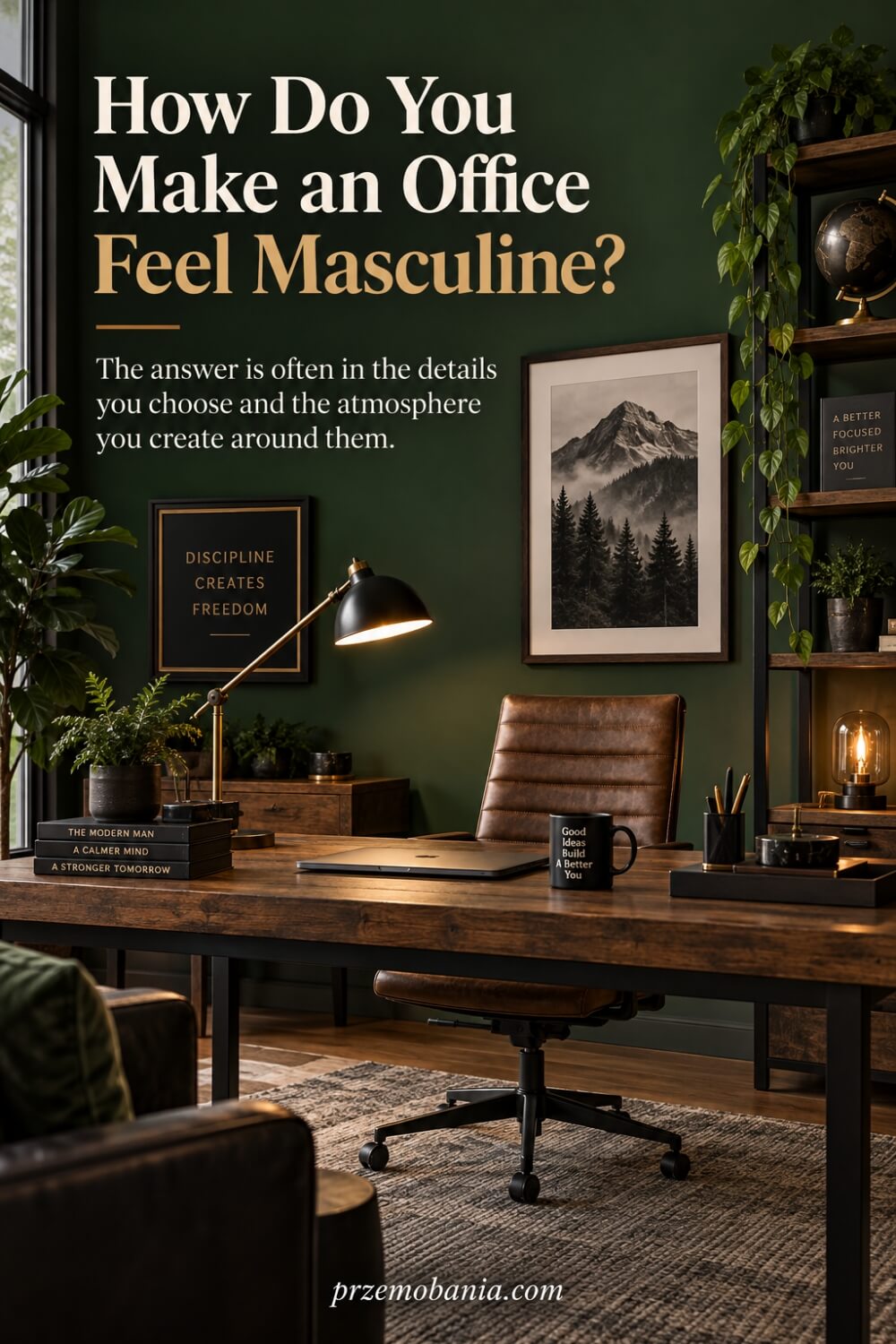
Once the room works practically, I think it is worth asking something we often ignore when decorating: how does this space make you feel after several hours inside it? A masculine home office should give you enough structure to concentrate while still feeling comfortable, calm and human, because productivity means very little if the room leaves you mentally drained by the end of every day.
I learned this most clearly through my wife, because when her health is difficult, the environment around her can either remove small pressures or quietly add to them. Something as simple as harsh lighting, an awkward chair position, too much visual clutter or constantly having to reach for things can feel insignificant to somebody having an easy day, but very different when your energy is already limited.
Watching her changed the way I design my own workspace because I stopped treating comfort as something you add after the room looks good. I now think about what my eyes see when I look away from the screen, whether I can alter the light when my head feels tired, whether there is enough space to move comfortably and whether the room still feels welcoming after I have spent hours working in it.
That does not mean turning your office into a wellness room or filling it with things you do not need. Sometimes wellbeing comes from fewer decisions, fewer objects and fewer small frustrations competing for your attention.
I feel this personally when I am deep into writing or working on my blogs because there are days when I can spend many hours at the desk without noticing how tense my shoulders have become or how long I have been staring at the same screen. Having a comfortable chair, a clear surface, adjustable lighting and a room I genuinely enjoy being in does not magically remove that workload, but it makes those hours kinder.
There is also something emotional about having a place that belongs to your work and ambitions, especially when you are building something from home. For me, my office represents creativity, independence and the possibility of creating a better life for us, so I want it to remind me why I started rather than simply looking impressive.
At the same time, I have learned from my wife that your workspace should allow difficult days to look different from good ones. Some days you may want brighter light, another chair position or everything within reach, while on other days you may feel stronger and want to move around more.
Designing that flexibility into the room gives you choices instead of forcing you to work one particular way regardless of how you feel. That is one of the most valuable lessons our home has taught me: a room should adapt to the person inside it, not demand that the person adapts to the room.
When both of us can work from spaces that acknowledge who we actually are, not some perfect version of ourselves, home feels less like a place containing desks and more like somewhere that genuinely supports the lives we are trying to build.
How Can a Masculine Home Office Grow With Your Life and Work?
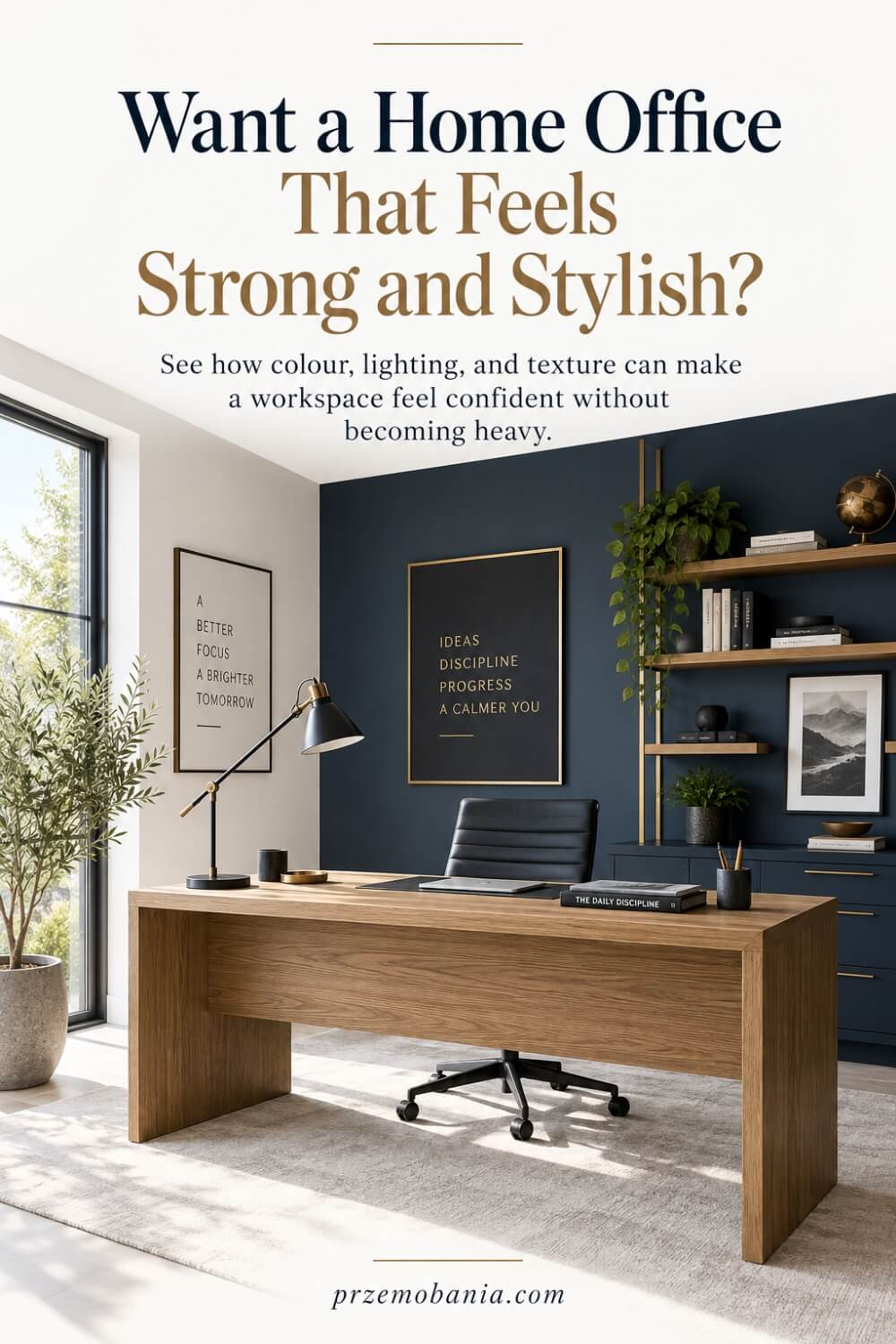
The best workspace is rarely the one you finish once and never touch again, because your work, routines, technology and even the way your body feels can change over time. I prefer thinking of a masculine home office as something that can evolve with you, rather than a room you have to completely redesign every time your circumstances change.
That is why I favour furniture that can be repositioned, shelving that can be adjusted, lighting that can serve more than one purpose and storage that gives you a little spare capacity instead of being filled to the last centimetre on the day you install it. When your needs change, those small pockets of flexibility can save you from replacing perfectly good furniture simply because the room was designed too rigidly.
I have watched this happen in our own home as my wife’s working needs changed alongside her health, and it taught me that what works brilliantly during one period of life may become frustrating during another. There have been times when having more things within easy reach mattered enormously, while at other times having greater freedom to move around the room became more useful.
My own work has evolved too, because blogging now involves far more than simply sitting down and writing words on a screen. I may be researching, working with images, planning content, managing websites or thinking through another idea, so I value having a workspace that lets me change what I am doing without making the entire room feel wrong.
This is also why I would avoid building your design around one fashionable piece unless you genuinely love it enough to live with it long after the trend disappears. A strong timber desk, good chair, adaptable storage and well-planned lighting can remain useful for years while paint, artwork, accessories and smaller details can change much more easily when you want the room to feel fresh.
Living beside chronic illness has made me especially aware that none of us can completely predict what our daily life will look like several years from now. When I see my wife adapting the way she works according to what her body allows that day, I am reminded that good design should leave space for change instead of punishing you for needing something different.
And for both of us, that flexibility carries something deeper than practicality because our home offices are connected to the life we are trying to create together. I want the spaces around us to help us keep moving towards that life, even when the route changes, rather than becoming beautiful rooms that only worked for the people we happened to be when we first decorated them.
Final Word on a Masculine Home Office
If there is one thing I want you to take from this article, it is that creating a strong workspace is not about filling a room with black furniture, dark walls and objects somebody else has labelled masculine. It is about understanding how you work, how you want to feel, what your body needs, what keeps you focused and what kind of atmosphere makes you want to return to the room tomorrow.
A masculine home office can be bold, quiet, traditional, modern, industrial, minimal or warm. What gives it character is not one particular colour or material, but the way every choice supports the person sitting inside it. Deep paint can create depth, timber can bring warmth, metal can add definition and leather can introduce texture, but none of those details matter if your chair hurts, your screen reflects sunlight or your storage makes every working day harder than it needs to be.
That lesson became personal for me. When my wife became chronically ill, I stopped looking at home interiors as something that should simply photograph well. I began noticing the smaller things: how far she had to reach, whether the light could be adjusted, whether there was enough space to move comfortably and whether the room gave her some calm when her body was already demanding so much from her.
It changed my own office too. Blogging from home means I spend a large part of my life surrounded by the choices I make in that room, so I want those choices to earn their place. I want a desk that gives me room to think, lighting that works from morning into evening, storage that prevents clutter from taking over and personal pieces that remind me why I am doing the work in the first place.
You do not need to finish everything at once. In fact, I think some of the best home offices are built slowly because living with the space teaches you what photographs and floor plans never can. You discover where cables collect, which corner is too dark, what you keep reaching for, what you never use and which objects genuinely make the room feel more like yours.
Allow the office to change as your life changes. Your work may grow, your technology may change, your body may need something different or your taste may simply evolve. Good design gives you room for that rather than locking you into one perfect-looking arrangement.
Most importantly, create a workspace that supports the life happening inside it. A room can look impressive for a moment, but the real success is much quieter. It is sitting down in the morning and feeling ready. It is finding what you need without frustration. It is being able to concentrate, move, breathe and eventually switch off.
That is the kind of office I believe is worth creating. Not a showroom, not a stereotype, but a place that feels strong, personal and genuinely yours. To me, that is thoughtful design done well.
Your office does not need to prove anything to anyone. It needs to help you think clearly, work comfortably and feel at home in the life you are building. Choose strength without harshness, personality without clutter and beauty without sacrificing function. Build it for the person who will actually sit there every day: you.
If this article made you rethink your own workspace, leave me a comment below and tell me what you want to change first. And if you want to read more of my story and approach, make sure you check out the FREE chapter of my eBook at the bottom of this post.


Przemo Bania is a blogger and writer who helps people get out of their traditional jobs to start a blogging career. Przemo also runs a health blog advocating for endometriosis and fibromyalgia…
Related Questions You May Be Asking About a Masculine Home Office
1. What colours work best in a masculine home office?
Deep navy, charcoal, forest green, warm grey and earthy brown all work beautifully, but you do not need to make every wall dark. I prefer balancing one deeper shade with lighter surfaces, warm timber and softer textures. The right palette should feel grounded and focused while still giving the room enough light to remain comfortable throughout the working day.
2. Can a small home office still feel masculine?
Absolutely. In a smaller room, I would concentrate on proportion rather than filling the space with heavy furniture. Choose one strong desk, restrained colours, practical vertical storage and a few well-chosen materials such as wood, metal or leather. Leaving visible breathing space between pieces can actually make the design feel more confident than trying to decorate every available corner.
3. Does masculine office design have to be dark?
Not at all. Masculine character can come from clean lines, substantial furniture, natural materials and a restrained palette rather than darkness alone. Light oak, warm beige, stone, soft grey and off-white can create a lighter interpretation while black metal, deeper artwork or darker accessories provide contrast. I would always design around your room’s natural light before choosing paint.
4. What furniture should I buy first?
I would start with the desk and chair because those two pieces affect both the appearance of the room and the way your body experiences it every day. Choose them for size, comfort and how you genuinely work before adding shelving or decorative furniture. Once their positions feel right, you can build storage, lighting and the rest of the design around them.
5. How do I make the office masculine without making it look stereotypical?
Build the room around your personality instead of a checklist of supposedly masculine objects. Use materials, colours and furniture you genuinely like, then add books, photographs, artwork or meaningful pieces connected with your interests and work. You do not need whisky bottles, leather everywhere or black walls. A convincing workspace feels personal, useful and lived in rather than themed.
6. What lighting works best with darker office colours?
I would combine natural daylight with general room lighting, a focused desk lamp and at least one softer secondary light. Darker surfaces absorb more light visually, so relying on one ceiling fitting can leave the room feeling flat. Layering several controllable sources lets you brighten your working area while keeping the warmth and depth that make deeper colours so appealing.
Masculine Home Office References
- https://www.decorilla.com/online-decorating/modern-masculine-home-office-before-after
- https://www.homesandgardens.com/by-design/ashley-montgomery-guide-to-getting-lighting-right
- https://www.homesandgardens.com/by-design/ashley-montgomery-decorate-a-home-that-makes-you-feel-something
- https://www.homesandgardens.com/interior-design/designer-profile-ashley-montgomery-studio
- https://www.hse.gov.uk/msd/dse/home-working.htm
- https://www.hse.gov.uk/home-working/employer/display-screen-equipment-at-home.htm
- https://www.hse.gov.uk/msd/dse/
- https://en.wikipedia.org/wiki/Interior_design
