
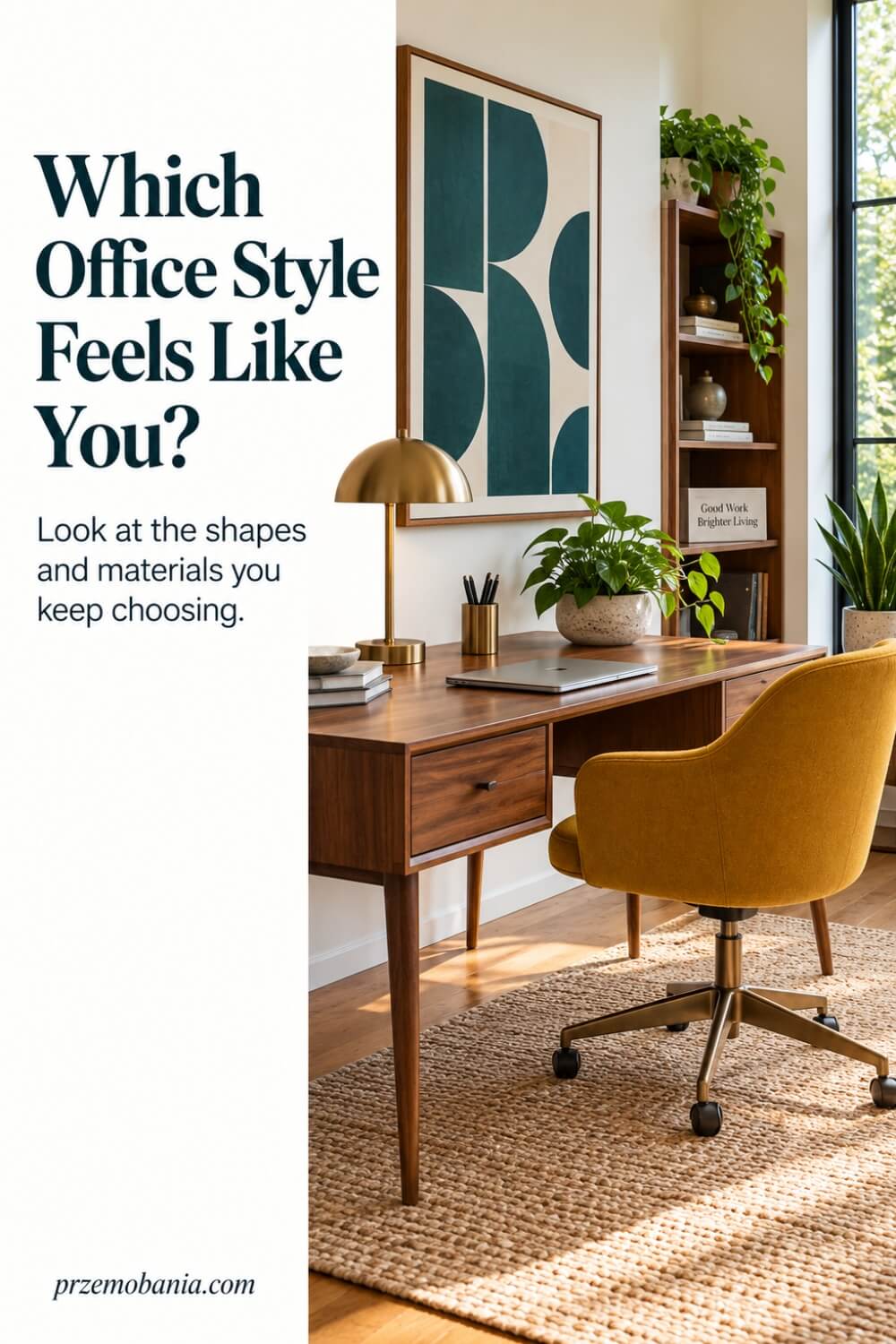
Home Office Style
Why do some workspaces feel beautifully connected while others look like furniture collected for different rooms? Your home office style develops through the relationship between shapes, materials, colours and the details you choose to keep. If you like several different looks and cannot decide which one feels like you, that is a useful starting point rather than a decorating failure.
Home office style is the visual character created by furniture shapes, colours, materials, finishes and decorative details. A coherent scheme connects these choices with your home’s architecture and your preferences, while keeping the desk, chair, lighting and equipment suitable for everyday work.
The love of interiors my mum encouraged became more purposeful when my wife’s chronic illness changed our lives, and helping shape her workspace led me towards my own cosy office, a passion for blogging and earning from home, with ongoing learning and the sources below supporting the experience I share.
You can enjoy a traditional room without buying every item in a traditional style. A carefully chosen contemporary chair can belong beside an older desk when their proportions and surrounding details work together.
Style names are useful search terms, but they are not instructions you must obey. Understanding what attracts you to an image gives you much more freedom than copying its shopping list.
My guide to the foundations of a useful home workspace helps you check the practical decisions beneath the appearance before committing to a particular look.
- Find a Home Office Style That Feels Personal
- Use Scandinavian Simplicity with Warmth
- Explore the Shapes of Mid-Century
- Give Traditional Details Breathing Room
- Keep Industrial Elements Visually Balanced
- Make Contemporary Choices Feel Connected
- Introduce Rustic Character Without Bulk
- Build an Eclectic Room Deliberately
- Borrow from Craft Rather Than Themes
- Keep Home Office Style Separate from Comfort Claims
- Testing Home Office Style Before Buying More
- Letting Home Office Style Evolve with You
- Choosing Home Office Style for Yourself
- Final Word on Home Office Style
Find a Home Office Style That Feels Personal
Collect a small selection of images you genuinely like. Look for repeated features rather than repeated labels. You may discover that timber and simple shapes matter more to you than any named aesthetic.
Describe what you enjoy in each image. Mention the curved chair, muted contrast or generous empty wall. Avoid saving something merely because it appears popular.
Your home office style becomes clearer through those specific observations. Include photographs of furniture you already own. Those pieces are part of the starting point.
Next, notice your room’s existing character. Doors, skirting boards and windows contribute to the final appearance. You can respond to them without reproducing their period in every object.
Choose one broad direction to guide the larger decisions. Let smaller details provide variety. This keeps the room connected while leaving room for your personality.
My wife’s needs taught me that appearance should support the person using a space. That lesson makes me willing to adapt any aesthetic when comfort requires something different.
These eight approaches offer useful starting points:
- Use Scandinavian Simplicity with Warmth
- Explore the Shapes of Mid-Century
- Give Traditional Details Breathing Room
- Keep Industrial Elements Visually Balanced
- Make Contemporary Choices Feel Connected
- Introduce Rustic Character Without Bulk
- Build an Eclectic Room Deliberately
- Borrow from Craft Rather Than Themes
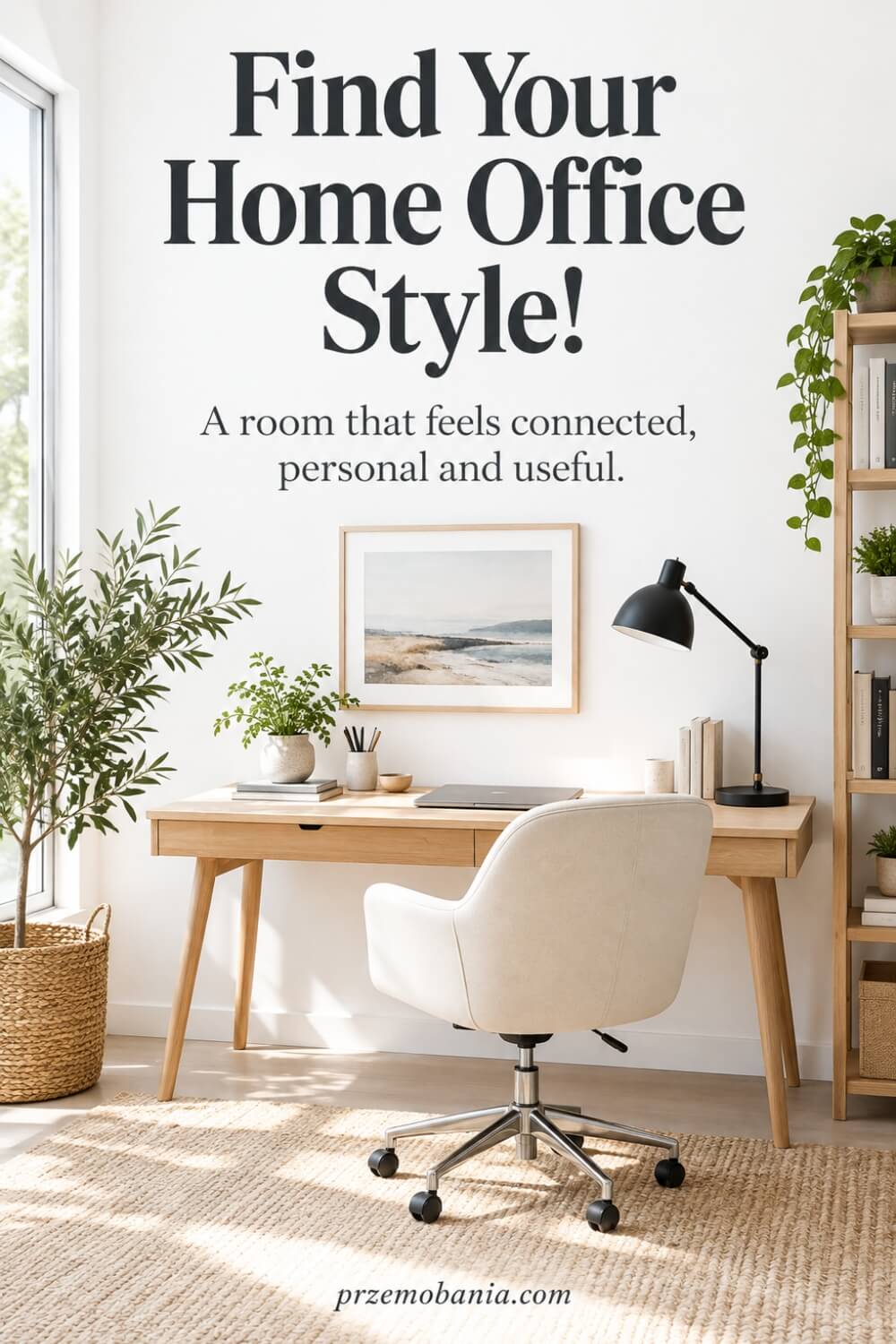
Use Scandinavian Simplicity with Warmth
Scandinavian design is associated with functional simplicity and thoughtful everyday objects, rather than a requirement to paint everything white. For an office inspired by it, I would begin with clear furniture shapes, useful proportions and materials you enjoy living with. Light timber can be part of the picture, but it is not compulsory.
Choose a limited number of visual details and let them have space. A shaped wooden lamp, a woven textile or one strong print can add interest without making the desk feel crowded. Look at the actual finish rather than assuming every pale wood will look the same together.
Keep your working requirements visible throughout. A comfortable adjustable chair may be a better choice than a photogenic dining chair, even if the latter appears in more inspiration images. You can connect the chair to the room through colour and surrounding materials while preserving the function you need every day.
Explore the Shapes of Mid-Century
Mid-century modern references often include clear lines, sculptural forms and an interest in practical modern living. In a present-day office, I would borrow those qualities rather than try to create a historical set. A desk with slender proportions or a curved lamp may supply enough character without every piece belonging to the same era.
Check older furniture particularly carefully for your intended use. A desk designed for writing may offer little space for a large monitor, and its drawers may reduce usable legroom. Attractive age or a recognisable outline does not guarantee that the dimensions suit your work.
Pair a distinctive piece with quieter neighbours so you can appreciate its shape. Repeat a timber tone or a small colour accent elsewhere, but avoid buying an entire matching collection automatically. The result can feel considered and personal while allowing modern equipment to remain an honest part of the room.
Give Traditional Details Breathing Room
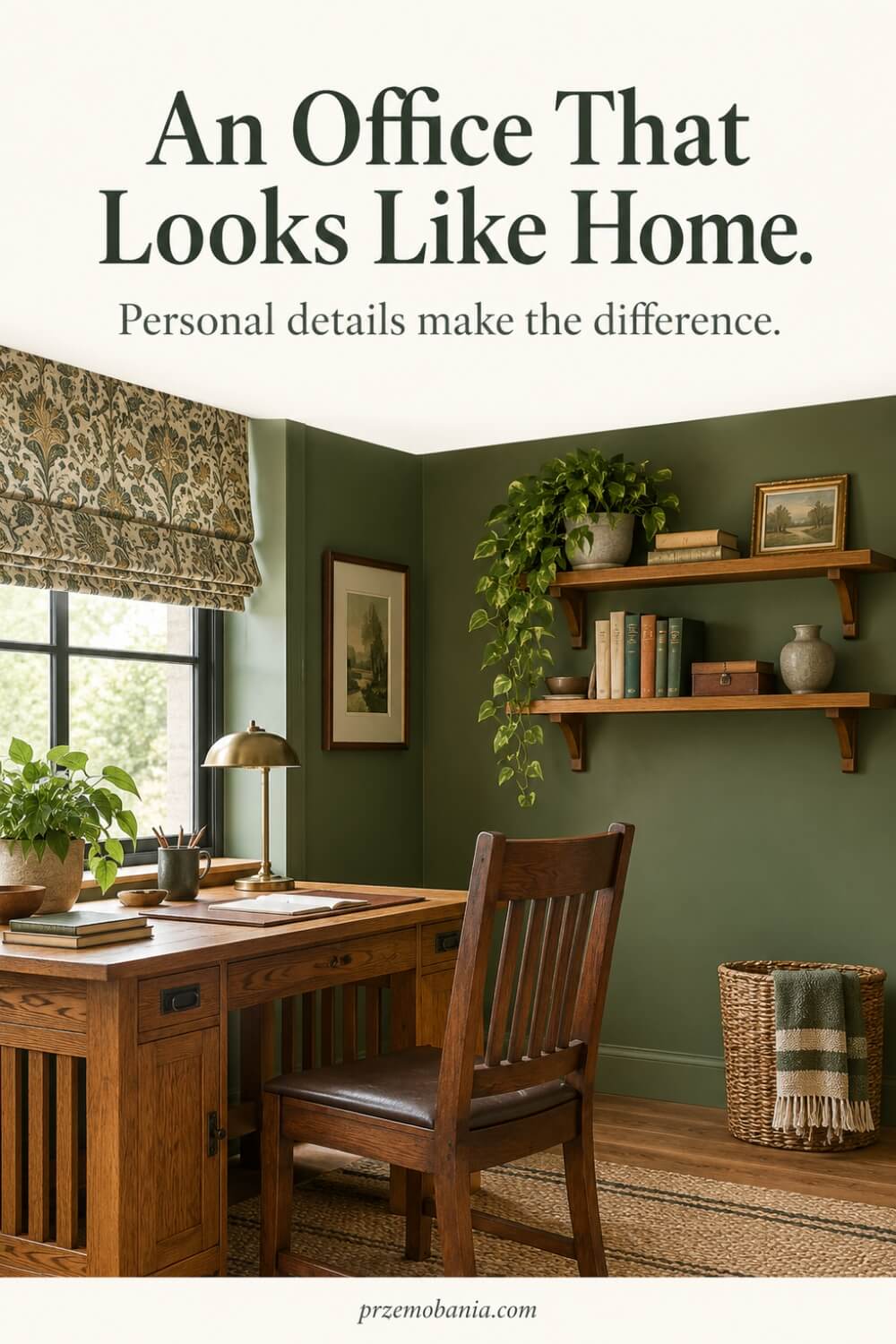
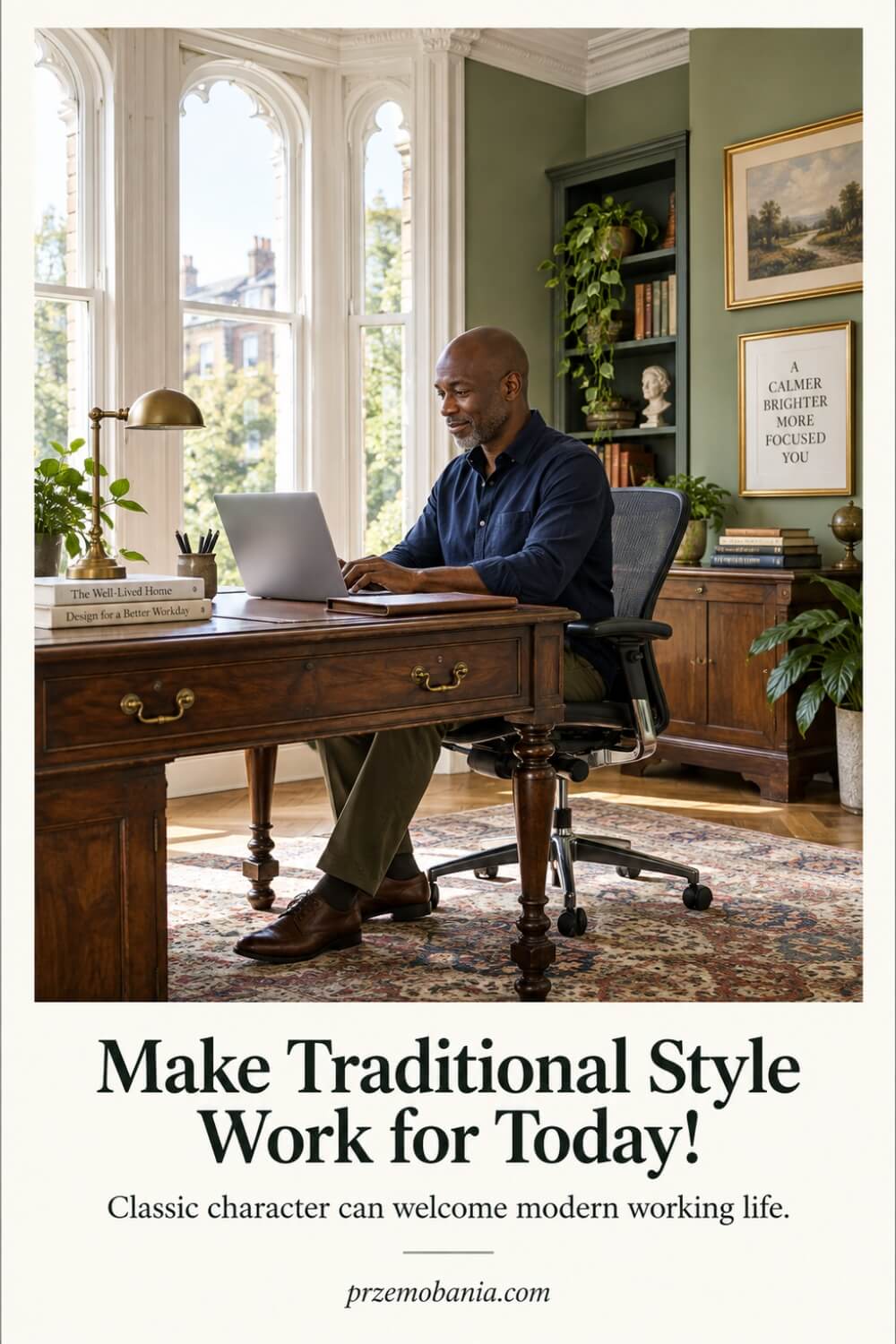
A traditional office can draw character from framed doors, turned legs, established patterns or the proportions of older furniture. I would choose the details that suit your home rather than assume the room needs dark panelling and a large executive desk. Traditional references can also work in a modest, bright space.
Look at the amount of ornament already present. If your room has decorative mouldings, a simpler desk may sit comfortably alongside them. If the architecture is plain, a characterful cabinet or patterned blind can introduce interest without requiring a full renovation.
Keep scale in mind when shopping. An imposing piece that looks balanced in a showroom can dominate a small room at home. Measure its actual footprint and consider its visual weight from the doorway. Leaving clear wall space around a detailed object often makes it easier to appreciate and prevents the entire office from feeling crowded or overly formal.
Keep Industrial Elements Visually Balanced
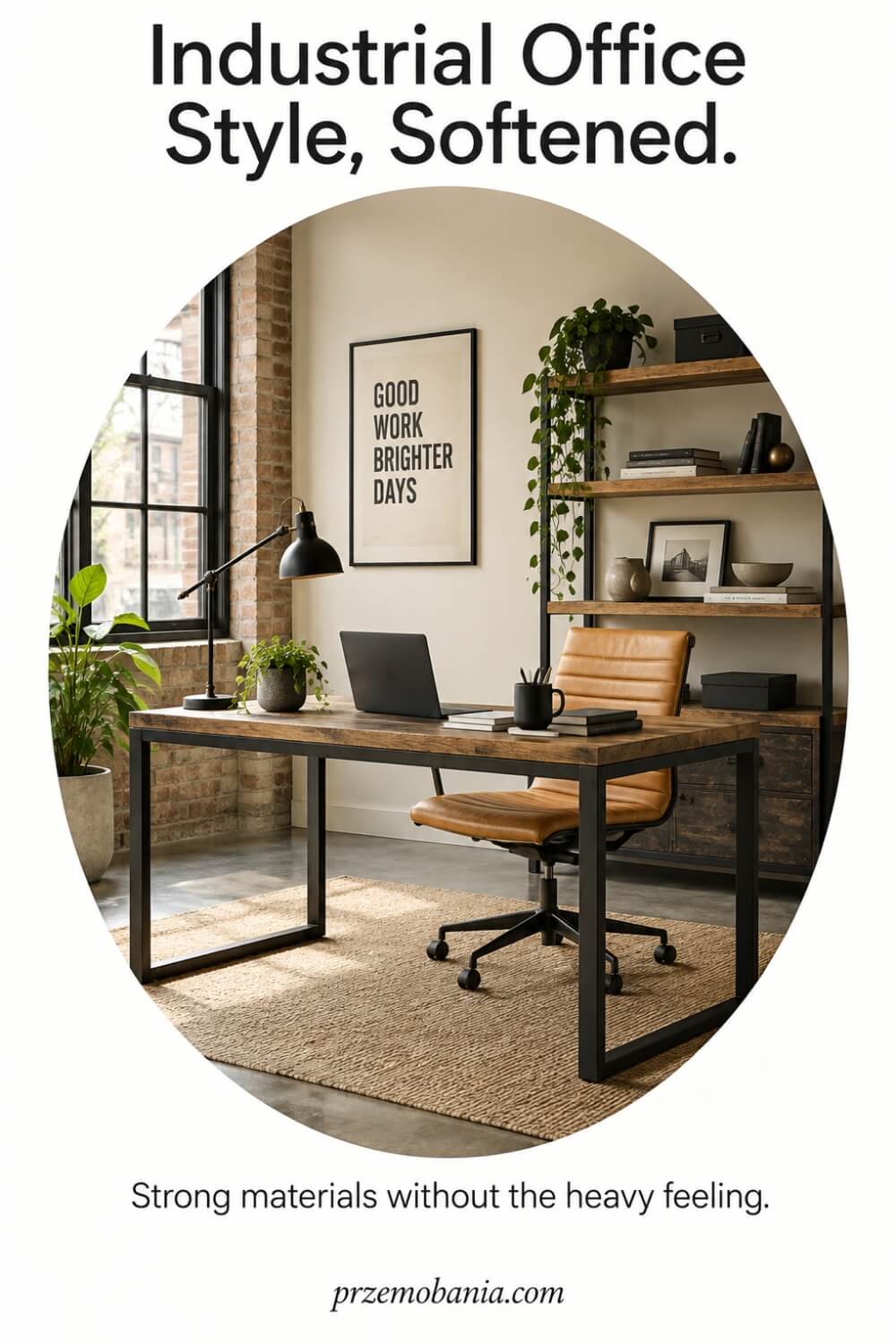
Industrial-inspired interiors often use metal, robust timber and references to working buildings. A black steel desk frame or an enamel task lamp can introduce that character without exposed pipes or imitation brick everywhere. I would begin with one or two convincing materials rather than assemble a collection of factory-themed accessories.
Notice how much dark structure the room can comfortably hold. Several heavy frames, dense shelves and a dark wall may create more visual weight than you intended. Balance them with clear space, lighter surfaces or a simpler background.
Do not mistake an unfinished appearance for permission to accept rough edges or unsuitable furniture. The parts you touch still need to work well, and a metal seat is not automatically a sensible working chair. Keep the practical standard high while choosing the visual references you enjoy. That gives the room character without making everyday work feel like an exercise in enduring the aesthetic.
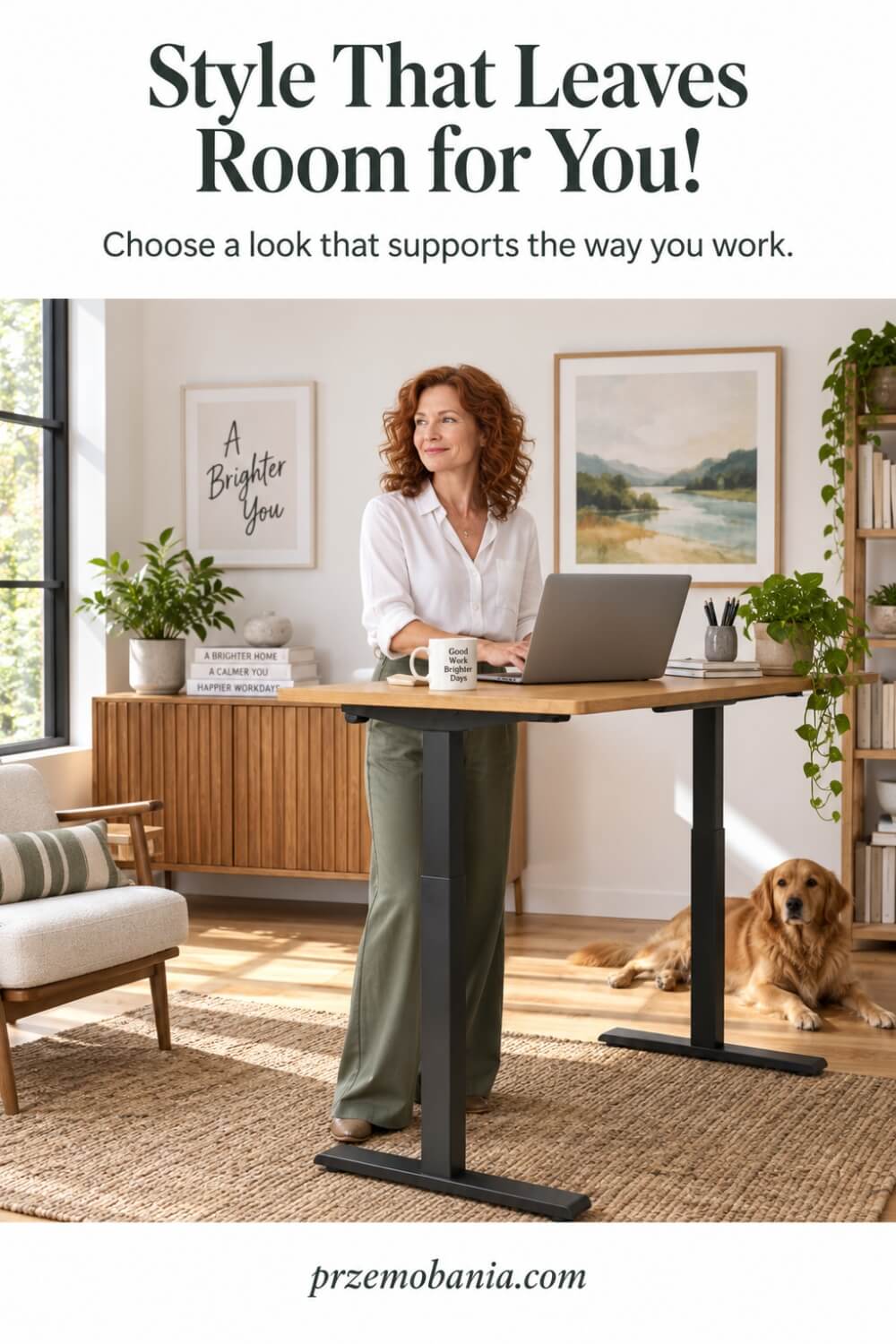
Make Contemporary Choices Feel Connected
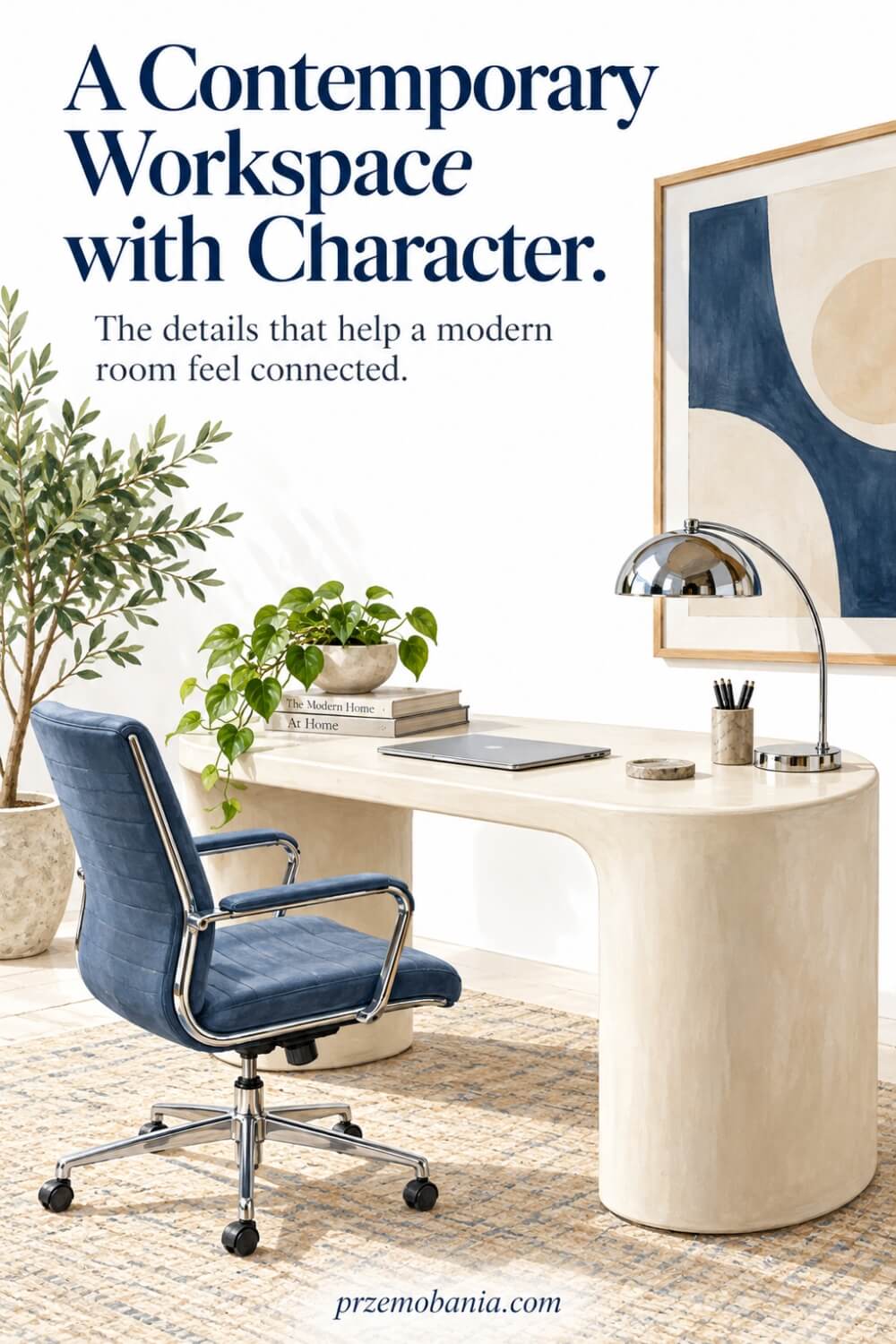
Contemporary describes what feels current rather than one fixed historical style. That makes it flexible, but it can also encourage a room full of unrelated fashionable pieces. I would connect your choices through a small number of repeated qualities, such as rounded forms, a restrained palette or a particular level of contrast.
Begin with the largest objects and ask how they relate. A broad desk, slim shelving and a sculptural chair can work together if their proportions leave the room balanced. They do not need identical finishes, but each should have a reason for belonging.
Use one distinctive object as a focus and let the surrounding pieces support it. If every lamp, shelf and accessory demands attention, the room can become tiring to look at. You can refresh a contemporary scheme later through smaller elements while keeping the useful furniture. That approach allows your taste to develop without requiring a complete replacement whenever fashions move on.
Introduce Rustic Character Without Bulk
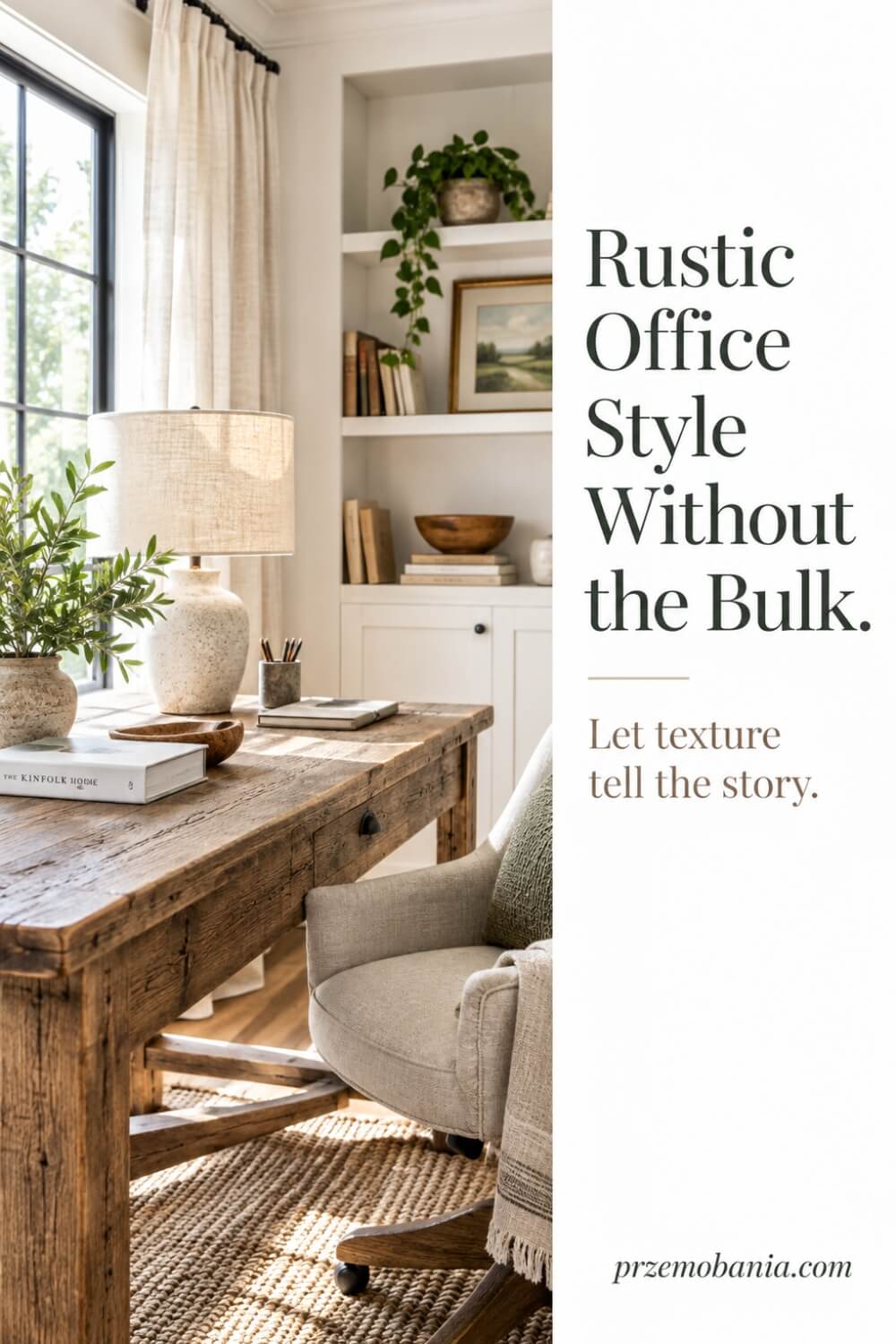
Rustic character can come from visible grain, a gently worn finish or the irregularity of a handmade object. It does not require oversized furniture or rough surfaces throughout the room. I would choose the places where texture will be appreciated and keep the working surface suitable for its actual tasks.
Inspect reclaimed or older timber carefully before bringing it into daily use. Condition, stability and finish matter more than an appealing description. A surface that catches sleeves or makes writing difficult may need appropriate restoration rather than simply being called authentic.
Balance textured pieces with calmer surroundings. A characterful desk can sit beside straightforward shelving, while a small ceramic pot may provide enough handmade interest on a plain surface. Let the materials do the visual work instead of adding numerous themed decorations. This keeps the room grounded and usable, with character that feels connected to real objects rather than a staged rural scene.
Build an Eclectic Room Deliberately
Eclectic does not have to mean that everything competes. I would begin with two or three qualities that connect otherwise different objects, such as a repeated blue, rounded outlines or warm timber. Those relationships help an older desk, modern chair and personal artwork feel part of one room.
Give the strongest pieces enough room to be noticed. A patterned rug, dramatic picture and brightly painted cabinet may all be lovely, but they do not need equal emphasis. Decide which one leads and which ones play a quieter role.
Try moving existing objects before buying another missing piece. Sometimes the connection becomes clearer when two related colours are brought closer together or a crowded shelf is simplified. Photograph the arrangement if that helps you assess it, then return to the actual room. Your daily experience matters more than achieving a perfectly balanced image from one carefully chosen camera angle.
Borrow from Craft Rather Than Themes
The Arts and Crafts movement placed importance on making, materials and the relationship between design and everyday life. You can take inspiration from that attention without turning your office into a period reconstruction. I would look for objects whose construction or surface gives you something interesting to notice over time.
A well-made wooden shelf, woven textile or hand-thrown pot can introduce that quality. Ask how the object is made and cared for rather than relying on words such as artisan or heritage in a product description. Those terms do not tell you everything about its usefulness.
Choose a few pieces you genuinely value and allow ordinary working equipment to remain alongside them. You do not need to disguise your monitor to appreciate craftsmanship. A room can connect older design ideas with current life when the objects serve a purpose and the references are treated thoughtfully rather than reduced to decorative symbols.
Keep Home Office Style Separate from Comfort Claims
A style name does not tell you whether a room is comfortable. The same appearance can be achieved with very different furniture. I would assess the working pieces individually.
Your home office style should not require an unsuitable chair. It should not depend on dim light that makes reading difficult. Nor should it hide equipment in a way that prevents proper use.
My wife’s experience makes this distinction especially clear to me. A room can look gentle while asking too much from the person inside it. Attractive colours cannot compensate for a repeatedly awkward movement.
Keep the function you need and work around it visually. Adapt the palette or neighbouring objects first. An aesthetic is flexible enough to accommodate a useful decision.
Testing Home Office Style Before Buying More
A mood board is a proposal rather than a promise. Its objects may come from rooms with different proportions. Its photographs may also use very different lighting.
Test your home office style against the room you actually have. Put samples beside existing furniture. View them in daylight and under your usual lamps.
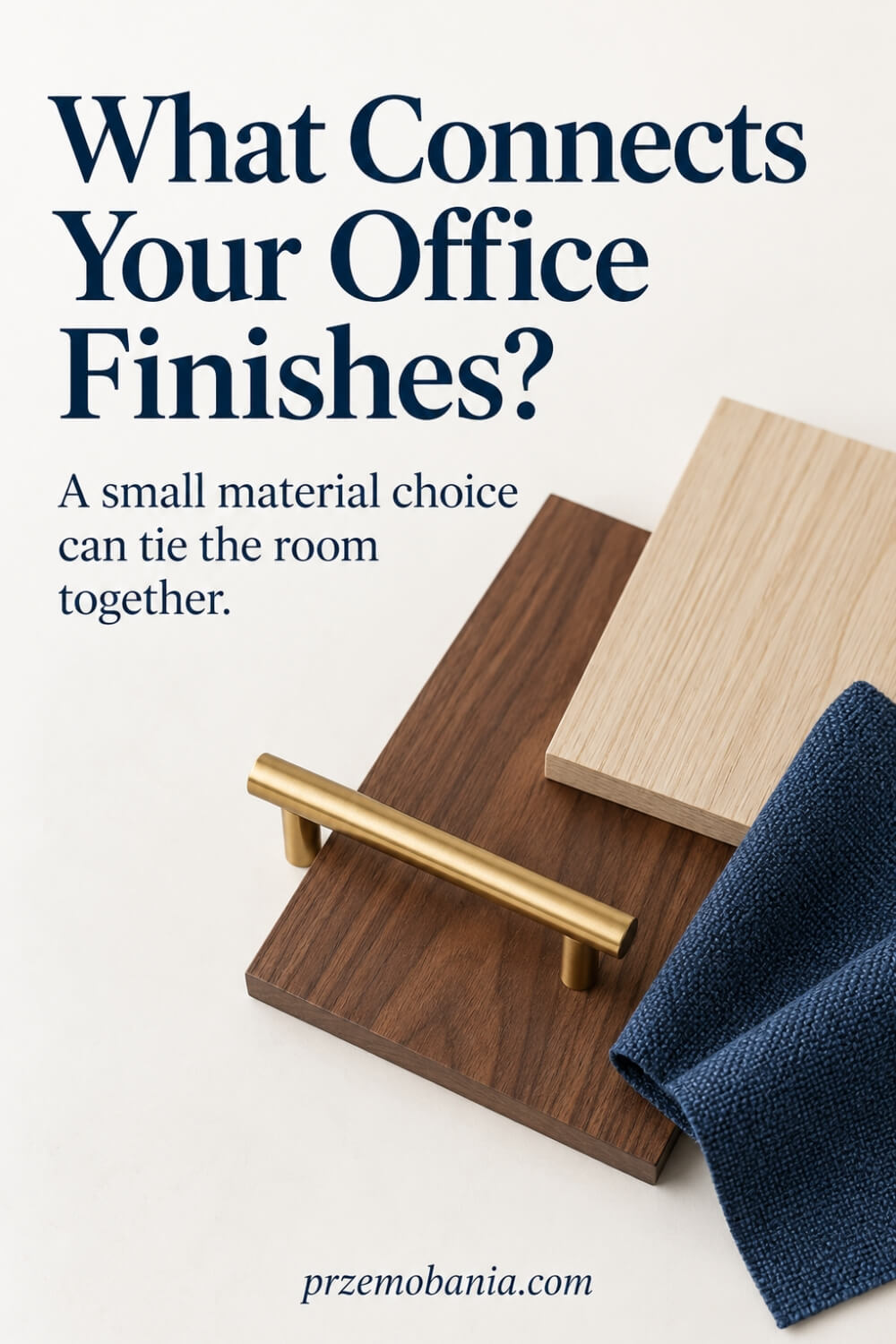
Compare finishes directly where possible. Two timber descriptions that sound similar can look different together. A small digital image may conceal texture or sheen.
I would also check the scale of any pattern. A close-up sample does not show how it repeats across a blind. Request enough information to imagine the finished surface.
Keep a short record of the decisions you have made. This reduces the temptation to start again whenever another attractive image appears. It also helps you recognise a useful addition when you see one.
Helping my wife taught me to value decisions that can be tried before they become difficult to reverse. That approach gives me more confidence in my own workspace choices too.
These four checks make a scheme easier to judge:
- Check Scale Beyond the Product Photograph
- Compare Finishes in Your Own Light
- Repeat Details Without Matching Everything
- Include Technology in the Visual Plan
Check Scale Beyond the Product Photograph
Measure the object and mark its footprint before deciding that it belongs in your room. A desk photographed alone can look delicate even when its dimensions are substantial. I would also check height and the thickness of its visible parts, because visual weight is not determined by width alone.
Use an ordinary chair or a cardboard outline to help imagine the relationship between pieces. A tall cabinet beside a low desk creates a different composition from two objects of similar height. Neither is automatically wrong, but the difference should be deliberate.
Look from the doorway and from your working position. You may enjoy a striking object on arrival but find it overwhelming beside you all day. Keep enough space for the furniture to function as well as look balanced. A successful proportion is one that belongs to the room and the way you use it, rather than simply filling the area available on a plan.
Compare Finishes in Your Own Light
Bring samples into the office and place them where the finished materials would sit. Hold a wall sample vertically and a desktop sample horizontally rather than judging both flat on a table. I would compare them with the flooring and any furniture you plan to keep.
Look again at another time of day. The relationship may change under your lamps or when direct sun leaves the room. This is particularly useful when deciding whether two similar neutrals work together or whether a shiny finish produces reflections you dislike.
Photographs can help you remember the options, but they should not replace looking at the samples yourself. Screens and cameras can alter their appearance. Keep the selection small enough to compare meaningfully, and label it so you know what you are seeing. You are looking for a combination you enjoy in your actual conditions, not a perfect match to an image displayed on another device.
Repeat Details Without Matching Everything
A repeated detail can connect a room without making every object identical. You might echo a dark metal finish in the lamp and cabinet handles, or pick up a colour from an artwork in a small accessory. I would use repetition as a quiet link rather than a rule that controls every purchase.
Choose which details deserve repeating. If timber grain, metal, pattern and colour all compete for attention, the room may feel less coherent despite the effort to coordinate it. Start with one clear relationship and assess the result before adding another.
Allow meaningful exceptions. A favourite chair or inherited object can belong because it matters to you, even if it does not follow the scheme precisely. The surrounding choices can help it feel intentional. A room becomes personal through that balance between connection and difference, rather than through a shopping list in which every item carries the same finish or comes from the same collection.
Include Technology in the Visual Plan
Your monitor, keyboard and other equipment are part of the room’s appearance. I would include them in the plan from the beginning instead of designing an attractive empty desk and treating the working tools as an unwelcome surprise. Their shapes and colours can influence the balance of the whole arrangement.
You can connect dark equipment with another dark detail, or give it a quieter background so it feels less visually abrupt. Keep access, ventilation and normal operation intact. Decorative covers and enclosures are not useful if they make the equipment awkward to use.
Think about the view during work as well as after it. A closed laptop may look discreet in a photograph, but an open screen is the reality of your day. Let the room acknowledge that purpose. A stylish office can look like an office, with practical tools integrated thoughtfully rather than hidden at the expense of their function.
Letting Home Office Style Evolve with You
You do not need to settle your taste permanently. A useful room can develop as your work and interests change. I would keep the largest decisions grounded in lasting preferences.
Home office style can evolve through artwork, smaller objects and textiles. Those changes let you explore something new without replacing useful furniture. Keep what still works.
My wife’s changing needs have made me wary of rigid plans. They have also helped me accept that adapting a room is normal. A previous choice can have served us well without remaining right forever.
Notice what you continue to enjoy after the novelty fades. That is valuable information for the next decision.
Choosing Home Office Style for Yourself
An online audience may see your room briefly. You will spend much longer using it. I would give your own experience the greater weight.
A home office style does not have to communicate success through expensive objects. It can communicate care through thoughtful relationships. An ordinary desk can belong in a beautiful room.
For my blogging, I want a space that reflects the life I am building. My wife’s experience reminds me that a photograph only reveals part of that life. The most useful details may never attract attention online.
Choose what feels honest and practical to you. Let the finished room have its own character rather than borrowing someone else’s identity.
Final Word on Home Office Style
A personal workspace becomes easier to design when you stop treating style as a test with one correct answer. You can enjoy several influences, keep useful furniture and make room for objects that carry meaning. The task is to find relationships between those choices, rather than prove that every item belongs to one named aesthetic or appears in the same sort of inspiration photograph.
Begin with what you already like. Look for repeated shapes, materials and colours in the rooms you save and the objects you own. Describe those qualities in ordinary words. You may discover that you prefer slender furniture, warm timber and a small amount of pattern, even though the images that attract you carry several different style labels. That understanding is more useful than choosing a label first.
Your home office style should also respond to the place you live. Existing windows, doors and proportions are part of the composition. You can work with them, introduce a thoughtful contrast or keep the background simple. What matters is that the choices feel considered in the real room, rather than copied from a space with different light, dimensions and architectural features.
I would protect the usefulness of the working furniture throughout. The chair, desk and equipment need to support your actual tasks. If a piece does not fit an aesthetic neatly, look for visual connections around it before sacrificing its function. A repeated colour or finish can help practical equipment belong. You do not have to hide the fact that work happens in this room.
My own interest in interiors began with the home my mum created. Later, supporting my wife helped me understand that an attractive environment has to be judged through daily life. Those experiences sit together in the way I approach design now. I care about the appearance, but I also care about whether the room allows the person inside it to work with less unnecessary effort.
Give yourself time to compare materials and test scale. A sample in your own light can answer a question that hours of browsing cannot. A marked footprint can reveal that the beautiful cabinet is too dominant. These are useful discoveries, not disappointments. They help you make a choice with a clearer understanding of what you will live with after delivery day.
Keep some decisions flexible. Your preferences may develop, and your work may change. Smaller details can bring a fresh direction while the furniture that serves you well remains in place. A room does not need to be frozen at the moment it first looks finished.
The goal is a workspace that feels connected and recognisably yours. It can be quiet or colourful, traditional or contemporary, carefully restrained or full of meaningful objects. Start with one clear direction, make practical choices and allow a few personal exceptions. You will have a better chance of creating a room you enjoy long after its first photograph, because its appearance grows from the way you actually want to live and work.
Choose the shapes, materials and colours you keep returning to, then test them in your own room. You can create a connected look without replacing everything or obeying one rigid label. Keep comfort and usefulness in the plan, and let the personal details make your workspace recognisably yours over time.
Share the style details you are drawn to in the comments, and explore the FREE chapter of my eBook at the bottom of this post for more help shaping a workspace that feels like home.


Przemo Bania is a blogger and writer who helps people get out of their traditional jobs to start a blogging career. Przemo also runs a health blog advocating for endometriosis and fibromyalgia…
Related Questions You May Be Asking About Home Office Style
Can I mix two different office styles?
Yes, but give them a clear connection through colour, material, proportion or repeated shapes. Choose a main direction for the larger pieces, then introduce the second influence selectively. This makes the combination easier to judge and prevents every object from competing. You can add more variety once the main relationships feel settled.
Does my office need to match the rest of my home?
It can relate to the rest of your home without copying every detail. Repeating a timber tone, wall colour or metal finish may provide enough continuity. A separate room can also have a more distinct character. Consider the views between rooms and decide how much connection you personally want to see.
Is contemporary style the same as modern style?
Not always. Contemporary generally refers to current design, while modern can refer to historical modernist movements as well as being used loosely in everyday retail language. Look beyond the label to the actual shapes, materials and proportions. Product descriptions are not always precise enough to tell you how different pieces will work together.
Can an ergonomic chair fit a traditional scheme?
Yes. Choose a chair that meets your working needs, then consider its colour, upholstery and relationship with surrounding furniture. A restrained finish can sit comfortably beside an older desk or cabinet. The room does not lose its character because one essential piece uses modern construction and adjustments suited to regular work.
How do I know whether I like a trend or a lasting style?
Notice whether you still enjoy its underlying qualities after looking at several versions. Ask if the colours, shapes or materials connect with things you already value. Try the idea through a smaller reversible addition first. Time and everyday use will tell you more than the excitement of repeatedly seeing it online.
Home Office Style References
- https://www.vam.ac.uk/articles/arts-and-crafts-an-introduction
- https://en.wikipedia.org/wiki/Scandinavian_design
- https://en.wikipedia.org/wiki/Mid-century_modern
- https://galathome.com/2019/02/16/home-office-styles-you-can-cop/
- https://schemeinterior.com/rooms/home-office-style/
