
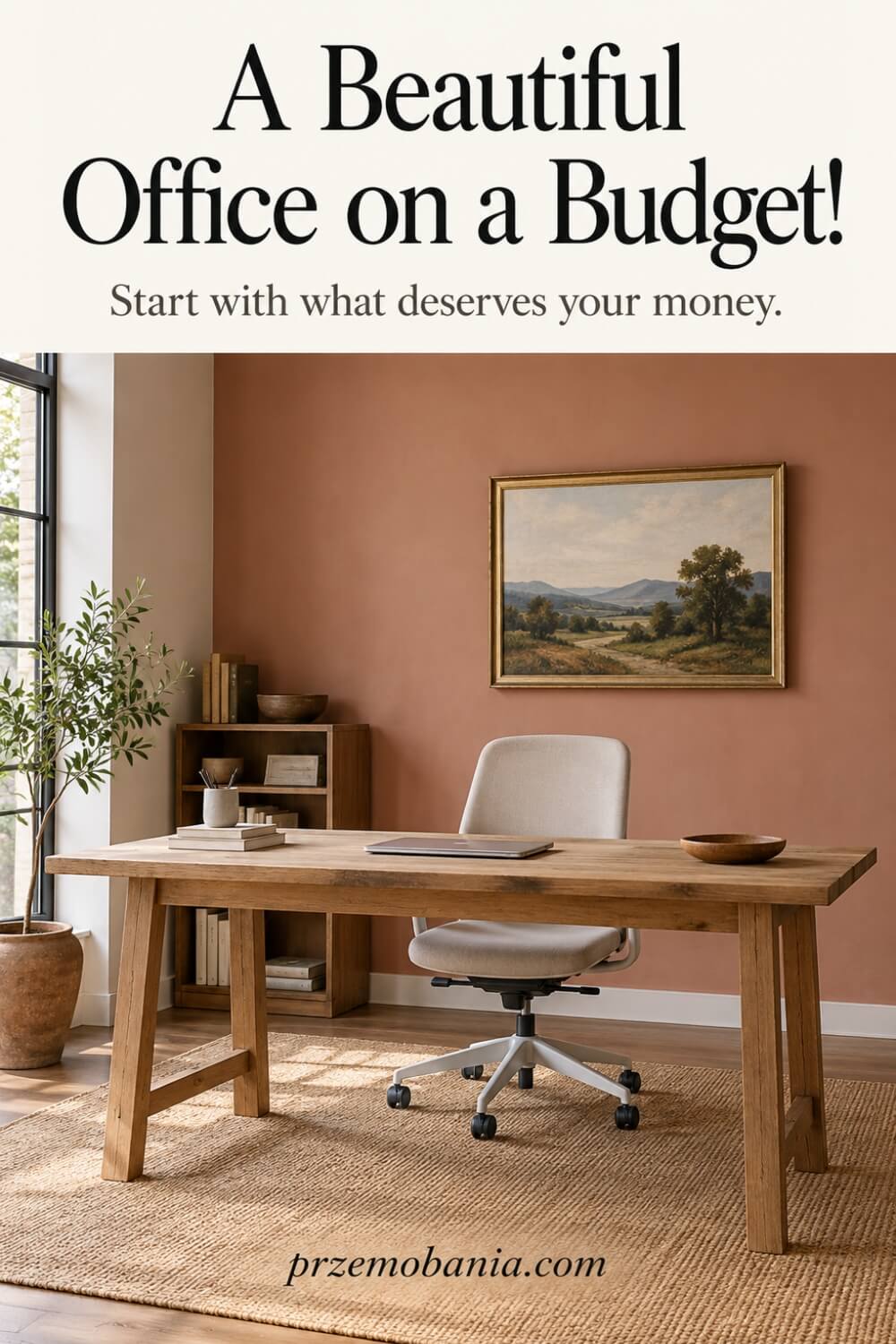
Home Office on a Budget
What would make your working day easier if you could afford only one improvement? Creating a home office on a budget begins with answering that question before opening another shopping tab. If you want somewhere comfortable to work without feeling guilty about the cost, I understand why every purchase needs to earn its place.
A home office on a budget uses existing furniture, carefully chosen essentials and affordable improvements to support everyday work. Planning purchases around real needs, checking second-hand condition and including delivery or repair costs helps you spend less without sacrificing working space.
I am a passionate blogger whose life changed when my wife became chronically ill, and the love of interiors my mum sparked in childhood later helped me support my wife in creating a workspace that suited her life, while today I work from my own cosy home office building an income through blogging and supporting that personal experience with continued learning and the sources listed below.
A desk advertised for very little can become expensive once you arrange transport, replace missing fittings and discover that its drawers need repairing. Meanwhile, a plain table you already own might need nothing more than a different position and a suitable chair.
That difference interests me more than a dramatic makeover photograph. The real skill is recognising where a modest change will solve a persistent problem.
If you are still deciding what your workspace needs to do, my guide to planning a practical workspace at home will help you establish the essentials before allocating your money.
Planning a Home Office on a Budget
Start by writing down what interrupts your work most often. Be specific about the problem rather than naming a product.
A crowded keyboard area might need a different arrangement, not a larger desk. A gloomy corner might need a lamp moved from another room.
Walk around your home with those problems in mind. Notice furniture and accessories that have stopped earning their space elsewhere.
An unused side table could hold a printer. A sound dining table might offer a better working surface than a fashionable narrow console.
Next, separate essential changes from improvements that can wait. Give each proposed purchase a clear purpose.
I would plan a home office on a budget around the work that happens there most frequently. Occasional tasks rarely deserve the largest share of the money.
Set a spending ceiling you can comfortably live with. Include delivery, assembly materials and any necessary alterations within that figure.
Keep a small amount unallocated until the main pieces are in use. You will often understand the remaining gaps more clearly after several ordinary working days.
Supporting my wife has made me more interested in whether a purchase removes effort than whether it looks impressive. I want our home to support us without turning every improvement into another demand on our time or money.
These are the decisions I would work through first:
- Start with What You Own
- Spend Where Your Body Works
- Measure Before You Search Online
- Inspect Second-Hand Furniture in Person
- Count the Complete Purchase Cost
- Refresh Sound Furniture with Care
- Make Small Decorative Changes Count
- Buy in a Deliberate Sequence
Start with What You Own
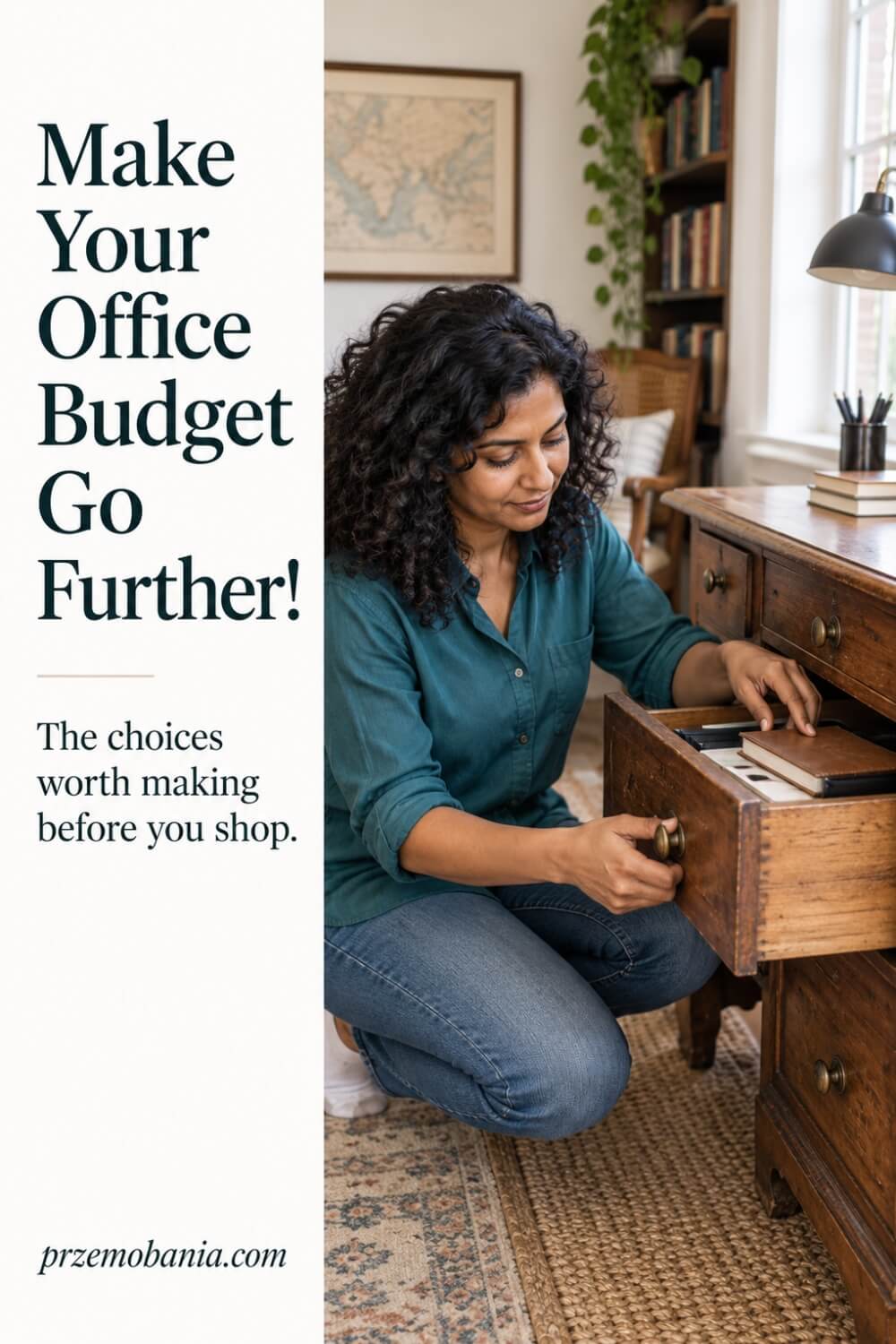
Before making a shopping list, make an inventory of useful pieces already in your home. Look for a stable table, an adjustable chair, a working lamp and a container that could hold the supplies you actually use.
Do not assume that something belongs permanently in the room where it currently stands. A small cabinet might serve you better beside the desk than in a hallway where it holds forgotten belongings.
Try the arrangement before committing to it, and check that moving an item does not create a problem elsewhere. The aim is to make better use of your home, rather than transfer inconvenience from one room to another.
I also suggest photographing the trial arrangement from the doorway. Seeing the whole space at once can reveal that you already have enough, or that one carefully chosen addition would be more helpful than a collection of inexpensive purchases.
Spend Where Your Body Works
Your desk and chair are working equipment, even if they also happen to look lovely. I would give their suitability more attention than matching finishes, decorative shelves or an impressive background for video calls.
Check how the chair, desk and your usual equipment work together. A chair that feels comfortable by itself can become awkward if its arms prevent you from sitting close enough to the keyboard.
Price alone will not tell you whether a chair suits you. Try adjustments where possible, read the return conditions and avoid assuming that the word “ergonomic” guarantees a good fit.
If the current furniture is usable, you can save towards a better option while postponing decorative purchases. If it is unstable or unsuitable, that problem deserves attention before styling, because the nicest accessories cannot correct a working position that does not work for you.
Measure Before You Search Online
Keep a short measurement note on your phone before browsing furniture listings. Include the available width and depth, the route into the room and any features that restrict placement, such as a radiator or an opening door.
Measure the space beneath a potential desk as carefully as the top. A central drawer, low apron or bulky pedestal can reduce the room available for your legs and chair.
Ask sellers for missing measurements rather than estimating from photographs. Camera angles can make a compact desk look generous and disguise how far a cabinet projects into the room.
I would also mark the proposed footprint on the floor with removable tape suitable for the surface. Walk around it and pull your chair back, because discovering that a bargain blocks everyday movement is an expensive way to learn what its dimensions really mean.
Inspect Second-Hand Furniture in Person
Second-hand furniture can offer character and useful construction at an accessible price, but condition matters more than the excitement of finding it. Where practical, inspect the piece in person and ask permission to try its moving parts.
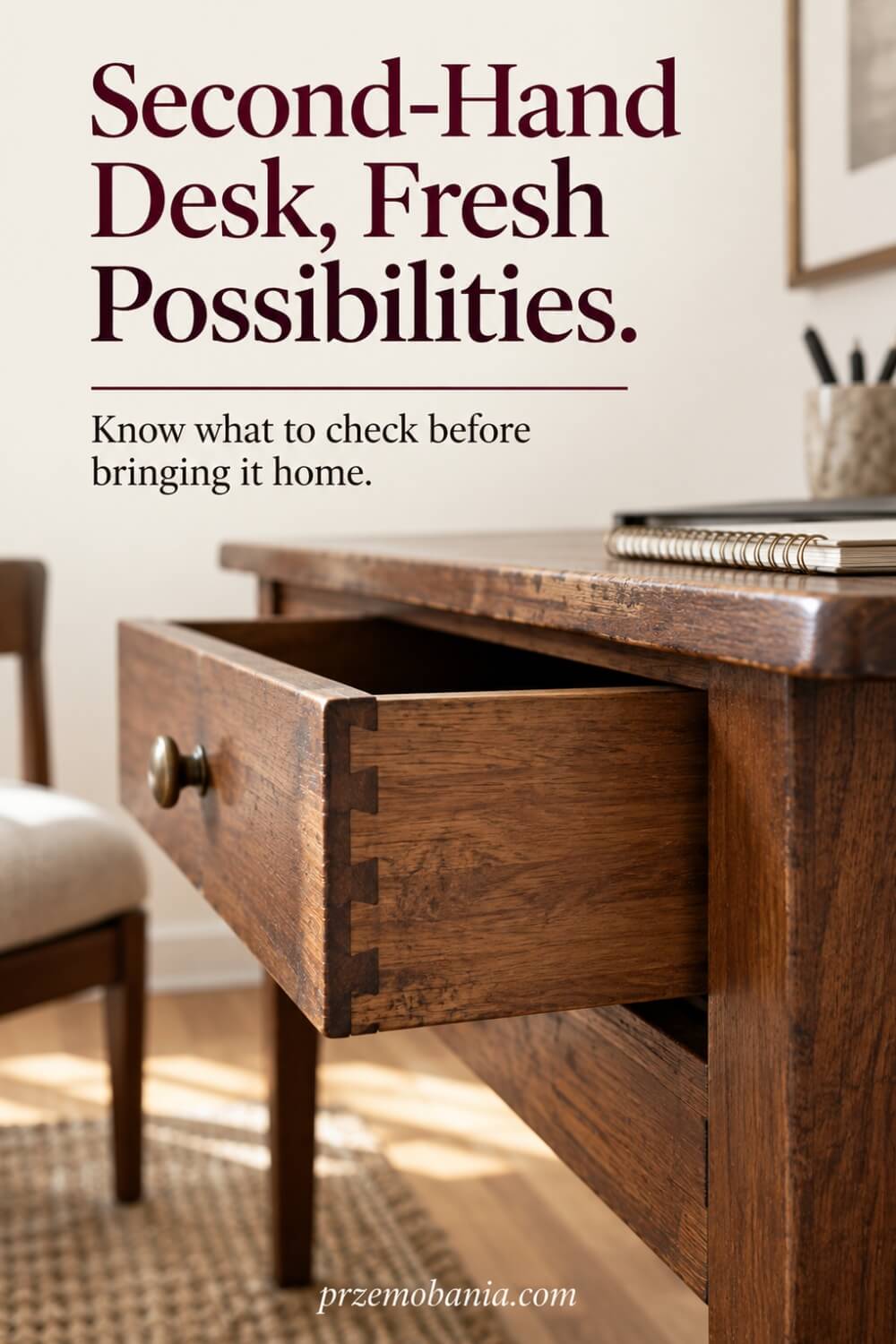
Open drawers fully, look at joints and check whether the item stands steadily. Examine surfaces for swelling, lifting veneer, damage or repairs that are less obvious in the listing photographs.
For an adjustable chair, test the controls and check that it holds its position. Ask about missing components, replacement parts and anything the seller already knows needs attention.
A cosmetic scratch is different from a structural fault, and I would keep that distinction clear. If you cannot inspect the item, request detailed photographs and a written description, then decide whether the uncertainty fits the amount you can afford to risk.
Count the Complete Purchase Cost
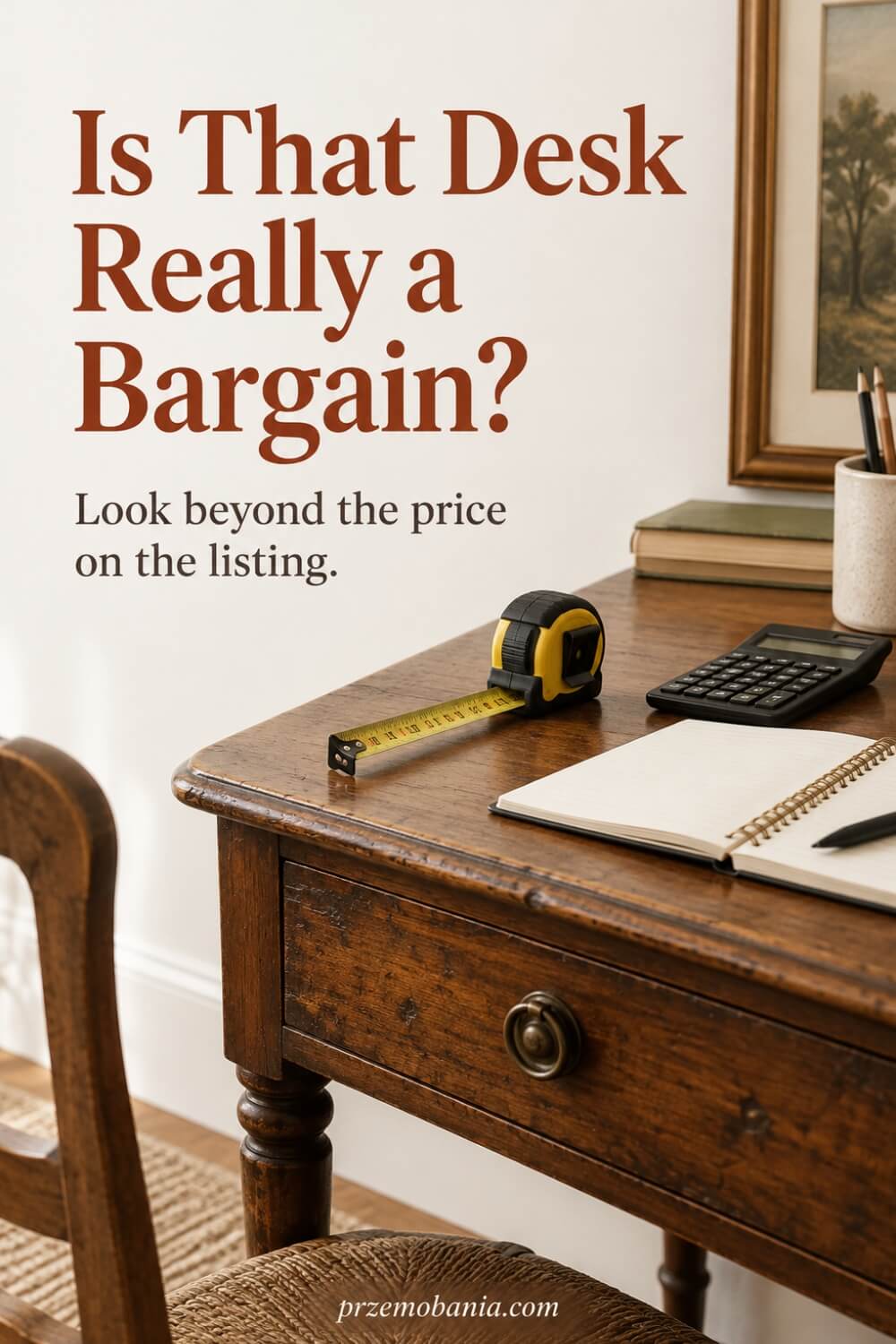
The price on the listing is only the starting point. Add delivery, vehicle hire, parking, cleaning supplies, replacement fittings and any professional work needed before the item becomes useful.
A heavy desk on an upper floor can create a very different collection task from a small table near an entrance. Confirm access and dismantling arrangements before agreeing to collect it.
Include your time in the decision, even if you do not assign it a precise monetary value. Several evenings spent repairing an unsuitable bargain may be a poor exchange when work and family already need your attention.
I like comparing the total cost of two realistic options on one page. A slightly dearer item that arrives ready to use may offer better value than the cheapest listing, while a local piece in sound condition could still be the most sensible choice.
Refresh Sound Furniture with Care
A cosmetic refresh makes most sense when the furniture already works well. Cleaning, replacing suitable handles or touching up a damaged finish can change how a piece feels without rebuilding it.
Identify the surface before buying products, because solid timber, veneer, laminate and painted finishes need different preparation. Follow the product instructions and test compatibility somewhere inconspicuous.
Avoid treating every inexpensive find as a project that must be sanded and painted. Some older finishes need specialist advice before disturbance, and a simple clean may preserve more character than an unnecessary makeover.
For me, the best small project has a clear stopping point. Decide what you want to improve, price the materials and recognise when repair costs are approaching the cost of a sound alternative, rather than continuing because you have already started.
Make Small Decorative Changes Count
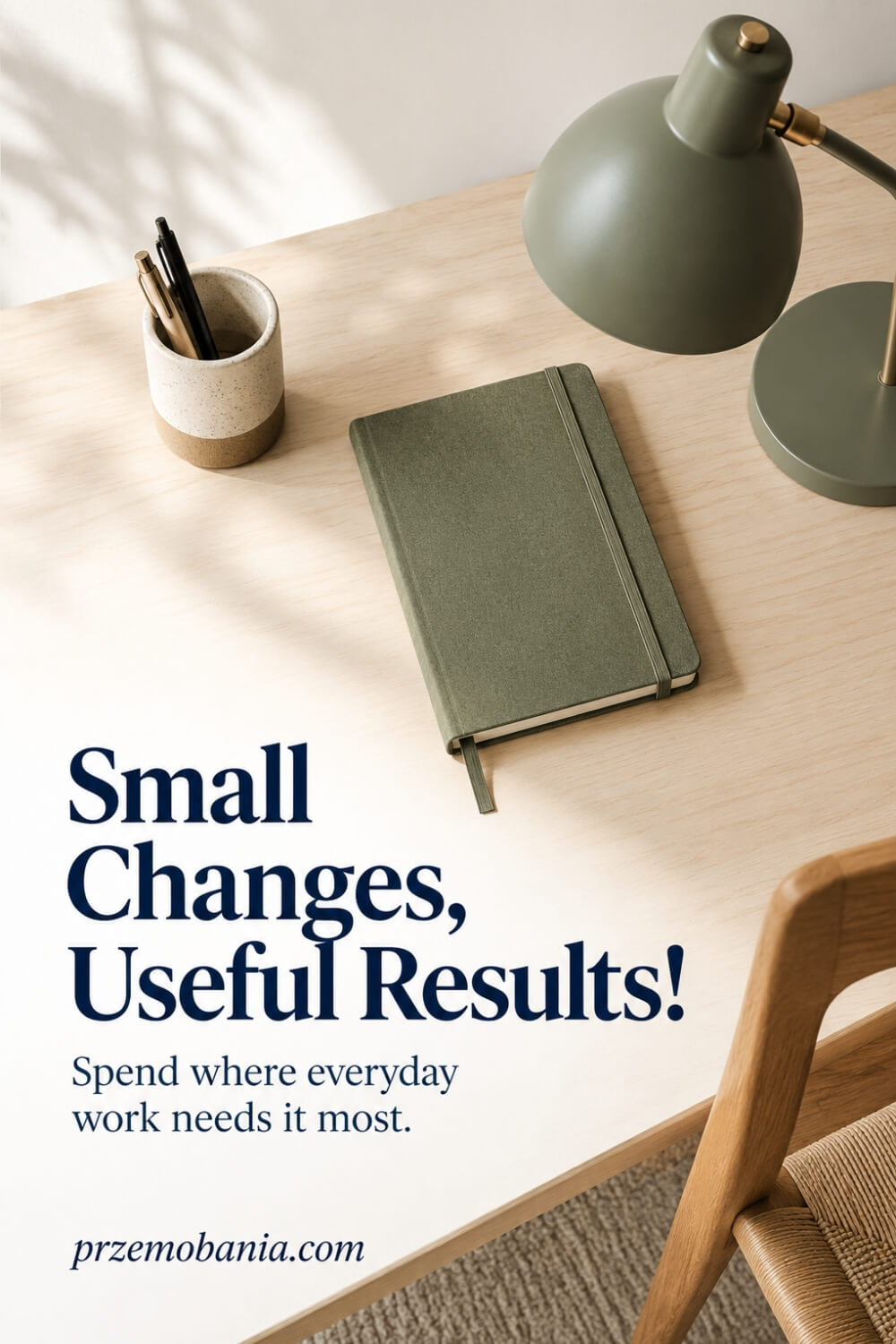
Decoration does not need to arrive in a shopping bag. A photograph you love, a print you already own or a notebook in a favourite colour can make the desk feel more personal.
Choose one visible area to improve instead of scattering purchases around the room. A considered lamp and a well-placed picture can have more presence than several small ornaments competing for attention.
Second-hand frames are worth examining, but check their size, glazing and hanging fittings before buying. An attractive frame is less of a bargain if the artwork you want to display requires an expensive custom mount.
I would keep the working surface generous and let a few details carry the personality. That approach gives inexpensive objects room to look intentional, while leaving you enough space to use the office without constantly moving the decoration out of your way.
Buy in a Deliberate Sequence
Plan purchases in stages so that each one can prove its usefulness before the next arrives. Begin with the most disruptive problem, make the change and spend a few working days noticing what improves.
The first purchase may alter what you need afterwards. A desk with suitable drawers, for example, could remove the need for a separate small cabinet you had already placed on your list.
Keep a waiting list for appealing extras rather than buying them immediately. Add the intended purpose beside each item, because an accessory with no clear job is easier to reconsider after the initial excitement fades.
I find this a kinder way to approach a limited budget than expecting the whole room to look finished at once. You can enjoy genuine progress while leaving room for your needs, available money and understanding of the workspace to develop.
Comparing Value in a Home Office on a Budget
Cheap and good value are not interchangeable descriptions. A low price becomes useful only when the item suits the job.
Think about how often you expect to use each purchase. Daily equipment deserves closer attention than something needed twice a year.
Consider how easily the item can be repaired. A replaceable castor or available drawer runner may extend its useful life.
Ask whether the furniture can move with you. A piece that fits only one awkward corner may become difficult to reuse.
For a home office on a budget, flexibility can be part of the value. It gives you more options if your circumstances change.
My wife’s experience has made changing needs feel very real to me. I would rather leave room for adjustment than spend everything making one arrangement permanent.
Managing Purchases for a Home Office on a Budget
A useful spending plan can be very simple. You need a total limit, a short priority list and a record of what has already been committed.
Write down quoted costs before ordering anything. Include charges that appear only at checkout.
Keep purchase dates and return deadlines together. A product sitting unopened can quietly move beyond its return window.
Inspect deliveries promptly enough to identify problems. Keep the packaging until you know the item is suitable and working.
Photograph any damage before assembly changes its appearance. Follow the seller’s process for reporting it.
I would keep a home office on a budget manageable by reducing avoidable mistakes around the purchase itself. Careful administration is less exciting than styling, but it protects the money available for the room.
Treat sale prices as information rather than instructions. Something you did not need yesterday does not become essential because its discount ends tonight.
If a purchase is optional, give yourself time to reconsider it. The room can remain useful while that decision waits.
For my wife and me, a home improvement should make ordinary life easier to manage. A project that leaves us surrounded by packaging, unfinished jobs and uncertain costs has missed part of its purpose.
These habits help keep the buying process contained:
- Keep One Clear Spending Record
- Ask Sellers the Useful Questions
- Give DIY a Defined Limit
- Review Purchases Before Adding More
Keep One Clear Spending Record
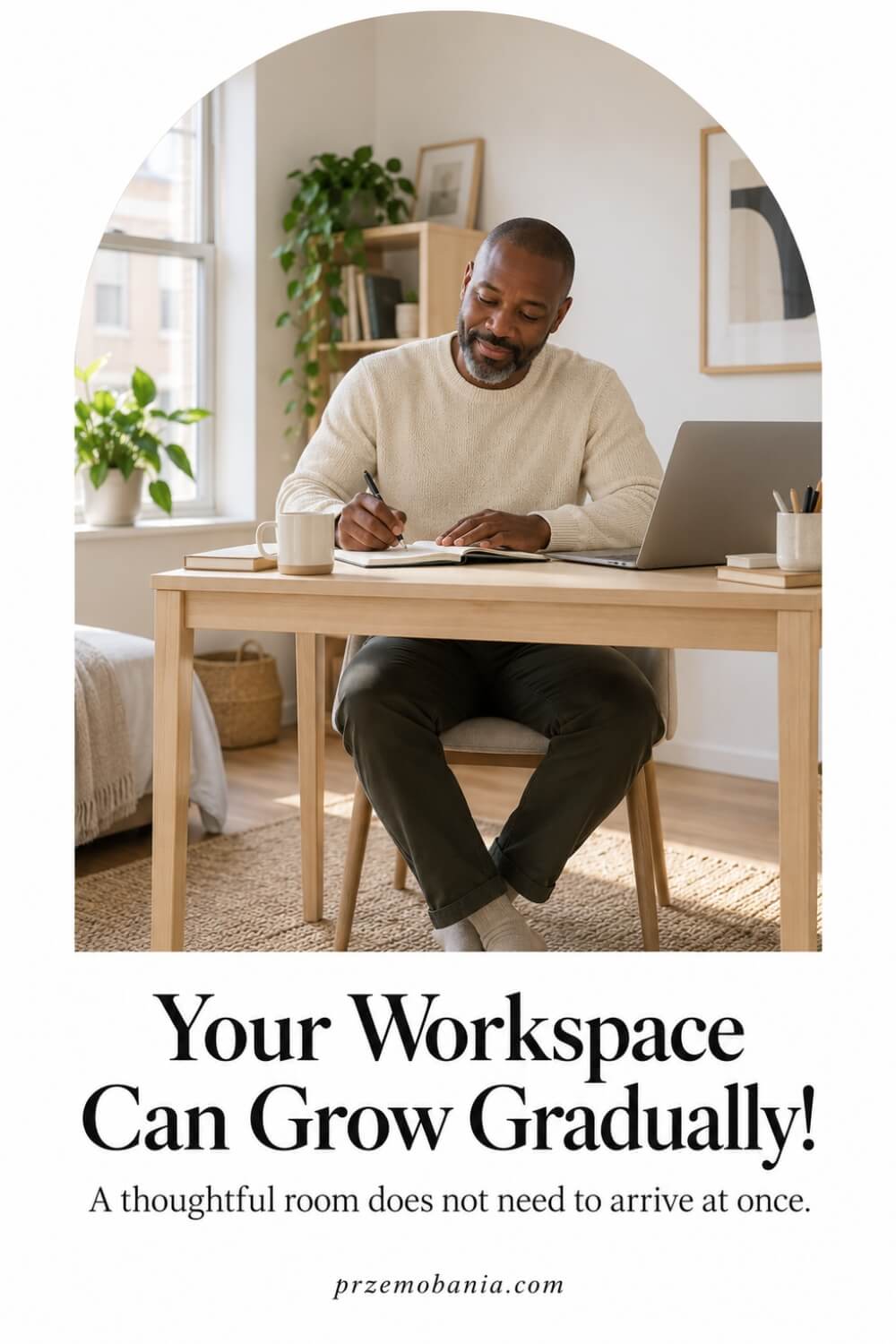
Use a notebook page or a basic spreadsheet to record planned, ordered and paid amounts separately. This prevents money committed to an undelivered item from appearing available for another purchase.
Include a brief note about what each item is meant to solve. If your plans change, that explanation helps you decide which purchases still make sense and which can be postponed.
You do not need a complicated system with dozens of categories. A few clear columns for the item, total cost, status and deadline are enough for most small workspace projects.
I would review the record before buying anything else, rather than trying to remember several separate orders. The point is to reduce the mental load of the project and make it easier to stop confidently when the useful work is finished, even if some decorative ideas remain on the wish list.
Ask Sellers the Useful Questions
A good question can save you an unnecessary journey or an unsuitable purchase. Ask about exact dimensions, known faults, included parts and whether the photographs show the item in its current condition.
For furniture that needs dismantling, establish who will do it and whether the instructions and fittings are available. Ask whether the item has been assembled and taken apart before, because some pieces tolerate repeated moves better than others.
Confirm collection access, delivery arrangements and what happens if the description is inaccurate. Different sellers offer different terms, so avoid carrying assumptions from a large retailer into a private sale.
Keep the answers with the listing details while you make your decision. I would rather ask several practical questions early than arrive with a vehicle and feel pressured to accept something that clearly does not meet the needs of the room.
Give DIY a Defined Limit
Before starting a project, describe the finished result in plain language. “Replace the damaged handle and clean the desk” is easier to manage than “make this old furniture look completely new”.
List the materials, tools and workspace you need, including somewhere suitable for drying or curing. Follow the finish manufacturer’s instructions rather than assuming that a surface is ready because it feels dry.
Decide which parts you can do confidently and which need experienced help. Structural repairs and electrical faults deserve appropriate expertise, not optimism encouraged by a short video.
I also suggest choosing a point at which you will pause and reassess the cost. A budget project should not keep expanding simply because each extra purchase looks small, especially if the furniture remains unavailable for work while the unfinished job occupies your home.
Review Purchases Before Adding More
Once the essentials are in place, stop shopping long enough to use them normally. Notice what still gets in the way during writing, calls, paperwork and the routine of starting and finishing work.
Be precise about any remaining inconvenience. You may need a longer compatible cable rather than a different desk, or a better place for supplies rather than another set of containers.
Check whether new equipment has made an older item redundant. Passing that item on responsibly can recover space, although any resale income should remain a possibility rather than money you assume will arrive.
This review is also your chance to recognise that the room already works. I want a finished project to mean that your needs are met, not that you have bought every object shown in the inspiration photograph or filled every corner with something new.
Living with an Unfinished Home Office on a Budget
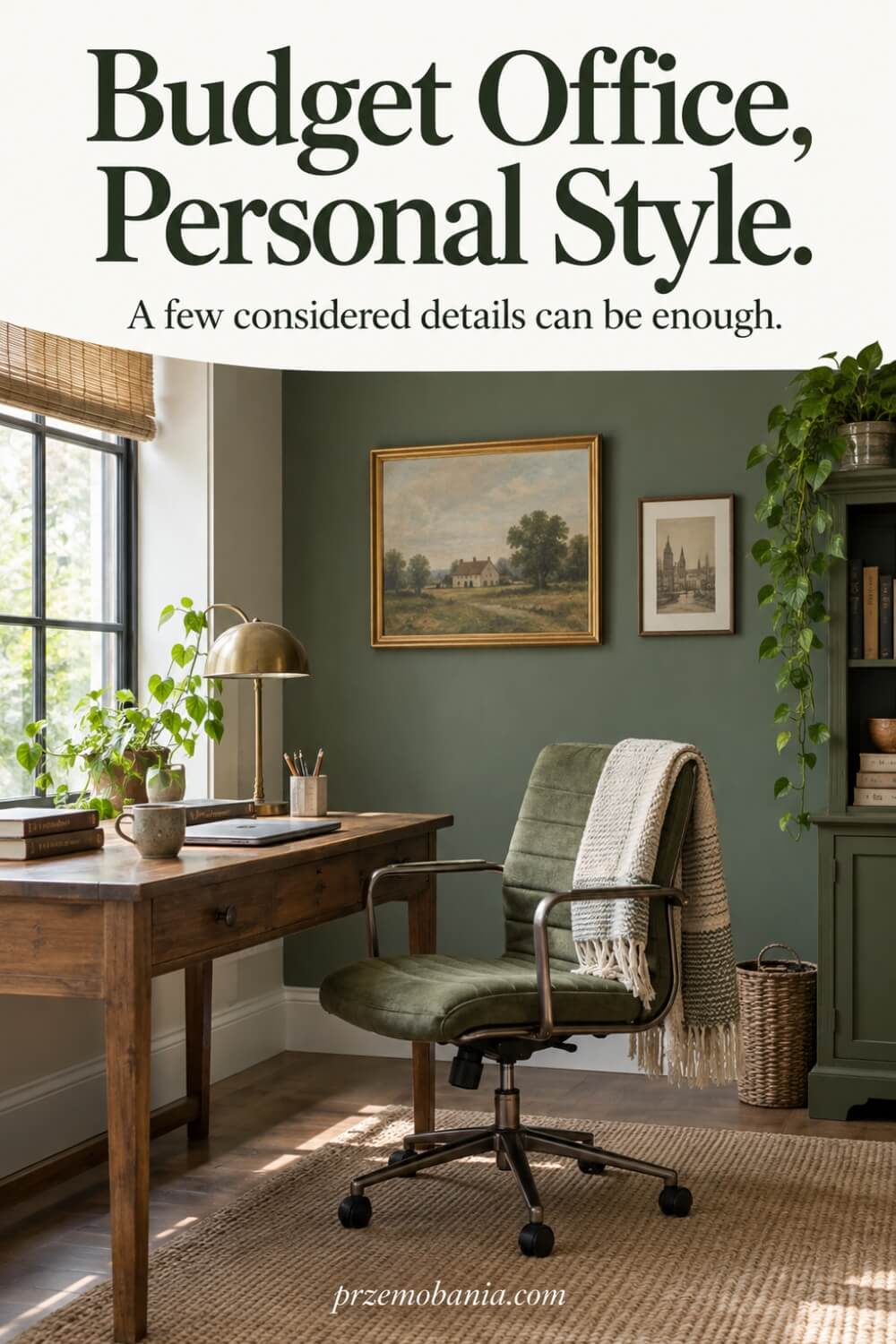
A room can support your work before it looks finished. That distinction can remove a surprising amount of pressure.
You might use a mismatched chair while saving for a suitable replacement. You might leave a wall undecorated because the next purchase has a more useful purpose.
I see a home office on a budget as something you can build gradually. Its appearance does not need to prove how seriously you take your work.
My wife’s changing needs have influenced how I think about progress at home. An improvement can matter even when it is small and barely visible to anyone else.
That has also changed what I ask of myself. I do not want the pursuit of a perfect office to consume the energy meant for living and working in it.
Give yourself permission to keep the room at a useful intermediate stage. A sensible pause is part of a considered project, not evidence that you have failed to finish.
Setting Boundaries Around a Home Office on a Budget
Shopping for a workspace can easily become a way of postponing the work itself. There is always another comparison, saved photograph or product review to explore.
Set a clear decision window for non-urgent purchases. Gather the information you need, choose a suitable option and let the decision rest.
Avoid repeatedly checking prices after a purchase you are happy with. A later discount does not erase the value of the use you have already had.
For a home office on a budget, attention is another resource worth protecting. You do not need to become a full-time furniture researcher to make reasonable choices.
As a blogger, I know that looking at beautiful rooms can blur the line between inspiration and distraction. My working space needs to help me write, not keep me permanently planning another version of it.
My wife and I need a home with room for more than projects. Knowing when to stop improving the office helps protect that balance.
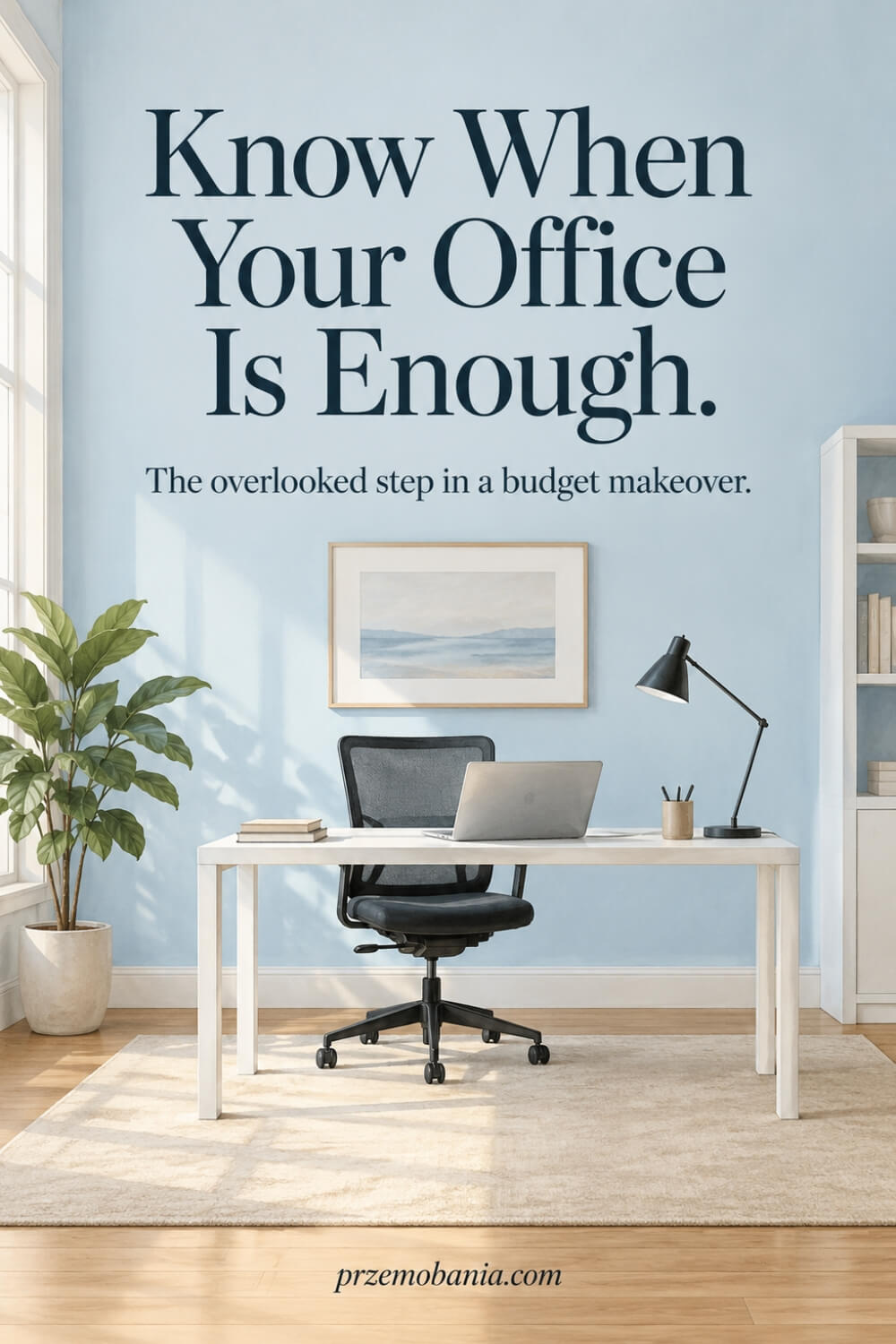
Final Word on Home Office on a Budget
The most useful starting point is an honest description of what your current workspace makes difficult. Perhaps you cannot sit close enough to the desk, your papers occupy the only clear surface, or you keep moving a lamp between rooms. Those everyday frustrations give you a better purchasing brief than an attractive photograph ever could.
Creating a home office on a budget does not require you to become an expert at finding the cheapest possible version of everything. It asks you to make a smaller number of decisions with greater care. Some will involve buying something, while others will involve moving, removing, repairing or simply using what you already have.
I would begin with the pieces that directly support your work, then allow the decorative layer to develop more slowly. That does not mean beauty is unimportant. My mum gave me a love of interiors that has stayed with me, and I know how much pleasure a thoughtful corner can bring. I simply want that pleasure to sit comfortably beside the practical purpose of the room.
Second-hand furniture can be part of that approach, particularly when you have time to inspect it and understand its condition. Look beyond the listing price and consider the complete journey from the seller’s room to yours. Transport, missing fittings, repair work and your own time all belong in the decision. A bargain should still make sense after those details are included.
There is also value in leaving some decisions open. You may discover that the cabinet you planned to buy is unnecessary, or that a better chair deserves the money originally reserved for decoration. A staged project gives you permission to respond to those discoveries. Spending everything immediately removes that flexibility before you know whether you need it.
Supporting my wife has made me care deeply about the relationship between our home and the effort required to live in it. I do not want a workspace that adds financial pressure, a long repair list or another standard we feel obliged to meet. I want somewhere that helps us carry on with the things that matter.
Your circumstances may be very different from mine, but you deserve the same practical kindness. You can choose a modest desk, keep an old cabinet, hang a picture you already own and still create a room that feels considered. The meaning comes from how well those choices serve you.
Before making your next purchase, ask what it will improve, what the complete cost will be and whether you have already tried a simpler solution. If the answers are clear, you can buy with more confidence. If they are uncertain, waiting is a useful decision too.
Let the room earn its finished appearance through use. A workspace built gradually around real needs can feel more personal, more manageable and more satisfying than one assembled in a hurry. Your budget is a boundary to work thoughtfully within, and you can make worthwhile progress without crossing it.
Start with the problem you notice most, use what you already own and give each purchase a clear job. Your office can become more comfortable and personal in stages, without a complete makeover. A thoughtful improvement that fits your budget is enough to move your working day in a better direction.
Tell me which improvement would make the biggest difference to your workspace, and have a look at the FREE chapter of my eBook at the bottom of this post if you would like more ideas.


Przemo Bania is a blogger and writer who helps people get out of their traditional jobs to start a blogging career. Przemo also runs a health blog advocating for endometriosis and fibromyalgia…
Related Questions You May Be Asking About Home Office on a Budget
Should I buy an office furniture set or separate pieces?
Compare the pieces you will actually use with the complete set price, including delivery. A set can be convenient, but it offers poor value if several items are unnecessary or unsuitable. Separate purchases let you prioritise fit and condition, and you can connect their appearance through a few repeated colours or materials.
Is ex-office furniture worth considering for home use?
It can be, particularly when a reseller provides clear condition details and allows you to inspect or return the item. Check dimensions carefully because commercial furniture may be larger than expected. Test adjustments, confirm included parts and ask what refurbishment involved rather than assuming that the description means every component has been replaced.
Can I create an office without buying a dedicated desk?
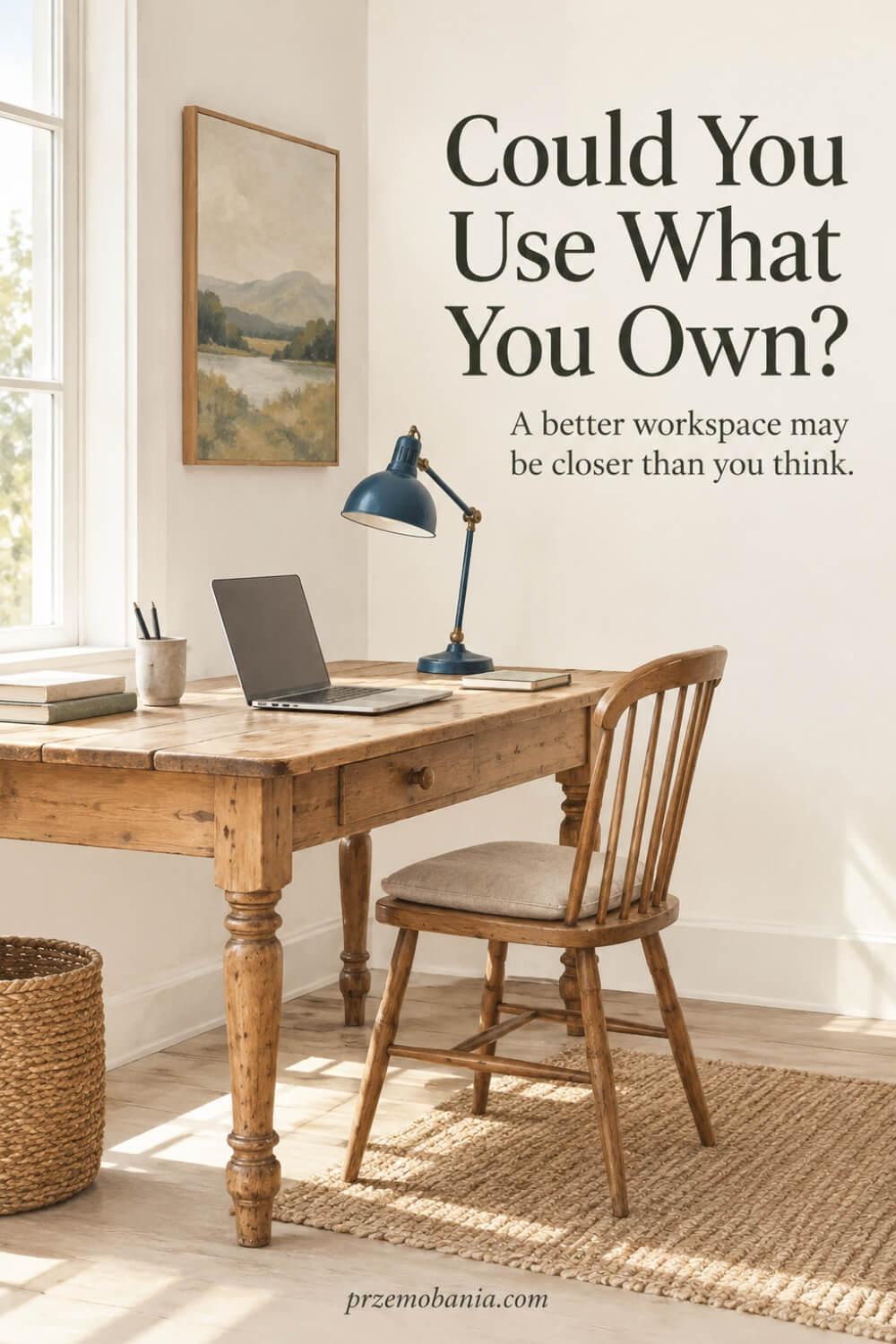
Yes, if an existing table provides a stable surface, suitable working space and enough clearance for your chair and legs. Check how it works with your equipment during real tasks. A dining table or other reused surface may be practical, but its original purpose does not automatically make it suitable for prolonged computer work.
How can I avoid spending too much on small accessories?
Keep a single list of intended accessories with their total cost and purpose. Buy only after the main furniture is in use, because that often changes what you need. Small purchases are easy to dismiss individually, but reviewing their combined cost makes it easier to choose the few that offer real value.
Should I replace furniture simply because it looks dated?
Not necessarily. If it is sound, suitable and pleasant to use, its age or appearance alone does not require replacement. Try changing its surroundings or making a small, compatible cosmetic improvement first. Replace it when its condition, function or fit creates a meaningful problem that a reasonable adjustment cannot resolve.
Home Office on a Budget References
- https://www.ikea.com/gb/en/rooms/home-office/how-to/6-workspace-decor-ideas-to-boost-productivity-and-creativity-on-a-budget-pubc65c9a20/
- https://www.homesandgardens.com/interior-design/things-to-thrift-for-your-home-office
