
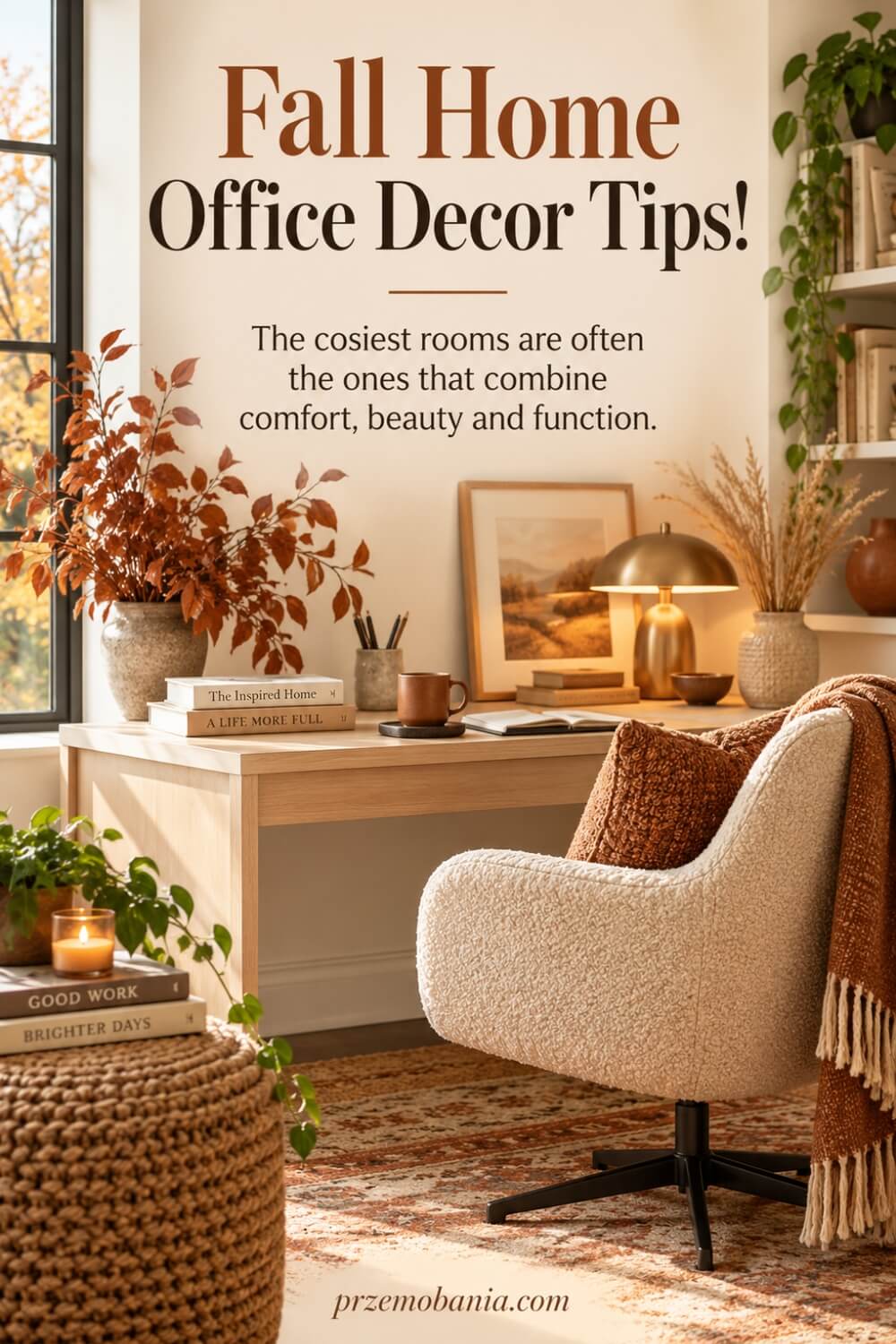
Fall Home Office
Have you noticed how the same workspace that felt bright and effortless in summer can suddenly feel cold, flat, and harder to settle into once autumn arrives? A fall home office works best when it responds to shorter daylight, cooler rooms, and that natural urge to make the place where you work feel warmer.
If you are spending hours at your desk while the light fades earlier outside, I know how quickly a practical room can start feeling like somewhere you simply endure rather than somewhere that supports you.
A fall home office is a workspace adapted for autumn with warmer lighting, earthy colours, tactile layers and practical seasonal changes. The best version keeps your desk clear, supports comfortable work as daylight shortens and adds cosy character without turning the room into busy themed clutter.
I came to this as a passionate blogger whose life changed when my wife became chronically ill; the love of interiors my mum sparked in me as a child helped me create a gentler workspace for my wife to work from home and a cosy office where I could write, build my blogging income and enjoy the life we were rebuilding, and alongside that personal experience and my love of home décor, I have included the sources I used at the bottom of this article so you can see where I continue expanding my knowledge too.
What surprised me most when I dug deeper into the research was how much of an autumn workspace refresh is really about light rather than decoration. One international home-office lighting study analysed 694 responses and 453 photographs across six countries and found that most participants appreciated daylight as their primary light source, while features such as distance from the window and indoor shading were linked with satisfaction with the visual environment.
That matters because autumn changes the light your office receives, while current 2026 interior design coverage is also moving away from loud seasonal clichés towards layered lighting, chocolate browns, ochres, burnished reds, wool, velvet and other tactile natural textures. You can create a workspace that feels unmistakably autumnal without covering your desk in pumpkins or sacrificing the clear surfaces, useful lighting and peaceful atmosphere that help you actually get your work done.
If you want to see how I make these smaller autumn changes work as part of the whole year, my guide to adapting your workspace through the seasons shows how lighting, textiles, colour and comfort can shift naturally without rebuilding the room every few months.
How to Create a Fall Home Office That Feels Cosy and Productive?
The first change I make in a fall home office is not decorative at all; I look at what the room now needs because autumn light, temperature and working habits are different from July. A seasonal workspace should still help you think clearly, sit comfortably and find what you need without making you fight through cushions, ornaments or piles of seasonal accessories.
UK Health and Safety Executive guidance for home workers puts the basics first too: adequate lighting, a comfortable sustainable posture, regular movement and a work area free from avoidable obstructions.
As daylight shortens, I try to place the desk where I can benefit from useful natural light without putting the screen in a position that catches glare. HSE lighting guidance also points out that daylight alone will not always provide enough light for the whole working day, so natural and artificial light often need to work together. That is why I prefer layers: useful task lighting at the desk, softer background light elsewhere and enough control to brighten the room when detailed work demands it.
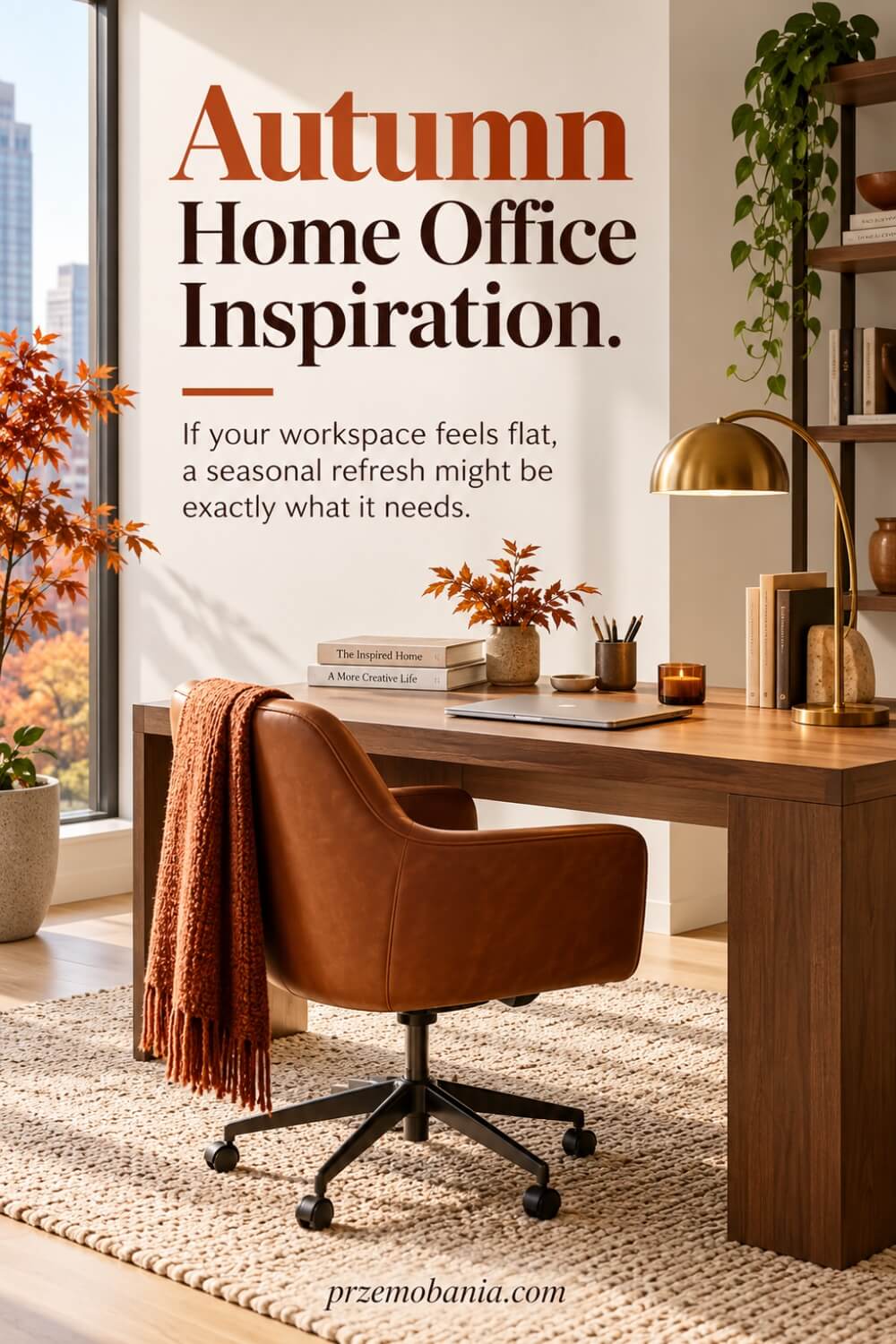
Once the practical light is right, colour can change the mood surprisingly quickly. Current autumn 2026 interiors coverage is moving towards chocolate brown, ochre, maroon, terracotta, oxblood, warm timber and other earthy shades, but I would never tell you to repaint your entire office just because a colour is having a moment. A rust cushion, brown storage box, muted red print, ochre lampshade or warm wood accessory can give you the seasonal shift while leaving the room flexible for winter and spring.
Texture does another job that colour cannot because it makes the space look and feel warmer even when the palette stays neutral. Wool, woven fibres, linen, wood and other tactile materials are appearing strongly in current autumn design advice, and they work particularly well in an office because one or two pieces can add depth without taking over the room. I would rather have one soft throw, one textured rug or one fabric lampshade I genuinely enjoy than ten tiny decorations competing for desk space.
The room also needs to feel physically comfortable, not merely look warm, because temperature, lighting and working space can all affect how comfortably and effectively you work. Keep the things you actually use within easy reach, leave enough room to move your chair freely and make warmth adjustable rather than turning the office into a stuffy box.
If you use a laptop for long sessions, remember that a beautiful autumn desk still needs the screen, keyboard, mouse and seating arranged so your posture is sustainable; HSE specifically recommends a separate keyboard and mouse when a laptop is raised for prolonged use. I think this is where good seasonal design becomes different from seasonal decorating: the room looks cosier because it works better for the season, not because every surface announces that October has arrived.
When my wife’s health changed, I stopped seeing our home office as a background for photographs and started noticing every small thing that either made a hard day gentler or made it unnecessarily harder. There were days when her body was already asking everything of her, and simply being able to sit in a supportive place, reach what she needed, and work in a room that felt warm and cared for mattered far more to us than whether the décor looked impressive; those are the details I still think about whenever I design a workspace now.
So before you buy anything simply because it says “autumn”, these are the changes I would make first if I wanted your office to feel more comforting, useful, and genuinely yours.
- Create a Warm Lighting Layer
- Use Autumn Colour With Restraint
- Layer Texture Without Desk Clutter
- Keep Your Workstation Ergonomic
- Bring Nature Into the Room
- Make Temperature Easy to Adjust
- Protect Your Clear Working Space
- Create a Cosy Evening Routine
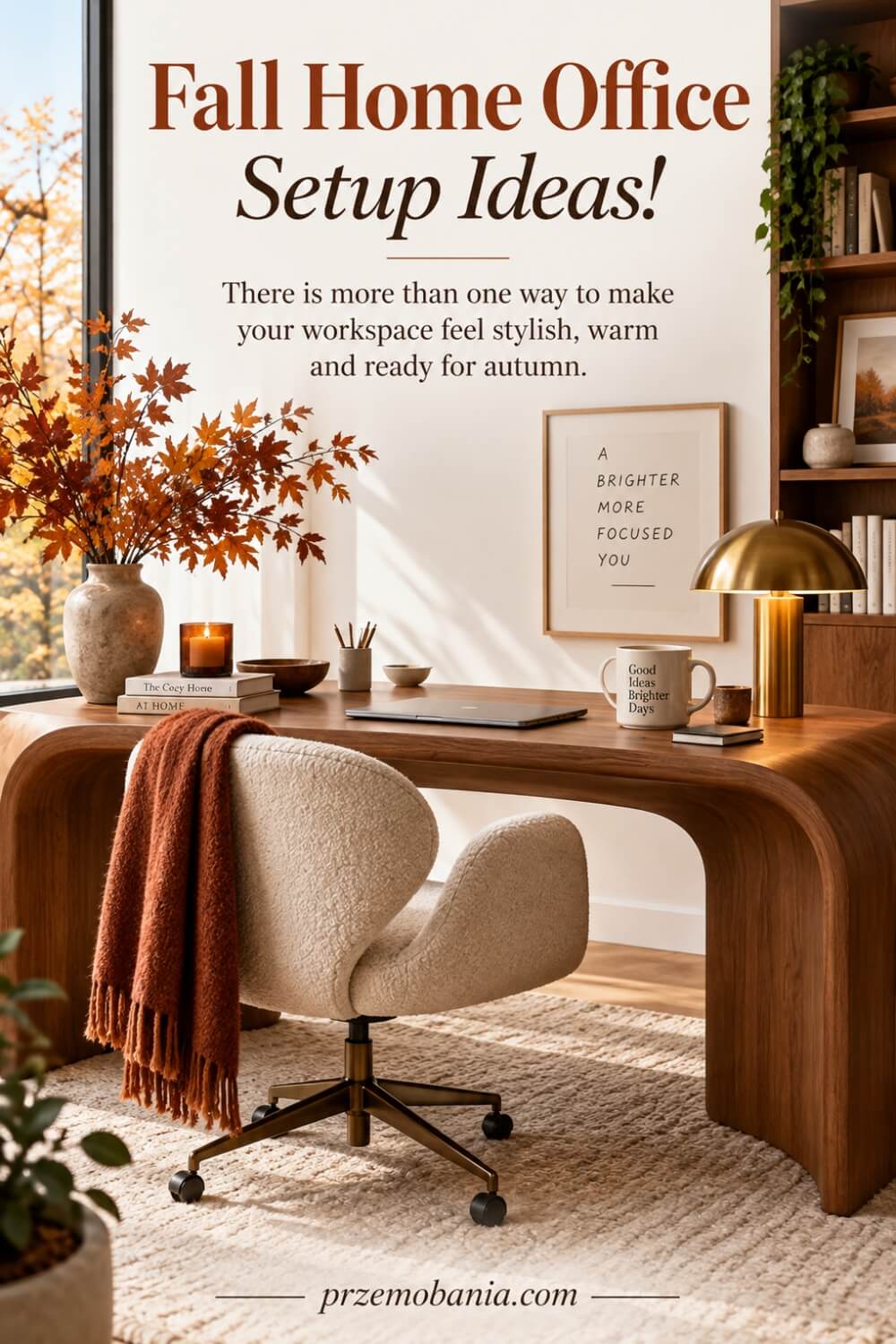
Create a Warm Lighting Layer
Autumn can make a room feel dull long before you notice why, especially when the bright summer daylight you relied on disappears earlier each afternoon. I like to build light in layers rather than depend on one harsh ceiling fitting, starting with a good desk lamp for focused work and then adding softer light behind or beside me so the room still feels calm. Warm light can make timber, rust, ochre and brown tones feel richer, but I still make sure the desk itself is bright enough for reading, writing and screen work without strain.
This became especially important in our home because my wife could be working on a day when her energy was already low, and a gloomy room only made everything feel heavier. I learned that cosy lighting is not about making your office dark. It is about creating enough useful light to work comfortably while removing that cold, flat feeling that makes autumn evenings seem longer than they need to be.
Use Autumn Colour With Restraint
You do not need to repaint your walls every September to make your workspace feel seasonal. I prefer to keep the permanent parts of a room fairly flexible, then bring autumn in through smaller pieces such as a rust cushion, a muted terracotta planter, an ochre lampshade, a deep brown storage box or a framed print with warmer tones. This gives you the richness of the season without making the office look like a shop display or leaving you tired of the colours after three weeks.
I also find that restrained colour feels more grown-up and easier to work around when you already have furniture you love. My mum taught me early that a room often feels more considered when colours repeat quietly rather than shout from every corner, and I still use that idea now. Choose two or three autumn shades that suit what you already own, then let them appear in small doses so the office feels warmer without losing its identity.
Layer Texture Without Desk Clutter
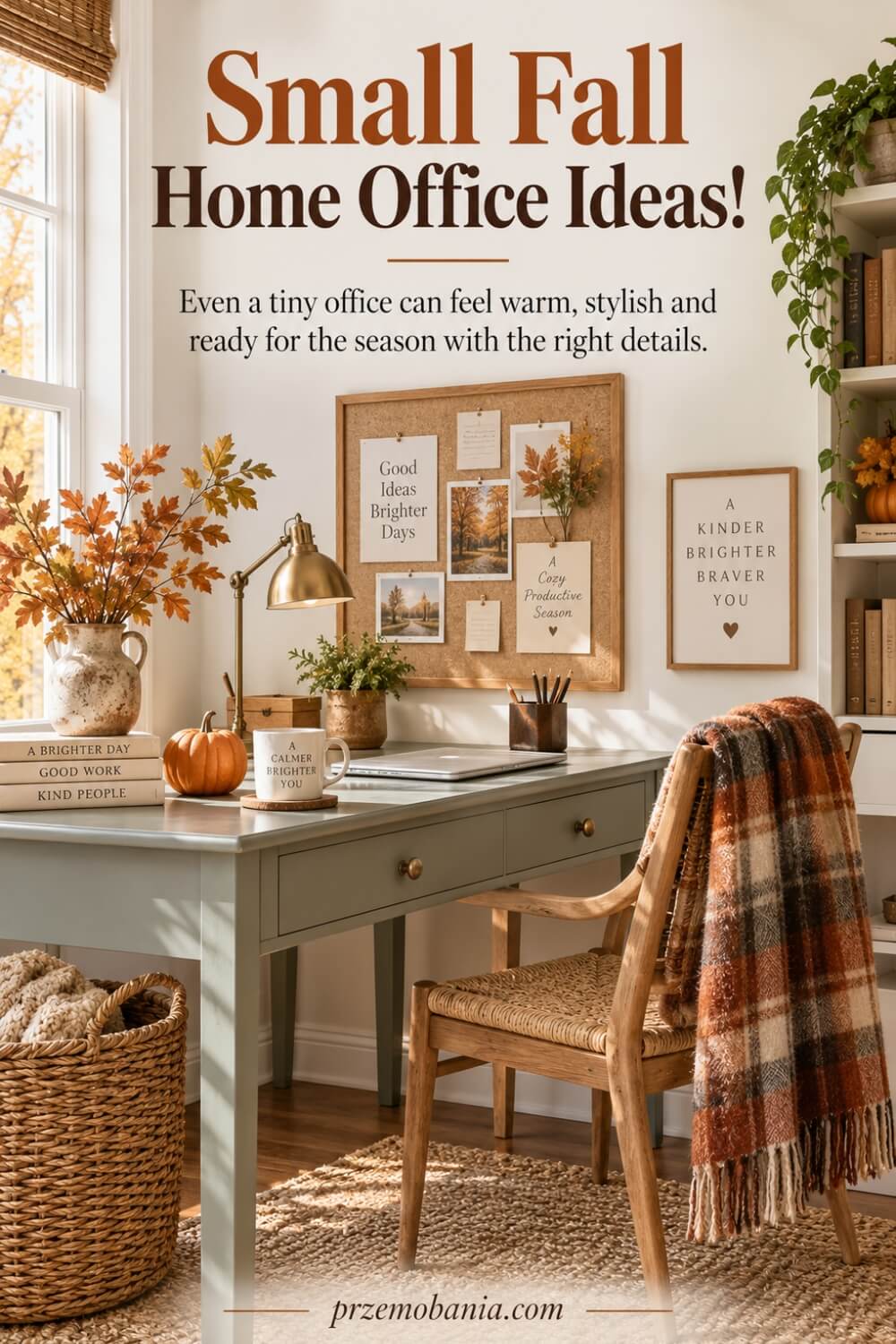
Texture is one of the easiest ways to make an office feel warmer because it changes the atmosphere without demanding much space. A woven throw over the back of a chair, a wool or flat-weave rug, a linen shade, a cork board or a timber tray can add depth while the desk itself stays clear enough to work on. I am careful with this because it is very easy to confuse cosy with crowded, especially when social media keeps showing desks covered in candles, pumpkins, books and little ornaments.
Real work needs room for your hands, keyboard, notebook and whatever else earns its place there. When my wife was struggling through difficult days, the last thing I wanted was for her to move decorative objects just to find somewhere to put a drink or paperwork. Keep the softness around the work zone, not on top of it. The result still feels layered and seasonal, but the room remains useful when you actually sit down and need to get something done.
Keep Your Workstation Ergonomic
A beautiful autumn office can still leave you aching if the chair, screen and desk are working against your body. I always start with the boring but important things: your feet need stable support, your screen should sit at a comfortable viewing height, and the keyboard and mouse should be positioned so you are not constantly reaching or twisting. If you work from a laptop for long periods, raising it and using a separate keyboard and mouse can make the whole setup easier to adjust.
I became far less casual about this after seeing how much small physical demands can matter when someone is already living with pain and fatigue. A chair that looks perfect in a photograph is not useful if you cannot sit in it comfortably for an hour. Let the autumn styling come after the workstation fits you. The cosiest office is not the one with the prettiest throw, but the one that lets your body settle instead of asking you to tolerate discomfort all day.
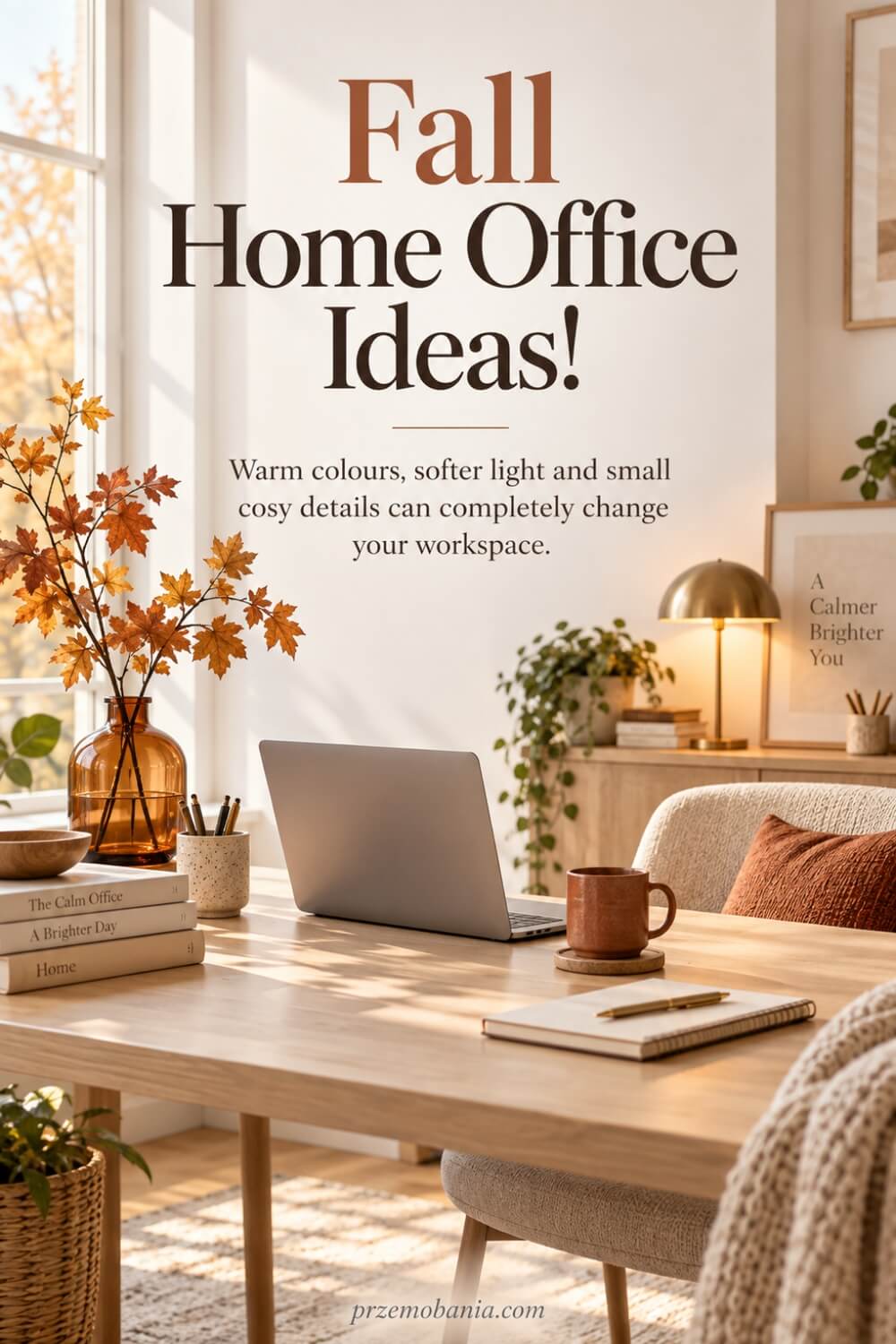
Bring Nature Into the Room
Autumn has a way of reminding me how much warmth comes from natural materials rather than obvious decorations. I like timber, rattan, cork, stone, dried seed heads or a simple branch gathered responsibly and placed in a plain vase because they bring the outside season into the room without making the workspace feel themed. If you prefer living plants, choose ones that suit the actual light in your office rather than buying something just because it photographs well.
Natural texture also works beautifully with earthy colours, so even one wooden tray or woven basket can make a white or grey desk feel less sterile. I have always loved rooms that feel connected to something real, probably because my mum taught me to notice materials and atmosphere long before I ever wrote about interiors. You do not need a forest on your desk. One or two natural elements can be enough to soften the room and give it that grounded autumn feeling without adding visual noise.
Make Temperature Easy to Adjust
A room can look incredibly cosy and still be uncomfortable if you are too cold in the morning and overheated by mid-afternoon. Autumn temperatures change quickly, so I prefer adjustable comfort rather than trying to make the whole office permanently warm. A light throw, breathable layers, a rug underfoot and sensible control of heating or draughts can make the space easier to work in without turning it stuffy.
This matters even more when two people use the same room or when one person experiences temperature differently from the other. In our home, I learned not to assume that what felt fine to me would feel comfortable to my wife, especially on difficult health days. That changed how I think about designing shared spaces. Give yourself options you can add or remove in seconds, and keep vents, radiators and heaters clear. Comfort should respond to you through the day rather than forcing your body to adapt to the room.
Protect Your Clear Working Space
Seasonal decorating can quietly steal the part of your office you need most: usable surface area. I have made this mistake myself, adding things because they looked good individually and then wondering why the desk suddenly felt annoying to work at. Before I place anything decorative, I decide which areas must stay clear for my keyboard, mouse, notebook, drink and current task, and I treat those spaces as non-negotiable.
Shelves, walls, a windowsill or the corner of a filing unit can carry more of the seasonal character without interrupting your work. This became a much bigger priority for me once our home office had to support real life rather than simply look attractive. On days when my wife had very little energy, even small obstacles mattered, and I never wanted the room to create another job for her. A clear desk is not cold or boring. It gives your autumn colours and textures room to breathe while making the office calmer to enter and easier to use.
Create a Cosy Evening Routine
The biggest autumn change for many of us is not the décor at all, but the fact that we are still working when the room outside the window has already gone dark. I like to make that transition intentional instead of suddenly realising at six o’clock that I have been sitting under a bright overhead light for hours. As daylight fades, I switch on the desk lamp and softer background lighting, clear away anything I have finished with and make the room feel settled for the final part of the day.
If I am writing, I often find that this small ritual helps me move from the noisy pace of the afternoon into more focused work. It also creates a boundary at the other end: when I finish, I put the desk back in order rather than leaving tomorrow’s mess waiting for me. After watching how precious energy can become in our household, I value routines that remove friction. A calm evening setup can make both working and stopping feel easier.
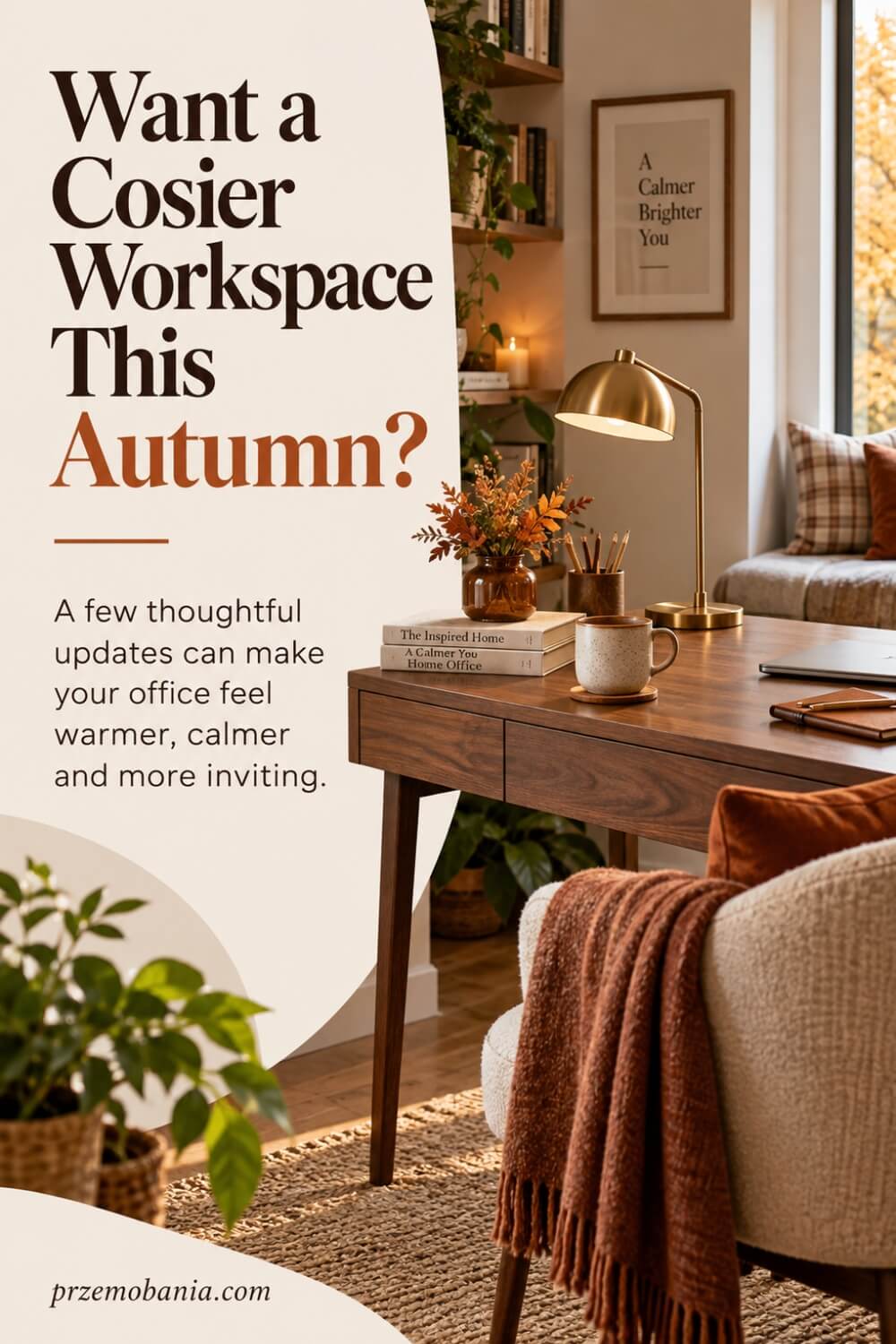
Why a Fall Home Office Should Feel Personal?
The best fall home office should not look as though you copied somebody else’s September shopping list; it should feel like your own room becoming more supportive as the season changes. Current interior design thinking is moving towards quieter, more intentional autumn rooms built around comfort, personality and meaningful objects rather than filling every surface with obvious seasonal decorations.
I think the view from your desk is a surprisingly good place to begin because you spend far more time looking across the room than admiring the corner behind your chair. Turn your seat towards something that settles you if the layout allows it, whether that is a window, a favourite print, books you genuinely use, a photograph with meaning or simply one beautifully organised shelf.
I also like changing what I call the emotional temperature of a workspace, not just its physical temperature, by bringing forward objects that make the darker months feel familiar rather than gloomy. Research into home-working environments has found links between satisfaction with factors such as daylight, artificial lighting and other workspace characteristics and outcomes including mood, concentration and perceived productivity, although the evidence does not mean that décor alone can determine how you feel.
That distinction matters to me because I have watched my wife sit down to work on mornings when merely getting to the desk had already taken more from her than anyone looking through the window could possibly know. I could not take the difficult days away from her, but I could make sure the room waiting for her did not feel cold, chaotic or indifferent, and somewhere along the way I realised that caring for a workspace can sometimes become a very quiet way of caring for the person using it.
There were no dramatic reveals in our house, just little decisions made because I loved her: moving something so she did not have to reach, keeping comforting things nearby and making the room feel less clinical when life outside that room already involved enough difficult conversations. Those changes taught me more about interior design than chasing a perfect photograph ever could, because a successful room should meet you where your real life is happening.
You can bring the same thinking into your own autumn workspace without needing a large budget by choosing a few things that mean something to you instead of buying an entire seasonal collection. A ceramic mug from somewhere you love, an old wooden box, a book you keep returning to, a framed family photograph or a small piece you found years ago can create more character than a desk crowded with decorations purchased simply because they are brown or orange.
Nature can help too, and research on restorative work environments suggests that incorporating natural elements or access to nature may offer useful psychological benefits, although findings vary between studies and should not be treated as a cure-all. Instead of forcing greenery into every corner, you might simply position your desk where you can notice a tree changing colour, use natural wood and stone, or bring in one seasonal branch that costs nothing and disappears again when winter arrives.
What I want you to take from our experience is that your office does not have to impress anybody who never works there. Make it a place that recognises the person who actually walks into it on a dark Tuesday morning, because when autumn strips away the long evenings and easy summer brightness, that sense of belonging can become one of the most valuable things you design into the room.
How a Fall Home Office Can Support Real Life?
The longer I have worked from home, the more I have realised that a room should adapt to the life happening inside it rather than expecting you to perform at exactly the same level every day. A fall home office can help with that because autumn naturally invites you to rethink routines, comfort and the way you use the space as mornings become darker and more of your working day happens indoors.
For my wife, there are days when simply getting ready for work can use far more energy than most people would ever imagine, so I have learned to remove unnecessary effort wherever I can. Keeping chargers within reach, paperwork organised, frequently used items nearby and a comfortable extra layer close to her chair may sound small, but small inconveniences feel very different when your body is already struggling.
Her experience changed me too, because I stopped judging productivity by how many uninterrupted hours somebody could sit at a desk. I began designing our workspace around the possibility of breaks, slower mornings and changing energy, while still making it somewhere I could sit down as a blogger and concentrate when I needed to write, create or work on growing our income.
That balance matters when two people share a home and work affects both of them, because my desire to keep working cannot come at the cost of making the room exhausting for her to use. We have both benefited from creating simple boundaries, keeping the space reasonably orderly and allowing comfort to matter just as much as appearance.
I also think autumn is a useful moment to look honestly at what you no longer need around you, because clutter tends to become more noticeable when you are spending longer stretches inside the same room. Removing unused equipment, storing summer items, and keeping only the things that help you work can make the office feel calmer without buying anything at all.
Most importantly, build the room for the person you actually are on an ordinary November morning, not for an imaginary version of yourself who is always energetic, perfectly organised and ready to work, because a workspace becomes truly valuable when it still supports you on the days when life does not go according to plan.
Final Word on Fall Home Office
Autumn has taught me that a workspace does not need a dramatic makeover to feel completely different. The most successful seasonal changes are often the quiet ones: better light when the afternoons darken, warmer textures where you actually touch the room, colours that make the space feel settled, and a layout that removes small frustrations before they have a chance to drain your attention.
For me, a fall home office is not really about decorating for a season. It is about noticing what changes when summer disappears and responding to those changes with intention. Your room may need a stronger task lamp, a softer rug beneath your feet, a throw close to the chair, fewer objects on the desk, or simply a better place for the things you use every day. None of those decisions are glamorous, but together they can change how it feels to begin work on a cold, dark morning.
Living and working beside my wife has made me appreciate those details far more deeply than I once did. When somebody you love is trying to keep working while their body is making ordinary things harder, you stop seeing comfort as an indulgence. You begin to understand that a supportive chair, a clear surface, easy access to essentials, calm lighting and a room that feels emotionally safe can remove tiny pieces of resistance from an already demanding day.
That lesson has influenced the way I design my own workspace as well. I still love beautiful interiors, warm timber, thoughtful colour combinations and the satisfaction of creating a room that looks inviting, but I no longer separate beauty from usefulness. A workspace earns its place in your home when it helps you write, think, create, earn, plan and finish the day without feeling as though the room itself has been working against you.
So use autumn as permission to look at your office honestly. Keep what helps. Move what irritates you. Store what you no longer need. Add warmth where the room feels cold, strengthen the light where your eyes struggle, and choose a few seasonal details that genuinely make you happy rather than filling every empty corner because somebody online told you that you should.
You also do not need to complete everything in one weekend. Rooms become personal through small decisions made over time, and some of my favourite changes have come from living with a space long enough to understand what was missing. Start with the problem you notice most often and improve that first.
If your desk feels gloomy at four in the afternoon, begin with lighting. If your feet are cold, begin with the floor. If the room feels chaotic, begin by clearing one surface. If it feels anonymous, add one object with a story behind it.
Your office does not have to look like anybody else’s version of autumn. It only has to make your own working days a little warmer, easier and more enjoyable. That is the design I now trust.
You do not need a perfect room or a large budget to create a workspace that feels right for autumn. Start with the change that would make tomorrow easier, then build slowly from there. A warmer, calmer and more useful office can grow one thoughtful decision at a time, and that is often where the biggest difference begins.
I would love to hear how you are making your workspace feel better this autumn, so leave me a comment below and tell me what you have changed. And before you go, check out the FREE chapter of the eBook at the bottom of this post.


Przemo Bania is a blogger and writer who helps people get out of their traditional jobs to start a blogging career. Przemo also runs a health blog advocating for endometriosis and fibromyalgia…
Related Questions You May Be Asking About Fall Home Office
1. How can I make my home office feel autumnal without completely redecorating it?
Start with small changes that are easy to remove when the season ends. Introduce warmer lighting, one or two earthy colours, a textured throw, a different cushion cover or a natural wood accessory. You do not need pumpkins everywhere. I find that changing a few materials and tones creates a stronger autumn feeling while keeping the workspace practical and uncluttered.
2. What colours work best in a fall home office?
Warm browns, rust, terracotta, ochre, burgundy, muted red and deeper natural greens can all work beautifully. I would choose two or three shades that already complement your furniture rather than trying to use every autumn colour at once. Even a mainly white or neutral office can feel seasonal when you repeat one warm accent across a few carefully chosen pieces.
3. How can I make a dark home office feel cosier in autumn?
Begin by improving the lighting rather than simply adding more decoration. Use a useful desk lamp for focused tasks, then add softer background lighting so the entire room does not depend on one ceiling light. Reflective surfaces, lighter walls and keeping windows unobstructed can also help. Cosy should feel warm and comfortable, not so dim that working becomes difficult.
4. Can I create an autumn office on a small budget?
Absolutely, and I actually think budget limits can encourage more thoughtful design. Rearrange what you already own, clear unnecessary clutter, bring a throw from another room and use natural seasonal materials such as branches or dried foliage where appropriate. Changing a lampshade, cushion cover or storage box can also transform the mood without spending money on an entire collection of seasonal décor.
5. How do I keep seasonal office décor from becoming distracting?
Keep your main working surface protected first. I like to decide exactly how much desk space I need for my keyboard, notebook, mouse and drink before adding anything decorative. Put most seasonal pieces on shelves, walls or furniture away from your immediate work zone. If something regularly needs moving before you can work comfortably, it probably belongs somewhere else.
6. When should I change my home office for autumn?
There is no correct date, so I would follow the conditions in your own home rather than the calendar. When mornings become cooler, daylight begins fading earlier and your workspace starts feeling less comfortable, make the first changes. Starting gradually also works well because you can adjust lighting, textiles and colour as the weather changes instead of redesigning everything at once.
Fall Home Office References
- https://www.hse.gov.uk/home-working/worker/
- https://www.hse.gov.uk/humanfactors/topics/lighting.htm
- https://www.hse.gov.uk/msd/dse/good-posture.htm
- https://www.hse.gov.uk/home-working/employer/display-screen-equipment-at-home.htm
- https://www.homesandgardens.com/decor/fall-color-trends-2026
- https://www.homesandgardens.com/decor/how-to-layer-your-home-for-fall
- https://orbit.dtu.dk/en/publications/lighting-conditions-in-home-office-and-occupants-perception-an-in/
- https://pmc.ncbi.nlm.nih.gov/articles/PMC10657703/
- https://pubmed.ncbi.nlm.nih.gov/33410358/
- https://pubmed.ncbi.nlm.nih.gov/37947544/
- https://en.wikipedia.org/wiki/Study_%28room%29
